Tuesday, June 15, 2004

Ronald Reagan's Workplace Safety Legacy

(Note: This is long. If you click on the Posted 10:41 PM above, a printable version of this article only will come up)

Reagan was dead: to begin with. There is no doubt whatever about that.

According to the "official" hagiography, Ronald Reagan had single-handedly defeated the Soviet Union and ended the Cold War. And in his spare time he revitalized the American economy by cutting taxes and ending the era of big government whose regulations were slowly strangling the free market, free will and liberty itself. And he did it all with great humor and affability.

Of course, one's definition of “liberty” and “freedom” may differ depending on whether you are interested in freedom to run your business as you want, or freedom to enjoy safe working conditions and to come home from work alive. Ronald Reagan and his followers clearly defined liberty differently than most working people and it was his version of liberty that led to the Reagan regulatory reform policies that effectively took away the right of American workers to work in a safe workplace.

William Greider observes in the current Nation remembers that "a chilling meanness lurked at the core of Reagan's political agenda (always effectively concealed by the affability), and he used this meanness like a razor blade to advance his main purpose--delegitimizing the federal government."

According to Steven Malloy of the Cato Institute:
Getting a grip on runaway federal regulation was one of Ronald Reagan's many significant achievements as president. But, media tributes since his death have scarcely mentioned President Reagan's efforts at regulatory reform.
Former Oil Chemical and Atomic Workers (OCAW) attorney and staff representative Steve Wodka agrees that this part Reagan's legacy has been neglected, although he differs somewhat on the "significance" of Reagan's "achievement:"
Ronald Reagan and his administration cost hundreds of thousands of workers to needlessly suffer death and injuries on the job and shortened their lives from preventable occupational diseases. His direct attack on workers by firing the air controllers is well-known. His destruction of OSHA and the set backs that he caused in the field of worker health and safety are hardly known beyond our immediate group.

His view of OSHA was summed up in a piece that he wrote for the Conservative Digest in October, 1975: "'OSHA' is a four-letter word that's giving businessmen fits."
OK, then, lets look at Reagan's "achievements".

First, you should understand that this is my history of the Ronald Reagan years at OSHA -- with a bit of help from my friends. If you want the official history, you can read the fifth (and final) chapter of the Department of Labor's official history of OSHA entitled: Thorne Auchter Administration, 1981-1984: "Oh, what a (regulatory) relief" (The entire official DOL history of OSHA's first twelve years can be found here.)

Second, there is far more that can be said about the effect of Ronald Reagan on the American workplace than I can write here. If you want to contribute to this story, make free use of the “Comments” link at the end, or I’d be glad to publish any longer pieces as separate articles.

***

The newly elected administration of Ronald Reagan lost no time in putting its imprint on OSHA. Wodka remembers that:
Within 9 days of taking office, on January 29, 1981, Reagan froze all federal regulations that had not become effective.

On February 10, 1981, the U. S. Chamber of Commerce submitted a list of 10 OSHA rulemakings to Reagan's Task Force on Regulatory Reform which should be "prevented," including a proposal to reduce the permissible limit for asbestos exposure. Eleven days later, Reagan's Budget Director, David Stockman, announced that the proposed asbestos rulemaking would be rescinded.
According to the official DOL history:
These included proposals to amend the hearing regulations and the cancer policy and to require the labeling of hazardous substances (the "right-to-know" proposal). To begin implementing the longer term aspects of Regulatory Relief, Auchter quickly appointed special "task groups" to study existing rules on lead, cotton dust and noise and to develop a new labeling proposal.
Instead of looking for someone to head OSHA who actually had a background in health and safety, Reagan chose construction executive Thorne Auchter. According to the official history:
In February 1981 President Reagan announced that he would nominate Thorne G. Auchter for that post. Auchter was the 35-year-old executive vice president of Auchter Co., a family-owned construction firm based in Jacksonville, Florida. He had served in President Reagan's 1980 election campaign as special events director for Florida.
Former OSHA scientist Peter Infante was present at the creation of the Reagan/Auchter administration and quickly became the symbol for Auchter of all that was wrong with OSHA, leading to an attempt for fire him for insubordination. As Infante remembers it:
The early Reagan administration (Auchter) also embargoed the joint OSHA/NIOSH Current Intelligence Bulletin on formaldehyde that had been signed by the head of OSHA and NIOSH at the end of the Carter Administration. The Formaldehyde Institute did not want information about the cancer causing properties of formaldehyde released.

The Reagan Administration also proposed to fire me for writing to the International Agency for Research on Cancer (IARC) (on Agency letterhead) that its review of formaldehyde incorrectly concluded that there was "limited evidence" in experimental animals that formaldehyde caused cancer. OSHA and NIOSH had already concluded there was sufficient evidence of cancer and hence were about to publish the Health Information Bulletin (HIB) on formaldehyde at the end of the Carter Administration.

At the time the Deputy Dir of OSHA (Mark Cowan, who joined the Agency from the CIA) met with John Byington of the Formaldehyde Institute and they then concluded that the experimental evidence for formaldehyde to cause cancer in animals was "flawed." Albert Gore, then in the House, held 2 days of oversight hearings on OSHA's firing me. A month after the hearings, the Agency said it could not find any evidence that I was "insubordinate" or that I "misrepresented" the Agency's scientific position on formaldehyde. Thus, the charges against me were dropped.

Months later, the agency was told it could not withhold the distribution of the HIB since the government had paid for the printing of it.
It also probably did not help OSHA’s case that they attached the letter from the Formaldehyde Institute complaining about Infante to the letter of dismissal.

One of Auchter's first actions was straight out of Fahrenheit 451 (Ray Bradbury's classic named after the temperature at which a book will burn.) The Reagan administration began the day before the recently issued Cotton Dust standard was heard at the Supreme Court. For the business community, the cotton dust standard was symbolic of all that was wrong with Eula Bingham's OSHA, and government regulation in general.

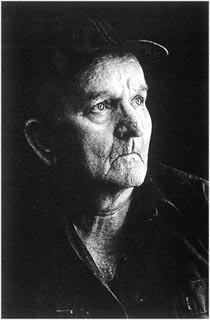
A week after his arrival, Auchter was shocked to find that the cover of an OSHA publication on Cotton Dust displayed a photograph by Earl Dotter of a cotton dust victim, Louis Harrell. Auchter, believing the cover to be inflammatory, ordered the remaining publications destroyed and reissued the document with no photo on the cover.


The "official" DOL history has a slightly different take on the story:
When he [Auchter] learned that the agency was about to publish separate booklets on the cotton dust hazard - one version for workers and another for employers - he temporarily withdrew them because he felt that having separate booklets was divisive. Five days later, a unified booklet was released that contained essentially the same information, but in the meantime organized labor leveled a barrage of criticism at Auchter - the first of many - over the withdrawal.
Auchter also tried to repeal the hierarchy of controls which states that respirators (and other personal protective equipment) should be the last strategy and engineering controls the first. Infante recalls that:
Auchter was in favor of putting workers in respirators instead of lowering PELs for substances that standards were being developed for like EtO, arsenic, certain sectors for the cotton dust standard, benzene, cadmium, etc. We in Health Standards along with the Solicitor of Labor's office had to argue with him that the OSHA Act required engineering controls for the first line of defense against toxic substances in the workplace.
Medical removal protection triggers for blood lead levels in the lead standard were another target of the Reagan administration. OSHA wanted workers' blood lead levels to fall to a certain level before the workers were allowed back in the workplace, but the lead industry claimed that levels would never fall that low. In a tribute to their creativity, the industry further claimed that keeping these veteran workers off the job would create safety hazards because they were the most knowledgeable about workplace safety.

Ethylene Oxide was one of the first new standards that Reagan's OSHA worked on:
In April 1983 Ethylene Oxide (ETO) became the first chemical since 1978 for which OSHA proposed to lower allowable exposure levels. ETO is a gas used primarily as a sterilizer in hospitals and was one of the substances regulated in OSHA's old consensus standards. In August 1981 the Health Research Group and several unions petitioned OSHA to set an emergency standard for ETO to protect an estimated 100,000 workers in hospitals and elsewhere from possible damage to chromosomes. When OSHA refused their petition, they sued in a federal court.
The court eventually ordered OSHA to issue a standard within one year.

According to the DOL history, Peter Infante again played the troublemaker:
OSHA decided whether or not to set a ceiling for short-duration exposures [Short Term Exposure Limit or STEL] after a brief "memo war" between Peter Infante, who thought a short-term level was needed, and Leonard Vance, who did not. Infante lost and the short-duration maximum was omitted from the proposal, much to organized labor's disappointment. Hearings were held in July 1983.
The official history doesn't finish the story, however. When it came time to write the final standard, the public comments on the proposal and testimony at the public hearing so overwhelmingly proved the need for a STEL, that OSHA included it in the "final" version sent to OMB as the court-ordered deadline approached. OMB was not amused and, at the last minute, ordered OSHA to remove the STEL along with any justification in the preamble. Facing a deadline only hours away and not looking forward to contempt-of-court charges, the staff was ordered to take a marker and literally cross through any reference to the STEL. The inexpertly crossed-through document was then delivered to the Federal Register, to be retrieved later as part of a successful court challenge to the rule.

But, that's still not the end of the story. Months later, a House committee hauled OSHA to a hearing studying the development of the standard and the missing STEL. Accusations were made that Director of Health Standards, R. Leonard Vance, had met illegally with representatives of the Ethylene Oxide Industry Council.

Vance denied the charge and was asked to produce his calendar. He consented, but later was reluctantly forced to inform Congress that he had taken his records on a hunting trip and his dogs, after apparently feasting on bad bunny rabbit, vomited on them, forcing him to discard the putrid records before they could be delivered to Congress.

I hate it when that happens.

The Standards Process

As the Washington Post's Cindy Skrzycki puts it.
Though the Reagan administration is remembered most vividly for cutting agency budgets, eliminating rules and creating a task force to scrutinize regulations that the administration and business wanted to change, regulatory experts say the real effect of those years can be traced to a change in the process of creating rules.

Within weeks of taking office in 1981, the Reagan administration issued an executive order that, for the first time, set up a system of reviewing all of the rules issued by dozens of federal agencies. The Feb. 17 order set out a protocol of review and cost-and-benefit analysis that laid the groundwork for the way that the federal regulatory system works today. It replaced a much looser system of consultation where previous administrations reviewed some but not all rules.

The result was a kind of deregulation that did not depend so much on removing regulatory barriers for entire industries, as the Carter administration did for airlines in 1978. Instead, it used administrative tools that sometimes made it harder for federal agencies to issue rules as their regulatory agendas became subject to strict oversight by the White House.
AFL-CIO Occupational Health and Safety Director Peg Seminario recalls how the burden on OSHA has grown over the years.
In the early 1970's, it took about six months to two years for the agency to develop and issue major rules such as those on asbestos and vinyl chloride even though these rules were controversial and contentious. The preambles for the standards were only five to ten pages, but the standards, evidence and material were upheld by reviewing courts.

In the mid- to late-1970's, the process was somewhat longer, taking three years for the promulgation of the lead standard, four years for standards on cotton dust and arsenic, all major regulatory initiatives. But during that time the agency developed and issued numerous other standards including those as benzene, acrylonitrile, DBCP, cancer policy, access to exposure and medical records, hearing conservation, fire protection, and guarding of roof perimeters.

In the early 1980's, as a result of the anti-regulatory philosophy of the Reagan Administration, the time for standards development and issuance became even longer as action was only taken in response to Congressional mandates or court orders. For example, it took six years and a lawsuit for OSHA to issue its formaldehyde standard and five years and a Congressional mandate for the issuance of the blood borne pathogens standard.

Other standards initiated during the Reagan Administration took much longer. Standards on 1,3 butadiene, methylene chloride and respiratory protection each took 12 years from start to finish and were not completed until the Clinton Administration.
Most recently, we saw a situation where it took OSHA more than ten years to issue an Ergonomics standard. The regulatory language spanned a total of 8 pages in the Federal Register, while the "Preamble," containing extensive economic and regulatory analyses, went on for an additional 600 pages. Following issuance of the standard, industry association representatives inflamed their members with the specter of 600 page standard! The tragic irony is that the 600 page preamble that raised the ire of the Republicans and business community was largely a result of Republican and business community-inspired legislation and Executive Orders endlessly increasing the amount of analysis required to justify a standard.

Reagan's OSHA Budget

The Occupational Safety and Health Administration (OSHA), founded in 1970, saw its budget increase steadily from 1975 to 1981, and its staffing--the key to enforcement--rise from 1975 to 1980. But, during the Reagan years, it lost funding and people. Its staffing went from 2,951 in 1980 to 2,211 in 1987. Clinton increased spending on OSHA in the 1994 and 1995 fiscal-year budgets, but in fiscal year 1996, the Republican Congress forced the administration to agree to budget cuts and another reduction in staff. In the past two years, the administration has finally got the budget back up, but there are still fewer people working at OSHA in 2000 than there were in 1975, even as OSHA's job has become more complex and demanding.

Enforcement

One of the goals of former construction industry executive Thorne Auchter was “the eradication of the "prevailing adversary spirit" among labor, management and government.” All of those inspections were clearly “adversarial,” especially for employers already doing the right thing. How to tell the “good” employers from the “bad?” Just check their injury and illness records before deciding whether to inspect. UNITE's Eric Frumin recalls Auchter's infamous "record check" inspections and the tragic consequences:
In July, 1981, OSHA Director Thorne Auchter, with the help of his new deputy Assistant Secretary of Labor Mark Cowan told his Regional Administrators that effective October 1, they would impose a new category of inspections on their inspectors -- the infamous "records-check" inspection - -which required inspectors to stop from entering the workplace if the plant's OSHA Log showed a below-average injury rate. Two years later, at the Film Recovery Corp. plant in Elk Grove, IL, an inspector did exactly that, and weeks later a worker died from arsenic poisoning. The Cook County Coroner ruled it a homicide because of the employer's blatant efforts to hide the arsenic hazard he spray-painted over the skull-and-crossbones warnings on the labels of hazardous chemicals). The Cook County State's Attorney (Richard Daley Jr.) prosecuted the first homicide case for a workplace fatality. The record check policy was finally reversed a couple of years later, as Bush I began to run for re-election and the scandal of cooked injury books was revealed in the Union Carbide inspection in W. VA. Thousands of inspections were wasted in the interim. So much for effective government.
A number of other actions taken by Auchter weakened OSHA's enforcement ability, according to the DOL history:
Inspectors began to cite fewer "serious" violations and greatly reduced the size of penalties assessed. OSHA instituted a new system for exempting firms with good safety records from safety inspections and targeting those with poor records. "General Duty" clause citations were restricted and the requirement for walkaround pay was dropped.
The walkaround pay repeal was particularly hard-hitting for workers. The OSHAct gives workers the right to "walk around" the workplace with OSHA inspectors. Until Reagan, this "walkaround right" was presumed to imply that workers should also be paid for the time spent walking around with the OSHA inspector. Reagan and Auchter took that right away. Workers still had the right to walk around, but no longer had the right to be paid for the time spent exercising that right.

One of main worker safety debates raging today is whether or how to get OSHA to pursue more criminal prosecutions and jail time against employers whose willful violation of the law causes the death or serious injury of a worker. According to NY Times investigative reporter David Barstow, much of OSHA's refusal to pursue more criminal prosecutions can be traced back to the administration of Ronald Reagan:
When people at OSHA explain their reluctance to pursue criminal prosecutions, they sometimes begin by pointing to the example of Ronald J. McCann.

Mr. McCann, acting regional administrator in Chicago during the early 1980's, was an early champion of criminal prosecutions. He had a simple, no-nonsense approach: If a death resulted from a willful violation, it should be referred to the Justice Department without delay.

But in the early days of the Reagan administration, he said in a recent interview, that policy brought a clear rebuke from OSHA's new political appointees. Twelve times he sought prosecutions. "They were all thrown out." Soon after, he said, he was removed from his job and transferred so often that he ended up living in a tent to avoid moving his family again.

"We wanted to stop people from killing," said Mr. McCann, now retired. "We wanted to make an example of those few people who do so much harm to society for their own personal gain."
But Reagan's biggest impact on OSHA may have come from an action that wasn't directly targeted at OSHA at all -- the firing of the PATCO strikers. OSHA was only created, and only survives today (such as it is) due to the influence of the American labor movement -- both directly through lobbying OSHA, Congress or the President -- and indirectly, through electing worker-friendly politicians. By declaring war on PATCO and the entire labor movement, Reagan gave the green light to American business to declare war on workers and unions. We're still feeling the effects of that war today in the form of a weaker labor movement, unending attacks on workers' rights, compensation and benefits, and a weaker OSHA.

Other Actions

Research: Some actions had longer term implications as AFT's Darryl Alexander points out
One of the most chilling things was the suppression of Department of Health and Human Services research on healthcare, disease and the health status of the population. The administration wouldn't release data and literally stopped collecting information on important indicators. The postulate: No data; no problem. Seems like a tradition that is followed today.
Training Grants: One of the most significant accomplishments of Eula Bingham’s administration at OSHA was the development of “New Directions” training grants. Money was provided to unions, COSH groups, universities and other non-profit organizations, generally for a period of five years, to develop a self-sustaining program to provide training and develop training materials for workers. During Bingham’s administration, OSHA funding reached almost $14 million (in addition to several million provided by the National Cancer Institute.) In Reagan’s first budget, the funding for the worker training grants was cut in half, while funding for “consultation programs” was increased. Worker training funding did not regain its previous funding levels until midway through the Clinton administration, over 15 years later. (Currently, the Bush administration is again attempting to slash funding for worker training programs.)

Voluntary Protection Program: Consistent with his desire to increase “voluntary” actions by employers, Auchter created the Voluntary Protection Program which offered employers with exemplary safety programs freedom from general schedule inspections. Although employees could still file complaints and request inspections, critics objected to the exemption from general inspections and the resources that the new program would require. Since then, the number and variety OSHA’s voluntary programs have mushroomed, sucking up an increasing portion of OSHA’s limited resources.

Conclusion

Peter Infante reminds me of a rather Freudian "typo" in the Federal Register containing the final Ethylene Oxide standard:
If you can find a 1982 Code of Federal Regulations, a footnote indicates that the toxic level for ethylene oxide in the workplace was "1 Ronald Reagan." This typo was appropriate.
Today, even more than in the 1980's, American workers are feeling the effects of that anti-regulatory atmosphere that Ronald Reagan did so much to promote. Only today, the situation is worse because the anti-government, anti-worker zealots have learned to be much more subtle when they undermine worker protections. As bad as the Reagan years were, career civil servants claim that the current Bush administration is much worse.

Indeed, Ronald Reagan's "regulatory reform," based on his interpretation of "liberty" as the freedom for employers to do what they want, when they want, to whom they want, doomed countless working people to preventable injury, illness and death. He may have done it with style and with a smile, but the damage was the same. That is the real legacy of Ronald Reagan.

Finally, although this article focuses solely on OSHA, I can't end it without providing some assistance to those of you trying to steer through rhetorical trash strewn about the land by the media over the past couple of weeks. This is from Atrios:
God, Does it Ever End?

Russert last night on Larry King:
RUSSERT: One other political point: The Republicans achieved control of the United States Congress for the first time in 70 years, of both houses, under Ronald Reagan.
Look, I'm fine with the Peggy Noonan footworshipping. I'm fine with all the "Reagan destroyed the Soviet Union singlehandedly" nonsense. I'm fine with all of these types of things because they're opinions. Some are silly opinions, and there should be some balance to them, but they are still opinions.

What I'm not fine with is all the factual errors that creep into the coverage by supposedly "unbiased" reporters.
  • The House and Senate did not both come under Republican rule during Reagan's time.
  • The Berlin Wall did not come down when Reagan was in office.
  • Reagan is not the president who left office with the highest approval rating in modern times.
  • Reagan was not "the most popular president ever."
  • Reagan did not preside over the longest economic expansion in history.
  • Reagan did not shrink the size of government.
  • Reagan did preside over what was at the time the "biggest tax cut in history" but it was almost instantly followed up by the "biggest tax increase in history."
  • Reagan was not "beloved by all." He was loved by some, liked by some, and hated by some with good reason.
Those concerned about the safety and health of Americans who go to work every day believing in their freedom to come home alive and healthy have good reason to hate Ronald Reagan.

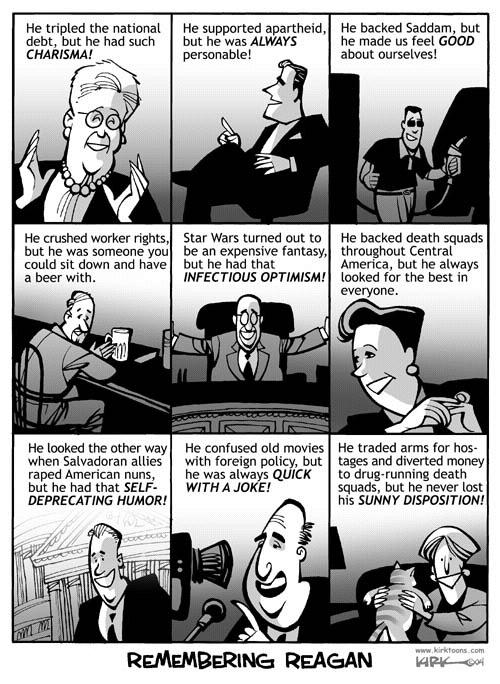
We'll Miss Him So....


Kirktoons, by Kirk Anderson

Republicans Having Hard Time Selling Bush to Workers

I wonder why?

The LA Times helps count the ways

Well, first there’s overtime
Osvaldo Millet makes a good living — $43 an hour plus overtime — as a hospital pharmacist in Miami. The overtime pays for vacations and other extras for his family of five, but that money might disappear under a Bush administration initiative.

***

Millet, the Miami pharmacist, said the new overtime rules were a big topic of conversation around his office. He is paid an hourly wage, but worries that the new rules would allow his boss to ask for overtime work without offering overtime pay.

In Millet's case, that could mean a lost vote for Bush.

"The main salary is to cover the basics — food, clothing, school and the homestead, and now for gasoline," he said. "To lose the overtime, that'd definitely be a big deal."
Then there’s jobs
Jeff Deckard is a member of the National Rifle Assn. who voted for Ronald Reagan and isn't fond of the Democratic Party's more liberal views. But the Reynoldsburg, Ohio, electrician has soured on President Bush. Deckard is out of work and his unemployment checks will soon end if the Republican-led Congress doesn't extend benefits.

***

Deckard, the Ohio electrician, said his family of four would soon feel the consequences of the lawmakers' decision not to renew a benefits program for the long-term unemployed. The program gave workers three months of federal jobless benefits after their state benefits ran out, typically after 26 weeks.

The federal program had been paying out nearly $1 billion a month before it expired in December. Many Republicans say renewing it would violate a budget deal.
And then there’s ergonomics
Bush's workplace policies have drawn criticism almost from the beginning of his administration, when he took aim at one of worker advocates' most treasured achievements: sweeping new ergonomics rules.

The regulations, which had been under development for years, were issued in the Clinton administration's final days; Bush backed a measure in Congress to repeal them.

The rules required businesses to adopt new equipment and training to help workers avoid repetitive stress and related conditions that are common in industrial plants and white-collar offices alike.

The vote to repeal them ran largely along partisan lines, with Republicans and the White House heeding warnings from business groups that the rules would cost at least $7 billion in the first year alone. When the repeal became law, a National Assn. of Manufacturers spokesman called it a "high-water mark" of its lobbying efforts.
"High water" as in enough to drown them all I hope.

Short Takes

There’s just too much news for me to comment on. Read all about it yourself.

  • Oops. Looks like an OSHA expert witness who testified about the benefits of paper masks had -– until just weeks before the OSHA respirator hearings -- been a paid adviser for lawyers defending 3M against hundreds of thousands of lawsuits alleging that defects in the firm's first government-approved mask caused workers to get lung diseases.

    Approval of the paper masks by OSHA would enable employers to rely more extensively on the cheaper masks. The $1 and $2 masks are the biggest seller in 3M's respirator line.

  • New York City received over 250 workplace safety violations in just 5 months.(But that’s the good news. Boston, Philadelphia, Pittsburgh, Chicago, Cleveland, Cincinnati, Washington D.C., Atlanta, New Orleans and Miami didn't get a single citation -– because public employees in their states aren’t covered by OSHA.)

  • Remember the Quecreek Mine near-disaster and the miraculous rescue of nine miners trapped 240 feet underground when the mine flooded? Well, the Mine Safety and Health Administration (MSHA) just fined the three companies involved a whopping $14,000, despite evidence that the mine owners and operators should have known they were drilling too close to a flooded mine. Read Charles McCollester’s story for a good accounting on the underlying causes of the incident. (Hint: It wasn't God's will.)

  • Over the last month, President Bush has repeatedly recounted how he was inspired by "the courage of the firefighters and the police" in the aftermath of the September 11 terrorist attacks. He recounted how, when standing atop a pile of rubble at Ground Zero, he was told by a firefighter, "Don't let me down." But more than two years later, he continues to ignore the needs of firefighters and police officers who are now suffering adverse health effects from their rescue efforts at Ground Zero. The situation has reached a head: yesterday, 1,700 cops and firefighters were forced to sue in court for the medical help they desperately need

  • Bush "clean air" policies sentence more than 14,000 people to death by pollution who can be saved with a more protective program sponsored by Senator Jim Jeffords (I-VT).

  • Good article in The Nation about labor’s ideas for organizing Wal-Mart.

  • Right wing Bush Republicans are so impressed with the quality and persuasiveness of Michael Moore’s new film, Fahrenheit 911, have hired a public relations firm to kill it.

  • OSHA has published ergonomics guidelines for retail grocery stores as part of its COMPREHENSIVE APPROACH TO ERGONOMICS .This is the second set of ergonomics guidelines that OSHA has published in the three and a half years since repealing the ergonomics standard. Anyone out there in the blogosphere want to review them for Confined Space?


Formaldehyde Definitely Causes Cancer in Humans

The International Agency for Research on Cancer has determined that formaldehyde is carcinogenic to humans.
Previous evaluations, based on the smaller number of studies available at that time, had concluded that formaldehyde was probably carcinogenic to humans, but new information from studies of persons exposed to formaldehyde has increased the overall weight of the evidence.

Based on this new information, the expert working group has determined that there is now sufficient evidence that formaldehyde causes nasopharyngeal cancer in humans, a rare cancer in developed countries.
IARC is the gold standard international body evaluating chemical carcinogens. They operate under the World Health Organization, and call the best scientists from all over the world to serve on evaluation working groups.

The OSHA Permissible Exposure Limit for formaldehyde in the workplace 0.75 parts formaldehyde per million parts of air (0.75 ppm) measured as an 8-hour time-weighted average (TWA). The standard includes a second PEL in the form of a short-term exposure limit (STEL) of 2 ppm that which means a workers average exposure during any 15-minute period must not exceed 2 ppm.
NIOSH has a Recommended Exposure Limit ceiling of 0.1 ppm, which means that a worker’s exposure should never exceed 0.1 ppm even for an instant.

Formaldehyde is a very widely used chemical.
Formaldehyde is produced worldwide on a large scale. It is used mainly in the production of resins that are used as adhesives and binders for wood products, pulp, paper, glasswool and rockwool. Formaldehyde is also used extensively in the production of plastics and coatings, in textile finishing and in the manufacture of industrial chemicals. It is used as a disinfectant and preservative (formalin) in many applications.

Common sources of exposure include vehicle emissions, particle boards and similar building materials, carpets, paints and varnishes, foods and cooking, tobacco smoke, and the use of formaldehyde as a disinfectant. Levels of formaldehyde in outdoor air are generally low but higher levels can be found in the indoor air of homes.

Occupational exposure to formaldehyde occurs in a wide variety of occupations and industries: for example, it is estimated that more than one million workers are exposed to some degree across the European Union. Short-term exposures to high levels have been reported for embalmers, pathologists and paper workers. Lower levels have usually been encountered during the manufacture of man-made vitreous fibres, abrasives and rubber and in formaldehyde production industries. A very wide range of exposure levels has been observed in the production of resins and plastic products. The development of resins that release less formaldehyde and improved ventilation has resulted in decreased exposure levels in many industrial settings in recent decades.

Monday, June 14, 2004

OSHA Hosts Hispanic Worker Safety and Health Conference

OSHA has announced that it will hold a Hispanic Safety & Health Summit sponsored by OSHA and a broad range of Hispanic organizations including the Hispanic Chamber of Commerce, the Hispanic Alliance for Progress and the uh, umm, that's all....

The Alliance for what? Hispanic Alliance for Progress? Couldn't find much on the web about this group except for two press releases -- one supporting the Bush administration's immigration reform proposal, and the other supporting the administration's new overtime regulations that will take overtime away from thousands of workers. It's headed up by former New Mexico Republican Congressman and Bush I Interior Secretary Manny Lujan.

The conference will be held on July 22, in Orlando, Florida. Hmm, Florida.... Rings a bell somewhere. Wasn't there some kind of controversy in Florida during the last election?

And unions? They don't need no stinkin' unions.

The National Institute for Occupational Safety and Health? Well, according to an anonymous NIOSH insider,
NIOSH tried for months to convince OSHA to hold an open meeting which had speakers representing all of the important interest groups and to make the tone be open and asking for outside input. In the end we got nowhere. OSHA decided to make this a DOL summit and we are no longer a cosponsor nor do we have any meaningful input into the agenda.
There had apparently been some discussion about some labor participation in some panels, but no one seems to know what's happening.

So far, the only named speakers are Assistant Secretary for OSHA, John Henshaw and Secretary of Labor Elaine Chao, herself an immigrant who has made good.

By the way, if anyone reading this will be attending and would like to be the designated Confined Space correspondent, please contact me. I promise to pay you the same amount I make.

More on immigrant workplace safety issues here.

Saturday, June 12, 2004

CalOSHA Clouds Worker Safety In Sunny California

CalOSHA Infected With Partnership Obsession

After a two month investigation, CalOSHA has found that a company knowingly over-exposed its welders for almost a year to two to three times the legal limit for manganese and welding fumes and then refused to tell the workers the truth (as required by law) or provide them with the legally required information or training.
"These do rank as very serious, violative conditions that existed that could have potential harm to the employees exposed," said Cal-OSHA spokesman Dean Fryer.
Sounds serious (and willful) enough for a pretty high fine, if not a criminal prosecution, no?

Apparently not. It seems CalOSHA has been infected with the same dubious "partnership" obsession as Federal OSHA. In this case, the leadership of CalOSHA had decided that the companies, KFM Joint Venture (a partnership of three construction companies, Kiewit Pacific, FCI Constructors and Manson Construction Co.), should receive no citations, no fines — nothing but a verbal promise to "take care of the problem" sometime. These are violations that, by law, CalOSHA should be citing with fines. Instead, a "partnership" with evil-doers has been formed.

Exposure to manganese and welding fumes is serious
According to the National Safety Council, inhalation or ingestion of manganese dust or fumes can cause a wide range of symptoms including: Parkinson's, insomnia, mental confusion, metal fume fever, weakness, paralysis, dry throat, cough, tight chest, flu-like fever, low-back pain, and vomiting.
Adding insult to injury, the Pile Drivers union, which represents the welders, is letting Cal/OSHA get away with it by signing off on the partnership.

The linked article is only one I've seen on the issue. CalOSHA is trying to keep the deal quiet because it is apparently considering a similar "partnership" arrangement with contractors in San Diego who have had similar "problems" and the arrangement is causing morale problems among CalOSHA inspectors who actually care more about workers' health and safety than they do about being "cooperative" and "non-adversarial".

Well, I just hope that other scumbag employers who are poisoning their workers are paying very close attention. (Merriam Webster: scum·bag: Pronunciation: 'sk&m-"bag. Function: noun, slang: a dirty or despicable person)If you discover that you're over-exposing your employees to poisonous fumes and then you decide to break the law by continuing to over-expose them and then you don't inform or train them, you're in BIG, BIG TROUBLE. Keep it up and you just might find yourself sentenced to a partnership and forced to promise that you won't do it again.

Oh, somewhere in this favored land the sun is shining bright,
Workers are healthy somewhere, and somewhere unions fight,
And somewhere OSHA struggles, and somewhere workers win,
But there is no fight in Oakland — CalOSHA has caved in.

OSHA's Not A Fraud. Not Sure About Scripps-Howard

A couple of weeks ago, someone sent me an editorial from a Florida paper calling for passage of Charlie Norwood's legislation weakening the Occupational Safety and Health Act. Calling the bills a "gift to small business, to workers, to the economy generally and to America," the column goes on to state
The fact is, OSHA is pretty much a fraud. As analysts at the Cato Institute point out, there is no evidence the agency has made any significant impact on workplace safety in its 34 years of existence.
What's been making workplaces safer? Well, first no one does any hard dangerous work anymore (we all work in offices and Wal-Mart now) and the risk of lawsuits and rising workers comp insurance premiums forces employers to keep the workplace safe (at least until they manage to pass tort "reform.")-- in other words, the free market works! (Yeah, yeah, tell it to these guys, and these and these and this kid and this guy and ...)

The editorial then trots out that old study by the libertarian Cato Institute that claims that not only do OSHA regulations strangle business, but OSHA regulations actually kill workers. (The reason, in case you haven't moved on to some more sensible reading material by now is that if a company is doing more to protect their workers, the workers have less incentive to protect themselves. Get it?)

Yeah, yeah, probably just some crazy editor who just stumbled upon the the Cato article.

But then someone sent me the same editorial, this time from the East Valley (Arizona) Tribune. And then I did a search and found more and more, all in Scripps-Howard newspapers, some by Jay Ambrose, director of editorial policy for Scripps Howard Newspapers, and some just generic editorials. Turns out it was on Scripps-Howard's editorial of the week list.

Scripps-Howard doesn't exactly have a "pro-OSHA" history. In 2000 it reprinted an anti-ergonomics screed by Eugene Scalia, an attorney who led that charge against OSHA's ergonomics standard (and was later appointed Solicitor of Labor by President Bush), and published at least one decidedly unfavorable "news" story quoting employers who had bad experiences with ergonomics and insurance companies saying the market was taking care of the problem.

At least one person (aside from me) was upset about this polemic. Safety professonal Thomas Wazelle Jr published a letter to the editor in the Fort Smith, Arkansas Times Record
OSHA Saves Lives, Remains Necessary

As a safety professional, I was dismayed to read the description of the Occupational Safety and Health Administration in the guest editorial in the May 20, 2004 Times Record. OSHA is not a fraud. Far from it. Anyone who believes that employees may rely solely on the largess and good will of most employers to protect them on the job is not dealing with reality.

Further, the statement that most employers will make their work sites safe to avoid high insurance costs is naive as well. Many employers will complain vociferously about the high cost of workers’ compensation insurance while refusing to invest the time and resources to establish and maintain a safe and healthy workplace.

Employees realize that safety first is seldom an employer’s first priority. Production and survival of the business is, of necessity, the first priority. For that reason alone OSHA is necessary. In 1970, the year before the Occupational Safety and Health Act was implemented, there were more than 14,000 worker deaths in America. In 2003 there were less than 6,000.

OSHA has worked hard to change from a policing agency to an agency that partners with employers and employer groups and professional organizations such as the American Society of Safety Engineers, to advise and mentor. Yes, OSHA compliance adds to the cost of goods and services, but so do a myriad of other government regulations. The difference is that OSHA saves lives.


Thomas Wazelle Jr.
Alma


Thursday, June 10, 2004

Medical Malpractice Solution: Kill the Lawyers (and their families)

I wasn't sure if I was full awake or still dreaming this morning when I heard this story on NPR's Morning Edition about a proposal by Charleston, S.C., surgeon J. Chris Hawk III to the American Medical association to allow doctors not to treat trial attorneys or their families because they're angry about skyrocketing malpractice premiums.

Just to make sure I was actually awake I did a web search and lo and behold, it was actually true. (here, here, here) Happily, columnists are just as outraged as I am.
Among its whereases, the resolution suggests that "if trial attorneys were given the opportunity to experience the access problems caused by the professional liability crisis, then perhaps they would be willing to help change the system."

So, Hawk believes, the AMA should "notify physicians that, except in emergencies and except as otherwise required by law or other professional regulation, it is not unethical to refuse care to plaintiffs' attorneys and their spouses."

Forget about that Hippocratic oath.

Let's indulge in discrimination according to livelihood - not to mention guilt by marital association.
So how much truth is there to the accusation that frivolous lawsuits are causing high malpractice insurance premiums which are causing doctors to shut down their practices? Not much, according to independent experts as described in a recent article by Stephanie Mencimer in the Washington Monthly.
Even the respected General Accounting Office (GAO) has recently concluded that there's little evidence to back the striking doctors' main claim, which is that lawsuits are forcing many of them to abandon the practice of medicine or to avoid high-risk procedures. And while there's no doubt that malpractice insurance is getting more expensive across the board--about 30 to 40 percent, on average, during the last three years--this increase is largely due to the ailing stock market and poor business practices in a virtually unregulated industry. As a result, there's no reason to think that capping jury awards would bring premiums down, a fact the insurance industry itself acknowledges. Robert E. White Jr., president of First Professional Insurance Company, the leading medical malpractice insurer in Florida, told the Palm Beach Post in January, "No responsible insurer can cut its rates after a [medical malpractice] bill passes." The one surefire way to bring down the number of big-payout lawsuits is to reduce the number of those doctors who inspire most of them. But state medical boards--which are run by doctors--have been notoriously reluctant to aggressively police their own.
Following a particularly vicious campaign against trial lawyers in West Virginia, the Charleston Gazette conducted an investigation which came to a similar conclusion:
All in all, claims about a "lawsuit abuse crisis" proved remarkably effective in West Virginia--and resistant to contradictory evidence. In February 2001, responding to the doctors' allegations, the Charleston Gazette undertook a computer-assisted analysis of more than 2,000 medical malpractice claims reported to the West Virginia Board of Medicine. The paper determined that far from being in a state of crisis, West Virginia ranked 35th in the country for median malpractice payouts. The paper also found that both the number of malpractice claims and the dollar amounts of the settlements and verdicts had actually declined between 1993 and 2001. Nor was West Virginia suffering under an epidemic of "disappearing doctors." Last August, the Gazette's Messina attended a rally at which the West Virginia medical society set out 37 empty chairs labeled with the names of local doctors who supposedly had been forced out of practice because of insurance costs. He discovered that at least two of the doctors named were indeed not practicing--because they were dead. Another two were still actually treating Wheeling patients. A Public Citizen study of the state medical board records later found that the number of doctors in West Virginia increased by more than 350 between 1997 and 2002.
And as I reported in a posting about medical malpractice shenanigans, we find that insurance companies were forced to tell the truth when the Florida legislature put them under oath. Guess what? No frivolous lawsuits, no exodus of doctors, and no explosion of malpractice litigation. (And, oh yeah, they're making a profit.)

So what's the story? Basically, we have insurance companies who are raising their rates because they lost their shirts on bad stock market investments, combined with a well-coordinated right-wing strategy based on "an agenda that advocates an anti-government ideology that promotes privatization, deregulation, Social Darwinian competition and free markets as the solutions to all social problems." They want to weaken contraints on the conduct of corporations and limit the income of trail lawyers who (coincidentally) are, along with labor unions, one of the chief financial supporters of Democratic candidates.

And the ideologues and insurance companies have been successful in convincing doctors that the real bad guys are the greedy trial lawyers who are flooding the country with frivolous lawsuits. Mencimer tells of a bitter strike by physicians in West Virginia, calling for the legislature to cap non-economic damages in medical malpractice suits at $250,000.
The doctors' protests aren't about good policy. They're about good politics. Although the malpractice strikes look like a natural outgrowth of physician frustration, they are, in fact, the product of a sophisticated lobbying campaign coordinated by Republican operatives and underwritten by business groups with little interest in the practice of medicine. GOP leaders view malpractice lawsuits as a pivotal issue for the 2004 campaign. With health-care costs skyrocketing on its watch, the GOP is eager to shift blame onto the Democrats, who have long enjoyed greater public trust on the issue. And doctors, who enjoy great credibility among voters, are the key. By linking rising health-care costs to frivolous medical lawsuits, Republicans can use doctors as a cudgel against trial lawyers, the Democratic Party's second-largest funding base and one which could be paralyzed by lawsuit caps. Once bills to restrict malpractice lawsuits are on the table--in Congress and in the state legislatures--Republicans can slip in much broader legal relief for corporations under the guise of bringing down health-care costs, especially for senior citizens. Frank Galitski, a former Bush campaign staffer who works with the doctors as head of the Texas Alliance for Patient Access (TAPA), a coalition of insurance companies and health-care corporations, puts it bluntly: "This is a great issue for the president, particularly in the key battleground states of Pennsylvania, Michigan, Ohio, where they have an aging population." Indeed, if the experience in West Virginia is any indication, the GOP has found itself a winning formula.
The bottom line is that malpractice award limits have not slowed the rise in malpractice premiums. What will? Mencimer suggests experience rating to "reward better doctors and price those who attract the most lawsuits out of business rather than subsidizing them" and better regulation of health care to reduce the number of malpractice lawsuits simply by reducing the number of preventable medical injuries.

Why is stopping limits on medical malpractice awards and other tort "reform" so important? The regulatory process is all but broken and enforcement of workplace health & safety, environmental or consumer protections always wins the Congressional prize for "most likely to be cut." By reducing damage awards you destroy one of the last remaining incentives for companies and bad doctors to clean up their acts, and you remove the incentive for trial lawyers to take up the cause of people who have no money to hire an attorney (much less the high-priced talent that major corporations and business associations can hire.)

So without malpractice and large judgments against other forms of corporate malfeasance, what do we have left to strike fear into the hearts (and portfolios) of businesses that may not have the welfare and health of workers/consumers/patients/communities at heart?

Wednesday, June 09, 2004

WMDs In Your Back Yard: Be Afraid, Be Very Afraid

I have written a number of times about the failure of the U.S. government to address security issues at American chemical plants, while at the same time engaging in a costly and disastrous wild goose chase for phantom WMDs in Iraq. (Here and here) Now U.S. PIRG has issued a report showing that twelve companies each endanger more than five million Americans in the event of accidents or terrorist attacks at their chemical facilities. The report, "Dangerous Dozen: A Look at How Chemical Companies Jeopardize Millions of Americans," analyzes the chemical companies' own estimates submitted to the Environmental Protection Agency (EPA). Findings include:
  • The 12 companies whose facilities endanger the most people are JCI Jones Chemical, The Clorox Company, Kuehne Chemical, KIK Corporation, DuPont, Pioneer Companies, Clean Harbors, GATX Corporation, PVS Chemicals, Dow Chemical, Ferro Corporation and Occidental.

  • The 12 parent companies profiled in Dangerous Dozen own 154 high-hazard facilities in 31 different states.

  • The three companies whose facilities put the greatest number of people at risk are JCI Jones Chemical, The Clorox Company, and Kuehne Chemical, which put a total of more than 20 million, 14 million, and 12 million people at risk, respectively.

  • Since 1990, the National Response Center (NRC) has received more than 8,400 reports of incidents involving oil or chemical spills at facilities owned by these 12 parent companies.
US PIRG calls for laws requiring "high-hazard chemical plants to review and use safer chemicals and processes wherever possible and to enact strict security standards where safer chemicals are not feasible."

This "inherently safe production" makes sense on two levels. First, no highly hazardous chemicals capable of killing large numbers of people means no terrorist targets. Second, moving toward safer production means a much lower threat of chemical accidents caused by "naturally occurring" management system failures.

The Bush administration has refused to consider regulations that would require chemical facilities to minimize the hazards at their plants. Although Senator Jon Corzine has introduced legislation requiring the chemical industry to consider inherently safe production, the administration and Republican-controlled Congress seem to prefer a bill introduced by Senator James Inhofe (R-OK), supported by the American Chemical Council, that would simply encourage the chemical industry to follow voluntary standards focusing on higher fences and more guards. US PIRG reports that
The American Chemistry Council (ACC), a lobbying organization that works on behalf of the chemical industry, spent $4.3 million in 2002 and 2003 on in-house lobbyists, making it the loudest voice on Capitol Hill opposing strong, mandatory chemical security regulations.
I find one statistic most unnerving: Only six of the 12 companies profiled in Dangerous Dozen are ACC members. Why does this fact bother me so much? The Bush administration and Senator Inhofe are essentially depending on the ACC's "Responsible Care" security program to ensure the safety of the country's chemical plants.
Two years after the terrorist attacks on our country, Americans understandably are asking “Are we safer?” On behalf of the members of the American Chemistry Council (ACC), ACC is providing you with information about the comprehensive, risk-based security measures ACC member companies have taken - and continue to take - to further ensure that our industry and all Americans are increasingly secure against threats of terrorism.

Today, each of ACC's members is implementing an extensive security program under our industry's Responsible Care® Security Code, which addresses site, transportation, and cyber security. Our members have completed vulnerability assessments at the highest priority sites. All remaining assessments will be completed by the end of this year.
Even if it's true (which I seriously doubt) that all ACC members are in perfect compliance with the ACC program, that still leaves half of the most dangerous plants without even the claim to be in compliance.

I feel safer. Don't you?

Invisible, Anonymous, Far From Home and Dead on the Job

I've written frequently about the short lives and tragic deaths of immigrant workers who fall from roofs and are crushed in collapsing trenches. Most of the stories are about Hispanic immigrants. But there's also an even less visible world of immigrants from China who have come to this country to make lives for themselves, and like their Hispanic brothers and sisters, end up doing dangerous work without basic training or safety precautions. I wrote yesterday about a nameless Chinese immigrant worker killed on the job in a trench collapse in Queens.

The victim has still not been identified.
Yong Fa Cai did not know the man's name. He did not know what kind of construction experience the man had, either in New York or in his native Shanghai. All Mr. Cai knew was that the man had called his cellphone a few days ago, expressing interest in Mr. Cai's project to build a two-family house at 51-18 92nd Street in Elmhurst, Queens.

But the call was enough to get him the job.

On Monday, though, just days after the man started to work, an eight-foot-tall concrete wall at the construction site suddenly crumbled, killing him and injuring two others. And now, the man's death is helping to expose an informal but little-understood world in which construction workers from China rely heavily on anonymous calls, personal references and help-wanted ads to secure dangerous work.

Tossing in another element of mystery, the authorities said yesterday that they still did not have any clue to the man's identity. The only official hints, based on an autopsy performed by the medical examiner's office, were that he appeared to be in his mid-30's, and that he was short and slight, at least by Western standards.
As the number of construction and demolition projects accelerate in the New York area, and more immigrants pour in to find any work they can, OSHA and city building code authorities are having a harder time keeping up.
According to local residents, many Asian contractors have been aggressively buying older homes to either subdivide into many small rooms, or to replace with larger homes. Those plans often include demolition, which jumped by 27 percent citywide in 2003, according to a report released last week by the Rent Guidelines Board. But demolition can be a dangerous task when performed by unskilled laborers working with few safety precautions.

"The builders tear down houses and build new ones to pack a lot of people into," said Irwin Wanto, a retired electrician. "These crews of Asian workers in the neighborhood, they never have harnesses or even hard hats."


NYCOSH Awards Speeches:The World Trade Center Worker and Volunteer Medical Screening Program at Mt. Sinai -- Drs Steve Levin and Robin Herbert

This concludes the series of excerpts from the speeches delivered at the NYCOSH 25th Anniversary Awards Ceremony last month. This award went the Dr. Steve Levin and Dr. Robin Herbert on behalf of the World Trade Center Worker and Volunteer Medical Screening Program at Mt. Sinai.

Dr. Steve Levin
Woody Allen has said that 90% of success is just showing up. The Selikoff Center for Occupational & Environmental Medicine at Mount Sinai has a pretty long history of showing up – when issues affecting the health of working people have arisen, when we have been asked (and even sometimes when nobody asked), we have tried to be of help and say honestly what we think. In that, we’re carrying on a tradition at Mount Sinai established by Dr. Selikoff and sustained by Phil Landrigan. By instruction and example, Selikoff made three points very clear: number one, you keep your eye on the prize – improving the health of working people – that’s the goal. Number two, you use or develop the best scientific information you can to figure out how to change things for the better – science was to serve the cause of reducing human suffering and not be just a thing that scientists do for their own satisfaction; and number three: you’re going to be a hell of a lot more effective if you can find some unions to work with. If you examine Dr. Selikoff’s professional life, that’s the way he worked. And organized labor played a key role in his most important work.

But there’s no question that having direct contact with these men and women – most of whom were regular, more or less non-heroic people in their daily lives up to September 10 – raised the level of commitment for all of us. Because so many of them, faced with intense challenges to body and spirit, had in fact performed heroically, doing everything they could do to save lives, and then doing what had to be done when it was clear that saving lives was no longer a possible mission. And now they were ill, distressed and worried. And there were far more of them than could be absorbed into our understaffed, underfunded clinical center.

We knew something had to be done on a larger scale, to find workers and volunteers who were ill and get them into treatment somehow. And so did people from organized labor in NYC, because they saw what was happening to their members. The firefighters and their doctors had also been making similar requests for help. So we developed a proposal for a screening program for WTC responders, in coordination with the Central Labor Council (special thanks to Ed Ott who pushed for this), and it was labor at the state and city level who took the proposal to Senator Clinton. She listened, she understood the issue, and she did something about it. She pulled together the NY legislative delegation; they fought for the resources, and eventually secured $12 million from FEMA for the WTC Screening Program, funded as a contract from NIOSH. We were amazed. And grateful for the chance to do what we could.

Well, showing up may be 90% of success….. but what’s the other 10%? Maybe having real knowledge and experience, so that when you do show up you either know what to do or know how to find out. Some of that 10% has to include understanding and caring about the lives of working people; that makes a difference, too. And having good friends and allies. That’s a big deal.
Dr. Robin Herbert
It is truly an honor to have the World Trade Center Worker and Volunteer Medical Screening program honored by NYCOSH. I am particularly proud that our program is being honored at an event that is also recognizing Senator Hillary Rodham Clinton, because she has been a true champion of programs to monitor the health of World Trade Center responders.

The September 11 terrorist attacks on the World Trade Center towers resulted in horrific loss of life. Amid the shock and grief we all experienced immediately after the attacks, some failed to recognize that the terrorists had also created one of the worst acute environmental disasters in an urban setting ever to occur in the history of the United States.

Thousands of heroic men and women rushed into this environmental disaster to conduct rescue, recovery, and restoration of essential services. They risked their lives in a moment of national crisis, and unfortunately, many have gone on to develop a wide range of physical and mental health consequences due to their exposures.

In response to this public health disaster, the Mount Sinai Irving J. Selikoff Center for Occupational and Environmental Medicine received federal funding from NIOSH to establish and coordinate the World Trade Center worker and volunteer medical screening program. We are deeply grateful to the broad coalition of labor and elected officials who fought long and hard to secure funding to establish this vitally needed screening program. Together with our regional partners at the Long Island occupational health clinic , TBA… and with our national partner, the Association of Occupational and Environmental Clinics, the program has provided 11,660 screening examinations to World Trade Center responders.

We are proud that our program is being recognized tonight, because this honor is recognition of the importance of providing medical monitoring to the thousands of heroes who responded to the World Trade Center disaster. These heroes are from all walks of life and all parts of the globe. They include law-enforcement officers, members of the building trades, a range of municipal workers, telephone and utility repair workers, transit workers, building service workers, and hundreds of other workers and volunteers. They gave selflessly of themselves in the face of a crisis..

Unfortunately, the impact of the heroic response of our patients on their lives has often been catastrophic. Many of our patients have become disabled by World Trade Center related physical and mental health problems. While it is a privilege and an honor to provide care to World Trade Center responders, it has also been heartbreaking to see the ongoing difficulties they are facing. I would be remiss if I didn’t end my comments tonight by reminding everyone here that WTC responders are still facing the same nightmarish experiences with the Workers Compensation insurers as other New York State injured workers face. I hope you will all join in the struggle for legislative reform of this system.

Granholm Vetos Bill Weakening OSHA

I wrote last month about the Michigan Senate's contribution to death in the workplace when it passed a bill (Senate Bill 647) making it almost impossible for Michigan OSHA to issue a willful citation. Yesterday, Michigan Governor Jennifer Granholm vetoed the bill.
Granholm said the bill is inconsistent with federal safety standards.

"I do not support this effort to hinder the effective and efficient administration of Michigan's workplace safety laws," Granholm wrote in a letter to the state Senate.

Granholm said employees would be discouraged from telling MIOSHA about possible safety hazards. Also, MIOSHA would have a tougher time obtaining accurate and reliable information about workplace safety conditions, she said
.


NY Construction Worker Killed in Trench

Criminal Charges Considered -- 2nd Time in Two Weeks

Another day, another nameless, invisible immigrant worker killed in a New York city construction site.

A Chinese immigrant construction worker was killed Monday, buried in an unshored 8 foot deep trench when an adjoining wall collapsed into the trench.
Fellow workers said the man who died was a recent immigrant from Shanghai who was in his 40's, lived in Flushing and had been part of the construction crew for only a few days. They said they did not know his name.

Investigators for the City Department of Buildings issued citations for building code violations against the developer in charge of the site and ordered that work be stopped until the violations were corrected.

The developer, Yong Fa Cai, and his company, USA Heng Tai Inc., were accused of failing to provide protection for their workers. City inspectors said the area where the workers were injured was eight feet deep, the wall that fell was 25 feet long and "no sheeting, shoring or bracing" had been erected to prevent the collapse.
The Manhattan District Attorney's office said that it was considering criminal charges.

The fatality was the second in two weeks where an immigrant construction worker was killed.
The accident came two weeks after another in Bay Ridge, Brooklyn, in which Angel Segovia, a 37-year-old immigrant from Ecuador, was killed when an illegally constructed balcony roof collapsed beneath him. Both deaths have come amid calls by law enforcement officials, including Robert M. Morgenthau, the Manhattan district attorney, to vigorously pursue cases in which building code violations lead to injury, particularly those involving illegal immigrant workers who are reluctant to report their superiors.


Tuesday, June 08, 2004

Ronald Reagan

I am working on a piece addressing Ronald Reagan's "contribution" to workplace safety and health. Stay tuned.

In the meantime, this piece by University of Michigan Professor Juan Cole should satisfy. If you're interested in what's really going on inside Iraq, you should read Cole's blog, Informed Comment:Thoughts on the Middle East, History,and Religion every day.

Thanks to Mary Miller for forwarding this.

Update: Also check out Nathan Newman here.

And there are a number of articles at Slate.

OSHA Wavers On Protections for Health Care Workers

OSHA Giveth, OSHA Taketh Away, Giveth, Taketh Away

You may remember last December when OSHA announced its final decision to withdraw the tuberculosis standard by explaining in a press release that it was "enhancing" respiratory protection for health care workers.

Its reasoning was that when OSHA's new respirator standard was issued, the agency was still been working on the tuberculosis standard -- which would include new language on respiratory protection. OSHA decided that until the TB standard was issued, health care workers would remain covered under OSHA's old, less protective respiratory protection standard, rather than the new, enhanced standard.

When OSHA withdrew the TB standard, it announced that health care workers would be covered under the new respiratory protection standard, which included fit testing for anyone who would be using a respirator. Hence, the enhancement.

Everyone happy? Not exactly. The American Hospital Association (AHA) and the Association for Professionals in Infection Control (APIC)had fits and went running to their old friend -- and TB standard foe -- Mississippi Congressman Roger Wicker (R) who immediately gave OSHA a call. Now OSHA is reportedly considering a six-month delay in requiring that hospitals annually fit their employees for respirators.

The problem with this extension goes way beyond protection against TB. Respirators protect against other airborne diseases, including bioterrorism agents.
Critics say delaying the July 1 enforcement date would undermine homeland security efforts to prepare for a bioterrorist attack involving smallpox, bubonic plague or other airborne infectious diseases. The Department of Homeland Security has announced that chances of a major terrorist attack this summer are high.

“They really have been exerting a lot of pressure on health care institutions to be ready for a terrorist attack, including bioterrorism,” said Darryl Alexander, occupational safety and health program director for the American Federation of Teachers. The union represents about 50,000 registered nurses.
So what's the problem? Is fit testing too costly? Not exactly.
OSHA estimates the total cost of compliance at $11.7 million annually, an amount considered economically insignificant. For example, OSHA estimated that the cost to a small health care facility would be eight-thousandths of 1 percent of revenues.
So what's the big deal about fit-testing anyway? Who needs it?
OSHA said in December that the best available evidence shows that 5 percent to 50 percent of workers would lack a proper fit without annual testing.

Mark Nicas, an adjunct associate professor at the University of California-Berkeley School of Public Health, said a poorly fitting respirator might provide 70 percent protection compared with 95 percent for one that fits well.

“Would you want to treat someone with smallpox if there’s 30 percent leakage?” Nicas asked. “For smallpox, it takes just one organism in the lungs to infect.”


Monday, June 07, 2004

DOE Investigation of Hanford Coverup: Exoneration or Whitewash?

You may recall a report last February in the Washington Post detailing a worker safety scandal at the Hanford Nuclear Reservation in Washington State.

The Post, working with the Government Accountability Project reported that bonuses were given to the contractor (C2HM HIll) to empty nuclear and chemical waste tanks faster, nuclear cleanup contractors were given incentives to minimize the number of workdays lost to employee injuries, an employee medical center director instructed clerks to alter patient records to show that workers' injuries were not related to work, environmental monitoring was conducted after toxic gasses had dispersed, and workers were harrassed and fired for requesting protective respirators and complaining about safety conditions.

As a result of the allegations, the feds investigated. The results were released last week.
A Hanford contractor was sharply criticized yesterday by federal investigators for failing to protect workers from toxic and radioactive chemicals at the nuclear-waste cleanup site, concluding that aging underground tanks are at risk of collapsing and aren't being properly monitored.

A separate Energy Department investigation, however, found no evidence of criminal misconduct by contractors accused of trying to cover up worker illnesses and injuries.

Investigators looking into the tank cleanup cited dangerous practices by contractor CH2M Hill that "could seriously damage" some of the 177 massive tanks holding highly radioactive waste.

"It's not just worker health and safety," said Tom Carpenter, a Seattle attorney with the Government Accountability Project, a watchdog group. "It's all of our health and safety."

Most of the tanks are years past their design life, but hold radioactive material measured at about 200 million curies -- roughly four times the level released in the Chernobyl reactor meltdown.

Some of the tanks are maintained under vacuum conditions to prevent dangerous vapors from escaping, but investigators discovered that in most cases there were no pressure-relief valves.

The 89-page report agreed on many points with a recent state study that concluded that not enough is known about the lethal mix of waste in the tanks to adequately shield workers. It also found that monitoring of gases released from the tanks was insufficient, the analysis of potential threats to workers was inadequate and the federal government was not providing enough oversight of CH2M Hill.
No sooner had the report concerning the Hanford Environmental Health Foundation (HEHF)(the health clinic that was accused of altering patient records to show that workers' injuries were not related to work) been released than I received an e-mail from Steve Hessl of the HEHF:
I hope that "Spewing Forth" [sic] will have the journalistic integrity to retract its former, extremely negative statements regarding the Hanford Environmental Health Foundation. The real story is that the investigation was politically motivated in order to enhance the ability of a for-profit company to take over care of the Hanford Site Workers. HEHF is a non-profit health care program that had been providing excellent care to the Hanford Workers for 38 years and now is displaced by a well-connected for-profit corporation with deep pockets.
Well, first, in these days of Fox News and Judith Miller at the New York Times, the term "journalistic integrity" sounds a bit quaintly antiquated. Anyway, I'm not a journalist, I'm an unpaid blogger with nothing to lose but my integrity. So in the spirit of Blogger Integrity, Mr. Hessl, I certainly will report that, as mentioned above, the DOE Inspector General
found no evidence of criminal conduct at Hanford. The inspector general said he could not substantiate workers' accusations about contractors' tampering with medical records and hiding information about dangerous vapors from nuclear waste tanks.
Of course, integrity (journalistic or otherwise) also compels me to report GAP's response to the DOE I.G. report regarding the exoneration of HEHF. Calling the DOE report a "whitewash,"
Tom Carpenter, an attorney with GAP’s Nuclear Oversight Campaign, stated, “The Inspector General has done a poor job of executing its mission as watchdog for the public. GAP has collected the sworn statements and documentary evidence from many workers, but the OIG has apparently ignored much of this information, and therefore failed to meet minimum investigative standards."

GAP observed the following about the OIG report:

• The OIG took no sworn statements from any of the witnesses identified to them by GAP.

• The OIG failed to follow-up on eye-witness evidence provided to them of the falsification of calibration records for lab equipment at HEHF.

• The OIG did not interview two engineers from the tank farms even though GAP identified that their evidence dealt precisely with falsified and inaccurate environmental records and inaccurate information regarding constituent products contained within the headspace of the tanks in the Tank Farms.

• The OIG did not seek to interview a worker who suffered a broken leg at work that was not reported as a job injury, after GAP provided the information to the OIG along with the name and phone number of the worker.
GAP also had some problems with the timing of the release of the reports. A GAP spokesperson expressed concern about the timing of the release of the two reports.
The more positive inspector general's report was released early Wednesday and Abraham's public comments focus on its findings of "no criminal wrongdoing." The much more critical report, which was completed in April but not released until Wednesday, was posted on the department's Web site late in the day.

"The fact that the department is playing games with the release of these reports makes me worry that there is no commitment at the secretary's level for reforming health and safety at Hanford," said Tom Carpenter, director of GAP's Nuclear Oversight Campaign.
In addition, despite the DOE report, the Washington State attorney general's office is still investigating the adequacy of medical care at the site.

NYCOSH Awards Speeches: Guillermina Mejia

Guillermina Mejia, Principal Program Coordinator for Safety and Health, District Council 37, AFSCME, received the Karen Silkwood award at the NYCOSH 25th Anniversary Awards Celebration on May 14, 2004. Below are excerpts from her remarks.
My parents’ experiences opened my eyes to what I call ‘the world of unsafe work’. As children, my siblings and I saw the long hours our parents worked.

We would give our mother shoulder and back massages to ease the pain from the many hours she was hunched over her work table in the purse factory; we rubbed lotion on her dried hands, cracked from daily exposures to harmful glues; there just weren’t enough aspirins to relieve the headaches caused by the chemical fumes in that poorly ventilated factory. To earn extra income, our father would bring work home from the dental lab. While he made dental bridges, we played with the silvery-white mercury used back then. Neither he nor we would know until much later of the hazards of this poisonous metallic element.

As a child, I did not know that these conditions constituted abuses in the workplace. I thought that was the life hard-working immigrant parents had to accept and endure. The impressions of my parents’ experiences provide me today with the impetus to tackle daily safety and health concerns head on. Back then I could not make a difference in their work lives. I make up for it today, by working hard to ensure every DC 37 member has a safe work environment.


Saturday, June 05, 2004

The Weekly Toll

Valpo man dies at steel plant.

Tony Parker, a 56-year-old Valparaiso man who coached some of the region's brightest young basketball stars, died Friday morning while on the job at Ispat Inland Inc.'s No. 2 basic oxygen furnace.

The 25-year company veteran was working as a hot metal helper when the accident occurred, said company spokesman David Allen. He was found about 9:15 a.m. and later pronounced dead at the scene by a deputy of the Lake County Coroner's Office.

Parker was working alone when the accident occurred and "no one saw what happened," Allen said. Parker's job was at the hot metal station, where iron comes into the steel shop from the blast furnace and is transferred from rail cars into ladles.

Parker apparently fell 20 to 25 feet into an area below his work station, Allen said.

More here.


Plant worker dies after water main ruptures

A worker at a power plant in southeast Harris County was killed Friday when a water main ruptured.

The accident happened about 2 p.m. at a power plant owned by Calpine Corp.

Mike Addison, 52, was near the water main when it ruptured after a plant turbine came online, said Meg Laidlaw, a local spokeswoman for San Jose, Calif.-based Calpine.


Apache worker dies in accident

An industrial accident Wednesday claimed the life of a worker at Apache Mills.

James Graham, 32, formerly of Calhoun and now of a Summerville address, was pronounced dead at 12:22 p.m. Wednesday. According to an incident report from the Calhoun Police Department, an officer was dispatched to 417 S. River St., at 11:08 a.m. in reference to some type of explosion.

Upon arrival, the officer saw a white male lying on the floor with visible injuries to his chest and face. Witnesses said that they saw Graham welding on a pipe about 30 seconds to a minute prior to hearing the explosion. Graham had been in the process of welding caps onto the ends of a pipe when a cap end blew off striking him in the chest, police officials said.


Highway Worker Killed

Eladio Lopez, a 50-year-old Colorado Department of Transportation worker, was killed shortly after 1 a.m. Friday when a car driving the wrong way on I-25 hit him and a co-worker. Investigators believe the driver was drunk.

Lopez came to the United States from Mexico when he was a teen. He grew up in Commerce City and raised his family in Denver. He was a husband of 32 years, father of three, grandfather of four and friend to too many to count.


'Gentle giant' felled on roadway

They were the final words Kathy Forster spoke to her husband: "Be careful, honey, don't let a car hit you."

It was something Forster told her husband any night he worked repairing the area's broken roads. As always, Paul Forster, 43, promised he wouldn't.

The Colorado Department of Transportation worker died early Friday morning when a car going the wrong way on Interstate 25 slammed into him and a co-worker, killing them instantly.


Highway Patrol officer killed in pursuit accident in Redlands

REDLANDS, Calif. - A California Highway Patrol motorcycle officer was killed Thursday when he collided head-on with a minivan in an intersection while he was chasing a suspect in another accident.

Officer James Goodman, a 20-year CHP veteran, died at Loma Linda University Medical Center, said Officer Jim Whitney.


Man dies after bus falls on him

Belleville, NJ -- A Belleville man working for a Bergen County towing company was killed yesterday when a bus he was attempting to haul away fell on him, authorities said.

The bus that crushed 38-year-old Franklin DeLarosa was the same vehicle that collided with a car on the Garden State Parkway on Monday while en route to Atlantic City, said Lt. Robert Urie, spokesman for the Ocean County Prosecutor's Office.

Well Worker Dies in Derrick Collapse

A Pennsylvania man is deadafter a 100-foot gas derrick collapsed in northwest Colorado.
26-year-old Scott Nelson of Warren, Pennsylvania, died at the scene of the accident on Monday.

He was working about two-thirds of the way up the derrick when it collapsed 35 miles southwest of Meeker.

Nelson worked for Union Drilling of Vernal, Utah. The company was sinking a 10,000 foot well for EnCana Oil and Gas.

More here and here.


Police Officer Dies In Gun Battle

OXON HILL, Md. -- Police in Prince George's County have identified the teenager who they said tried to rob an off-duty D.C. police officer before fatally shooting him.

Prince George's County police said Jonathan Washington, 16, attempted to rob D.C. police Sgt. Clifton Rife as he was leaving a friends' apartment in Oxon Hill, Md., at about 4:30 a.m. Wednesday.

The two became involved in a shootout, at the apartment complex in the 5400 block of Livingston Terrace, High said. Washington was killed on the scene and Rife later died at the hospital.

Rife is the second D.C. police officer to die within the past week. Sgt. John Ashley died Sunday while chasing a dog that had run away from its owner.


Investigation Continues Into Construction Worker's Fall At Carter-Finley Stadium

RALEIGH, N.C. -- Investigators spent the day at North Carolina State University's Carter-Finley Stadium, wanting to know why a construction worker plunged 80 feet to the ground.

A foreman at the site said all workers who are working higher than six feet off the ground are required to wear a safety harness. The worker, Jose Perez, was in critical condition in WakeMed Tuesday night after the second accident at the site in three months.

Perez fell from the stadium's second level. There have been reports that he was not wearing a safety harness.


Man drowns in crane accident

NASHVILLE -- A crane operator working in a gravel pit drowned Tuesday when the machine toppled into water. The victim of the accident was not identified by authorities.

The accident was reported at 10:07 a.m. at Mead Sand and Gravel at 733 Durkee Road on the south side of Nashville. According to the Nashville Police Department, the crane operator was working near a gravel pit pond when the crane slid into the pond. The operator was unable to climb out of the unit before it was submerged in the water. Another employee of the company saw the accident and called emergency dispatchers.


Bridge worker dies after car crashes through gate

HAMPTON, N.H. -- A Hampton River Bridge employee was killed yesterday when a car crashed through a steel gate he was attempting to open, the state Transportation Department said. Police identified the victim as Alphonse Napolitano, 80, of Seabrook. Transportation spokesman Bill Boynton said Napolitano was reopening steel gates on the drawbridge around 10 a.m., when a car drove around one warning gate and crashed through a steel gate at the southern end of the bridge. He said it was not clear if the car hit Napolitano, or if he was hit by the gate. (More here and here.)


Co-workers mourn loss of friend killed in accident

ST. LUCIE COUNTY — Friends and co-workers of a man killed in an industrial accident mourned his loss during a memorial service at his workplace Thursday.
p
Cozar Jimenez Ferman, 48, of Fort Pierce, was accidentally run over by a front-end loader around 11 a.m. Wednesday at East Coast Recycling, in the 4800 block of Glades Cut-Off Road, a St. Lucie County Sheriff's Office report states. He had worked as a laborer at the company for two years, said Carol Leonard, an administrator with the company.

"It was a tragic accident," Leonard said. "We had a little memorial service today for the employees."

The driver of the front-end loader was moving concrete around when he unknowingly ran over Ferman, the report states. The driver said he last saw Ferman 15 minutes before the accident and did not notice anything unusual until another employee told him he had struck Ferman.


Landscaping worker killed

Shawn McGregor, 27, of Fowlerville, died in an accident involving heavy equipment
A 27-year-old landscape worker from Fowlerville was killed Thursday morning in an accident involving heavy equipment at a Genoa Township subdivision, Michigan State Police said.

Shawn McGregor sustained fatal injuries after he was struck in the head by the hydraulic arm of the Bobcat construction equipment he was operating, Sgt. Therese Fogarty-Cremonte said.

Worker Killed by Rock Crushing Machine

In Charlevoix County, a 38-year old Bellaire man was killed about 8:20 a.m. at Manthei Development Corp. in Norwood Township.

The victim was among several workers who were disabling a rock crushing machine when an arm on the machine swung around and hit the man in the chest, police said. He was pronounced dead at Charlevoix Area Hospital.

No other information about the accident was available Thursday evening, the Sheriff's Department said.


Industrial accident kills worker, 29

State labor officials and company leaders are investigating a fatal industrial accident Thursday in which a 29-year-old man died after a forklift pinned him against a table. An initial investigation by Marion County sheriff's deputies indicated possible problems with the forklift.

Randy Komlance, of Indianapolis, was fatally injured, deputies said, when a forklift backed into a tow cart he was driving. The collision tossed another employee, who was sitting on the cart, into a nearby waste bin and pushed the cart 6 to 8 inches sideways into a metal table. Komlance was wedged between the cart and table, witnesses said. He was taken to Wishard Memorial Hospital, where he was pronounced dead.

The driver of the forklift told deputies he had notified his supervisor of a problem with the "forklift operation." A towing company driver, summoned to remove the forklift, also told deputies the forklift's emergency brake was not working. The forklift's warning beeper also did not sound when he drove it backward, he said. But it did work when the forklift was dropped onto the flatbed of the towing company's wrecker

Worker dies in construction accident

Max Oaks has owned and operated Oaks Construction for more than 20 years."We've been in this business for 23 years and this is our first serious accident,” said Oaks. “We've had nothing even close to a fatality."

Geremias Lopez was working for a contract company hired by Oaks Construction when he was crushed by this 40 ton wall around 10:15 Wednesday morning.As soon as the wall fell, workers hurried to attach the crane to it to left it up. And when the got him they realized he was killed instantly.

Lopez leaves behind a wife and two daughters. All three live in Guatemala. More here.

There have been 21 deaths due to construction accidents in North Carolina since last October.


LIRR Worker Killed While Repairing Tracks

NEW YORK -- A Long Island Rail Road worker was killed while doing track work Wednesday in Brooklyn. The railroad says 30-year-old Peter Osso of Yonkers was pronounced dead at St. Mary's Hospital shortly after the accident.

LIRR spokesman Sam Zambuto says a track car tipped over and fell on Osso. No one knows why the car tipped.


Worker injured in fall dies

York, PA -- Emergency and construction workers rush to save a man injured in a fall at William Penn Senior High School on Wednesday. The injured man, Bradley Dean Hahn, 43, of Overbrook Drive in York, died later at York Hospital.

A construction worker died Wednesday after he fell two stories onto a concrete floor at the site of the William Penn Senior High School construction project in York. The man was identified by the York County Coroner as Bradley Dean Hahn, 43, of Overbrook Drive in York. He was a mason for Caretti Inc. of Camp Hill, said Robert Mitten, the York City School District's business manager.


Burn Victim In Monroeville Mall Blast Dies

PITTSBURGH -- A construction worker died Wednesday from injuries suffered in an explosion at Monroeville Mall last month.

James Sherry, 61, of Plum, died in Mercy Hospital, where he had been treated since the April 19 blast. Sherry and another man were working near an area of the mall that was under construction. A transformer exploded, injuring both men and prompting a short evacuation. Sherry suffered burns over half of his body, according to Allegheny County Coroner Dr. Cyril Wecht. More here.


Contractor worker falls, dies at BP refinery

TEXAS CITY — A Welasco man working inside a distillation tower at BP’s refinery died Tuesday after falling more than 30 feet to his death.

Israel Trevino, 26, was working on a ladder inside the 50-foot-tall round vessel at the refinery plant at 5:10 a.m. when he fell between 30 and 40 feet onto a scaffold below, said a representative from the Galveston County Medical Examiner’s office. The contractor suffered massive injuries to his chest as a result of the fall.


Canton worker dies in truck accident

Canton- A dump truck struck the raised bucket of a work truck, killing a city worker who was repairing a traffic signal, police said.

Peter Milbrodt, 32, of Canton, was thrown from the bucket and pronounced dead minutes later, at 10:41 a.m. Monday at Aultman Hospital. Police said the dump truck, driven by Robert Martz, 64, of Nimishillen Township, was eastbound when it hit the bucket. More here.


Construction accident kills Tyre man Saturday

TYRE, NY — A Tyre man who rescued a Schuyler County teenager last fall lost his life Saturday in a construction accident.

Seneca County sheriff’s deputies report that Michael LaRock, 31, of Route 414, and other employees were unloading heavy pipe from a truck at D.C. Rauscher Trucking Co., near his home about 4 p.m., when a piece hit him in the chest, knocking him off the truck.

The pipe also fell off the truck and is believed to have hit LaRock in the head.

LaRock was taken to Geneva General Hospital with massive head, neck and chest injuries. He was pronounced dead at 4:38 p.m.


Worker dies at Visalia project

VISALIA -- A construction worker fell from the fourth story of a building under way at Kaweah Delta Hospital Monday morning and later died of his injuries.

Craig Mangano, the project's developer, said the worker's identity has been withheld so family members can be reached. He said the man is believed to be from Modesto. Cohen said the victim was working on metal decking on the fourth story of the hospital's new support services building, which is under construction at Mineral King Avenue and Willis Street.


Man Killed in ATV Accident

A U.S. Forest Service employee was killed last week in an all-terrain vehicle accident in Angelina County.

It happened last Thursday in the Angelina National Forest. Authorities say 54-year old Rodney Peters was conducting soil and water evaluations for a project when he had the accident. Peters was a 35-year veteran with the agency, and spent most of his career in Lufkin.


Hanahan man killed Friday in forklift accident

(St. George-AP) May 24, 2004 - A Hanahan man has been killed after a forklift fell on him in Dorchester County. Dorchester County Corner Chris Nisbet says 38-year-old James Gaither was killed Friday afternoon.

Officials say Gaither and another man at RSC Rental Service Corporation were loading a forklift onto a flatbed drug when it slid off the side and landed on top of Gaither.


Wednesday, June 02, 2004

Integrity In Science Conference

I've written a number of times about the right-wing attacks on science, the labeling as any science that points to the need for more protections as "junk science," and any science that allegedly shows that we can never know enough to regulate or protect as "sound science." (here, here, here)

For those who want to know more about this issue, the Center for Science in the Public Interest is organizing a conference on INTEGRITY IN SCIENCE: Corporate and Political Influence On Science-based Policymaking, July 12, 2004 in Washington, DC.

The Conference will
address the corporate and political manipulation of science and scientists to influence public opinion and public policy on health and the environment.

Learn how corporate-funded science is being wielded to frustrate regulation, thwart research on health risks, corrupt evidence-based medicine, suppress information about toxic products, and falsely reassure the public about product safety. Learn more about the latest political and corporate manipulation of the federal scientific advisory process and corporate harassment of scientists.

Become part of a growing movement to reassert the primacy of objectivity in science and science-based policymaking. Help forge an agenda to prevent conflicts of interest and corporate domination of federal science advisory committees. Discuss the media’s role in disclosing conflicts of interest and press for change
Speakers include Carol Browner, former administrator, Environmental Protection Agency and Congressman Henry D. Waxman (D-CA), as well as a number of experts and luminaries who have been frequent subjects of Confined Space articles like David Egilman, David Michaels and Eric Schaeffer.

Safe Synagogues

I have a confession to make. I'm a thief. A shameless thief of e-mail addresses. Send me an health and safety or labor-related e-mail with lots of cc's and I'll vacuum them right up and put them on my mailing list. I'm not apologizing. You've been warned. Anyway, it's for the better good. I'm on a mission from God.

Generally, people don't seem to mind getting a notice of this week's Confined Space. Many people thank me. A few accuse me of spamming them and threaten legal action. And occasionally someone thinks I'm God and wants to have my children.

And speaking of God, today I got a pleasant surprise. In return for an unsolicited mailing of Confined Space, Cate Poe, labor organizer, AFL-CIO National Field Representative, and labor/faith based group coalition builder sent me an article she wrote from Your Synagogue on Money, Morality & Synagogue Construction Projects, about why congregations should use union labor when building synagogues and how the job can be done safely. There's also an article by Cate on The Historic Alliance Between Jews and Labor
Synagogues face financial constraints in completing the construction projects necessary to accommodate their growing congregations. Because they depend entirely on donations, they need to work as closely as possible to a minimum budget.

However, that should not and cannot come at the expense of shoddy workmanship and the exploitation of workers through a less-than-livable wage or unsafe working conditions. A synagogue - or any faith-based organization - builds more than just a building; it builds a structure dedicated to teaching and observing moral and ethical ways of living.
Religious life was never so interesting where I grew up....

Tuesday, June 01, 2004

Labor - Environment Alliances

"It’s almost always the case that companies that have a bad environmental record also have bad labor records," says David Foster, District 11 director of the United Steelworkers of America. Foster, who is nothing short of a hero among rank-and-file steelworkers, has reached out a steady hand to environmentalists over the past few years. "Our interests are portrayed as colliding with one another, but there’s nothing further from the truth," he says. "On a practical level, there is such extremism in the corporate world that the opportunities for us to work together are virtually limitless."
Blogging will be a bit light this week. I'm writing an article and my daughter is graduating from high school next weekend (I know, it's hard to believe that I'm old enough to have a daughter graduating from high school), meaning I've got relatives, inlaws and assorted friends descending upon us like cicadas.

So, instead of pining away and missing me, here are some good items to read about labor-environment alliances, all thanks to my blue-green correspondent Jim Young. The first is an article from High Country News about labor-environmental coalitions in the West. Then there's the latest issue of Green Labor which contains articles on the continuing ANWR controversy and the Bush administration's collusion with the energy industry to the detriment of workers and unions.

Finally, there's a story about an environmentally friendly trucking company that has the support of unions and environmentalists. Last October, I wrote an article about problems caused by the Port of Los Angeles only being open during regular work hours:
In a nutshell, the Port of Los Angeles is only open during regular work hours when it disgorges 47,000 trucks onto the 24 mile Long Beach freeway each day, "a number that is expected to double or triple in coming years." Efforts are underway by the LA County Council to get the Port to move cargo 24 hours a day, 7 days a week, so that much of the freight can move at night when the freeways are emptiest instead of "flooding the freeway with trucks while commuters are traveling to and from work."
APT has figured out how to profitably pick up containers at safer and more environmentally friendlier times of day.

In addition,
the company will pay their drivers an hourly wage and benefits.

That's a drastic change from the current situation for most truckers in the port. Roughly 90 percent of truckers who haul containers in and out of marine terminals are independent owners or leasers and are paid a fee by cargo owners for hauling a load.

The result is a system that rewards drivers for making as many trips to the port per day as possible. The consequences of that are congested freeways and safety issues. Drivers who depend on fees from a third and fourth load per day aren't likely to take as much time inspecting or repairing their trucks, experts say.

Allied will operate its own maintenance staff and pay for fuel and upkeep of the trucks something port truckers usually have to worry about themselves.
Not only do the birds and the bees like it, but so do the Teamster-represented drivers.
For truck driver Pedro Mirabal, ATP has been heaven sent. Before joining the company, Mirabal was an independent owner/operator, meaning he was responsible for all expenses, maintenance, insurance and fuel on his truck, which he was also still paying off to a truck leasing firm.

Just one month on ATP's staff and it's changed his life, he said.

"There are a lot of responsibilities being your own boss. Now the stress has gone away,' he said with a smile.

The reasons are clear. Mirabal said that each month he spent: $600 on insurance, $900 to $1,200 on fuel, $573 on lease payments and $150 on license registration. He also spent $550 a year in road taxes and roughly $3,000 a year in new tires. That's more than $30,000 in expenses annually, excluding maintenance costs.

Meanwhile, Mirabal typically earned $80 per round-trip container delivery, averaging two or three trips a day. At $200 a day, that's $52,000 in gross income each year, or a net of about $22,000 before income taxes.
UPDATE: For a free electronic subscription of Green Labor, email info@greenlabor.org with SUBSCRIBE in the subject line