Saturday, June 24, 2006

Department of Labor Union Busting

Before:
In the words of the organic act establishing the Department of Labor, its main purpose is "to foster, promote and develop the welfare of working people, to improve their working conditions, and to advance their opportunities for profitable employment."

Official History of the US Department of Labor
After:

In the words of the organic act establishing the Department of Labor, its main purpose is "to foster, promote and develop the welfare of working people corporate America, to improve their working conditions ability to stay union free , and to advance their opportunities for profitable employment."
Before:

It is declared to be the policy of the United States to eliminate the causes of certain substantial obstructions to the free flow of commerce and to mitigate and eliminate these obstructions when they have occurred by encouraging the practice and procedure of collective bargaining and by protecting the exercise by workers of full freedom of association, self-organization, and designation of representatives of their own choosing, for the purpose of negotiating the terms and conditions of their employment or other mutual aid or protection.
-- NATIONAL LABOR RELATIONS ACT (Wagner Act)

After:

It is declared to be the policy of the United States to eliminate the causes of certain substantial obstructions to the free flow of commerce and to mitigate and eliminate these obstructions when they have occurred by endiscouraging the practice and procedure of collective bargaining and by protecting preventing the exercise by workers of full freedom of association, self-organization, and designation of representatives of their own choosing, for the purpose of negotiating dictating the terms and conditions of their employment or other mutual aid protection subjugation.
***

Earlier this week,
Citizens for Responsibility and Ethics in Washington(CREW) received a 108 page document showing "a close and supportive relationship" between political appointees at the Department of Labor and staff of the anti-union, Center for Union Facts run by conservative lobbyist Richard Berman. The document resulted from a Freedom of Information lawsuit requesting any information about contacts between DOL and Berman.

So what's the problem here? Those younger than a certain age may not remember that the law of the land encourages the formation of labor unions, and that the Department of Labor was created to improve the working conditions and welfare of working people. Yet, these days the sole purpose of the Department of Labor seems to be ignoring workers and acting as if all unions are mafia offspring that deserve about as much sympathy as Al Queda.

So what is the Center for Union Facts and why do we care if they've got a close, personal relationship with the powers-that-be over at the Labor Department? I've written a couple of times recently about the Center. According to its website, the Center is "dedicated to showing Americans the truth about today’s union leadership. The real purpose is to fight the labor movements increasingly successful move to card check organizing.

Card check means that instead of the traditional "secret ballot" election to determine if workers want to organize a union, management voluntarily agrees to recognize the union if a majority sign cards indicting their desire to join the union. Under the National Labor Relations Act (NLRA), it is up to the employer to agree to card check recognition or to require a traditional election.

Because of the difficulty in conducting a fair election, card check campaigns — instead of secret ballot elections — have become labor’s main tool for organizing the unorganized. Card checks were used to sign up roughly 70 percent of the private-sector workers who joined unions last year, according to the A.F.L.-C.I.O, compared with less than 5 percent two decades ago. Workers in Las Vegas casinos, janitors in Houston and thousands of workers at Cingular have organized recently using card check.

And what does the Center do with its corporate funding? Recent advertisements compared UNITE HERE president Harris Raynor to Fidel Castro and Kim Jon Il, the group headed by an operative named Richard Berman who has never seen a corporate scam he couldn't exploit whether opposing Mothers Against Drunk Driving and its efforts to lower the legal blood alcohol content limit or defending the tobacco industry against smoking curbs in restaurants or organizing campaigns against raising the minimum wage. Union "Facts" recent campaign is a slick television commercial that asks a group of perky worker/actors what they "like" about their union: Paying union dues (just so I can keep my job), supporting union bosses' fat-cat lifestyles, that my dues are going to politicians I don't like, and how unions discriminate against minorities,... You get the idea. Berman is also behind an organization called Employment Policies Institute, which describes as “a think tank financed by business” that runs websites opposed to increasing the minimum wage and living wages. You can read more about at the AFL-CIO blog.

CREW's FOIA request was inspired by a Washington Post column last March that revealed an e-mail from Lynn Gibson, an aide in the Department of Labor's public liaison office, that alerts people on her DOL mailing list to an educational opportunity: The website of the Center For Union Facts.

Sensing that there may be more going on behind the scenes at the Department of Labor, CREW filed a Freedom of Information lawsuit requesting any information about contacts between DOL and the Center's Executive Director, Richard Berman.

Crew received a 108 page document showing
a close and supportive relationship between the two entities. For example, the documents include correspondence showing that DOL Secretary Elaine Chao agreed to be profiled for one of Richard Berman’s many conservative organizations, the First Jobs Institute.

The documents include an email indicating that Lynn Gibson set up a meeting between Berman and DOL staff. In another, Ms. Gibson tells a CUF staff person that she will send out emails related to CUF’s website to her “network.” Additionally, the e-mails obtained by CREW and sent out by DOL staff, include an op-ed drafted by Berman, anti-union newspaper accounts as well as anti-union blogs and news releases.

Claiming privilege, DOL has withheld e-mail correspondence including correspondence from Secretary Chao, that directly refer to Berman and his organizations. CREW will litigate this issue and press for the release of all documents responsive to its request.
Berman and friends were apparently a big help to Gibson, having just arrived at DOL from the conservative Heritage Foundation, asked her e-mail list for "Any suggestions as what I need to do to read up on regarding labor-related issues."

According to the documents, she spent most of her time reading and circulating to DOL political appointees publications from the Center For Union Facts that they "might get a kick out of," numerous anti-labor articles, as well as publications the State Policy Network's State Labor Policy Exchange. The State Policy Network is a "the professional service organization for America’s state-based, free market think tank community."

Now, I once worked at the Department of Labor and I can certainly sympathize with those who find their e-mail splashed across the Washington Post and passed around the internet. And there's nothing wrong with sending "interesting" items to friends and co-workers.

The problem here is what gets these people excited: trashing labor unions, characterizing them as corrupt pseudo-mafia-like organized crime syndicates who's only purpose in life is to prey on poor innocent workers who want nothing more than to be left alone to develop their own individual relationship with their kindly boss who thinks of them as family.

This is not what the Department of Labor was created for, nor is it what the Department of Labor has ever been used for, by Republicans or Democrats.

Related Articles

Thursday, June 22, 2006

"Taking your life into your own hands just to get the job done:" Missouri Mental Health Institutions

During my 16 years running the health and safety program for the American Federation of State County and Municipal Employees, I spent a lot of time out in the field, providing training for our members and listening to what their lives were like from 9 to 5 (or 5 to 1, or 1 to 9) while they worked.

A lot of those jobs I'd never want to do -- even if they paid decently, which most of them didn't. Close to the top of that list was mental health workers. I had enormous admiration for the caring people who did those jobs, and little understanding at first for how they could tolerate the working conditions, the chronic understaffing and constant threat of assault day after day. The answer was that they cared about people -- and they needed a job. The union, and the control that gave them over some of their working conditions -- even if limited -- was what made it tolerable to many.

The St. Louis Post Dispatch ran a series last week about horrendous conditions in Missouri's public and private mental health institutions. In summary,
Mentally retarded and mentally ill people in Missouri have been sexually assaulted, beaten, injured and left to die by abusive and neglectful caregivers in a system that for years has failed at every level to safeguard them.

While recent publicity over two of those deaths has sparked outrage across the state, a Post-Dispatch investigation has uncovered widespread mistreatment in 19 large state institutions and hundreds of smaller group homes supervised by the state across Missouri.

The abuse has been largely shielded from the public by broad secrecy laws, shoddy investigations and ambivalent police and prosecutors, and it has been perpetuated behind a series of broken promises by state officials to do better.

The abuse and neglect can be measured in numbers: 2,287 confirmed cases of abuse and neglect of residents since 2000. Of those, 665 resulted in injuries with 21 deaths.

And it is reflected in the skepticism of advocates, families, auditors and some caregivers themselves, who suspect that much more abuse and neglect has never surfaced in reports, lawsuits or the state database set up to track trends.
The series is chilling. Read it all if you have the stomach.

There is one part that is mandatory reading. Although the focus of the series is the "abusive and neglectful caregivers" as well as the criminally ineffective state oversight, the authors -- Carolyn Tuft and Joe Mahr -- also take the time to discuss the hazardous conditions, low pay and lack of support that the caregivers work under, and how those conditions contribute to the abuse.

They also acknowledge that they're not trying to accuse all workers of abuse.
Across the state, there are thousands of workers who provide quality care to mentally retarded and mentally ill residents. Parents offer story after story of caregivers who go beyond the job requirements, holding birthday parties or taking residents on shopping trips or out to eat.

But state officials and private facility operators acknowledge that the poor working conditions make it easier for bad workers - and some good ones - to mistreat the people they're supposed to be protecting.
The Mental Health Commission, which oversees Mental Health's management, noted in a joint statement this month that it's "abundantly clear" that workers "desperately need higher levels of support, leadership, and continuing education in order to function in their vital role.
First, there's the lack of training and support:
Once hired, new employees get two weeks of training and then spend a week watching other aides do their jobs. The training includes 16 hours learning how to manage aggressive residents and four hours on how to prevent neglect and abuse.

The private sector has fewer training requirements. Caregivers who work in both public and private facilities say the training is less extensive in private homes, particularly specialized care for some of the most challenging residents.

They receive training in abuse and neglect, emergency drills, and how to speak to residents and their families. They also must be certified in CPR.

But sometimes they don't keep current with their certification - a problem cited in a death in a Kansas City group home in 2001.
Then there's the pay:
Caregivers are paid about $9 an hour - making it hard to keep, recruit and train workers on how to handle challenging situations that can quickly evolve into abuse or neglect.

***

State officials, advocates and researchers acknowledge one of the best ways to make the job seem more like a career is simple: Pay more.

The average pay is $19,000 a year. And that's for a worker in a state facility. Those in private facilities commonly make less money, with fewer health benefits.

"We expect them to do it for a pittance of pay," said Bill Edmonds, the retired superintendent of a state-run facility in Nevada, Mo. "I had people working for me on food stamps, and that's a shame that people doing that kind of work have to rely on public assistance."

A 2004 study by The Associated Press found the Department of Mental Health had the highest number of workers who qualified for welfare benefits of any state agency in Missouri.

The lower pay makes it harder to hire people, said Felix Vincenz, who in February was named the head of all 19 state-run facilities.

"I think too often we've been in the mode of 'Let's take whoever comes across' because it's so challenging to get folks on board on some of these low-level positions," Vincenz told the commission this spring.

Some caregivers must work other full-time jobs to make ends meet. And then there's the forced overtime in state centers, some of which are so short-staffed they require workers to do two double-shifts a week.

Joe Lawrence, spokesman for the state workers' union, the American Federation of State, County and Municipal Employees, blamed state officials.

"When you have the worst-in-the-nation state-employee pay, on top of chronic understaffing and chronic overtime, they are fueling the turnover," Lawrence said. "This will leave staff vulnerable."

Researchers say low pay is a problem across the country. In Missouri, there's little debate from Department of Mental Health officials, who say they wish they could pay more.

In four years, the department's General Revenue funding was sliced by a tenth - resulting in cuts to the state workforce of 16 percent. This year, the Legislature gave back nearly all of the shortfall.

The new money will pay for more workers and a 4 percent raise for state workers - about $760 a year more for the average worker. The Legislature also approved a 7 percent boost in the amount paid to private facilities for each resident, but it is up to the providers how much of that will go to workers.
Then there's the violence and injuries suffered by the workers:
Police reports and state records show they have been hit, slapped, punched and stomped on by the patients they care for.

They've suffered black eyes, shattered teeth and broken noses, ribs, jaws, shoulders, cheeks and eye sockets.

Prisons may look more dangerous with their razor wire and high security but state workers compensation data shows that it's far more dangerous to work in a state facility caring for mentally retarded or mentally ill residents.

Workers who care directly for mentally retarded residents are four times as likely to be hurt by a resident as a prison guard is to be hurt by an inmate, according to a Post-Dispatch analysis of state injury data.

For workers who care for the mentally ill, the rate is nearly three times as high, the analysis showed.

At least 135 times since 2000, workers have filed police reports, complaining about such things as residents pummeling them, choking them unconscious and throwing urine on them.

State data shows the most abuse of workers occurs in the psychiatric hospital in Fulton, which houses some of the state's most dangerous mentally ill criminals.

In the state's 2004 fiscal year, Fulton workers suffered 331 injuries at the hands of patients. That is more injuries than prison guards suffered that year at the hands of inmates in the entire state correctional system.

State workers and officials offer a slew of reasons for the violence against workers across the system - chronically short-staffed facilities, frustrated patients who lack the mental capacity to control their anger, and caregivers who lack the proper training to calm those patients.

Department of Mental Health Director Dorn Schuffman said that prison guards must only ensure inmates don't escape or hurt each other, and they often do it from behind protective barriers. Mental health workers must be "therapeutically engaged" with residents, and deal much more passively with residents who turn violent.

Last year, the state began a pilot program at Fulton to teach workers safer ways to restrain violent residents. They hope to get federal money to expand it to workers across the state.

"A lot of these situations occur where our staff doesn't feel safe and may adapt ways (to cope) that are inappropriate," Vincenz told the commission.

In the meantime, the level of violence has spread fear among some workers. That's particularly true at Fulton, said Kevin Morris, who has repaired equipment there for eight years.

Each morning Morris drives into the center parking lot and walks through electronic gates that clank shut behind him. Once inside, he said, there is no protection from violent patients. This spring, he watched a patient grab an aide by the neck and beat him so hard the aide's glasses flew off and his ear began to bleed.

"You are really taking your life into your own hands just to get the job done," Morris said. "You have to always be looking behind you. It's not a pleasant place."

Recent research suggests the violence may have a chilling side effect: Fueling abuse and neglect of patients throughout the system.
One thing the authors fail to mention is Missouri is one of 26 states where public employees have no OSHA coverage. Although federal OSHA has not been particularly aggressive in enforcing safe working conditions in mental health institutions, the agency did issue guidelines for preventing violence for health care and social service workers. Although federal OSHA has not cited companies for workplace violence hazards in this administration, some states with OSHA state plans, such as California and New York, have been more active.

Missouri, until recently, was one of the many states in the country without laws allowing collective bargaining for public employees. Missouri workers finally won that right in 2001, only to have it taken away last year by newly elected Governor Matt Blunt.

Finally, it's reassuring to see that some of the many letters to the paper recognized the conditions under which the employees work.

This, from a nursing home worker:
Now, I don’t believe for a moment that all personnel at either nursing homes or homes for the mentally handicapped are at fault. Some of these people–at near minimum wage–bust their fannies to do what they can for their clients. But unfortunately even the best of them can be overwhelmed. If you’re assigned to care for 20 clients when reality dictates that you can only realistically care for 8, obviously the care you are able to give suffers. I think that many of the conciencious employees end up quitting because they can’t stand what they see day to day and feel they are letting their charges down. When they leave, that opens the door to the lazy, inept, and abusive. They’re the only ones who stay because they don’t care about their charges and really don’t have to in order to keep their jobs. I don’t know what the answers are, but increasing staff rather than decreasing it to save a few bucks would be a good place to start.
And this follow-up:
I agree - in addition to increasing staff, increasing education for the staff that need it should be addressed. There are amazing workers in these facilities that would die before they’d allow any sort of abuse to happen to their clients. Unfortunately as you stated, homes are drastically under-staffed. You have made so many good points. Direct care is HARD work. I couldn’t handle it when I did it. Great post.

Wednesday, June 21, 2006

Treating Workers Like Hogs: Smithfield Packing Workers Take Their Case To The Country

You really can't go to the restroom, you really can't take a break off the floor and it's the kind of work that begs for injury particularly the way it's run. Because obviously Smithfield is looking at the highest productivity for the labor

I've written a lot about the working conditions and notorious anti-union campaign at Smithfield Packing in Tar Heel, North Carolina. But however much I read or write about the plant, it's still hard for me to believe that conditions like this exist in America -- and harder for me to believe that anyone who knows about what happens in this plant could have any question about whether unions are needed in this country.

Citing unsafe working conditions, constant harrassment, and illegal campaigns against union organizers, labor unions, religious leaders, community activists and former Smithfield Packing workers have launched a multi-city public-education campaign this week to pressure the giant Tar Heel, North Carolina pork processer to change its workplace practices and accept the union. The Tar Heel plant is the largest hog-killing facility in the country, killing 30,000 pigs every day, 33 hogs a minute. The plant has 6,000 employees.

A federal court decided last month that Smithfield Packing Company had repeatedly broken the law in fighting the UFCW's attempt to organize its pork-processing plant in Tar Heel, N.C. nine years ago. The Court concluded that Smithfield had engaged in "intense and widespread coercion" of workers who were attempting to organize the union, including firing union supporters. Although disagreeing with the Court's findings, the company recently announced that it would not appeal the decision.

The United Food and Commercial Workers union, which is trying to organize the plant, is not calling for a new election. Instead, the union is putting together a coalition of churches, civil rights groups and colleges students to press the company for neutrality in the unionization fight. The union is also not formally calling for a boycott of Smithfield products, but leaving it up to communities to make the choice.

Edward Morrison, a former worker at the plant, tells a story that is tragically typical:
He only worked at the plant for five months last year, working on the kill floor, the toughest job in the plant.

Standing 6 feet 1 inch tall and weighing 235 pounds, Morrison said despite being the oldest man on the floor, working mostly with 20- and 30-year-olds, "They took one look at me and said, 'Okay kill floor.;"

Flipping an average 4,000 hogs that weighed nearly 400 pounds, each shift in temperatures that soared to 125 degrees, the job was taking a physical toll on Morrison.

"My arms would lock up from all this flipping all day long," he recounted.

"My back and my legs would be tired. I would go home and fall in the bed."

He would tell his supervisors of the pains he suffered regularly, but his complaints weren't heard until he tore his meniscus, requiring surgery and physical therapy.

"They sent me a termination letter while I was on medical leave. They said if I couldn't return to work 100 percent, and ready to go to work at my same job that I would be terminated. There was no way I was going to be able to do that same job after knee surgery."

Morrison said Smithfield added further insult to injury by denying his workman's compensation claim, which he is currently suing the company to recover.

Since losing his job, Morrison became a full-time organizer with the UFCW, telling his story and trying to get people to support a union at the Tar Hill plant and anyplace that needs one.

"Before my injury I was an athlete. I was active. I can't run anymore," Morrison says.

"This is something I've got to carry with me for the rest of my life.
In addition to the health and safety problems at the plant, organizers cite racial issues;
The workers and supporter Rev. Graylan Hagler said organizing the union at Smithfield will address other problems at the plant including safety and racial discrimination issues including threatening immigrants with deportation.

Hagler, the pastor of the Plymouth Congregational United Church of Christ in Washington, D.C., is the president of Ministers for Racial, Social, Economic Justice, a coalition of more than 600 congregations.

Hagler and some ministers from the group recently visited the plant and said he was disappointed to see only two Black supervisors in the plant that Human Rights Watch report said was nearly 60 percent Hispanic immigrants and 40 percent Black.
"Basically you have overwhelmingly White supervisors in a plant that is mostly people of color. It's that, it's the issues around safety, it's the issues around workers being able to advocate for themselves," he said.

Morrison explained that Smithfield often tried to divide Black and Latino workers by having them physically separated working in different areas to dissuade any type of solidarity that could help bring a union.

"They would always tell us don't get mixed up in this stuff about the union, if you talk about the union they will fire you, (and) having the Hispanics think they'll bring in INS if they try to vote for a union," he said.
A report published last year by Human Rights Watch (HRW)described conditions at the plant, as well as weak government oversight that makes these conditions possible, according to the report's author, Lance Compa.
Compa and the HRW report list dozens of state and federal shortcomings. These include weak OSHA and USDA laws that permit unsafe line speeds and under-reporting of injuries; a lack of ergonomic standards to require better job training and more frequent breaks; and poor state-level workers’ compensation standards that allow companies to easily delay or deny rightful claims.

"What [Smithfield] workers repeatedly told me is they work in pain, or they work in fear that if they get hurt or if they report an injury, they’re going to lose their jobs," said Compa. "And there’s enough evidence of that, of people being terminated or not being allowed to come back after an injury, that this is not just a deep-seeded fear."

The HRW report also cites excessive line speeds at Smithfield, close cutting quarters, inadequate training and equipment, interference of workers right to organize, discrimination against immigrant workers, and intimidation by the company’s private police department, which until recently, had the power to arrest and detain employees.

Compa summed up the goals of the week's activities:
"It’s clear that the labor movement can no longer make progress as kind of an insulated, go-it-alone entity or organization," author Compa told TNS. "It’s really got to be a social movement that brings in allies in the human rights community, the civil rights community, the religious community, women and farmers, and safe-food activists, environmentalists and so on. That’s the kind of broad coalition that I think can help bring back a stronger labor movement, which is really going to benefit society as a whole."
If you're in Atlanta, Washington DC or Raleigh NC tomorrow, come on out and join the Smithfield workers. More information here.

Related Confined Space Articles

Tuesday, June 20, 2006

Blogging At FireDogLake: Service Sector Organizing

Go on over the FireDogLake, where I have a post on Unions: Service Sector Workers’ Path To The Middle Class.

Industry Pushes Chemical Gag Rule To Keep Information From Workers and the Public

Our "friend" in the House of Representatives, Charlie Norwood (R-GA), is proposing legislation that would ensure that chemical producers and users "can continue to expose workers and the public to deadly hazards, and do so without interference by public health authorities and without the threat of legal action by those injured by their negligence," according to testimony by George Washington University professor David Michaels.

What's going on?

The story can get a bit complicated, so hang in there. Let me take you back to the early 1970's when OSHA was created. Because the agency couldn't create from scratch the large number of health and safety standards that were needed to protect American workers, they simply adopted existing industry consensus standards. Among these were about 600 chemical standards that had been developed by an organization called the American Conference of Governmental Industrial Hygienists (ACGIH), which issues Threshold Limit Values (TLVs) for chemical substances. OSHA adopted these standards as enforceable "Permissible Exposure Limits (PELs).

OSHA's PELs were OK for their day, but they were based on the science of the 1940's and 1950's before many of the long-term and cancer-causing effects of many chemical were known. Unfortunately, most of these outdated PELs are still on the books. Over the past 35 years, OSHA has issued only about 30 new chemical standards, leaving workers effectively without the protection of the latest scientific information on these chemicals, as well as the thousands of new chemicals introduced into the workplace since then.

The one bright spot in this travesty is OSHA's Hazard Communication (a.k.a. Right to Know) Standard, issued during the Reagan administration, which requires chemical manufacturers to develop Material Safety Data Sheets (MSDSs) that must list OSHA's "Permissible Exposure Limits," in addition to any recommended exposure limits to the product from certain professional organizations which have expertise in occupational safety and health. These organizations include ACGIH, as well as the highly respected National Toxicology Program (NTP) and the International Agency for Research on Cancer (IARC). he employer is not legally required to comply with these recommended standards, but OSHA's Hazard Communication Standard requires workers to be trained on the information on the MSDS, including the recommended standards.

Companies that produce and use chemicals are not happy with this arrangement. Having successfully bottled up OSHA's standardmaking process through endless analytical requirements and political obstructions, they see the these recommended standards as a threat. Although employers don't have comply with the standards on the MSDS (aside from OSHA's few antiquated PELs), they fear that if workers learn the latest health information about the chemical they are being exposed to, they may demand that something be done about their exposures. Or employees who are damaged by the chemicals may sue the manufacturers. And we can't have that!

The law firm Patton Boggs, which represents of number of the companies that would like to continue to poison workers unimpeded, came up with a brilliant idea: declare war on ACGIH through lawsuits designed to destroy the organization, and then to propose legislation that would prohibit OSHA from requiring the inclusion of ACGIH, IARC or NTP chemical standard in MSDSs. And Congressman Norwood was only happy enough to sponsor the legislation -- the Workplace Safety and Health Transparency Act (H.R. 5554,) -- for his friends.

Under Norwood's bill, OSHA would not be able to
promulgate or incorporate by reference any finding, guideline, standard, limit, rule, or regulation based on a determination reached by any organization, unless the Secretary affirmatively finds that such determination has been adopted and promulgated by a nationally recognized standards-producing organization under procedures whereby it can be determined by the Secretary that persons interested and affected by the scope or provisions of the standard have reached substantial agreement on its adoption
Instead of using information and standards developed by organizations like ACGIH, NTP and IARC where a group of experts in the field study all available information and reach a determination, Norwood wants OSHA to depend only on organizations that develop standards "by consensus" where everyone -- including the impacted industries -- agrees. As Dr. Michaels correctly points out, "that simply is not going to happen."

Norwood argues that Congress has already defined "consensus organization" in the Occupational Safety and Health Act the same way he does, and that by using standards issued by non-consensus organizations in MSDSs and as input into developing standards, OSHA is breaking the law. The reality, however, is much different. In fact, the OSHAct does define "consensus organization" as Norwood says, but the main place in the act that consensus organizations are mentioned is when OSHA was given authority to adopt consensus standard immediately after the agency was created.

The Hazard Communication Standard, however, explicitly requires employers to use other sources of information, and that standard has been upheld by the courts. In other words, the accusations of Norwood and Chajet that OSHA is engaged in illegal acts is ludicrous.

But Henry Chajet at Patton Boggs isn't going to let something as trivial as facts get in the way of his rhetoric. The language Chajet uses to justify the legislation would be funny if his goal didn't mean illness and death for thousands of American workers. Chajet accuses OSHA, MSHA and DOE of "abrogating their duties through an insidious delegation of government authority that denies our fellow citizens the rights guaranteed by the Constitution and the protection of the laws enacted by the Congress."

Norwood has even accused OSHA scientists of "moonlighting" for ACGIH -- unable to issue standards at OSHA, they go over to ACGIH to get them to issue a standard, which is then "adopted by reference" at OSHA. (Norwood mistakenly considers informing workers of other chemical standards on a Material Safety Data Sheet as "adopting the standard by reference.") The reality is that some scientists at OSHA and MSHA have contributed their unremibursed time on weekends or vacation time to go to TLV meetings -- not to make any money (as the word "moonlighting" implies) -- but because they have some skills and expertise that they want to contribute to make the world a little safer place for workers (a concept that Chajet and his ilk obviously have not understanding of).

Norwood manages to work himself into a frenzy about OSHA's alleged crimes:
"The ACGIH is going to stop writing the laws of this land, if it's the last thing I do on this earth. They'd better get ready because I'm going to come after them. You guys at the Labor Department that are letting this happen are next on that podium, under oath. We're going to find out why you are allowing this to happen, under oath .... It's against what Congress wants you to do .... We tried to fix this but the Labor Department stopped it, and now it's war!"
Hypocrisy Alert: The companies pushing Norwood's bill are praising ANSI's process which issues voluntary standards "according to strict procedures that are transparent, in open meetings, with a generous input and appeal process for all interested parties." But some of you may remember a previous effort by the American National Standards Institute (ANSI) to develop an voluntary consensus ergonomics standard. That consensus process took years of meetings, drafts that were commented on numerous times by a large committee of academics, industry and labor representatives. But as the final version was nearing completion in the Fall of 2003, the industry reps, unhappy with the result (even though it would have been significantly weaker than the recently killed OSHA Standard) threatened to sue the National Safety Council, which was sponsoring the process. The industry's threat worked. ANSI and the Safety Council caved in and the consensus ergonomics standard died. Moral of the story: These guys don't really care what the process is; only that the results allow them to go on doing whatever they want to do.

But I digress. Two hearings have been held on the bill. At the second hearing last week, Michaels attempted to enlighten Norwood on the origin of his bill:
The reality is that this legislation is part of a campaign, spearheaded by the well-paid lobbyists at the firm of Patton, Boggs, being waged on behalf of a small group of companies and trade associations. After losing in federal court, not once, but twice, these parties now seek special favors from Congress in the form of this anti-public health legislation.

***

Attorneys from Patton Boggs, for example, represent a group of mining companies who have fought for at least a decade for the right to expose underground miners to diesel particulate matter, a hazard that increases their risk of cardiovascular and cardiopulmonary disease and lung cancer. The EPA and this Congress have made important strides to limit the public's exposure to such dangerous particulates, but Patton Boggs continues to challenge the Department of Labor’s efforts to protect underground miners through sustained procedural attacks, and sadly, have succeeded in delaying the rule. The unceasing efforts of these lobbyists have genuine health consequences for exposed workers.
Norwood was so upset at the suggestion that he was doing the bidding of Patton Boggs and interested industries that he interrupted Michaels twice during his testimony, accusing him of attacking his honor, although Michaels had distributed a memo from the Brick Industry Association requesting money to fund Patton Boggs effort to attack ACGIH:
This effort is being led by Henry Chajet, an attorney at Patton-Boggs, who is soliciting interested companies and industries. Estimated costs for 2004 are $570,000. Several BIA member companies voiced interest in contributing to the effort. BIA is not in a position to make a financial contribution at this time.
And despite Norwood's fulminations, Michaels is right: there will be genuine health consequences for workers. Silica is a good example of the harm this legislation would do. It has been known for decades that silica dust, when inhaled, can cause a fatal lung disease called silicosis. But evidence has been building for years that silica also causes cancer. Ten years ago, IARC designated silica to be a carcinogen (a chemical that causes cancer) and ACGIH lowered its TLV. Since then, the evidence of silica's carcinogenicity has grown and OSHA -- which still enforces a hopelessly outdated 1966 standard, is currently working on a revision.

But this isn't good enough for the industry. Patton Boggs' Chajet testifying at the first hearing on April 27, complained that
The new [ACGIH] TLV limit for silica is ¼ the level deemed safe by valid OSHA and MSHA regulations and was created using secret authors with conflicts of interest and bias who ignored the scientific evidence that contradicts the TLV.
But as Dr. Michaels asks,

When an IARC expert panel concludes that a substance like silica, or beryllium, or hexavalent chromium are carcinogenic to humans, shouldn’t this information be provided to workers through a MSDS and the right-to-know protections afforded by the Hazard Communication standard?

In his testimony at Norwood's first hearing, UAW Health and Safety Director Frank Mirer argued that although ACGIH standards weren't as good as OSHA should be able to issue with months of hearings and expert input, they are much better than what's on the books now and given OSHA's inability to act, Congress should authorize a one-time adoption of ACGIH TLVs by OSHA. Mirer pointed out that the UAW had negotiated an agreement with the major automakers establishing the ACGIH TLVs as internal occupational exposure guidelines.

I'm not sure if OSHA's new director, Ed Foulke, was put under oath at last week's hearing as Norwood had promised, but to its credit OSHA is not supporting Norwood's bill, despite the Congressman's threats:
The bill ...could have the result of prohibiting OSHA from using many important sources of information—including standards, findings, reports, papers, treaties and recommendations, issued by industry, trade, or employee representative groups, and academic institutions--when drafting rules and issuing voluntary guidance documents.
Foulke also pointed out that the bill would prohibit OSHA from using the results of scientific studies to develop new OSHA standards
For example, suppose a study about a safety or health issue was conducted by a group of researchers at a university, such as the University of Georgia, and the results, which contained one or more scientific determinations, were published in a peer-reviewed journal. Even if the study’s determinations were submitted to OSHA as part of a formal notice-and-comment rulemaking process, this bill would likely prohibit OSHA from relying on that information in promulgating a standard.
I will end with one more example of the real consequences that this legislation could have for workers. Readers of Confined Space are familiar with the "popcorn lung" problems where workers have contracted a serious, fatal lung disease from exposure to diacetyl, a popcorn butter flavoring. Dozens of workers who are now facing lung transplants (one of whom has died) sued the manufacturer because the MSDS they were give did not include information that the chemical had been found through lab studies to cause severe lung damage, nor did it contain warnings to use appropriate respirators. The workers won most of the initial lawsuits, and the companies eventually settled with the rest.

If Norwood's bill were to pass, the criminal omission of the health information about diacetyl would be perfectly legal. And corporate America would rejoice.

Monday, June 19, 2006

Cal OSHA Board Adopts Permanent Heat Regulation. A Missed Opportunity For A Preventive Standard?

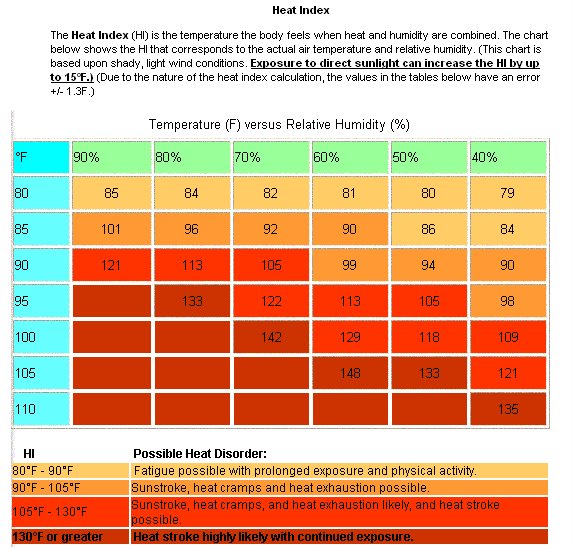
As I was picking the gravel and splinters out of my teeth after I fell off my mountain bike for the third time yesterday, I decided it was time for a water and shade break from the 95o heat. As my body temperature dropped to safe levels, I suddenly remembered that I had neglected to write about the new California heat standard.

Thirteen California workers died last year from heat-related illness. In response, CalOSHA adopted an emergency heat standard last August, and last week, the Cal/OSH Standards Board issued a final standard last week, but the Board missed an opportunity for a truly preventive standard.
The regulation, which has been in place in largely the same form since last August as an emergency standard, requires employers to provide workers access to potable drinking water of at least one quart per hour for the entire shift. Employers providing plumbed water are not bound by the quantity requirement.

The standard also requires employers to provide shade for employees who are either suffering from heat illness or who need a "preventive recovery period." Non-agriculture industries are allowed to provide alternative cooling methods, such as misting machines, but the burden will be on employers to demonstrate that they are as effective as the shade requirement. DOSH Acting Chief Len Welsh told the board that the Division will cite employers if the alternatives are found not to be at least as effective.

The heat illness regulation also requires employers to train workers and supervisors on the risk factors for heat illness, how to avoid it, the employer's procedures for complying with the standard and emergency procedures if an employee becomes ill.
Although the standard is a major advance in workplace safety, many California experts were highly critical of the standard, mainly because it only requires employers to provide shade breaks if the employee requests it, after he or she is already "suffering from heat illness or believing a preventative recovery period is needed."

Fran Schreiberg, co-ordinator of Worksafe (a California coaltion for workplace safety and health protection), protested that workers would be too scared to request breaks. University of California at San Francisco Professor of Medicine Robert Harrison who was a member of the Cal OSHA Standards Board before he was recently replaced by Governor Schwarzenegger, called the standard "a good first step." While on the Board, Harrison also recommended a more comprehensive standard that gives workers rest breaks before symptoms occur. "If we rely on workers to report their symptoms it may be too late," according to Harrison.

WorkSafe also argued that shade should have been made available during preventative recovery periods, meal periods, and during other rest periods the employer provides, and that breaks should be a minimum be for 10 minutes, instead of 5 minutes that the standard requires. Finally, WorkSafe advocated for written training and emergency plans "so that there is a clear understanding of what the employer is doing."

Harrison said that now that the standard has been approved without giving workers rest breaks before symptoms occur, it is even more important that employees and employers receive training, that the rule be enforced and that the results are tracked in order to determine whether or not the new standard works to prevent serious heat-related illness and deaths. Schreiberg also doubts that Cal OSHA has the resources and staff necessary to enforce the standard.

More information on the hazards of heat can be found here:


Related Articles

Smithfield Packing: Walking Into The Pit Of Hell

New York Times reporter Bob Herbert returns with a second column on the plight of workers at the Smithfield Packing Company in Tar Heel, North Carolina and the illegal fight the company has waged against the union trying to organize workers at the plant. As no one but paying Times Select readers can read the article online, I'll quote extensively.

Plant worker describe for Herbert what it's like to work at the plant:
Life inside the Smithfield plant can border on the otherworldly. To get a sense of what conditions are like on the killing floor, where 32,000 hogs are slaughtered each day, listen to the comments of a former Smithfield worker, Edward Morrison, whose job required him to flip 200- and 300-pound hog carcasses, hour after hour:

"Going to work on the kill floor was like walking into the pit of hell.They have these fire chambers, big fires going, and this fierce boiling water solution. That's all part of the process that the carcasses have to go through after they're killed. It's so hot in there. And it's dark and noisy, with the
supervisors screaming, and that de-hair machine is so loud. Some people can't take it.

"I would go home at night and my body would be all locked up because I was dehydrated. All your fluids would just sweat out of you on your shift. I don't think the company cared. Their thing was just get that hog out the door by any means necessary."
Despite conditions at the plant, the United Food and Commercial workers union has been unable to organize the 5500 workers are the plant, not because of lack of support, but because of Smithfield's illegal actions that prevented a fair election.
A vast majority of the workers at Smithfield are Latino or black. The union has circulated the comments of Ronnie Ann Simmons, who worked at Smithfield when the 1997 vote was held. "It was ugly," she said. "Supervisors yelling: 'Hit this nigger! Hit this nigger! They don't need to vote.' Police was everywhere."

The board and the courts determined that Smithfield had been guilty of myriad "egregious" violations of federal labor law. The company was ordered to cease its interference with the union's organizing effort and to reinstate workers that the courts found had been illegally fired because of their union activities.

Rather than obey the directives of the board and the courts, Smithfield has tied the matter up on appeals that have lasted for years.
Herbert reports, however, that Smithfield is showing signs of changing its evil ways. It has given workers a raise, decided not to appeal the court's decision, and promised to fully comply with the orders of the court and the NLRB.

Given Smithfield's history, the union, however, remains skeptical, fear more illegal tactics and another lenghty court battle. According to the UFCW's Smithfield organizing director, Gene Bruskin
"What we are fighting for," he said, "is for them to recognize that they've got to talk to the workers and the union and work out a process that doesn't involve intimidation and interference."
The company promises to be good. Herbert says "We'll see," but the union doesn't want to take its chances with the possibility of yet another tainted eletion. Instead, the union is putting together a coalition of churches, civil rights groups and colleges students to press the company for neutrality in the unionization fight. As Herbert says, "We'll see..."

More information on UFCW's organizing campaign at Smithfield can be found here.

Related Articles

Sunday, June 18, 2006

Mine Attorney: Mining Deaths Cause Political, P.R. Problems

A mine industry attorney, Mark Savit of Patton Boggs, is really, really upset about the coal mine safety crisis sweeping the country, according to a speech he gave recently to the Elko Mine Expo in Elko, Nevada. Not because miners are being killed, necessarily, but because of all the political problems the fatalities are causing mine owners
"MSHA, for political reasons, can no longer give us a break," he declared. Savit noted that three separate federal investigations of the Mine Health Safety Administration (MSHA) are currently underway by the Inspector General in the U.S. Department of Labor, the General Accounting Office, and the Department of Justice.

Meanwhile, in the Sago case, MSHA had issued citations but the mine had not corrected all the conditions, according to Savit. As a result of the disaster, he predicted that "MSHA will be unlikely to extend abatement periods." (emphasis added)
One mine safety expert wrote me that she wasn't aware that MSHA, under the law, was allowed to give mine owners a break to being with!

Not only will MSHA not be able to give mine owners a break any more, but all of these inconvenient deaths also mean that "The industry will also have a harder time convincing MSHA that any new laws enacted by Congress or MSHA regulations are unreasonable, he added."

Yeah, I'd guess so.

And the Sago deaths, along with the initial reports that the miners were alive, was a complete public relations disaster!
Savit asserted that the misinformation originally disseminated that the Sago miners had survived the disaster proved to be a major mistake that hurt the credibility of mining as an industry, which is already suffering from perceptions that mining destroys the environment, and is dirty and unsafe. Savit claimed that erroneous Sago communications created a public, media and political backlash of "huge anti-mining sentiment" that takes even more money "out of the pocketbook and punishes them [mining companies] more."

He urged miners to "redouble our efforts to marshal the good information" about mining's overall positive safety track record. "Our response at this moment will govern how we are treated for the next 10 to 15 years by MSHA," Savitt concluded.
Oy, such a headache!

Abramoff-DeLay Mariana Islands Sweatshop Connection

NPR had an excellent story Saturday morning on the the Abramoff-DeLay-Mariana Islands Connection: how Jack Abramoff and Tom Delay managed to head off any serious effort to address sweatshops in the Mariana Islands, where workers were kept prisioner, but manufactuers could label their products "Made in America."

You can listen to it here.

My favorite quote (taken from an ABC 20-20 investigation) is from a speech that DeLay gave to sweatshop owners:
You are a shining light for what is happening in the Republican party and you represent everything that is good about what we are trying to do in America in leading the world in the free market system.
DeLay went on to ensure that the House would never consider legislation dealin gwith abuses in the Mariana's despite a House bill with 228 co-sponsors and a similar bill that had passed the Senate.

MSHA Appointees Failed to See The Future

Remember a long time ago, in another era, when no one paid much attention to what was happening in American coal mines, when so few miners were killed in the workplace that the media didn't even report them, and so few people had ever heard of the Mine Safety and Health Administration that you could fill it with industry hacks who knew little about how to make a coal mine safe, and no one would even notice?

In case you're having trouble remembering, a kind reader has sent me a time capsule from those long-forgotten days. It's a copy of the Society Review: A newsletter devoted to helping the world become a safer place to work, published by the International Society of Mine Safety Professionals, in Fall 2005.

The issues highighted articles by Dave Lauriski, who had recently resigned as head of MSHA, and MSHA Deputy Assistant Secretary, John Correll, who is currently a very controversial nominee to head the Department of Interior's Office of Surface Mining. Listening to these learned professionals discuss the state of mine safety in late 2005 is like listening to the captain of the Titanic boast of how his ship is unsinkable as it left Southampton in the Spring of 1912.

How's MSHA doing?

Lauriski:
People have to stop talking about rates. “Whenever we have a rate, we’re basically saying it’s OK for people to get hurt.” Five years ago, who would have thought only 5 coal miners would lose their lives in the first 5 months of 2005? “That’s an incredible improvement. But it’s not enough.
Correll:
Mining fatalities have dropped 40 percent in the past four years. Fatalities are on course for a 50 percent reduction in five years.

The injury decline, although not as steep, is in decline.

“We think that’s because we’re working together,” said John Correll, MSHA deputy assistant secretary. “We’ve developed a culture and collaboration. We’ve walked away from a culture of confrontation. MSHA and the industry are on the same road to ZERO accidents.
And to what do we owe this great record?

Lauriski:
“Some people say it’s not about disciplining people,” Dave said. “Well, by golly, sometimes it is. Maybe that discipline will save somebody’s life. If you want to have ZERO, you have to have ZERO tolerance.”
Correll
Now the focus incorporates the human aspects of safety and health. “The vast majority of accidents we investigate deal with behavior,” John said. “I’m not talking about blame. I’m not talking about disciplinary action. I’m talking about why people do the things they do.”
Yeah, if only those miners at Sago -- and the other 21 who have been killed this year -- had been punished more, they'd probably be alive today.

MSHA Sues Massey Energy For Withholding Information

Massey Energy, one of the largest mining companies in the country, and owner of the Aracoma mine that killed two workers in a mine fire shortly after the Sago disaster, is not playing nicely with others. On Friday, the Mine Safety and Health Administration filed a lawsuit against Massey.
The civil suit, filed in a Federal District Court in West Virginia, describes a "broad refusal" by the company, Massey Energy, to turn over documents concerning management authority, ventilation, previous fires, construction projects and other matters at the Aracoma mine near Melville, W.Va.

"This is the first time the Mine Safety and Health Administration has been faced with a broad refusal by a mine operator to provide relevant documents in an investigation and, subsequently, the first time that this kind of civil action against a mine operator has been necessary," said David G. Dye, the agency's acting administrator. "The goal of a mine accident investigation is to determine the cause of the accident and whether the mine operator was complying with the law."
Some observers believe that MSHA has created the problem itself:
Tony Oppegard, a former top official with the Mine Safety and Health Administration and a former prosecutor of mine-safety violations in Kentucky, added that the bigger problem was that the agency had so far chosen to keep its investigation into the Aracoma fire private and voluntary.

"Rather than convening a public hearing which would grant them power to issue subpoenas," Mr. Oppegard said, "they have opted to conduct this in voluntary fashion, and therefore they are struggling to force the company to cooperate."
Massey has an "interesting" history in the workplace safety and environment area. First, there's the case of Jack Spadaro, former superintendent of MSHA's National Mine Health and Safety Academy in Beckley, W.Va -- and whistleblower -- who was fired by MSHA political appointees in retaliation for uncovering of the fact that Martin County Coal (owned by Massey Energy) knew about problems that eventually resulted in a massive toxic coal slurry spill -- "the worst environmental catastrophe in the history of the Eastern United States," according to the Environmental Protection Agency.

Last October, the Appalachian News Express released a memo from Massey Energy president Don Blankenship that told all of the company's deep mine superintendents to focus only on coal production:
If any of you have been asked by your group presidents, your supervisors, engineers or anyone else to do anything other than run coal (i.e. - build overcasts, do construction jobs, or whatever) you need to ignore them and run coal. This memo is necessary only because we seem not to understand that the coal pays the bills.
A week later Massey sent out another memo saying "nevermind," safety is really the first priority.

And finally, Massey is the company that employed Richard Stickler, President Bush's nominee to head MSHA. Stickler's nomination is in deep trouble in the Senate.

More mine safety stories here.

Saturday, June 17, 2006

Bad Boss? Win A Vacation. You Need It

Do you have a bad boss? A really bad boss. Well, the AFL-CIO's Working America is holding a "My Bad Boss Contest, " a chance for workers to speak out about the nighmares they face on the job every day. Share them a story about your nightmare boss, and you could win a week-long getaway or other exciting prizes. Winner's are determined by your votes.

Just go to the Bad Boss website and follow the directions. The contest just started on Wednesday, and there are already lots of amazing stories. Not too many health and safety stories, though, so I'm sure you all can contribute some "interesting" experiences.

Here's one interesting example from Rob, in Pennsylvania:
I worked as a roofer's helper. On top of working 10-12 hrs. a day, in 130 degree weather, we got yelled at all day. It wasn't like a friendly come on', hurry up yell, it was we'll fire you and throw you of this building's roof yell. Every job we did involved a zero safety tolerance I.e. no ropes, monitors, harness, etc. One morning we were tearing off an old roof and I slipped on some trash. I had threw my knee out and I went too the boss about it. They thought I wanted to go home early. He stated," get the 'heck' off my jobsite. If I ever see you again at this company, I will beat the tar out of you." So needless to say I was out of work for a couple months without pay, lost my girlfriend and also got evicted from where we lived.
Come on, let your inner Dilbert shine through.

Miami Janitors Overwhelmingly Choose The Union

Well here's some good news on the labor scene. Turns out that when workers are given the simple right to organize a union without intimidation or unfair elections, they overwhelmingly choos to join the union.

Remember those janitors at the university of Miami who struck for two months, including a hunger strike by some of the workers, finally winning an agreement with their employer, Unicco Services, to use card check recognition? Well, they voted overwhelmingly to join the union.
The Service Employees International Union won the right to represent more than 400 janitors at the University of Miami on Thursday, creating the first union presence at the private school.

"We won today!," an ebullient janitor, Maritza Paz, told a crowd of about 100 who gathered for a news conference on campus to announce results of the election.

As part of a previously-agreed upon election process, a neutral third party, the American Arbitration Association, verified that the union had won more than 60 percent support via signed worker pledge cards.

The official count stopped after the 60 percent threshold was reached, but union officials said they had more than 70 percent support in the card check process.
The campaign was also notable, as is the hotel worker campaign that UNITE HERE is running, because it stressed the poor safety and health conditions that the Unicco employees were forced to work under.

And as anti-union employers fear, the University of Miami victory is having ripple effects:

Union officials have now set their sights on organizing not just other university workers, including Unicco employees who work at Nova Southeastern University, but also Unicco janitors who clean malls like the Shops at Sunset Place.

After the news conference, workers delivered a letter to Sunset Place mall management to ask that they hire a responsible contractor who will provide higher wages and health insurance to its workers.

''It's been incredibly inspirational how you have UM workers working with janitors from the malls, security guards from the malls, janitors from Nova, and they're all talking together, working together, showing up together.,'' said SEIU spokeswoman Renee Asher.

Friday, June 16, 2006

Chemical Plant Security Bill Goes From Bad To Worse

After voting down a requirement that high risk chemical facilities use inherently safer technologies on Wednesday, the Senate Homeland Security and Governmental Affairs Committee proceeded to make the bill even worse on Thursday before unanimously approving it and sending it to the Senate floor for a final vote.

The committee voted to approve an amendment by George Voinovich (R-OH) that would prohibit Homeland Security from disclosing to the public when chemical plants are not in compliance with security requirements, and restricts the public's ability to sue chemical companies for alleged violations of the act.

Senator Joseph Lieberman (D-CT) led the opposition to Voinovich's amendments:
Lieberman called the provisions "unwise and unfair" and said he would try to eliminate the amendment when the bill reaches the Senate floor. "People who live in the shadow of chemical plants should have the right to know how safe those plants are, and they should be allowed to challenge DHS actions, or inactions, if they believe their safety is in jeopardy," Lieberman argued. Proponents said the measures would keep sensitive information out of the hands of terrorists.
Other amendments makes it harder to bring criminal charges against plants that are not in compliance:
The amendment was altered during the markup to stipulate that chemical companies must knowingly and willfully violate their security plans in order to face criminal penalties. Another change to the amendment gives Homeland Security the ability to waive annual inspections of chemical facilities if they are found to be in compliance with their security plans for five consecutive years.
Environmentalists were not happy with the result:
"Among the bill's most serious failures is the refusal to require the elimination of unnecessary risks with proven safer and cost-effective technologies," said Greenpeace's Rick Hind in a statement. "Guards, guns and gates alone will not protect millions of Americans currently at risk."
The chemical industry was mostly pleased, as might be expected. According to American Chemistry Council President, Jack Gerard,
ACC is encouraged by the direction of the debate today in which the panel clarified the bill’s essential focus on security by limiting government’s ability to mandate chemistry processes. And, we applaud the panel for strengthening the protection of sensitive security information.
The only fly in the chemical industry's ointment was the committee's failure to approve language that would have pre-empted stronger state laws. According to Gerard:
However we are still concerned the bill allows a potential patchwork of discordant and confusing state-level regulations which will weaken security. Chemical security is a national issue that requires a uniform national response which is why we have called for federal preemption. We will continue to work with Congress to ensure federal preemption is included in the bill. The 900,000 people who work in the chemical industry, the communities where they live and work, and the millions of Americans who rely on our products, deserve no less.”
New Jersey has passed its own chemical plant security legislation that requires chemical plants using the most hazardous chemical are required to review the potential for adopting inherently safer technologies. The chemical industry is scared to death that more states may decide that the chemical companies can't always be trusted to ensure the safety of the community.

Thursday, June 15, 2006

BP: Nothing To See Here Folks. Just Move Along.

The CEO of oil giant BP, Lord John Browne, assures us all that the little problems that caused the explosion that killed 15 workers and injured 170 at BP's Texas City refinery last year were just confined to that one plant alone, and there are no other problems in any of BP's four other North American refineries.The US Justice Department is also considering criminal indictments of BP for the Texas City explosion.
"We had a broken safety record at Texas City," Browne told Reuters on the sidelines of a meeting where BP presented its annual energy statistical review at the National Press Club.

"After a lot of improvement we're learning from the accident at Texas City and I believe we are applying that learning to our refineries in the United States and worldwide in a very rapid way," he said.

When asked if safety problems were spread through its other refineries in the United States, he said, "No. This was a lesson that was specific."
This would probably be news to the Chemical Safety Board which issued an urgent recommendation to BP North America last August to commission an independent panel that would review a range of safety management and culture issues stemming from the catastrophic March 23 Texas City explosion, as well as a number of other incidents at BP facilities in the United States. Former Secretary of State James Baker is heading that panel, which has not yet released its findings.

Lord Browne's news would probably also come as a surprise to OSHA, which fined the company $2.4 million for unsafe operations at the company's Oregon, Ohio refinery last April.

And finally, there are probably a number of fish, carabou, polar bears and Eskimos in Alaska who are a bit flummoxed by Lord Browne's reassurances, considering a little oil spill last March, courtesy of BP:
The spill of some 267,000 gallons (1m litres) discovered at Prudhoe Bay field, is the largest ever on Alaska's North Slope region.

BP Alaska, which operates the pipeline, has denied claims it failed to maintain it properly.

Such an investigation by a grand jury could lead to criminal charges and ultimately fines and prison sentences.

The spill was detected on 2 March and plugged. Local environmentalists have described it as "a catastrophe".

BP said "management failures" and "employee mistakes" were responsible.
Nope. Nothing to see here. Everything's under control.

Truth To Power: Mine Widow Tells President To Can Stickler

President Bush signed the first major overhaul in mine safety law since 1977 today. The ceremony was attended by , the only survivor of the Sago mine disaster, along with relatives of the victims of this year's mine accidents.

In addition to the usual blah, blah, ("We make this promise to American miners and their families: We'll do everything possible to prevent mine accidents and make sure you're able to return safely to your loved ones," Bush said), the president got a bit more than he had figured on:

Deborah Hamner, whose husband, George Hamner, was killed at Sago, told the president that she was honored to attend the ceremony but opposed his choice to head the Mine Safety and Health Administration.

Bush's nominee, Richard Stickler, faces staunch opposition from Senate Democrats and miners' advocates. They say he has spent too many years as a coal industry executive.

Bush defended his pick during the speech before the bill signing. "He was a miner, mine shift foreman, a superintendent, and a manager, and the Senate needs to confirm Richard Stickler to this key position," Bush said.

The Senate disagreed, forcing Majority Leader Frist to cancel a vote Tuesday that would have shut off debate on Stickler's nomination, because Republicans didn't have enough votes to overcome a filibuster by West Virginia Senator Robert Byrd and move the nomination foward.

The daughter of a Sago victim also expressed some frustration with the limited achievements of the mine safety bill itself.
Peggy Cohen, who lost her father, Fred Ware, at Sago, said she hoped lawmakers would continue to strengthen mine safety laws. "It's a start," she said of the new law. "Let's hope it's not the end."
Although the bill passed the Senate unanimously and passed the House overwhelmingly, there was some frustration that the amendments offered by California Congressman George Miller were not seriously considered. Miller had pressed for four amendments that would have strengthened the bill -- including supplying 48 hours of air for trapped miners -- but the original bill was strongly supported by Senate Democrats, the United Mineworkers Union, the AFL-CIO and the National Mining Association.

Where The Workers Come Last

New York Times columnist Bob Herbert writes a vivid article about working conditions at the anti-union hog processor Smithfield Packing Company. (I'm quoting extensively from the column because you can't read it online unless you're a paying member of Times Select.)

You can learn a lot at Smithfield. It's a case study in both the butchering of hogs (some 32,000 are slaughtered there each day) and the systematic exploitation of vulnerable workers. More than 5,500 men and women work at Smithfield, most of them Latino or black, and nearly all of them undereducated and poor.

The big issue at Smithfield is not necessarily money. Workers are drawn there from all over the region, sometimes traveling in crowded vans for two hours or more each day, because the starting pay — until recently, $8 and change an hour — is higher than the pay at most other jobs available to them.

But the work is often brutal beyond imagining. Company officials will tell you everything is fine, but serious injuries abound, and the company has used illegal and, at times, violent tactics over the course of a dozen years to keep the workers from joining a union that would give them a modicum of protection and dignity.

"It was depressing inside there," said Edward Morrison, who spent hour after hour flipping bloody hog carcasses on the kill floor, until he was injured last fall after just a few months on the job. "You have to work fast because that machine is shooting those hogs out at you constantly. You can end up with all this blood dripping down on you, all these feces and stuff just hanging off of you. It's a terrible environment.

"We've had guys walk off after the first break and never return."

Mr. Morrison's comments were echoed by a young man who was with a group of Smithfield workers waiting for a van to pick them up at a gas station in Dillon, S.C., nearly 50 miles from Tar Heel. "The line do move fast," the young man said, "and people do get hurt. You can hear 'em hollering when they're on their way to the clinic."

Workers are cut by the flashing, slashing knives that slice the meat from the bones. They are hurt sliding and falling on floors and stairs that are slick with blood, guts and a variety of fluids. They suffer repetitive motion injuries.

The processing line on the kill floor moves hogs past the workers at the dizzying rate of one every three or four seconds.

And Smithfield is doing everything it can to make sure that workers don't acquire the power to change their working conditions:

Union representation would make a big difference for Smithfield workers. The United Food and Commercial Workers Union has been trying to organize the plant since the mid-1990's. Smithfield has responded with tactics that have ranged from the sleazy to the reprehensible.

After an exhaustive investigation, a judge found that the company had threatened to shut down the entire plant if the workers dared to organize, and had warned Latino workers that immigration authorities would be alerted if they voted for a union.

The union lost votes to organize the plant in 1994 and 1997, but the results of those elections were thrown out by the National Labor Relations Board after the judge found that Smithfield had prevented the union from holding fair elections. The judge said the company had engaged in myriad "egregious" violations of federal labor law, including threatening, intimidating and firing workers involved in the organizing effort, and beating up a worker "for engaging in union activities."

Rather than obey the directives of the board and subsequent court decisions, the company has tied the matter up on appeals that have lasted for years. A U.S. Court of Appeals ruling just last month referred to "the intense and widespread coercion prevalent at the Tar Heel facility."


Related Articles

Wednesday, June 14, 2006

Company President Convicted of Homicide In Deaths of Two Workers

Occasionally, all too rarely, justice is done; those responsible for the preventable deaths of workers receive appropriate punishment.

The former president of a water and sewer company, Brent Weidman, has been found guilty by a jury of two counts of negligent homicide and two counts of endangerment in the deaths in 2001 of 26-year-old James Gamble and 62-year-old Gary Lanser, who were killed in a confined space incident while working on an underground sewage tank. Last year, Arizona prosecutors Christina Fitzpatrick and Mark Horlings convinced a jury to find the Far West Water and Sewer Company guilty on five of the six felony charges filed against it. In January, a Yuma judge imposed $1.77 million in criminal fines against the company.

The jury acquitted Weidman of a charge of aggravated assault for the injury of a worker who survived the incident, but has permanent lung damage.

This tragedy was unfortunately typical of confined space incidents, where one of the workers killed was the attempted rescuer and two other rescuers narrowly escaped death:

Gamble entered the tank to remove a plug that was blocking a line into the tank and died after being overwhelmed by hydrogen sulfide fumes when a pump that ran raw sewage into the tank from a different line was turned on. Lanser died trying to save Gamble,

Enclosed areas or “confined spaces” in sewers and wastewater treatment plants (or anywhere where there is rotting organic material) are notorious for accumulations of hydrogen sulfide which can kill workers and their rescuers. Confined spaces can also develop life-threatening oxygen deficiencies and generate explosive methane gas. For this reason, OSHA has a detailed Confined Space standard which requires the air to be monitored, a means to safely rescue workers if they are overcome by fumes, and extensive training.

According to the prosecutors on the case, the violations were so blatant, and it was so obvious that the workers had no idea of the danger inherent in confined spaces, that a criminal prosecution was completely appropriate. The air in the tank had not been tested during the day of the incident, the workers weren’t properly trained and the required safety and rescue procedures weren’t followed.

The families of the dead workers were pleased with the jury's verdict:
Ed Thrasher, Gamble’s stepfather, who smiled as the guilty verdicts were read aloud in court, was also pleased with the jury’s decision.

“I thought the jury did a good job weighing all the evidence and coming back with the right decision,” said Thrasher, who attended every day of the 22-day trial. “It’s been a long five years.”

Both [Gamble’s mother, Carol] Borieo and Thrasher added they felt justice had been served and that they hope the jury’s decision will help save other lives as well as make companies take safety more seriously.

***

“Maybe this will make sure the people with the big paychecks, fancy titles and perks will realize they can be held responsible,” Thrasher said. “It’s really shameful when the bottom line is more important than people who work for the company.”
This is but one of thousands of cases every year where clear violations of OSHA standards lead to the preventable deaths of workers. Most employers get away with a relatively small fines (the total OSHA fine in this case was $31, 500), but sometimes aggressive prosecutors can not only punish the killers, but send an important message out to employers nationwide: Workplace killing means jail.

Chemical Plant Security: Win a Few, Lose a Few

There are few important issues that have been more overlooked by the US Congress (and Bush administration than chemical plant security. The Environmental Protection Agency had identified 123 sites where toxic gases released in a terrorist attack could kill or injure more than one million people in or near each plant, as well as 700 other sites where the death and injury toll could reach 100,000. Media reports and government studies have shown how poorly protected this country's chemical plants and refineries are. Yet four and a half years after 9/11, no chemical plant security bill has been seriously considered in the US Congress.

The Senate Homeland Security and Governmental Affairs Committee met today to "mark-up" the Chemical Facility Anti-Terrorism Act of 2005 (S.2145). A "mark-up" is where amendments are considered and a committee vote is taken. The mark-up was not completed today, although amendments considering two major issues: mandating the serious consideration of "inherently safer technologies" and federal pre-emption of state laws were considered and voted on.

To make a long story short, the good guys lost in the "inherently safer technologies" issue, but won on the federal pre-emption issue.

I wrote previously in some detail about the major issues of this legislation. For those of you who are just now tuning in, inherently safer technologies (IST) means simply using safer chemicals, reducing inventories of highly hazardous chemicals where safer substitutes can't be found, reducing hazardous pressures and temperatures where possible, improving inventory control, and reducing or eliminating storage, transportation, handling, disposal and discharge of highly hazardous substances. It's not pie in the sky. Lots of plants have already done it. The idea is that all the guns, guards and gates aren't going to protect chemical plants as effectively as simply reducing the target -- the amount of hazardous chemicals with the potential to do great damage to the surrounding community.

A recent report by the Center for American Progress, Preventing Toxic Terrorism, found that 284 facilities in 47 states have dramatically reduced the danger of a chemical release into nearby communities by switching to less acutely hazardous processes or chemicals or moving to safer locations. Most of the improvements occurred at wastewater treatment plants which switched from treating sewage with deadly chlorine gas to much safer methods using liquid chlorine bleach or ultraviolet light.

Senator Joseph Lieberman and Frank Lautenberg supported an amendment to Collins' bill that would have required chemical facilities deemed by the Homeland Security Department as posing the highest risk to use safer technologies. The proposal failed by a vote of 11 to 5. All the Republicans except for Lincoln Chafee (RI) voted against it. Democrats were more split. The Senators from Dow and Dupont -- Carl Levin (MI) and Tom Carper (DE) -- as did Mark Prior (AK).

Senator Tom Coburn (R-OK) was most outspoken against the proposal:
"I simply don't think it's an appropriate role for government ... to dictate specific industrial processes," Collins said. "We don't have the expertise to do that and we shouldn't do that."

Coburn said the amendment would create a "litigation nightmare" between chemical facilities and the government.

"This reminds me of Soviet-style mandates for how we'll do things," he said. "If this is in the bill, I will do everything I can to make sure this bill never moves."

Collins betrayed her fundamental misunderstanding of the subject, arguing that IST was an environmental issue, somehow unrelated to chemical plant security.

Pryor apparently fell victim to the agricultural chemical industry which strongly opposes IST:
The Agricultural Retailers Association, made up of members such as DuPont Agricultural Products and Cargill Ag Horizons, opposes mandatory use of alternatives to the chemicals.

“Anti-chemical groups have used clean-water laws to file lawsuits or threaten lawsuits against ag businesses and farming operations, and we want to make sure that does not occur with chemical security regulations,” said Richard Gupton, legislative director and counsel of the Agricultural Retailers Association.
But all was not bad news at today's meeting. The committee also defeated a proposed amendment by Ohio Republican George Voinovich that would have prohibited states from passing chemical plant security laws that were different -- or stronger -- than the federal law.

New Jersey recently passed its own law that required chemical plants using the most hazardous chemicals to review their potential for adopting inherently safer technologies.

The pre-emption amendment failed by a 9-7 vote:
Voinovich argued, however, that there should be a single national standard for the chemical industry that pre-empts state and local government authority. He said his amendment would allow state and local authorities to apply to the Homeland Security Department for permission to pass their own regulations.

Regulating chemical plants should be considered a national defense matter, he said, adding that the federal government already has other laws that pre-empt state and local authority. "This is a war type of atmosphere that we're in, so it's within the jurisdiction of the federal government," he said.

Collins led opposition to the amendment. "On balance, I come down on preserving the rights of state and local governments to legislate in this area," she said.
The New York Times felt quite strongly about defeating the pre-emption language, saying that the bill would be "worse than nothing" if it were passed:
A pre-emption provision could wipe away New Jersey's laws, and prevent other states from protecting themselves.

George Voinovich, Republican of Ohio, is taking the lead on pushing pre-emption. It is important that Lincoln Chafee, Republican of Rhode Island, and Mark Pryor, Democrat of Arkansas, who could be the swing votes, resist along with Senator Collins, the committee chairwoman. If the final bill pre-empts state laws, it should be killed or at least be renamed, to make clear what it is: a chemical plant antisecurity bill.
Once it passes out of committee, the bill will be considered on the floor of the Senate. Lieberman says that he plans to re-introduce his IST amendment on the floor. Then it's on to the House of Representatives. Still a long way to go.