Showing posts with label Susan Dudley. Show all posts

Friday, January 12, 2007

Of Foxes, Chickens and Chickencoops

In the continuing spirit of bi-partisanship, President Bush has renominated some of the worst of the worst nominees to head safety, environmental and regulatory agencies.

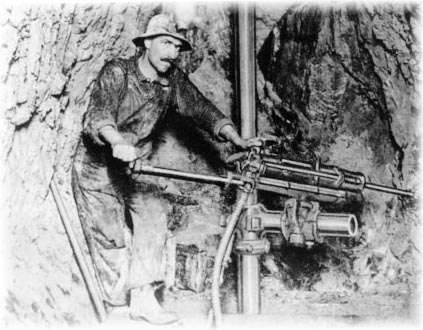
Former coal industry executive Richard Stickler was renominated for the -- hell, I can't even remember how many times the White House has sent him to the Senate (only to have him sent back again.) Stickler received a recess appointement last Fall.

Along with Stickler came the return of former Wal-Mart lawyer Paul DeCamp as wage and hour administrator at Labor. DeCamp has a record urging the weakening of the Fair Labor Standard Act’s (FLSA’s) overtime pay and other protections.

Also returning from the bureacratic dead is right-wing anti-regulatory zealot Susan Dudley, who we've written about here and here.

And then there's former mining industry executive John Correll who was re-nominated as director of the Interior Department’s Office of Mining Reclamation and Enforcement. Correll, you may remember, was involved improper contracting while at MSHA, and was instrumental in the firing of an MSHA whistleblower.

Needless to say, it's highly unlikely that any of these nominations will be confirmed by a Democratic Senate. (They were too controversial to even make it through a Republican Senate.)

But there is one piece of good news for the chickens. Steven Griles, a former mining lobbyist who was appointed Deputy Secretary of the Department of Interior (the number 2 position in the Departmetn) until he resigned in 2005, has apparently been notified by federal prosecutors that he will most likely be indicted for lying about his relationship with the corrupt lobbyist Jack Abramoff. Apparently Abramoff referred to Griles as “our guy” at the Interior Department.

Score one for the chickens.

Wednesday, September 13, 2006

Susan Dudley And Bush's War On Public Safeguards

While the nation and its media are consumed with the 9/11 anniversary, the deterioriating situation in Iraq, Afghanistan and the Middle East, and the upcoming elections, the Bush administration is intensifying its war on workers, citizens and the environment.

Public Citizen and OMB Watch launched a major campaign today designed to scuttle the nomination of anti-regulatory zealot Susan Dudley to be director of the the Office of Information and Regulatory Affairs (OIRA). OIRA is part of the White House Office of Management and Budget that controls the issuance of all protective regulations issued by agencies such as OSHA, and EPA.


In a telephone press conference conducted by Public Citizen, OMB Watch, the Natural Resources Defense Council and the AFL-CIO, the public interest groups outlined why Dudley is unfit to be the nation’s top regulatory czar. Throughout her career, Dudley has consistently fought against government safeguards and advocated a radical, hands-off approach to regulating corporations.

As director of regulatory studies at the industry-funded Mercatus Center, Dudley has sought to strike down countless environmental, health and safety rules. She has opposed such safeguards as the EPA’s attempts to keep arsenic out of drinking water and lower levels of disease-causing smog. She has questioned NHTSA’s life-saving air bag regulations and the Department of Transportation’s hours-of-service rules to keep sleep-deprived truck drivers off the roads. She has championed energy deregulation, which has led to skyrocketing prices and little consumer relief during record-setting heat waves.

“If confirmed as OIRA administrator, Dudley would continue her anti-regulatory agenda from a position with enormous power over federal health, safety and environmental protections,” said Robert Shull, Public Citizen’s deputy director for auto safety and regulatory policy, and a principal author of the report. “She would come to this office with a radical agenda that would destroy the federal government’s ability to protect the public. The public cannot afford to pay that price.”
Dudley was the director of the Regulatory Studies Program at the Mercatus Center, an industry-funded, antiregulatory advocacy organization. Mercatus' funders have included companies with long records of opposing government safeguards such as BP Amoco, Exxon Mobil Corporation, General Motors, JP Morgan Chase, Merrill Lynch, Pfizer, and State Farm Insurance Companies.

But Public Citizen and OMB Watch don't just issue press releases, they also do their homework. The groups released a 68 page report and a collection of fact sheets to support the campaign.

The report dismantles Dudley's arguments piece by piece, particularly the often circular and contradictory reasoning she uses to oppose every regulation she's ever met. For example, Dudley believes that regulations can only be justified to compensate for a "market failure." Other possible regulatory goals, suchas environmental justice, civil rights and fairness are not on her radar screen.

And how do you prove "market failure?"

You don't. If things like automobile safety or ergonomics protections were important, then the public would demand them and companies would supply them. The fact that companies aren't supplying them means the public isn't demanding them. Hence, the market works perfectly and no regulation is needed.

For example, EPA regulation require facilities that work with dangerous chemicals to create risk management plans for use in worst-case scenario disasters. Humbug! says Dudley.
“If there is a public demand for this information, as EPA’s benefit assessment argues, nongovernmental organizations would find value in deriving it. The fact that they don’t suggests that the value of the information to the public is less than the cost of the information. Certainly the public would value receiving a company’s products and services as well, but the quantity and price of those goods and services is determined by the market; the federal government doesn't simply require companies give products away. Information is a good, and like other goods, has associated costs as well as benefits.”
Companies have natural incentives to ensure their workers' safety.For example, ergonomics regulations designed to prevent workers from suffering from musculoskeletal disorders (MSDs):
“OSHA offers no evidence that employers and employees do not have adequate incentives to provide the optimal level of workplace protection against MSD hazards. On the contrary, OSHA provides evidence that (1) MSDs impose significant costs on employers, which should offer ample incentives to reduce their occurrence, (2) employers are, in fact, developing programs and other initiatives to reduce MSDs, and (3) MSDs are declining. Lack of knowledge on the causes of and remedies for MSDs, not lack of motivation, has hindered efforts to reduce MSDs.”
And then there's my personal favorite -- pollution is good for you:
“Due to ozone‘s screening effect on harmful ultraviolet-B radiation, the proposed reduction in ozone levels would increase malignant and nonmelanoma skin cancers and cataracts, as well as other UV-B-related health-risks. This doesn’t mean that more ozone is always better. It does mean that if the EPA really cares about public health it should take these trade-offs into account.”

I could go on and on, but then I'd rob you of the pleasure of reading the report yourselves.

But when you get done tsk-tsking and chuckling and shaking your head, remember that the Bush administration is dead serious about appointing this person to control, limit and abolish the safeguards that protect us and our children from the otherwise unsafe products and uncontrolled hazards in our workplaces, air, water, automobiles and anywhere else that corporate America can make a profit by neglecting the harmful effects of its products.

Related Stories

Thursday, August 24, 2006

Bush's Nomination For Regulatory Chief Is A Deadly Dud


Disaster in Iraq, war in the Middle East, Iranian nukes, anniversaries of 9/11 and Katrina, and on and on.

Meanwhile, back at home, virtually unnoticed, the Bush administration continues its deadly attacks on worker health.

Celeste Monforton, a senior research associate with the Project on Scientific Knowledge and Public Policy at George Washington University School of Public Health (and occasional Confined Space guest blogger), explains in the Louisville Courier Journal why President Bush's recent nomination of Susan Dudley to head the Office of Management and Budget's Office of Information and Regulatory Affairs (OIRA may end up killing workers.

As we've written before (here and here), Dudley currently directs the Mercatus Center's Regulatory Studies Program. According to Frank O'Donnell of Clean Air Watch, Dudley is "a true anti-regulatory zealot"-- exactly the type of person who would be a disaster as head of the agency that oversees the administration's regulatory policies.

Monforton focuses on Dudley's opinions on the deadly lung disease, silicosis and shows thatthat Dudley is simply
following the script first popularized many decades ago by the tobacco industry: When faced with regulation to protect the public health, always raise doubt and manufacture uncertainty about the scientific evidence.
She falsely claims that scientists don't really know how silica dust causes the disease:

This is not true. The cause of lung damage is exposure to respirable crystalline silica. Despite the authors' assertions, physicians, toxicologists and other experts have known for nearly a century that microscopic particles of SiO{-2} (silicon dioxide, or quartz), when inhaled, can penetrate deep into the lung's alveoli. The body's natural defense mechanisms attack the tiny silica particle, thereby creating scar tissue -- and with too much exposure and too much scar tissue, silicosis develops.

When materials containing SiO{-2}, such as cement, bricks or rock are drilled, sawed or otherwise disrupted and create dust, or when crystalline silica sand is used for abrasive blasting or in foundry processes, workers are at risk of breathing respirable particles containing quartz. This is all well-known, indisputable science.

She also claims that we don't know which types of silica are dangerous that the the evidence comes from limited sources.

Again,
Not true. The American Thoracic Society's 1997 official statement on the health effects of exposure to respirable crystalline silica includes more than 140 references, and the National Institute for Occupational Safety and Health's health hazard review lists nearly 500 scientific papers and documents to support its findings. Claims of scientific uncertainty by two law professors do not make it so.

Dudley also asserts in her article that epidemiological studies of silica-exposed workers may not be relevant because the studied workers "were exposed to silica of particular types, which may or may not be representative of silica found elsewhere."

Again, this tactic follows the uncertainty script, and, again, it is not true: SiO{-2} is SiO{-2}.
What would Dudley's appointment mean for workers, especially coal miners?
If confirmed to the White House post, is this how Dudley would interpret scientific evidence, even such settled science as the cause of silicosis or coal workers' pneumoconiosis?

Following her logic, might she declare that the coal mine dust from the Upper Harlan seam and the Pocahontas seam are substantially different? If so, would she require MSHA to develop "coal-seam specific" regulations before miners could be protected from the deadly dust?

Sounds ludicrous, but stranger things have happened when ill-qualified idealogues are appointed to decision-making posts for the sole purpose of delaying or stopping all regulations.
Dudley's nomination is yet another confirmation of the importance of taking back Congress this November. The Senate has to confirm the nomination of high-level Bush appointments like Dudley, and there is a critical need for Congress to get back into the oversight business -- to hold hearings that will reveal the damage this administration is causing to American workers. And the only way that will happen is if the Democrats take back at least one House of Congress.

So get out there and campaign. People's lungs and lives may depend on it.

Related Articles

Wednesday, July 12, 2006

Bush To Appoint Anti-Regulatory Zealot To Run White House Regulatory Affairs Office

The Washington Post warns today of a possible Bush appointment that should send chills down the spines of anyone concerned about worker safety, the environment or consumer protection.

The job is director of the Office of Management and Budget's Office of Information and Regulatory Affairs, which approves all environmental, health and safety and other government regulations. Her name is Susan Dudley, director of the regulatory studies program at George Mason University's anti-regulatory Mercatus Center. According to Frank O'Donnell of Clean Air Watch, Dudley is "a true anti-regulatory zealot."

The Mercatus Center is notorious for far-fetched justifications to kill protective regulations. They are fond of exagerating the cost of regulations and attempting to incite anti-government rebellion by describing the amount of space that the Code of Federal Regulations takes up. (20 feet of shelf space, according to Dudley.)

I first wrote about a crazy Mercatus study that found that OSHA inspections kill workers.

Huh? You say. This is how it works:
When the firm increases its efforts because of OSHA enforcement, the worker rationally substitutes away from his own efforts. That is, if the firm is doing more to protect the worker, the worker has less incentive to protect himself. (emphases added)
I attempted to imagine how this works....

OSHA comes out to inspect a workplace and cites the employer after finding safety problems. So far, so good. But according to Mercatus,
The typical "rational" worker, figuring that OSHA has forced his employer to be more responsible, now "has less incentive to protect himself." No sooner does the employer finally get serious about safety then workers suddenly start jumping down into unshored trenches, crawling down into unmonitored confined spaces, sticking themselves with HIV-contaminated needles and climbing tall buildings without fall protection. "Respirators? We don't need no stinking respirators!"
That's Mercatus.

Like the rest of Mercatus, Dudley is known for conjuring up all kinds of reason why protective regulations are killing our country. She opposed OSHA the deceased ergonomics standard on the grounds that all employers really needed was more information and they would automatically do the right thing. Furthermore, OSHA's ergonomics standard would "discourage individual responsibility and hinder innovation into creative solutions."

Dudley also directed the Bush Administration's transition team for the Assistant Secretary designate of the Office of Environment, Safety, and Health at the Department of Energy. That would be former Assistant Secretary Bev Cook, who did such a good job trying to torpedo the Energy Employees Occupational Illness Compensation Program (EEOICPA) that Republican Senators Jim Bunning and others had her fired. (The program seeks to compensate workers for the illnesses caused by their work on the nation's Cold War nuclear weapons complex. ) The Government Accountability Office recently found that the office, under Cooks supervision, had squandered 30 percent of the $92 million in total program funds in improper and questionable payments.

That DOE office, which is responsible for the health and safety of DOE contractors' employees, is the same program that current Secretary of Energy Samuel Bodman is trying to abolish.

Dudley is also an advocate of incorporating "sunset" provisions into all regulations, which would mean they's be eliminated unless Congress votes to continue them. Goodbye OSHA, EPA, FDA.

Mecatus, meanwhile, is well known as a ""wholly-owned subsidiary of Koch industries and other corporate interests," as the Post article describes.
Koch (pronounced "coke") has given many millions to Mercatus, but other companies also have contributed a bit as well.

Over the years, those contributors have included Fannie Mae, Microsoft, Pfizer and Enron, which have donated about $50,000, plus $10,000 from the late Kenneth L. Lay and his wife's foundation.

According to the Center for Public Integrity, Koch money controls or strongly influences a number of leading conservative institutions, including the Cato Institute (co-founded by Charles Koch), the Tax Foundation, the Institute for Justice, the Federalist Society, and Citizens for a Sound Economy, which was founded in 1984 by Charles and David H. Koch and Koch executive Richard Fink .
What did Mercatus do for its corporate benefactors?
In the early days of President Bush's first term, when the OMB asked for public input on which regulations should be revised or killed, Mercatus submitted 44 of the 71 proposals the OMB received. And the OMB approved 15 of them, the National Journal reported at the time.

These recommendations critiqued onerous regulations such as a proposed Interior Department rule prohibiting snowmobiles in Rocky Mountain National Park, a Transportation Department rule limiting truckers' hours behind the wheel, and that silly EPA rule limiting the amount of arsenic in drinking water. (Hey! You don't want it? Don't drink it.)
If it's true, it should make for some interesting election-year Senate hearings.

Update: I missed this last week, but here's more on Dudley at Daily Kos.