Monday, December 11, 2006

BP's Lord John Browne: Guilty Of Shameful Neglect

Poor Lord John Browne. You gotta feel sorry for him. Here he is "peer of the realm, a captain of industry, a lover of fine cigars and a wealthy man" but, as the Guardian says, his biographers will directly associate him with
one of the most shameful cases of neglect in the history of British business -
the Texas City refinery disaster.
All because 15 workers were killed and 180 injured on his watch.

And, according to the Guardian, "on his watch" is more than a figurative term. According to company documents, Lord Browne was specifically monitoring safety conditions at the BP refinery before the explosion occurred. According to a message written by Texas City's learning and development manager, Dennis Link,
"We have 18 BP refineries in the world. Lord Browne looks at monthly data for 17 of 18 refineries all together. He looks at TCR [Texas City refinery] data separately each and every month!
This was one of the documents released as a result of a settlement with BP by Eva Rowe, both of whose parents were killed in the Texas City explosion.

The Guardian doesn't have many nice things to say about BP or Browne:
Accidents can happen at the best of companies. But documents prised out of BP by bereaved families' lawyers show just how ashamed we should be of Britain's largest enterprise.

There had been 23 deaths at the plant in 30 years. The local fire brigade says there were 50 infernoes a year - one a week.

The blowdown drum that exploded had been involved in eight previous scares.

The refinery's director, Don Parus, felt the place was patched up with "Band Aids and super glue". He told a confidential safety commission before the accident that "killing somebody every 18 months seems to be acceptable at this site" and wondered why his staff turned up for work: "Why would people take the risk, based on the risk of not going home?"

The US Chemical Safety Board has accused BP of a "cheque book mentality" towards safety. Texas City made profits for the company of nearly $1bn annually. Yet BP ordered local managers to slash costs by 25%.

The training budget at Texas City was reduced virtually to nothing. There was no money for a new emergency response system, which BP's fire manager insisted was needed.
The Guardian seems to think that Browne's £3.3m Chief Executive salary last year means that he has "a duty of care to his employees."

I'd say he should have the same duty if he were only paid 1/3 that amout.

December 11, 1971: Today In Workplace Safety History

December 11, 1971: A methane gas explosion kills 22 workers building a water tunnel at Detroit Water and Sewerage's Lake Huron Water Plant in Fort Gratiot. More here

At approximately 3:11 p.m. on Saturday, December 11, 1971, 21 men died when an explosion ripped through the six-mile-long tunnel under construction beneath Lake Huron in Fort Gratiot Township, outside Port Huron. Another man who was bought out injured, but alive, died 10 months later. The tunnel was intended for use by the water treatment plant then being built by the Detroit Metropolitan Water Services, the name by which DWSD was known at the time.
UPDATE: More about this year's commemoration here.

Sunday, December 10, 2006

Fighting For Freedom: Iranian Couple Still Trying To Get Their Jobs Back At NIOSH

Sometimes you have to wonder if the terrorists have won.

I reported two years ago (here and here) about the firing of Ali and Shahla Afshari from their jobs at the National Institute For Occupational Safety and Health (NIOSH) in Morgantown, WV, because they they “failed to pass a background check” that they didn't even know was happening. Nor have they ever been told of the reasons that they failed. The Afshari's are Iranian natives who had been in the country 18 years when they were fired. They had passed background checks when they were hired in 1996 and in 1997.

And what was the high security work they did at NIOSH? Ali built equipment to study the health effects of welding and asphalt fumes and hand and arm vibrations and Shala worked in a laboratory that researched sensitivity to chemicals in the work place, such as allergic reactions to latex gloves.

Two years later, the Charleston Gazette follows up on the story. The Afshari's still have not learned why they were fired, but they have learned a few new things thanks to a lawsuit they filed. For example,
  • A government official has recanted her sworn testimony about the couple. The official once said she received a briefing from security officials and then recommended their termination. Now, she says that her earlier sworn testimony was “not consistent” with her current “recollection of matters.”
  • Long before they were fired, the Federal Bureau of Investigation had conducted a routine check on the couple, decided they were not a security threat and closed their file.
  • The government officials in Atlanta who recommended their firing never interviewed their neighbors, co-workers or supervisors in Morgantown.
How it all came down is pretty darn wierd:
The FBI had closed its file on Ali Afshari before officials at the CDC and NIOSH decided to fire the couple, according to a deposition by FBI agent Gary Stoops and a redacted copy of Ali Afshari’s FBI file obtained by their lawyers.

Many of the government officials involved in the Afsharis’ case never saw the supposed evidence against them. One man who did and who recommended their termination was William Porter, director of the Office of Security and Emergency Preparedness at the CDC in Atlanta.

His wife is Diane Porter, who was deputy director for management at NIOSH. At first, Diane Porter said she was very involved in the decision to fire the Afsharis. In a sworn statement, she said she recommended to NIOSH Director John Howard that they be terminated.

Howard himself did not have the security clearance to see the information being used to justify their firing, so he testified that he relied on Diane Porter’s advice.


But in a later sworn statement to the court, Diane Porter took back much of her previous testimony. She said that she couldn’t remember whether she had that conversation with Howard.
The Afsharis are asking to be re-instated in their jobs and reimbursed for attorneys fees and two years of lost income. Of course, the damage has been done:
But no settlement could make up for what they have suffered, Ali Afshari says. That day shook the family to its very core, he said. It shook their faith in themselves and in the United States but did not destroy it, he said. For even as the U.S. government fought them in court, they decided to start the process to become permanent citizens.

“The foundation of this country is strong,” he said. “What a few individuals did, that does not undermine what this country is.

“Freedom is not an easy thing,” he added. “Sometimes we must fight for it.”

***

Azadeh Afshari said this experience has been a test of the best ideals of America. If her family can receive justice, then she will believe ideals such as due process and freedom of religion are more than just words on a piece of paper.

Ali Afshari remains hopeful about the future of his adopted country. He said his family’s ordeal has led him to appreciate the true strength of America.

“The beauty of this country is not its land. The beauty of this country is not its wealth,” he said. “The beauty of America is our Constitution and the laws we have.”
Uh, John, Julie. This might be a good time to say "Oops, sorry. Nevermind. Our mistake. Is there anything we can do to make this up to you and your family?" Sure hope you don't disappoint them. These days we need more Americans like the Afsharis.

Hawpe: Workplace Safety Should Be On Congress' s Agenda

Louiville Courier Journal columnist David Hawpe has a good idea. Newly elected Congressman John Yarmuth (D-KY) is going to make a speech next week on "expectations for the Democratic majority in Congress" and Hawpe wants him to talk about workplace safety issues. It's an important issue with so many major assembly lines and distribution facilities in Louisville, and coal fields throughout Kentucky.

But beyond the obvious manufacturing and mining hazards, Hawpe would like to hear Yarmuth talk about the "unfinished business" of ergonomic hazards. You remember ergonomics, don't you? That was the standard that the Clinton Administration issued after 10 years of effort through Republican and Democratic administrations -- that was then repealed by the Republicans Congress and new President in 2001. Since then we've not only failed to see any new ergonomics standard, but Elaine Chao's Labor Department has been far more busy withdrawing regulations than issuing any -- except under court order.
After this year's spate of mine tragedies, it's a little easier to convince folks that working conditions in the coal industry must be improved.

But the mention of ergonomics still elicits a yawn or a giggle from all too many, including those who think such injuries occur in the kitchen or around the house, not on the job.

During 2004, the last year for which Bureau of Labor Statistics are available, there were 402,700 reported musculoskeletal disorder (MSD) cases that resulted in lost work days. And such cases constitute the biggest category of lost work days -- almost one-third of worker injuries and illnesses.

Not only that, but occupational illness and injury are, by almost everybody's account, grossly underestimated, maybe by as much as 69 percent.


The union safety advocates say, "A combination of too few OSHA inspectors and low penalties makes the threat of an OSHA inspection hollow for too many employers. More than 8.5 million workers still are without OSHA coverage."

And ergonomics reform remains unfinished business.
Hawpe has been a consistent champion of workers and workplace safety and health, calling coal "an outlaw industry" following the Sago mine tragedy. One thing that Hawpe doesn't mention in this column is that Yarmuth won his seat by defeating Congresswoman Anne Northup. Northup was on the House Appropriations Subcommittee on Labor, Health and Human Services, Education, and Related Agencies, which determines OSHA's budget. She was a strong enemy of ergonomic standards earning great praise from business associations in 2000 for introducing legislation that "would prohibit OSHA funds from being used "to promulgate, issue, implement, administer or enforce any proposed, temporary or final standard on ergonomic protection."

And finally, Hawpe has excellent taste in blogs:
There's an excellent blog called Confined Space that collects information about, and comments on, such topics. It recently ran a piece entitled "What the next Congress has in store of workplace safety."

The final item said, "Business associations have been busy sending out alarms that the sky is falling, fearing that Democrats will try to push national ergonomics standards and force OSHA to scale back its voluntary programs."

So my question for John Yarmuth when he speaks to his fellow Ivy Leaguers is whether the U.S. Chamber of Commerce, the National Association of Manufacturers and the National Federation of Independent Business have anything to worry about.
Finally, if you have a question you'd like him to ask Yarmuth, he asks you to e-mail him at dhawpe@courier-journal.com. But why stop there. This is a good idea for reporter to start asking all newly elected Congress types (as well as the old ones) before they start the new session of Congress. Send your questions to Hawpe, but put them in the comments below as well.

Go crazy.

Senators Aim To Stop Another Industry Fox From Raiding The EPA Chicken Coop

A couple of Democratic Senators are trying to keep at least one more fox out of the regulatory chicken coop -- this time over at EPA. The fox? Alex Beehler, currently assistant deputy under secretary of defense for environment, safety and occupational health. The job he's being nominated for? Inspector General of the Environmental Protection Agency. What does the EPA's IG do?
We perform audits, evaluations, and investigations of EPA and its contractors, to promote economy and efficiency, and to prevent and detect fraud, waste, and abuse. We also provide public liaison (ombudsman) and hotline services to review public complaints about EPA programs and activities.
In other words, the Inspector General independently investigates EPA -- a challenging, but vital job in this administration that's filled the regulatory agencies with representatives of th windustries they're supposed to be regulating. For example, the IG has investigated whether the agency is misleading the public on the purity of the nation's drinking water. Last year, the IG found that officials writing an EPA rule appeared to show favoritism to Cintas corporation, a major fundraiser for President Bush, but that EPA rulewriters broke no laws or policies in doing so. In 2004, the IG investigated whether the chemical industry had an undue influence on the agency's proposed mercury rule. And a 2003 report of EPA's Inspector General found that after 9/11, EPA press releases were unclear about the safety of workers at the Ground Zero site -- one of the major factors contributing to the failure of many workers to wear respirators

So what's the problem with Beehler?

Senator Barbara Boxer, D-CA, who will chair the Senate Environment and Public Works Committee when Congress reconvenes next month has put a hold on Beeler's nomination. One problem is his current job at the Department of Defense,
where Mr. Beehler now has a lead environmental policy position, has sought to increase its role in the federal process for setting environmental standards, often advocating for less protective standards than many scientists think will adequately protect our communities. DOD has repeatedly sought to waive environmental laws without sound justification. The EPA IG will play a key part in auditing EPA and DOD environmental activities.

***

Unfortunately, Mr. Beehler was also unclear at best and evasive at worst when I questioned him at his nomination hearing on his role in DOD initiatives to affect standards for dangerous pollutants like perchlorate. He downplayed his role and led us to believe that industry was not a real part of the discussions with DOD and Mr. Beehler's key staff. The documents we received in answer to detailed questions on these matters lead us to a different conclusion.
Senator Max Baucus (D-MT) is also putting a hold on Beehler's nomination (and all other EPA nominations) because of the agency's failure to ensure that its cleanup of asbestos contamination in Libby, Montana is effective. Libby is the home of W.R. Grace whose executives have been indicted by the EPA for knowingly contaminating the entire community with asbestos-containing vermiculite. Last week, the an EPA IG report stated that “EPA cannot be sure that the ongoing Libby cleanup is sufficient to prevent humans from contracting asbestos-related diseases.”
"It's been seven years and the EPA can't tell us whether or not their cleanup activities are working," Baucus said. "That's a disgrace. And that's why nobody from EPA will move through the Senate until we get this fixed."
Oh, and then there's the little matter of Beehler's employer prior to the Department of Defense: Koch Industries Inc. Koch had the distinction, as of 2000, of being the recipient of $30 million civil penalty from EPA,
the largest civil fine ever imposed on a company under any federal environmental law to resolve claims related to more than 300 oil spills from its pipelines and oil facilities in six states.

***

The settlement filed in U.S. District Court in Houston resolves two lawsuits in Houston and Tulsa, Okla., which charge that Koch illegally discharged crude oil and petroleum products in Texas, Oklahoma, Kansas, Missouri, Louisiana and Alabama.
Beeler's nomination was aproved by the committee last week, but because of the holds, his final confirmation will need 60 votes in the Senate. If I was a betting man, I probably wouldn't be putting much money on him moving over to EPA.

Saturday, December 09, 2006

Scientists Gone Bad

This summary is not available. Please click here to view the post.

Friday, December 08, 2006

Sad news: 2nd Washington Metro Track Inspector Dies

By Celeste Monforton

The transit workers in the Washington, DC region are suffering another loss. Matthew Brooks, 36, succumbed to the injuries he suffered after being struck by a Metro train on November 30. His fellow track inspector, Leslie Cherry, 52, died on the day of the accident. As the NTSB Chairman remarked, these deaths are unacceptable.

When the Washington Metro Area Transit Authority Board convenes next week for their monthly meeting, members of ATU Local #689 plan to make their voices heard. On the day of the meeting, they have a Safety Rally planned for the steps of WMATA headquarters. The message: Their lives are on the line. Mr. Brooks' and Mr. Cherry's families truly know that tragic fact.


SAFETY RALLY!

Thursday, December 14, 2006 11 a.m.
Metro Board Meeting
Jackson Graham Building
600 5th Street NW
Washington, DC

Time to send management a message: Too many injuries and deaths!

Thursday, December 07, 2006

Violence Continues To Injure And Kill Workers

Although workplace violence has fallen from the second leading cause of death in the workplace to fourth, it remains a major source of injuries and fatalities in the workplace.

A couple of good new studies on workplace violence have been issued recently with some interesting results that need to be considered as part of the debate about what the role of federal and state occupational health authorities should be in preventing these hazards.

But first a pop quiz to test your knowledge.

1. Who are the most common perpitrators of workplace violence?
a. Co-workers
b. Health care or residential patients
c. Criminals (e.g. robbers)
d. Spouses and former boyfriends
2. After suffering a workplace violence incident, most employers will
a. Implement or change their workplace violence policies.
b. Do nothing, hoping it was just a fluke that will never happen again.
c. Call OSHA
d. Punish the victim
3. Which Occupation suffered the most violent incidents (in Oregon)
a. Police and detectives
b. Guards
c. Nursing aides
d. Teachers (except postsecondary)
Answers

The Bureau of Labor Statistics recently released a survey of workplace violence, Survey of Workplace Violence Prevention, showing that the great majority of establishments that had experienced a workplace violence incident, did not change their workplace violence prevention policies, even though the incidents had a negative impact on their workforce. The BLS found that state governments reported higher percentages of all types of workplace violence than did local government or private industry. Only 5% of all business suffered a workplace violence incident in 2005, but almost half of large businesses (1,000 or more employees) suffered an incident.

Meanwhile an Oregon Department of Consumer and Business Services issued a study, Violence in the Workplace: Accepted Disabling Claims due to Assaults and Violent Acts, Oregon, 2001-2005 (authored by Confined Space frequent commenter Tasha Hodges) reports that the state has received and average of 268 Accepted Disabling Claims each year for the past five years, including five homicides, which accounted for 2.6 percent of all work-related fatalities in Oregon. 41% of compensable assault claims were health care or residential care patients, and like the BLS survey, Oregon found that government employees suffer more workplace violence related injuries than private sector workers. The service and retail sectors were also heavily affected:
For most industries, assault claims accounted for less than 1 percent of all accepted disabling claims, but they accounted for 2.2 percent of claims in the service industry and 4.5 percent of claims from government.

The retail trade industry reported the third highest number of assault claims from 2001 to 2005, although the 159 assaults accounted for less than 1 percent of all of the claims for that industry.
And why do state government employees experience more workplace violence? According to the BLS:
These workplaces reported much higher percentages of working directly with the public, having a mobile workplace, working with unstable or violent persons, working in high crime areas, guarding valuable goods or property, and working in community based settings than did private industry.
The BLS report divides workplace violence into four types:
  • Criminal: Usually robbery, shoplifting, or trespassing
  • Customer or Client: Customers, clients, patients, students or inmates who have a legitimate relationship with the employer or business, and is being provided services.
  • Co-Workers: employees or past employees
  • Domestic Violence: usually a boy/girlfriend or spouse who assaults the victim at work.
Using similar categories, the Oregon study came to some conclusions that may surprise many people:
Many people assume that workplace violence refers to assaults perpetrated by violent employees. However, Oregon workers’ compensation data (as well as national data from the Bureau of Labor Statistics) do not support this assertion. Co-workers and former employees only accounted for 10 percent of assault claims from 2001 to 2005. The majority of assaults were committed by health care and residential care patients, who were responsible for 41 percent of assault claims.

Criminal offenders were the second most common violent attackers, accounting for almost 21 percent of assault claims. The criminal offenders category combines three distinct groups: criminal suspects, robbers and shoplifters, and correctional inmates.
Nursing Aides in Oregon suffered the highest number of assaults, follwed by police, guards and teachers.

Despite the prevalence of workplace violence, the BLS found that over 70% of all establishments had no workplace violence policy.

Laboring In The Salt Mines Of Congress. Someone Help Us!

Elana Levin at the DMI Blog notes that Republicans in the House of Representatives, faced with working five days a week from now on (horrors!), have suddenly become very family friendly. Can mandatory paid sick days and vacations for all workers be far behind?

Meanwhile, Matt Singer at Left In The West suggests that one way to reduce the Congressional workload is to change campaign finance laws so that Congress types won't have to spend half their lives dialing for dollars.

Bioterrorism?

Presented Without Comment

Plane Lands After Matches Used to Hide Odor

An American Airlines flight was forced to make an emergency landing on Monday morning after a passenger lighted a match to disguise the scent of flatulence, the authorities said. The Dallas-bound flight was diverted to Nashville after several passengers reported smelling burning sulfur from the matches, said Lynne Lowrance, spokeswoman for the Nashville International Airport Authority. All 99 passengers and 5 crew members were taken off and screened while the plane was searched and luggage was screened. The Federal Bureau of Investigation questioned a passenger who admitted that she struck the matches in an effort to conceal a “body odor,” Ms. Lowrance said. The passenger had an unspecified medical condition, the authorities said. The flight took off again, but the woman was not allowed back on the plane. The woman, who was not identified, was not charged in the incident.

Wednesday, December 06, 2006

Are Respirators Enough To Protect Workers Against Popcorn Lung?

Over 200 workers have filed lawsuits against artificial butter producers that use diacetyl, the chemical blamed for cause bronchiolitis obliterans, or popcorn lung, a deadly inflammation of the lungs. Dozens of those employees work at the ConAgra plant in Marion, Ohio.

ConAgra's Marion plant has taken action to prevent the disease, according to the Cleveland Plain Dealer:
Among Marion's workers, problems seem worst for those who mixed flavors from open containers in the plant's slurry room, where a 2003 National Institute for Occupational Safety and Health investigation of the plant found high airborne concentrations of diacetyl.

A significant proportion of those who test-microwaved popcorn all day on the plant's quality control line also have difficulties, says Blake Dickson, a Cleveland-based attorney for Stevens, Miller, and more than a dozen other workers at the Ohio factory.

Upon learning of hazards associated with diacetyl, ConAgra installed a new ventilation system in the plant. It isolated the slurry room from the rest of the plant and now requires anyone who works with diacetyl to wear a respirator, says company spokeswoman Stephanie Childs.

"ConAgra has taken steps that go above and beyond NIOSH recommendations to protect employees' health," Childs said. She said diacetyl occurs naturally in butter and popcorn customers aren't exposed to it at harmful levels.
But are respirators enough? No, according to George Washington University Professor David Michaels and United Food and Commercial Workers Union official, Jackie Nowell:
David Michaels, who heads the George Washington University School of Public Health's Project on Scientific Knowledge and Public Policy, calls diacetyl "extremely dangerous" and says it should be banned. He notes diacetyl was approved for food use based on studies that examined oral consumption, not inhalation.

"There is compelling evidence that it is dangerous in the workplace at low levels and there is no evidence that breathing diacetyl at home is safe," says Michaels, who has asked the Food and Drug Administration to revoke federal approval of diacetyl as a safe food ingredient and asked the Occupational Safety and Health Administration issue to emergency standards to protect workers who handle diacetyl. Both federal agencies are reviewing his requests.

Another federal agency with jurisdiction over diacetyl, the Environmental Protection Agency, has completed a study of airborne emissions from microwaved popcorn but won't release its results until next year, an agency spokeswoman said.

Jackie Nowell, who heads the United Food and Commercial Workers union's occupational safety and health office, agrees the substance should be banned. Because of its widespread use in food, she estimates tens of thousands of workers have been exposed. She fears they might not connect diacetyl to lung problems because the link hasn't been widely publicized.
Those who work on workplace safety issues are familiar with what's known as the industrial hygiene "hierarchy of controls" -- in other words, which controls are most effective and should be used first if possible.

First on the list of the hierarchy of controls is eliminating the toxic chemical or "substitution" -- replacing the hazardous chemical with one that's less hazardous. It's hard to be exposed to something if you've gotten rid of it. Between substitution and respirators are "engineering controls," such as local exhaust ventilation to suck the chemical out of the breathing area, or isolation or enclosing the process -- physically separating the chemical from the worker.

Last on the list is personal protective equipment like respirators -- they're uncomfortable to wear for long periods and often not very effective. In addition, with a chemical like diacetyl, where relatively little is known about what levels are dangerous, it's difficult to determine what kind of respirators should be used. In addition, proper respirator use requires fit testing, training and medical examination -- requirements that are often overlooked.

So, while ConAgra may sound like it's taking bold action to protect workers, it's actually using the weakest form of protection. And how ConAgra's spokeswoman can say the company is going "above and beyond" the NIOSH recommendations is a mystery to me. Here are the controls that NIOSH recommends:

In order of preference, according to standard occupational health practices,
NIOSH recommends that employers minimize occupational exposures to
flavorings or flavoring ingredients by:

  • Substituting a material or materials that may be less hazardous, after carefully evaluating potential substitutes
  • Using engineering controls such as closed systems, isolation, or ventilation
  • Instituting administrative controls such as housekeeping and work practices
  • Educating employers and employees to raise their awareness of potential hazards and controls
  • Using personal protective equipment where needed as an adjunct to primary engineering or administrative controls
  • Monitoring occupational exposures and the status of workers health, tracking potential symptoms or cases, and reporting such symptoms or cases to NIOSH and state health departments

Personal protective equipment falls pretty far down the list and should only be used "as an adjunct" to engineering and adminstrative controls. Nice try Con Agra, but if you really want to go "above and beyond" NIOSH, stop using diacetyl and provide some generous compensation to the workers suffering from popcorn lung. Now that might be something to brag about.

More Popcorn Lung Stories here.

Jail For Asbestos Test Fraud

This is one of those stories that you need to remember when you hear Bush administration officials say that we don't really need more enforcement of our workplace safety laws, just more compliance assistance, fact sheets and web pages. Or when you hear (outgoing) Chairman of the Senate Health, Education, Labor and Pensions Committee Mike Enzi optimistically telling us that:
Cooperation, not confrontation is essential in making our workplaces safer. The notion that employers care little about worker safety, or are prepared to sacrifice worker health in the pursuit of profit is a dangerous myth.
Last week, Timothy Carroll was sentenced to 28 months in prison for falsifying asbestos air sampling results. Carrol was falsifying the reports to help Alex Salvagno and his father, Raul, who conducted illegal asbestos removal in up to 1,555 buildings throughout New York over a ten year period. They even paid homeless persons $4 an hour to remove the asbestos. The Salvagnos were found guilty of racketeering and conspiracy to violate environmental laws for rushing asbestos-abatement.
Carroll admitted he falsified air sample results and destroyed documents that revealed the illegal relationship between Analytical Laboratories of Albany, which Carroll owned, and AAR Contractors Inc. of Latham. Charges included mail fraud, federal Clean Air Act violations and filing false income tax returns.
In 2005, Alex Salvagno was sentenced to 25 years in prison and his father, Raul, to 19 years. The falsification of the asbestos tests conducted by Carroll was essential to the scam.
During the five-month trial, former employees testified the Salvagnos ordered them to crudely rip asbestos from buildings and falsify up to 75,000 laboratory samples. By working without even minimal safety precautions, the Salvagnos saved on labor costs. The scheme worked for so long because of the Salvagno-Carroll connection.

When the U.S. Environmental Protection Agency began investigating, agents discovered everything from asbestos fibers to chunks of asbestos left behind at job sites where AAR Contractors had performed work. In one case, investigators found asbestos dust on a box of lollipops given out at a bank, according to prosecutors.
Be careful out there. There are a lot of bad people around, and most of them probably aren't getting caught.


Related Stories
Job Wanted. Will Get Cancer For Food, June 22, 2005
Asbestos "Compensation" -- Return of the Living Dead, January 10, 2005
Father and Son Story, February 4, 2004

December 6, 1907: Today In Workplace Safety History

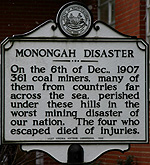
December 6, 1907: Explosion at the Monongah Nos. 6 and 8 mine in Monongah, WV kills 362 miners.
Exhausted volunteers found conditions in the mines almost unbearable, heat was intense, and afterdamp caused headaches and nausea. In some headings, ventilation materials and bodies had to be hauled 3,000 feet over massive roof falls and wrecked machinery, mine cars, timbers, and electrical wiring. The stench of death was barely tolerable, and became overpowering as the search dragged on.
More here.

Tuesday, December 05, 2006

Oversight Begins: Rep Miller Alarmed At OSHA Retaliation Against Employee Re.Asbestos Brakes

Last month, Andrew Schneider of the Baltimore Sun reported that OSHA had threatened to suspend an employee for refusing to withdraw an OSHA bulletin describing the hazards of asbestos in brake pads, Asbestos-Automotive Brake and Clutch Repair Work. The article also suggested that former Assistant Secretary of Labor for OSHA, John Henshaw, had inappropriately influenced the agency to rescind the bulletin.

Today, Congressman George Miller (D-CA), soon-to-be chairman of the House Committee on Education and the Workforce sent a letter to Secretary of Labor Elaine Chao saying that he was "alarmed to learn that OSHA was withdrawing and replacing" the bulletin.

Equally disturbing, according to Miller, is the news that DOL proposed to suspend the OSHA employee who drafted the original safety bulletin."

Miller requested all documents relating to communications between OSHA and the Office of Management and Budget, documents relating to Henshaws communications with the Department relating to the bulletin and all documents relating to the development of the bulletin.

I predict hearings come 2007. After 6 years of without oversight, the grownups are taking over. Sweet.

CalOSHA Cites Psych Center For Violence

CalOSHA has taken action to workplace violence in a psychiatric health center in Richmond, CA. The agency has fined Contra Costa County $20,805 for failing to provide adequate security at the Richmond health center after removing a uniformed safety employee from the premises.

The county is objecting to the fine with the ridiculous excuse that "we can't turn the place into a fortress," according to Dr. Jeffry Smith, who oversees medical services at the clinic and the county hospital in Martinez.

Why is this "fortress" excuse so ridiculous? The article in the Contra Costa Times notes that patients frequently bring concealed weapons into the center, and it's next door to a judicial complex and is often used as a walk-through by people going from court to the parking lot. There was recently a shooting incident at the center's entrance, although the office was cited by CalOSHA before that.

So what does Johnson consider "fortress-like?" CalOSHA recommended metal detection equipment, security cameras, reception desk barriers, a panic button alarm system, and mandatory searches.

County officials say they haven't installed metal detectors because they want to "avoid treating patients like criminals." Hello people, been in an airport or federal or state government building recently. We're all treated like criminals. Welcome to America 2006.

County supervisors also removed public safety officers, or PSOs, from the Richmond center as well as health clinics in Pittsburg and Martinez earlier this year without first adequately assessing security needs, according to CalOSHA. The county claimed that it would rely on Richmond police, although CalOSHA accused the county of failing to get a realistic estimate of response times by Richmond police in one of the "most dangerous cities in California."

The infuriating thing about the county's response is that it's been over a decade since California -- followed by the federal government -- issued guidelines to prevent violence in social service and health care facilities. This should all be obvious stuff.

Kudos to CalOSHA for enforcing these guidelines. Unfortunately, there's been no such action by federal OSHA nor most other OSHA state plans.

Bush's Highway Deregulation Kills

It's gotten to be an old story in this administration -- industry contributions flowing to Republican candidates, government oversight agency filled with appointees from the industry its supposed to regulate, relaxed regulations and continuing, but preventable deaths.

It's a familiar story, but it bears retelling over and over again, and Steve Labaton of the NY Times has done a masterful job describing how deregulation of "America’s most treacherous industry" -- the trucking industry -- has increased danger on the nation's highways. Almost 5,000 large trucks were involved in accidents in 2005, killing over 5,000 people -- both workers and "innocent" drivers and passengers. The direct cause of most of the accidents is driver fatigue.

But as Labaton points out, despite pleas to reduce the number of hours that fatigued truckers can spend behind the wheel, the Bush administration, caving in to lobbying and contributions from the trucking industry, actually rejected proposals to tighten drivers’ hours and instead relaxed the rules on how long truckers could be on the road.

The trucking industry is, of course, delighted; industry safety experts not so much:
But advocates of tighter rules say the administration’s record of loosening standards endangers motorists. The fatality rate for truck-related accidents remains nearly double that involving only cars, safety and insurance groups say. They note that weakening the rules has reversed a course set by the Clinton administration and has resulted in the federal government repeatedly missing its own targets for reducing the death rate.

“It is a frustrating disappointment that has led to a tragic era,” said David F. Snyder, an assistant general counsel at the American Insurance Association who follows the trucking industry closely. “The losses continue to pile up at a high rate. There has been a huge missed opportunity.”
In fact, the Bush administrations cave-in to industry influence was so egregious that even a Republican-appointed judge was appalled:

In July 2004, a three-judge panel from the federal appeals court in Washington issued a harsh opinion in a lawsuit brought by several safety organizations over the trucking work rules.

Judge David B. Sentelle, a conservative Republican appointed by President Ronald Reagan, wrote the opinion, faulting the Federal Motor Carrier Safety Administration for “ignoring its own evidence that fatigue causes many truck accidents.”

The opinion continued, “The agency admits that studies show that crash risk increases, in the agency’s words, ‘geometrically’ after the eighth hour on duty.” The judges said they could not understand why the agency had not estimated the benefits of electronic monitoring, saying the agency’s “passive regulatory approach” probably did not comply with the law. The panel struck down the hour and service rules.

But a year later, in August 2005, the agency issued virtually identical rules, which the safety groups and the Teamsters union are again challenging in court.

Despite Labaton's valuable description of how a powerful industry takes over a regulatory agency, I have a couple of problems with important omissions in the article. More than most workplace incidents, trucking accidents tend to get blamed on individual worker (driver) behavior. Truck drivers drive too much, they drive too fast, they falsify their logbooks, they take drugs to keep awake. The obvious solution is to drug test, monitor their driving (electronically), monitor the logbooks, and severely punish any who break the rules. But are those actually good solutions? Why do truckers cheat? Are they just a bunch of greedy bastards, thoughtlessly putting our families in danger in order to earn a few more pennies?

Actually, the answer lies more in the changing structure of the trucking industry than in the low morals of truckers. During the late 1970's the trucking industry was deregulated, making it easier to enter the trucking industry, increasing competition and reducing rates. Wages fell, particularly for non-union drivers. This led to the rise of the so-called owner-operator which has increasingly replaced unionized employees of large trucking companies. Whereas an employee of a company gets paid by the hour or is on a fixed salary, owner-operators who get paid by the trip are not compensated for waiting time, loading time, unloading time or time spent on maintenance. Combine these factors with increased competition in the deregulated industry that drives down their rates, and you have an industry where the only way you can earn a living is to cheat on the log books, speed from origin to destination and take drugs to keep awake.

For an excellent discussion of the industry, check out a recently published book, Working Disasters, edited by Eric Tucker. One chapter in the book: "Trucking Tragedies: The Hidden Disaster of Mass Death in the Long-Haul Road Transport Industry" by Michael Quinlan, Claire Mayhew and Richard Johnstone discusses the changes in the structure of the long-haul trucking industry mostly in Australia and New Zealand, although many of the conditions are similar to those in the United States. Quinlan et. al cite studies showing that such factors as earnings and regular contracts correlate with safer driving. And the number of unpaid hours (loading, maintenance, waiting) was the best predictor of unsafe speeds. Other studies found that drivers with higher earnings exhibited lower speeds. In fact, improving driver payment is the best way to improve safety. But they point out that under the current structure, "drug use in a long-term feature of the industry and is structured into the work process in a way found in no other occupation aside from prostitution. "

Of course, the fatigue issue is no secret. Since 1990, "Reduce Accidents and Incidents Caused by Human Fatigue" has been on the National Transportation Safety Board's list of Most Wanted Transporation Safety Improvements. NTSB has recommended that the Department of Transportation

Set working hour limits for transportation operators based on fatigue research, circadian rhythms, and sleep and rest requirements.
The NTSB says that progress on this objective is "progressing slowly."

Finally, take a look at workplace fatality statistics in the United States. 43 percent of workplace fatalities are transportation-related, 25% highway related. 993 1,428 workers died in highway incidents in 2005. drivers/sales workers and truck drivers were killed on the job, almost 70% on the road. But despite these numbers, trucking deaths are not really seen as occupational fatalities. In addition, the Occupational Safety and Health Administration has no authority over trucking safety. The Department of Transportation (DOT) preempts OSHA's jurisdiction. DOT regulates driving over public highways, the health and safety of drivers involving their use of drugs and alcohol, hours of service, and use of seat belts.

OSHA's absence from the highway safety debate is not a good thing. To a much greater extent than other occupational fatalities, trucking accidents are blamed on the drivers. Little attention is paid to the responsibility of employers (who, as Labaton documents, often encourage drivers to cheat on their logbooks), nor is attention paid to the structure of the industry which encourages employers to place unreasonable demands on drivers, in essence encouraging drug use and discouraging sufficient rest periods. Indeed, as Quinlan et. al. point out, when a trucker dies in a highway accident, "there is very seldom an investigation of possible corporate responsibility, let alone the launching of a prosecution. "

And leaving occupational health authorities and experts out of the the debate makes it impossible to address the problem successfully:
A regulatory approach that meerly focuses on individual crashes and the responsiblity of drivers for those crashes will routinely ignore the systemic causes of road injuries and death, and will persist in the isolation of each incident from its underlying causes and the tendency to understimate the disasterous nature of the road toll attributable to long-haul trucking.
With over 5,000 truck-related deaths on the highways each year, we have a slow motion disaster that the public only tolerates with because they happen a few at a time and are generally blamed on "bad" drivers. But the real story, the real blame, lies more in the structure of the industry, the overwhelming political influence of the trucking industry over those who control the regulatory agencies in this administration, and our tendency to deal only with the symptoms, rather than the underlying causes of these accidents. Only when people realize the root causes of the transportation toll can we begin to seriously reduce it.


Disclosures

Disclosure 1: Baywood Publishing, the publisher of Working Disasters (referenced above), is a Confined Space advertiser. Click on "Pathbreaking Collection" over on the right for more information on how to purchase the book.) I do not, unfortunately, profit from sales of the book (other than spiritually)

Disclosure 2: My entire family came close to being obliterated nine years ago on the Interstate outside of Allentown, PA when we were rammed from behind by a trucker who had probably fallen asleep. My kids still have nighmares. I still get shivers.


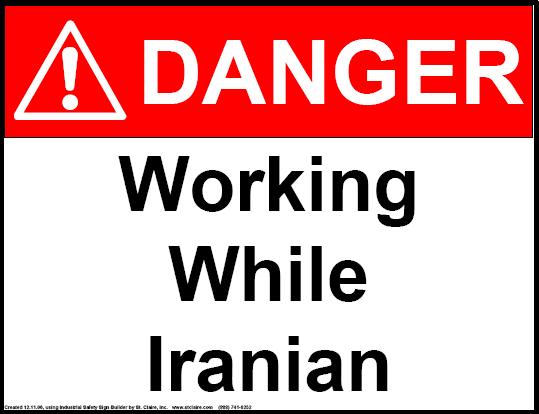
What To Do When You've Been Fired...

Oh come on, smile a little. Life is far too important to be taken so seriously.

Here are some ideas for those days when you've been fired (and don't have a union).

Check them out here.

Monday, December 04, 2006

Kentucky Darby Mine Disaster Report Released: "Nothing Accidental About Deaths In The Mines"

The state of Kentucky has issued a report on the May 20 explosion at the Kentucky Darby No. 1 coal mine in Harlan County, Ky., that killed five miners, Jimmy Lee, 33; Amon “Cotton” Brock, 51; Roy Middleton, 35; George William “Bill” Petra, 49; and Paris Thomas Jr., 53. A sixth miner, Paul Ledford, survived.

According to the report,
The underground blast was triggered by two miners using the torch to remove a metal roof strap intersecting an area of the Kentucky Darby No. 1 Mine that employees knew was leaking methane, the Office of Mine Safety and Licensing found.

The seal, intended to keep methane from leaking into the working part of the mine, was improperly constructed; use of the torch in that part of the mine was illegal; and the leaking methane should have been immediately corrected when it was first noted, according to the investigative report.

In addition, the report said, mine superintendent and co-owner Ralph Napier, along with two other company supervisors, admitted to investigators that they were not familiar with approved procedures for constructing the seals.

As a result of their supervisors’ ignorance, the employees who built the seals were not properly trained to do the job, the state concluded. Investigators were told, and physical evidence indicated, that the seals were built from blocks that were not bonded together with an adhesive agent and were not secured to the floor and walls.
Noting that in the last decade, Kentucky has lost more miners than any other staet, a Louisville Courier Journal Editorial describes the lessons of the Darby mine disaster:
The most obvious lessons are these: (1) It's really not "accidents" that kill miners. Rather, they die because laws are broken, regulations are ignored, rules are circumvented. (2) Federal and state regulators should be working in concert, to prevent deaths and injuries. Instead, they sometimes find themselves at cross purposes.

Had Darby been operated according to the rules, the five miners who died almost certainly would be getting ready for Christmas with their families. Improperly installed seals, built by employees whose supervisors didn't know how to do it, and therefore couldn't show their workers how, were part of the problem. So was the illegal use of a cutting torch to remove a metal roof strap. So was the lingering failure to correct a methane gas leak.
The Journal notes that there will be other reports about this and other mine disasters.
But one basic truth has been long apparent: There's nothing accidental about deaths in the mines, and, when it comes to avoiding them, nothing can be left to chance.
Meanwhile, the owners of Kentucky Darby have apparently abandoned the mine. Mine owners already owe $5,110 for 41 violations not related to the disaster, and could owe tens of thousands more in state and MSHA fines. But the fines may be hard to collect:
It could not be determined yesterday whether Kentucky Darby still is an active company.

The company's phone number was disconnected, and co-owner Ralph Napier did not return calls to other numbers.

The other owner of Kentucky Darby, John D. North, could not be located.

Kentucky Darby is listed as an active company with the Kentucky secretary of state's office, but the firm's most recent annual report was June 27.

Advocates say it is not uncommon for coal operators to run different mines under different company names and to close mines and companies and start new ones under new names in other locations.
MSHA and the state claim that the fines will be collected, although MSHA came under criticism after the Sago mine disaster when it was revealed that they had never collected a large percentage of the fines levied on safey violators.

New Blog: The Pump Handle

Unlike the dead tree media, we in the blogosphere welcome newcomers to our turf. One recent welcome addition to the public health section of blogdom is The Pump Handle:
a place for people interested in public health and the environment to discuss the issues that interest us, particularly when they’re not getting the treatment we think they deserve in the mainstream media.
The Pump Handle is a group blog, many of the contributors being my favorite people oft quoted in Confined Space: Dr. David Michaels and Celeste Monforton of George Washington University, Revere of Effect Measure, Drs. Richard Clapp (of IBM cancer study fame) and David Ozonoff, both of Boston University School of Public Health. And rounding off the bunch are Liz Borkowski works for the Project on Scientific Knowledge and Public Policy (SKAPP) and Susan Wood, PhD, is a Research Professor at George Washington University’s School of Public Health and Health Services.

But, of course, contributors are only as good as their contributions. And there are some pretty good ones. One recent post addresses the problems of "forgotten workers"
in those workplaces with the dirtiest jobs, where the lowest wages prevail, where many do not speak English, and where there is no union to defend their rights or speak for them.
David Michaels, who has written extensively on how corporate scientists "manufacture uncertainty" has a post about how the Global Warming deniers are using the same arguments that the tobacco industry used to "manufacture uncertainly" about whether smoking causes cancer.

Richard Clapp, who has done groundbreaking work on cancer among IBM workers (which I've written about here and here) has a post describing his fight with the publisher of Clinics in Occupational and Environmental Medicine and IBM to be able to publish the results of his study. He did publish recently, and the word is getting out:
The on-line journal tracks the number of times articles are accessed and posts this on the website. In the first month, the article was accessed over nine thousand times and reached the second position among the 100 articles published since the journal began in July, 2002. As of Nov. 23, the article is approaching 10,000 accessions and has been the topic of email and listserv conversations throughout the health and safety and environmental networks.
OK, enough. Now you go read it.

Oh, and for those of you who are wondering where the title -- The Pump Handle -- comes from:
The story of the pump handle is familiar to any first-semester public health student: During the London cholera epidemic of 1854, John Snow examined maps of cholera cases and traced the disease to water from a local pump. At the time, the prevailing theory held that cholera spread through the air, rather than water, so Snow faced criticism from others in the science community – not to mention resistance from the water companies. He finally convinced community leaders to remove the pump’s handle to prevent further exposure.

More than a century later, thousands of people still die from cholera each year, and providing clean drinking water to the world’s entire population is a far-off goal. The Pump Handle symbolizes both a public health victory and the challenges facing the public health and environmental fields today.
But Snow's action is significant in another way in today's world. Although he was one of the first to actually use epidemiology to successfully fight a public health hazard, the actual cause of Cholera wasn't discovered for another thirty years.

Think about that in today's context, where despite overwhelming epidemiological evidence that working around a chemical or a work process may cause occupational disease (think popcorn lung or ergonomics), industry fights any regulatory action until every single question is answered about the precise mechanism in which the chemical or work process causes the illness. Looking at disease patterns, it's clear that diacetyl destroys workers' lungs and that repetitive lifting causes back injuries. Do we know that exact physical mechanism in which these occur? No. Is there still uncertainty? Yes. Do we need to wait until we've figured it all out before acting to protect workers? According to corporate America, yes, even if it takes decades and more dead and disabled workers. According to good public health practice, no. Chemicals shouldn't have the same rights as people -- to be considered innocent until proven guilty -- by the illness and death of workers. Think about the Broad St. pump handle when confronted with their arguments.

But I digress. Go read the Pump Handle. Bookmark it. Tell them Jordan sent you.

Sunday, December 03, 2006

Mine Fatalities: All Is Not What It Seems

This year has been a nightmare in America's coal mines with 46 miners killed, compared with 22 last year. Prior to this year, however, the mine industry has been boasting of falling fatality numbers: 28 in 2004, 30 in 2003 and 27 in 2002. Non-coal -- or metal/non-metal mines have shown similar decreases: 24 so far this year, 35 in 2005, 27 in 2004 and 26 in 2003.

But according to an article in the Pittsburgh Post Gazette, things may not be as rosy as they seem:
In the past four years, 153 deaths have occurred at U.S. coal mines, but another 72 deaths were labeled "nonchargeable" incidents, 55 of them attributed to heart attacks or other "natural causes." As of late October, another eight cases were "pending determination," according to an internal MSHA daily fatality report.

During the same period in mines that don't produce coal -- metal/nonmetal mines -- 154 deaths were listed as "chargeable" and 100 classified "nonchargeable" because the workers died of natural causes.

The distinction is important because, unlike a death from a roof fall, there is no public follow-up investigative report that spells out the circumstances or recommends steps that might prevent deaths.
One worker's death was classified as non-chargable after he was pinned in a cab by a pipe after he ran over one end of it. His death was classified as a heart attack, which appalled former MSHA Special Assistant Celeste Monforton:
"That sure sounds like it's mining-related to me. I'd have a heart attack, too, if I were pinned in a cab," said Ms. Monforton, who is an environmental and occupational health specialist.
The number of "non-chargeable" deaths have been rising, which Monforton, who served in both the Clinton and Bush administrations, blames on the current administrations emphasis on reducing the numbers of fatalities:
In August 2001, Mr. Lauriski told a meeting of the Kentucky Mining Institute he had set an agency goal of reducing mining fatalities by 15 percent per year in the next four years, and cutting the nonfatal lost work days by 50 percent.

"This, of course, will require the commitment and help of all who work in the mining business," Mr. Lauriski told the mining industry crowd. "It can be achieved, and with your help, it will."

That year, 42 miners died, the highest yearly total since 1995, including 13 miners killed in an explosion at the Jim Walter Resources Mine No. 5 in Alabama one month after Mr. Lauriski's remarks.

MSHA documents show another 24 coal mine deaths were judged "nonchargeable" in 2001. All but four of those nonchargeable deaths were attributed to heart attacks, and one of the four was listed as "natural causes."

Since 2001, the number of chargeable coal mine deaths has held steady or gone down until this year, while nonchargeable deaths have increased from 14 in 2002 to 21 last year, nearly matching the number of charged deaths. Fifteen were attributed to "natural causes."
The problem is that no lessons are learned from deaths that are not counted as work-related. Too much focus on the numbers can ultimately work against prevention of future accidents. As Monforton explains,
"Certainly, people in the industry and in the agency want to see those [fatality] numbers go down, so there is an inherent desire not to count things," she said. "But because we're driven by some arbitrary number count, we're losing a whole subset of information that can be very helpful in terms of prevention."
University of Washington Professor of Occupational and Environmental Health Dr. Michael Silverstein explains why agencies have an incentive to undercount:
Dr. Silverstein sees an inherent conflict when enforcement agencies such as MSHA and the Occupational Safety and Health Administration decide which deaths count as work-related. "There are incentives with these government agencies to find ways to claim success, and that is to reduce work fatalities. Every administration does this."
And besides that, ask Silverstein, why shouldn't heart attacks be counted?
"If someone is working under conditions of extreme pressure and stress that has resulted in a heart attack, other workers are going to be faced with the same risks unless that information is recorded and dealt with,"
And who makes the determination about work-relatedness? It's all done inside MSHA, which is potentially problematic:
None of these proceedings is open to the public, nor is there any public report if the committee decides the death is not related to the mining operation.

"There should be some hard, fast rules about what a 'chargeable' death is. It shouldn't be left to some secret society," said Ms. Monforton.
Indeed.