Showing posts with label Chemical Safety Board. Show all posts

Wednesday, January 17, 2007

Straw Men: More Thoughts On The Baker BP Panel

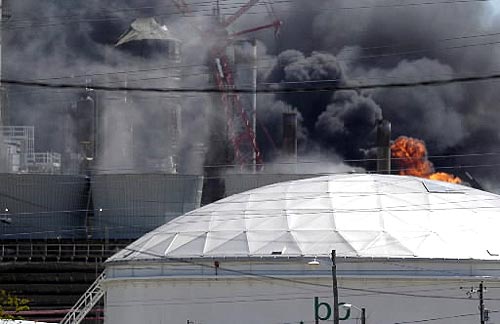
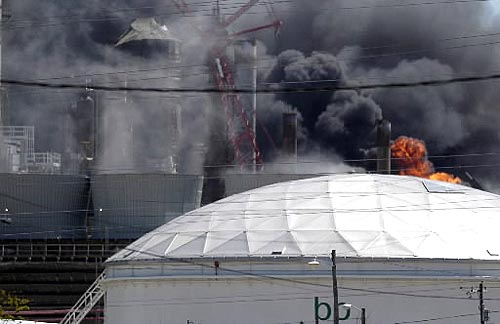
I reported yesterday on the release of the Baker Panel's 374 page report on the sad state of BP's safety system at its North American refineries. I want to go back and discuss on aspect of the report and the panel's press conference: The assertion that BP deliberately endangered workers by cutting costs in its safety budget.

CNN-Money.com, for example, argued that the report
found no evidence that BP intentionally scrimped on safety in order to cut costs - a charge that has been disputed by the U.S. Chemical Safety and Hazard Investigation Board.
Reuters reported that:
A panel investigating the 2005 deadly explosion at BP's Texas City, Texas refinery (sic) said on Tuesday that the oil major did not purposely withhold spending for safety programs at its U.S. oil refineries

***

"We could not determine that BP ever purposefully withheld resources with respect to safety-related practices," Baker said at a press conference in Houston.
The report itself stated diplomatically:
During the course of its review, the Panel did not develop or identify sufficient information to conclude whether BP ever intentionally withheld resources on any safety-related assets or projects for budgetary or cost reasons. The Panel believes, however, that the company did not always ensure that adequate resources were effectively allocated to support or sustain a high level of process safety performance.
But all of this talk about intentionally cutting safety is what's known as "setting up a straw man" -- creating a position that is easy to refute, then attributing that position to the opponent. It's an argument frequently heard when employers defend themselves against being blamed for workplace accidents, and to fight calls for criminal prosecutions: "No one intended to hurt anyone, we just didn't know," or "We may have overlooked some things, but we never meant to hurt anyone." Drunk drivers don't intend to kill families on their way home from the party either. But try telling that to the judge.

And no one, including the Chemical Safety Board, has accused BP of intentionally cutting safety or deliberately trying to hurt workers. The CSB did present convincing evidence that the company cut back on maintenance and infrastructure that "caused a progressive deterioration of safety at the Texas City refinery" and that company officials knew about many of the safety problems at the plant.
"BP implemented a 25% cut on fixed costs from 1998 to 2000 that adversely impacted maintenance expenditures and infrastructure at the refinery," she said. Maintenance spending fell throughout the 1990?s at the then-Amoco refinery, and following the merger with BP further cuts were imposed. "Every successful corporation must contain its costs. But at an aging facility like Texas City, it is not responsible to cut budgets related to safety and maintenance without thoroughly examining the impact on the risk of a catastrophic accident."

By 2002, an internal BP report had identified the cost reductions as contributing to a decline of infrastructure in Texas City that would require significant investment to correct. These findings were corroborated in a survey of the refinery's safety culture in 2005 just prior to the accident, known as the Telos study. The survey interview with the Texas City refinery manager identified a history of decapitalization and a culture of "things not getting fixed."

"The refinery manager was not alone in this candid assessment," Chairman Merritt said. "Large majorities of the survey respondents reported significant maintenance backlogs that were harming safety. Disturbingly, most employees agreed that 'production and budget compliance gets recognized and rewarded before anything else at Texas City.'"

Economic pressures were evident in numerous decisions that were causally related to the March 23, 2005, accident.
The Houston Chronicle summarized some of the results of the failure to ensure that adequate resources were provided for vital safety-related functions:
  • In the Texas City, Carson and Whiting plants, known equipment problems such as thinning pipes and vessels went unrepaired for months, even years. In Texas City, nearly 200 thickness defects were unaddressed for up to eight years, for example.
  • In all refineries except Texas City, the consultants found that BP's tests of critical alarms and "emergency shutdown devices" were either improperly conducted or overdue.
  • "Action items" resulting from audits or near-miss investigations intended to improve safety often went uncompleted for months or even years, or were overlooked altogether at all five refineries. For example, in Carson about half of the action items generated between 2001 and 2004 remained open at the time of the team's visit last spring. At Toledo and Whiting, some items were left uncorrected for more than a year.
  • At all refineries, BP did not adequately inspect important refinery process equipment, resulting in extensive backlogs. "Some of these backlogs included hundreds of items overdue for long periods (i.e years)," the report said. In Texas City, nearly 400 pressure vessels, piping, relief valves, storage tanks and other pieces of equipment were overdue, for example.
  • After discovering dangerous problems in the pressure relief systems in Whiting, the team found similar problems in Carson, Texas City and Toledo, as well as a lack of understanding of the risks involved.
  • Near misses at all five refineries were not properly investigated, and in some cases not even reported. The team found that "BP was systematically missing opportunities to learn from near misses."
All of which makes me a bit skeptical about outgoing BP CEO Lord John Browne's statement:
Brown defended the company's record. "We've never focused on profits above safety -- safety has always come first" he said.
As Houston Chronicle business columnist Loren Steffy summarized the company's actions:
That's not to say it didn't care about safety or maintenance. It merely had other priorities.
And despite their protests, worker safety really wasn't one of them.

Tuesday, January 16, 2007

Baker Panel Report Blasts BP


The Baker Panel, investigating the "safety culture" at BP's five North American refineries, issued its 374 page report today blasting the giant oil company for putting production targets, operational goals and budgets ahead of workplace safety.

The report's origin was an urgent safety recommendation issued by the Chemical Safety Board which is conducting an extensive investigation of the March 23, 2005 Texas City refinery explosion that killed 15 workers and injured 180. It was the biggest American workplace disaster in a decade.

The panel found serious problems throught BP's facilities:
While some refineries are far more effective than others in promoting process safety, significant process safety culture issues exist at all five U.S. refineries, not just Texas City. Indeed, the refineries show some similar process safety cultural weaknesses, even though they do not share a unified process safety culture. The Panel found instances of a lack of operating discipline, tolerance of serious deviations from safe operating practices, and apparent complacency toward serious process safety risks at each
refinery.
Among the findings of the report were BP's emphasis on "personal safety" (a.k.a. slips, trips, and falls) over process safety
BP has not provided effective leadership in making certain its management and U.S. refining workforce understand what is expected of them regarding process safety performance. BP has emphasized personal safety in recent years and has achieved significant improvement in personal safety performance, but BP did not emphasize process safety. BP mistakenly interpreted improving personal injury rates as an indication of acceptable process safety performance at its U.S. refineries. BP’s reliance on this data, combined with an inadequate process safety understanding, created a false sense of confidence that BP was properly addressing process safety risks.
The panel emphasized the importance of process safety over personal safety
Not all refining hazards are caused by the same factors or involve the same degree of potential damage. Personal or occupational safety hazards give rise to incidents—such as slips, falls, and vehicle accidents—that primarily affect one individual worker for each occurrence. Process safety hazards can give rise to major accidents involving the release of potentially dangerous materials, the release of energy (such as fires and explosions), or both. Process safety incidents can have catastrophic effects and can result in multiple injuries and fatalities, as well as substantial economic, property, and environmental damage. Process safety refinery incidents can affect workers inside the refinery and members of the public who reside nearby. Process safety in a refinery involves the prevention of leaks, spills, equipment malfunctions, over-pressures, excessive temperatures, corrosion, metal fatigue, and other similar conditions. Process safety programs focus on the design and engineering of facilities, hazard assessments, management of change, inspection, testing, and maintenance of equipment, effective alarms, effective process control, procedures, training of personnel, and human factors. The Texas City tragedy in March 2005 was a process safety accident.
One of the more interesting parts of the report dealt with the resources that BP invested in safety. Preliminary findings of the Chemical Safety Board determined that cost cutting had led to safety problems at the Texas City plant. Yet BP claimed vindication in this area, citing the Baker Panel's conclusion that
it did not develop or identify sufficient information to conclude whether BP ever intentionally withheld resources on any safety-related assets or projects for budgetary or cost reasons.
The report went on to say, however, that
The Panel does not believe that BP has always ensured that the resources required for strong process safety performance at its U.S. refineries were identified and provided.
At the Texas City refinery, for example
From 1992 to the 1998 merger with BP, Amoco consistently and significantly cut costs in the Texas City refinery. Between 1992 and 1999, total maintenance spending fell 41 percent; from 1992 to 2000, total capital spending fell 84 percent.24 Notwithstanding this sustained period of budget cutting, after the merger BP issued a company-wide challenge to each of the refineries to cut their budgets an additional 25 percent without jeopardizing the integrity of the facility. According to at least one senior manager, progress toward meeting that challenge to cut costs 25 percent became a milestone in each refinery plant manager’s performance contract. Pursuant to that corporate challenge, Texas City continued to cut costs, 25 and some data indicate the refinery came close to meeting the 25 percent target.
The report accused BP of eliminating thousands of critical jobs after its merger with Amoco, , not replacing experienced workers who retired, losing engineers and other personnel with with valuable operating and technical expertise. There were also serious understaffing and fatigue problems at BP's North American refineries.

The panel also found safety management problems:
BP has not demonstrated that it has effectively held executive management and refining line managers and supervisors, both at the corporate level and at the refinery level, accountable for process safety performance at its five U.S. refineries.
In a response to the report, BP's Chief Executive, Lord John Browne announced that the company will implement the panel's recommendations. The BP response noted that the report did not put blame on any individuals, that no one acted in anything but good faith, that BP's not the only company with serious safety problems, and that the company has already implemented a number of the recommendations. And in a not necessarily unrelated development, Lord Browne announced last week that he will retire 18 months earlier than expected. Browne claimed that his early retirement was unrelated to the report.

The panel also made a number of recommendations focused around improving its process safety management system, and to improve its methods of measuring safety performance. The panel also recommended an independent monitor to report to the company’s board over a five-year period.

The Baker panel will not have the last word on the Texas City disaster.

The Chemical Safety Board expects to issue a report in March. Daniel Horowitz, a spokesman for the board, said yesterday that the Baker panel's report showed that many things contribute to accidents like the one in Texas City. "It is a very significant finding that BP does not effectively investigate incidents throughout the corporation," he said. "If you're not learning from near misses, you're not in a position to prevent major disasters like the one in Texas City."

More BP stories here.

Wednesday, January 03, 2007

Top Ten Workplace Safety Stories of 2006

This is the fourth “Top Ten” list I’ve compiled. It’s always an educational experience for me because I get to look back at everything that’s happened over the past year. But something struck me this year: for thousands of people there was really only one top story of the year – the senseless loss of a husband or wife, daughter, son, father or mother, brother or sister, friend or co-worker. (See number 6 below). The rest is just commentary.

Nevertheless, as we here at Confined Space never tire of saying, workplace tragedies occur not as isolated, random incidents, but in a political and historical context. And if we’re going to change things, we need to understand those relationships.

So here goes…
  1. Sago: What else? The Sago mine disaster of January 2, 2006, catapulted mine safety into the nation’s consciousness like no other workplace disaster in decades. Subsequent mine explosions and fires in the Aracoma and Darby mines, as well as numerous other coal mine accidents, largely stemming from increased mine activity (as a result of higher energy prices), neglected maintenance, crumbling infrastruture and insufficient training led to 47 coal mining deaths in 2006, a ten year high and more than twice as many as in 2005. Faulty respirators, poor communication between miners and the surface contributed to the tragedies. But more important, the coal mine disasters of ’06 revealed the Bush administration’s abdication of its responsibility to ensure safe workplaces for this nation’s miners. Investigations by aggressive reporters like the Charleston Gazette’s Ken Ward showed how the Bush administration filled MSHA with industry insiders, deep-sixed numerous regulations that would have prevented or reduced the consequences of the mine accidents, cut the number of mine inspectors, failed to cite safety violations and failed to collect fines from those mining companies that were cited. The mining tragedies of 2006 revealed to Americans the human toll of this administration’s close ties to the industries it is supposed to regulate. No longer able to deny that the Emperor was as naked as a jaybird, Congress overwhelmingly passed the MINER Act which started the process of implementing needed improvements in the nation’s mine safety law. New mine safety laws were also passed in West Virginia and Kentucky.
  2. Richard Stickler: The Bush administration added insult to injury (and death) by nominating of Richard Stickler to head the Mine Safety and Health Administration. Stickler, nominated a few months pre-Sago, was perfect for that long-gone (and never really existing) era when MSHA was a forgotten dusty agency that no one noticed or cared about. But after the tragic first few months of ’06 and Stickler’s less-than-impressive performance at his confirmation hearing, it became vividly clear to almost everyone outside the reality-resistant walls of 1600 Pennsylvania Avenue that the former mine industry manager with a lousy safety record was manifestly unsuited for the job. Even the Republican controlled Senate couldn't stomach Sticker, forcing Senate Majority Leader Bill Frist to halt the vote on his confirmation. Then the Senate, in an unprecedented move, voted to return the nomination to the White House – a subtle hint that the President might want to consider a more qualified candidate.

    Bush didn't take the hint. In response, he launched the tennis game from hell, serving Stickler’s nomination back to the Senate, which duly returned it back to the White House for a second time. Bush then defiantly gave Stickler the job with a one-year recess appointment, and then for the third time lobbed his name back to the Senate for permanent confirmation where it rotted as time ran out on the 109th Congress and the Republican majority. Given the makeup of the new Senate, unless Stickler pulls some rabbit out of his hat, he’ll be heading back to retirement in West Virginia at the end of 2007.
  3. Ed Foulke’s Unimpressive Debut At OSHA: Coming from a union-busting law firm, Ed Foulke had a lot to prove when he took the reins of OSHA last March. Would he be able to overcome OSHA's hard-earned image as a tired, ineffective, moribund, anti-worker agency that had become almost totally irrelevant to workplace safety in this country?

    Apparently not. Foulke blew his honeymoon almost immediately with a series of speeches that seemed to blame workplace injuries and deaths on dumb workers who "do the darnedest things." Blaming employees for on-the-job injuries and fatalities is an all-too-common myth for those who don't understand that unsafe working conditions actually cause workplace deaths and injuries, but such ignorant rhetoric was more than a little surprising and unforgivable coming from the man who is supposed to be leading the nation's effort to make workplaces safe. In fact, Foulke’s follies were so notable that they even made the “Regulators” column in the Washington Post.
  4. OSHA’s Miserable Failure to Issue Standards: One of the jobs that Congress gave OSHA when it was created in 1970 was to issue standards that would protect workers from work-related injuries, illnesses and deaths. George Bush's OSHA seemed to have completely forgotten this role until, after years of regulatory infertility, the agency finally gave birth to its first major health standard in six years. But OSHA's new hexavalent chromium standard was not exactly the product of a loving and caring relationship between government and workers. In fact, it was conceived under duress by a union petition and lawsuit, and delivered by Caesarian section under a court order.

    The result, as might be expected, was a pretty darn ugly baby. The hexavalent chromium standard established a permissible exposure limit so high that it will allow hundreds of extra lung cancer deaths among exposed workers, and OSHA wrote the standard in such an obtuse and confusing way that it will be difficult for employers or workers to figure out exactly what must be done. Hardly a sterling effort for an administration that likes to complain about how difficult it is to understand government regulations. The new standard was issued less than a week after a report revealed that scientists working for the chromium industry had concealed data from OSHA that showed that even very low level exposures to hexavalent chromium can cause cancer.

    Meanwhile, unions have petitioned OSHA for two emergency temporary standards, one to protect workers against pandemic flu, and the other to protect workers against the lung-destroying effects of diacetyl, the ingredient used to provide butter flavoring for popcorn and other foods. OSHA has responded to neither petition. Oh, and then there’s the little matter of the proposed standard that would require employees to pay for workers' boots, gloves and other personal protective equipment required by OSHA standards. It was all ready to be issued at the end of the Clinton administration, but the deciders of the current regime have still not decided how to proceed. (Flash! Update here.)
  5. BP Texas City Explosion Aftermath: The massive explosion at BP’s Texas City refinery that killed 15 workers and injured 180 in March of 2005 barely caused a ripple in the nation's consciousness compared to the 2006 Sago tragedy despite the record $21.3 million OSHA penalty. Yet revelations throughout 2006 about BP's faulty safety system have raised major questions not just about the giant oil company itself and how seriously it takes the safety of its workers, but also OSHA’s failure to enforce refinery safety regulations.

    Preliminary reports of the Chemical Safety Board (whose final report will be issued in early 2007), as well as documents released as a result of the settlement with BP of a lawsuit filed by Eva Rowe, who lost both of her parents in the explosion, revealed a devastating picture of a company that cut back on its safety budget, delayed maintenance, failed to conduct training and ignored warnings by refinery management that all was not well at the plant. The BP story has been highlighted in CBS's 60 Minutes as well as numerous media reports about other problems plaguing BP. All of this was topped off by a massive pipeline leak in Alaska, more OSHA citations at other facilities, and civil and criminal investigations into illegal energy market manipulation. None of this stopped BP's CEO Lord John Browne from pulling down a cool $11 million in compensation last year.
  6. Families Go On The Offensive: From West Virginia and Kentucky to Texas, California and Maine, families of workers killed on the job are getting mad as hell and refusing to take it anymore. Frustrated by the small fines and weak penalties resulting from the preventable deaths of their loved ones, mine widows demanded better information about what happened to their husbands, picketed mines to keep their health care, and spoke truth to power by warning President Bush not to appoint Richard Stickler to head MSHA. Family members like Coit Smith, whose son was killed in a meat processing plant, Michelle Lewis, whose stepfather was killed in a trench collapse, and Tammy Miser, whose brother was killed in a factory explosion, and many others have launched campaigns to change the way workplace safety oversight works in this country, writing newspaper columns, putting up billboards, creating web pages, lobbying legislators and providing support to the families who have suffered similar losses.
  7. Union organizing victories: The organizing victories of janitors in Houston and the University of Miami, the successful campaign to organize the nation’s hotel workers and surging support for the Employee Free Choice Act that would require unions to be recognized by card check, rather than the failed traditional system of workplace elections, are not – on the surface – health and safety stories. But while a strong and active OSHA is necessary, anyone who’s worked a hazardous job will tell you that the best tool to make the workplace safe isn’t an OSHA inspection; it’s a well organized and knowledgeable union. In addition, health and safety issues can be a major reason that workers decide to organize as we’ve been seeing in the University of Miami campaign and UNITE-HERE's campaign to organize and win better contracts for the nation’s workers.
  8. Undercounting Injuries And Illnesses: OSHA broke open the champagne to celebrate a record low number of reported workplace injuries and illnesses last year, but the only thing bubbling to the surface is growing certainty that despite the hundreds of millions of dollars spent by OSHA and the Bureau of Labor Statistics on collecting workplace injury and illness data, no one really knows how many workers are injured and made sick on the job every year. One recent study estimated that the current national surveillance system for work-related injuries and illnesses may miss two-thirds of the total number of occupational injuries and illnesses. The reasons for undercounting are no mystery. Articles by ghost writer ERM Jr showed how and why companies cheat on their injury and illness reporting, and why OSHA prefers it that way. Meanwhile, a Confined Space series on KFM, the chief contractor on the San Francisco Bay Bridge project, revealed how companies are able to cook the books by discouraging workers to report injuries and illnesses.
  9. Chemical Safety Board Takes Up The Slack: With OSHA and MSHA struggling unsuccessfully to pass the oversight laugh-test, the tiny Chemical Safety and Hazard Investigation Board seems to be the only serious workplace safety game in Washington at the moment. Among the six reports that the Bush-appointed Board has issued this year was a study on combustible dust explosions that recommended that OSHA issue a standard to prevent the often overlooked hazard that killed 14 workers in 2004, and killed 119 workers and injured 718 over the past 25 years. The CSB also issued a timely report on an incident at a chemical manufacturing plant in Georgia that had major problems in the way the city and county handled the emergency response, and how the state oversees emergency response efforts of the cities and counties. More significantly, the Board revealed disturbing preliminary findings of its BP investigation including an appearance by its Chairman Carolyn Merritt on 60 Minutes. (See number 3 above) And in December, the Board held a hearing in Daytona Beach, Florida concerning an explosion in the city’s wastewater treatment plant that killed two public employees – public employees who are not covered by OSHA in Florida (and in 25 other states), have no right to a safe workplace, and can die like dogs -- which seems to bother no one, except possibly the Chemical Safety Board.
  10. Confined Space Wins Koufax Award For Best Single Issue Blog: Yes, after a hard-fought contest, Confined Space won a convincing victory for the best single issued "lefty" blog, an award even more significant than being named Time’s Person of The Year. And Confined Space came in third in the running for LaborStart's Best Labor Website Of The Year.

    Bottom Line: You like me, you really like me!

    Real bottom line: There are a lot of angry people out there and Confined Space has helped them find a voice.
Related Stories

Thursday, December 21, 2006

Chemical Safety Board Tackles Public Employee OSHA Coverage

Well, there's at least one agency in this country that cares about the workplace safety conditions of public employees.

The US Chemical Safety and Hazard Investigation Board held a hearing last week laying out the preliminary findings from an explosion at the Bethune Point Wastewater Treatment Plant in Daytona Beach, Florida last January that killed 2 employees. Workers were using a cutting torch above a tank of methanol when vapors from the tank ignited, the flames flashed back into the tank, where an explosion and fire killed two workers and seriously injured another. The CSB found that the workers had not been trained about the hazards of methanol, a flame arrester that was intended to stop the flames from entering the tank malfunctioned due to lack of maintenance, and the pipes attached to the tank were made of plastic, instead of metal, which increased the severity of the fire. (A CSB animation of the incident can be viewed here)

But the most important finding of the Board was that public employees in Florida, like public employees in 25 other states are not covered by OSHA and that lack of coverage was one of the factors that lead to the fatal incident.
Florida is one of 26 states that lacks a mandatory program that meets OSHA standards, federal officials said. Only a few categories of public workers in Florida are covered by mandated safety standards, including correctional officers and firefighters. The state safety program was eliminated in 2000 and a governor's executive order made such programs voluntary.

"There are 26 states that are in this same situation. That's over half of our country," Merritt said of the lack of safety programs. "It's really quite an amazing situation and why we thought this was a very important case to investigate."

Union official Marc Brody of the Florida Council 79 of the American Federation of State, County and Municipal Employees said Florida's 133,000 public workers face great risks not working under OSHA standards.

"It is scandalous that wastewater-treatment workers and thousands of other state and local government workers in Florida do not have the most fundamental rights to a safe workplace that every American worker needs and deserves," Brody said.
AFSCME Council 79 represents the workers at the plant.

Better training, construction of the system and maintenance of the flame arrester -- all of which would have been required by OSHA -- would have prevented the deaths, according to CSB investigators:
Robert Hall, who headed the federal investigation, said the explosion may have been prevented if the corroded safety device on the methanol tank had been regularly cleaned or inspected.

The device, called a flame arrester, is commonly used to stop an external fire from igniting chemicals inside a tank. At the Daytona tank, the bread-box-sized aluminum flame arrester, that might have cost less than $500, had corroded so badly that it had gaping holes where flames could pass through, he said.

Flame arresters should be inspected regularly and cleaned of dirt so that they can be effective, Hall said. However, city officials had not cleaned or inspected this device since it was installed in 1993, he said.

The methanol tank also should not have had plastic PVC pipes and valves, but should have had steel pipes, Hall said. The plastic pipes failed, causing methanol to gush onto the crane cab where Jones sat.

Hall also pointed out that Daytona Beach did not have enough safety training for its employees, with the number of training sessions declining since 1997. Facing severe financial woes, the city eliminated the job of safety officer in 2004.

OSHA standards require that employees who weld or use cutting torches receive specific training on the potential hazards and that supervisors must review and control the use of torches.

Hall said Daytona Beach had neither the training nor a control program. If it had, "This accident would not have occurred," he said.
The CSB will issue recommendations to the City of Daytona and other parties, including recommendations to the state of Florida addressing the lack of public employee protections.

Related Stories

Tuesday, December 12, 2006

BP Texas City: More Evidence That Neglegence Led To Explosion

The Wall St. Journal today reports on a series of internal "accountability reviews" of the 2005 explosion at BP's Texas City refinery that killed 15 workers and injured 180. The Chemical Safety Board reported earlier this year that cost-cutting at BP had contributed to the accident. The interviews cited by the Wall St. Journal seem to confirm those contentions.

BP had originally blamed the accident on workers' failure to follow procedures and reassigned the plant manager, Don Parus. Parus didn't have kind words for BP's upper management. Parus said
he had been ordered to cut costs by 25% as recently as 2005, according to notes of an interview conducted Oct. 12.

He said he had given a slide show to [BP's global chief executive, John]Manzoni during a visit by the executive in July 2004 showing BP and Amoco had "underinvested" at Texas City for the previous 10 years, according to the interview notes. He said he pleaded for additional funds, citing problem areas such as the poor condition of equipment, and he said he had "exhausted every avenue he had to get the funds and it remained a no," according to the notes.

An attorney for Mr. Parus said his client stands by what he said in the interviews but wasn't available to comment.

Ross Pillari, who stepped down as chief executive of BP's U.S. operations this year, said Texas City had been neglected, according to a BP interview on April 27. Senior BP-Amoco executives at the time of the merger "tried to squeeze as much out of [Texas City], so maintenance was neglected. The directive was to keep expenditures low because of 10 years of lousy refinery margins," according to a summary of his interview. Refinery margins are an industry measure of profitability. Mr. Pillari declined to comment.
And BP CEO Lord Browne wasn't much help either:
In addition to BP's management structure, one executive also cited Lord Browne's attitude toward safety. In an interview conducted on June 21, Greg Coleman, who was vice president of BP's health, safety and environmental programs before he left the company, said Lord Browne "showed little interest" in safety and demonstrated "no passion, no curiosity, no interest" in safety issues, according to his interview notes.
Poor Lord Browne, "repeatedly voted the best businessman in Britain." has had a very bad couple of years, according to Britain's Daily Telegraph, leading observers to wonder whether or not he will be able to stay on until his announced retirement date at the end of 2008:
The first signs that not all was well came in March, when 200,000 barrels of oil spilled onto the Prudhoe Bay tundra from a leaking pipeline. It appeared to be an isolated incident, but it set off a chain of events that led to the realisation that miles of pipes were dangerously corroded. In August, almost half the field had to be shut down.

BP faces a criminal investigation as well as inquiries by regulators and Congressional investigations into its maintenance record, amid allegations that the company neglected its infrastructure for years to boost profits.

In many aspects, what has happened in Alaska merely mirrored what was going on thousands of miles to the south in Texas City, where a refinery explosion killed 15 people and injured scores of others in 2005.

BP settled lawsuits with the families of those killed, but not before a report from the Chemical Safety Board catalogued years of unheeded warnings about the potential for disaster at the site. The regulator claimed that management was sub-standard, unsafe and antiquated equipment was not replaced and maintenance was deficient.

A website set up by lawyers for one of those whose parents were killed in the blast is publishing ever more damaging documents that show that Lord Browne himself knew of the poor safety record at the refinery, where workers feared for their lives every day and where even its managers admitted equipment was patched together with "band aids and super glue".

But if those are the two incidents that have generated the most headlines, they merely head an ever growing list of problems filling Lord Browne's in-tray.

The company was forced to admit that production at its Thunderhorse platform in the Gulf of Mexico would have to be delayed again after more problems were discovered.

BP's trading operations face criminal and civil investigations into whether the company has purposely manipulated the crude oil, petrol and propane markets.

Just yesterday the company found itself on the wrong end of a Supreme Court ruling over royalty rates that could see it forced to pay millions of dollars, on top of $30m of back taxes.

That pales into insignificance compared with the $1.4bn tax bill BP's Russian joint venture was forced to pay the Kremlin this month. The Russian government, in a bid to exert its control over its energy resources, is also threatening to withdraw some of BP-TNK's licences, ostensibly on environmental grounds.
More BP stories here.

Monday, December 11, 2006

BP's Lord John Browne: Guilty Of Shameful Neglect

Poor Lord John Browne. You gotta feel sorry for him. Here he is "peer of the realm, a captain of industry, a lover of fine cigars and a wealthy man" but, as the Guardian says, his biographers will directly associate him with
one of the most shameful cases of neglect in the history of British business -
the Texas City refinery disaster.
All because 15 workers were killed and 180 injured on his watch.

And, according to the Guardian, "on his watch" is more than a figurative term. According to company documents, Lord Browne was specifically monitoring safety conditions at the BP refinery before the explosion occurred. According to a message written by Texas City's learning and development manager, Dennis Link,
"We have 18 BP refineries in the world. Lord Browne looks at monthly data for 17 of 18 refineries all together. He looks at TCR [Texas City refinery] data separately each and every month!
This was one of the documents released as a result of a settlement with BP by Eva Rowe, both of whose parents were killed in the Texas City explosion.

The Guardian doesn't have many nice things to say about BP or Browne:
Accidents can happen at the best of companies. But documents prised out of BP by bereaved families' lawyers show just how ashamed we should be of Britain's largest enterprise.

There had been 23 deaths at the plant in 30 years. The local fire brigade says there were 50 infernoes a year - one a week.

The blowdown drum that exploded had been involved in eight previous scares.

The refinery's director, Don Parus, felt the place was patched up with "Band Aids and super glue". He told a confidential safety commission before the accident that "killing somebody every 18 months seems to be acceptable at this site" and wondered why his staff turned up for work: "Why would people take the risk, based on the risk of not going home?"

The US Chemical Safety Board has accused BP of a "cheque book mentality" towards safety. Texas City made profits for the company of nearly $1bn annually. Yet BP ordered local managers to slash costs by 25%.

The training budget at Texas City was reduced virtually to nothing. There was no money for a new emergency response system, which BP's fire manager insisted was needed.
The Guardian seems to think that Browne's £3.3m Chief Executive salary last year means that he has "a duty of care to his employees."

I'd say he should have the same duty if he were only paid 1/3 that amout.

Tuesday, November 28, 2006

Mass. Explosion: Chemical Safety Board Joins Investigation

Cooler heads have prevailed and the Chemical Safety Board has been allowed to join the investigation of the massive explosion at a CAI, Inc., that destroyed part of a neighborhood in Danvers, Massachusetts last week. A statement released jointly by the CSB along with the the Office of the State Fire Marshal, the Danvers (MA) Fire Department, the Executive Office of Public Safety and the federal Bureau of Alcohol, Tobacco and Firearms said that:
Consistent with its authority and jurisdiction under the federal Clean Air Act, U.S. Chemical Safety Board investigators are currently on the site of the November 22 explosion in Danvers, Massachusetts, along with teams from the ATF, Massachusetts Department of Fire Services, Massachusetts State Police assigned to the Office of the State Fire Marshal, and the Danvers Fire Department. All parties have agreed to cooperate in executing their different missions. The CSB and ATF will coordinate to ensure the integrity of the ongoing civil and criminal investigations during the access to the site.
The agreement followed a meeting among the parties this morning.

More newspaper editorials chimed in as well. A Boston Globe editorial, calling the dispute an "egregious" example of counterproductive turf wars, said that
It's understandable that local firefighters who risk their lives responding to chemical explosions might take a proprietary approach to such sites. But cooler heads, such as those from the State Fire Marshal's office, are supposed to recognize the immediate value of a federal team that includes chemical and mechanical engineers with decades of investigative experience, blast modelers, and combustible dust experts. And unlike local officials, federal investigators not only examine the factors contributing to the blast but also analyze and publicize their findings to prevent similar explosions across the country. Stiff-necked local fire officials have no cause to interfere with such work.
The North Andover Eagle Tribune also chimed in:
Fire Chief James Tutko has assembled a team of investigators from his department and other local and state agencies to go through the ruins of the CAI and Arnel manufacturing operations at 126 Water St. But his refusal to allow the federal Chemical Safety Board similar access in the days immediately following the incident was puzzling to say the least.

Unlike the locals, for whom this is (we hope) a once-in-a-career event, the federal agency has plenty of experience investigating this type of industrial mishap. There had to be a way of allowing the various investigative agencies to look at the scene without interfering with each other or trampling on evidence.

Danvers residents expect and deserve answers as to the cause of this catastophe. The unseemly turf battle simply raised more questions about what may have occurred.

Monday, November 27, 2006

Fire Chief To Chem Safety Board: 'Take A Hike'

Imagine a plane crashes into a small town in Massachusetts and the local fire chief tells National Transportation Safety Board investigators that their services are not needed, thank you very much. "We'll handle this..... "

When two hundred residents of Danvers, Massachusetts were rocked from their beds last week by a massive explosion at a CAI, Inc., a nearby industrial paint and ink factory, most were probably unaware that pagers and cell phones soon started beeping in the bedrooms of investigators from the US Chemical Safety and Hazard Investigation Board.

The CSB, a small independent government agency that recently rocketed to fame with its revelations on CBS's 60 Minutes about the investigation of the massive 2005 explosion at BP's Texas City refinery, was commissioned by Congress to perform independent investigations of chemical plant accidents. The Board, created by the Clean Air Act Amendments of 1990, identifies the root causes of incidents and makes recommendations to companies, associations and state and local government agencies in order to prevent similar accidents from happening. Since its creation eight years ago, the Board has conducted around 40 investigations.

But not everyone is pleased by the pleased with the CSB's mission. Danvers Fire Chief James Tutko is refusing to allow CSB investigators on the site, allegedly because the site is still a crime scene:
Tutko has said the federal team was "uninvited" and "unwelcome," but CSB spokesman Daniel Horowitz said his agency has statutory authorization to enter the site and gather evidence under provisions of the federal Clean Air Act.

"Our chairman has made it clear we're not going away," Horowitz said. "We're going to be talking with the state fire marshal tomorrow (Monday) and we're looking at a range of legal options."
The Boston Globe isn't buying it, noting that the Board's role to identify steps that might be taken to prevent future disasters sometimes rubs local officials the wrong way.
The feds may find, for example, that inadequate local fire codes contributed to a fire. They may find that inspections were not up to par in some regard. They may also produce findings that differ from those of local officials, who are accustomed to investigating fires together -- and, in some cases, covering each other's backs.

"Our role is to determine the root causes and make those public, so other communities in Massachusetts and elsewhere are protected from this kind of devastating accident," Horowitz said.


***

Its investigators need to see evidence before it has been picked over by several other investigators. Otherwise, the safety board investigators' ability to reconstruct the fire could be severely compromised .

One of the last things anyone needs at this point is a turf battle. A fire has displaced hundreds and wrecked the peace of a city. When a plane crashes, local investigators do their work, and federal investigators do theirs. That is the way to serve the public interest, and frankly there's no good reason any of this should be up to the Danvers fire chief.
Some of the Board's reports have highlighted the inability of fire departments to oversee and enforce the large number of industrial fire codes that states have adopted. The CSB's recent combustible dust study, for example, found that local fire departments generally do not have adequate resources to inspect most industrial facilities, nor the expertise to oversee complex industrial processes. Those industrial inspections that do take place focus mainly on "life safety" issues like fire extinguishers, sprinklers and emergency exits.

Meanwhile, OSHA, which has primary responsibility for industrial safety, is far too understaffed to inspect more than a handful of industrial facilities every year. CAI Inc. has never been inspected by OSHA, according to the agency's website. An AFL-CIO analysis shows that it would take OSHA 124 years to visit every jobsite in Massachusetts at least once .

Tuesday, November 14, 2006

What's OSHA Doing About Refinery Safety? Not Enough

And while we're talking about Congressional oversight, a prime subject might be OSHA's weak efforts to ensure safety in our nation's petrochemical industry and how increased funding and inspection strategies might address the problem.

One finding of the US Chemical Safety Board's investigation into the March 2005 explosion at BP's Texas City refinery that killed 15 workers is the contribution of OSHA's lax enforcement.
The board’s chairwoman indicated that OSHA’s approach to workplace safety might be a bit shortsighted.

“It’s just like BP was focused on trips and falls and lost work-time incident rates,” said Carolyn Merritt, who chairs the Chemical Safety Board. “OSHA focused on that, and they’re not going to recognize, for instance, if (a company) cuts too far back in maintenance.”

Merritt said OSHA’s approach does not recognize the long-term potential for disaster due to poor maintenance or other lax process-safety measures.
TJ Aulds, writing in the Galveston Daily News notes that U.S. Secretary of Labor Elaine L. Chao recently released a report showing workplace injuries and illnesses to be at an all-time low, and credits "compliance assistance from the regulated companies, health and safety partnerships with labor groups and targeted, “aggressive” enforcement against bad actors" for the improvement. (More on that here.)

Although OSHA's inspections of petrochemical facilites has picked up recently, that increase is a result of the catastropic BP explosion and other small incidents. In fact, according to Aulds, it may be OSHA's reliance on self regulation that's causing the problems.
Department of Labor statistics obtained by The Daily News show that in OSHA’s Region 6, which includes Texas and four other states, the agency conducted 123 inspections of petrochemical facilities in three years, from Oct. 1, 2003, through Sept. 30, 2006.

The vast majority of those inspections would not be considered preventative. In fact, 91 were conducted as a result of an accident, referral or complaint.

The rest were either follow-ups to previous inspections or related to an accident, complaint or referral.

Forty-eight of all of the Region 6 inspections during that same three-year period were conducted by the Houston office, which has oversight of the petrochemical facilities in Galveston County.

From those inspections, OSHA issued only four non-injury or non-incident citations.

However, the rate of inspections has picked up dramatically in the Houston region since the blasts at BP.
The root cause of this problem is, of course, not lazy OSHA inspectors, according to Merritt:
“Listen, they are understaffed, under-funded and overworked,” she said. “It’s simply a big job, and OSHA doesn’t have the resources to do much more than it already is.”
And the cause of that problem lies in Washington D.C.

Nevertheless, OSHA has it's opinion and it's sticking the script, no matter how ridiculous it sounds:
“A strong, fair and effective enforcement program is a key part of OSHA’s overall approach to workplace safety and health,” said Elizabeth Todd, a spokeswoman for OSHA’s Region 6 office. “We have the resources we need to be effective. Our balanced approach to workplace safety and health is succeeding, and it’s validated by workplace injury, illness and fatality rates that are at their lowest levels, even as the work force continues to expand.”
Blah, blah, blah. Not everyone is fooled though.
That response drew a chuckle from Glenn Erwin, who heads the United Steelworkers workplace safety initiatives.

Erwin, a former Texas City resident and BP — then Amoco — employee, is also a member of the panel led by James Baker that is reviewing the safety culture of BP.

“There is never an incident that happens that doesn’t have precursors or warnings before it happens if industry and (regulators) would investigate,” said Erwin, a critic of programs that emphasize investigations only when injuries are involved.

“Companies should be required — and OSHA actively force them — to investigate every incident, no matter what the size and even if no one gets hurt or loses work time.”

Erwin said such measures wouldn’t likely take hold unless Congress gets involved.

Fewer people were killed in the Sago Mine accident “and it sent shock waves all the way through Congress,” said Erwin.

“They even had hearings on mine safety. BP didn’t have that shockwave. There were no hearings until you had that problem with Prudhoe Bay, (Alaska).

“Why was it there were not hearings on Capitol Hill as to why (the Texas City) incident was allowed to happen? It’s a double standard.”


Erwin credits the Chemical Safety Board with putting pressure on BP as well as on federal regulators.

“Had it not been for the CSB calling attention to this last year, Terry Shiavo would have been the only news, and we would have been a footnote,” he said. “Congress was so worried about that one woman’s life, but didn’t get at all bothered that 15 people were killed.”
Amen brother.

Thursday, November 09, 2006

Chemical Safety Board Calls For OSHA Combustible Dust Standard

Three years after three combustible dust explosions killed 14 workers and injured 81, the US Chemical Safety and Hazard Investigation Board called today for the Occupational Safety and Health Administration to issue a standard to protect workers from the hazards of combustible dusts. The recommendation was a result of a two year CSB investigation into the hazards of combustible dusts and how to prevent them.
CSB Chairman Carolyn W. Merritt stated, "Combustible dust fires and explosions are devastating, preventable, and often fatal tragedies. Dust explosions often cause loss of life and terrible economic consequences. While some programs to mitigate dust hazards exist at the state and local levels, they form a patchwork of adapted and adopted voluntary standards that are challenging to enforce. New federal standards are necessary to prevent further loss of life."

The investigation was initiated in 2004 following explosions the previous year in Kinston, North Carolina (West Pharmaceutical Services), Corbin, Kentucky (CTA Acoustics), and Huntington, Indiana (Hayes-Lemmerz).
According to the CSB,
The explosions, which occur when fine particles of combustible material are ignited, occur in many industries including rubber and plastic products, chemical manufacturing, primary metal, lumber and wood products, and food products, the CSB found.
The CSB investigation found that there had been 281 combustible dust incidents between 1980 and 2005 that killed 119 workers and injured 718. Although there are widely recognized voluntary consensus standards issued by the National Fire Protection Association to address combustible dust hazards, they are not generally enforced by fire code enforcement officials. Furthermore, there is currently no comprehensive OSHA standard that will protect workers from combustible dust explosions. OSHA issued a standard in 1987 that covers grain dust in grain handling facilities.

Tammy Miser, whose brother, Shawn Boone, was killed in the Hayes Lemmerz explosion, testified at the CSB hearing and called for an OSHA standard. (Tammy also assembles the Confined Space Weekly Toll and runs United Support Memorial For Workplace Fatalities, a webpage for the families of workplace fatalities.)

The Board's vote, however, was not unanimous. Two Board members voted against the report:
Gary Visscher, one of the two board members who voted against the recommendations, said a campaign to raise awareness about the risks of combustible dust would be more effective and faster than passing new OSHA regulations. He favored alliances between OSHA and various trade associations, safety organizations and labor unions to spread the word about combustible dust hazards.
Chairman Merritt, however, said:
I think regulation has to happen in order for industry to pay attention and to recognize these hazards and do something about controlling them.
The Board also called for OSHA to modify the Hazard Communication Standard to ensure that combustible dusts are clearly included as a "physical hazard."

Sunday, October 29, 2006

BP Knew About Dangers At Refinery That Killed 15

Investigate almost any workplace disaster (or even small accidents) and you'll find that there were plenty of warning signs known to both workers and managers, but there was no existing management system to ensure that such warnings get addressed before disaster strikes. In addition, if you've been following the various investigations of the disaster -- from OSHA, as well as interim reports from the US Chemical Safety Board -- you know that plant managers had numerous warnings of unsafe conditions, malfunctioning equipment and previous "close calls."

So it was not too much of a surprise to hear in tonight's 60 Minutes that the managers at the BP Texas City Refinery that blew up last year, killing 15 and injuring 170, were aware of conditions that led to the deadly explosion.
60 Minutes examined internal BP documents confirming that John Manzoni, the company's executive in charge of refineries, was repeatedly warned by his own experts before the explosion about serious safety problems at the refinery. One report noted that the history of petroleum leaks at the facility near Galveston, Texas, created "the potential for a major site incident."

Manzoni has said under oath that he only became aware of serious safety concerns at the Texas City site on March 23, 2005, the day of the explosion. Asked in a videotaped deposition whether management was aware of the great risk to human life at the site, Manzoni replies: "I believe that ... nobody knew the level of risk at Texas City."
Carolyn Merritt, chair of the US Chemical Safety Board, an independent government agency that is investigating the tragedy, confirmed those findings and blamed it on budget cuts.
Carolyn Merritt, appointed by President Bush to be chairman of the U.S. Chemical Safety Board, says management at BP knew enough about Texas City's safety problems to have prevented the disaster.

"Absolutely," says Merritt to Bradley's question on whether the Texas City blast was preventable. "The problems that existed at BP Texas City were neither momentary nor superficial. They ran deep through that operation of a risk denial and a risk blindness that was not being addressed anywhere in the organization."

Merritt adds that she believes budget cuts at the facility were directly related to the accident. "Twenty-five percent of their fixed costs were cut and when you cut that much out of a budget ... Our investigation has shown that this was a drastic mistake," she says.
Merritt stressed that the incident was preventable:
"There were three pieces of key instrumentation that were actually supposed to be repaired that were not repaired, and the management knew this," reveals Merritt. She says BP management authorized the operation that ultimately resulted in the blast, knowing the three pieces of equipment were not working properly.

What's more, she says, the company violated its own policy when it allowed trailers for workers to be placed so near potentially dangerous operations — perhaps the single biggest lapse that led to the deaths and injuries.

"These things do not have to happen. They are preventable. They are predictable, and people do not have to die because they're earning a living."
Another financial analyst on the program also discussed how it was understandable that BP would make some budget cuts after buying Amoco several years ago, but he asked at what point to you go beyond normal cost-cutting before you're into "reckless behavior?" And another expert noted that the plant was making $1 billion a year. It would have been a few million to correct the problems that had come to their attention. "But would you rather make $1 billion or $998 million?"

The most moving part of the program was the interview with Linda Rowe, who lost both parents in the Texas City explosion. Although the families of the other fatalities have settled with BP, Rowe insists on going to trial -- not because of the money, but because of the information that would remain hidden if not for the trial: "I want everybody to know what they did," Rowe said.

Much more information will emerge during Rowe's trial, and other information will be released early next year when the US Chemical Safety Board releases its indepth investigation report.

A widow of one of the workers killed at the plant also said that her husband had warned of conditions at the plant.
One of the Baytown-area workers killed in the explosion was Jimmy Hunnings, 58, a quality control specialist for contractor firm Fluor Global Services.

His widow, Linda Hunnings, said Friday her husband told her about the dangers at the plant even before he ever worked there.

“My husband would come home and make the comment, ‘It’s an accident waiting to happen,’" said Hunnings, who received a settlement from the company.

She said her husband, an experienced quality control inspector, had only started working at the BP plant a few months before for a turnaround project. He had resisted working there before because he’d heard about the lack of safety measures, she said.

“To know that they put things on hold, and didn’t really care about people’s safety … it really pisses me off, because it’s an accident that didn’t have to happen and I could still have my husband,” said Hunnings, who has also long worked in the petrochemical industry.
After accidents happen, no matter how many warning signs, no matter how much proof that managers and workers had knowledge that conditions were unsafe, management will always say they had no idea that this would happen, and if they had, they would have done everything in their power to prevent it.

But what they really mean is this: They had no idea that the shortly after 1:00 pm on March 23, 2005, the BP Texas City plant would explode, killing 15 workers in nearby office trailers. This is true, just as no construction manager had any idea that at any specific moment, the trench would cave in on two workers in the 12 foot deep trench without a trench box.

But, of course, this is the wrong answer to the wrong question. The question is, were you aware that there were unsafe conditions? Were you aware that you were cutting corners and violating OSHA standards or industry best practices? Were you aware that there was a possibility that these unsafe conditions could possibly lead to a catastrophic incident? Either the answer is yes, in which case we have a willful violation, or if the answer is no, in which case we have extreme negligence. Either one is unacceptable.

More BP Texas City Explosion Stories here.

Friday, October 27, 2006

BP Texas City Disaster On 60 Minutes Sunday

Tune in to CBS Sunday evening for an 60 Minutes investigation report of the March 23, 2005 BP Texas City explosion that killed 15 workers and injured 170.
Internal BP documents examined by 60 Minutes confirm that top executives of the oil company were aware of safety issues that led to the worst workplace accident in this country in 16 years.

60 Minutes also interviewed a federal official investigating the explosion at BP's Texas City refinery, which killed 15 and injured at least 170, who concludes the blast was "absolutely" preventable.

Correspondent Ed Bradley reports on the investigation this Sunday, Oct. 29, at 7 p.m. ET/PT.
There's apparently some juicy stuff:
Carolyn Merritt, appointed by President Bush to be chairman of the U.S. Chemical Safety Board, says management at BP knew enough about Texas City's safety problems to have prevented the disaster.

"Absolutely," says Merritt to Bradley's question on whether the Texas City blast was preventable. "The problems that existed at BP Texas City were neither momentary nor superficial. They ran deep through that operation of a risk denial and a risk blindness that was not being addressed anywhere in the organization."

Merritt adds that she believes budget cuts at the facility were directly related to the accident. "Twenty-five percent of their fixed costs were cut and when you cut that much out of a budget ... Our investigation has shown that this was a drastic mistake," she says.

Merritt spoke to Bradley in the midst of her investigation into the accident. Her report, expected to be released in spring 2007, will outline other failures directly contributing to the deaths and injuries, including old equipment, corroded pipes and non-working alarms.

"There were three pieces of key instrumentation that were actually supposed to be repaired that were not repaired, and the management knew this," reveals Merritt. She says BP management authorized the operation that ultimately resulted in the blast, knowing the three pieces of equipment were not working properly.

Wednesday, October 18, 2006

Oops. Did OSHA Forget That Public Employees Are Second Class Citizens?

Last Friday:
CHERRY HILLS VILLAGE, Colo. -- A Denver Water employee was killed overnight when a valve in the high-pressure water main he was working on ruptured, sending a crushing stream of water toward him. After the accident, Shawn Patilla, 35, of Denver was trapped in the trench and and his co-workers needed help to get him out.

The Arapahoe County Coroner's Office said an autopsy determined that Patilla died from head and neck injuries as a result of being hit by the water at a pressure of 90 pounds per square inch. "The transmission and distribution crew was disconnecting from a 24-inch water main and reconnecting service to a new 8-inch line when the valve in the 24-inch line blew out," said Craig Austin, with Denver Water.

The Occupational Health and Safety Administration was called in to investigate the accident.
Yesterday:
DENVER -- The federal agency that investigates workplace fatalities will not be involved in further investigation into the death of a Denver Water employee.

The Occupational Safety and Health Administration does not have jurisdiction over city, state or county municipalities, according to the area director.
So what's the deal here? Did OSHA forget that Colorado is one of the 26 states in the country where OSHA doesn't cover public employees? It wouldn't be a complete surprise. Few people are aware of this gross injustice. Last Spring, for example, two public employees, Jose Rodriguez Garcia of Mission, Texas and Tony Poole of Byron, Georgia were were killed on the job. But Texas and Georgia are two other states that provide no OSHA coverage for public employees. Both articles about the fatalities initially stated that OSHA would be investigating the accidents. Both articles were wrong -- OSHA wouldn't be investigating -- and both were later corrected.

All three of these workers were killed in trenches, pretty dangerous work to be doing if your employer isn't even obligated to comply with basic safety precautions and if workers have no right to call for an inspection, no will any independent investigation be conducted if anyone dies, nor will anyone be fined if safety precautions were ignored.

You may recall the Labor Day death of Robert J. Creamer, 25, at the Georgetown Waste Water Treatment Plant "who allegedly drowned in a 600,000-gallon sewage vat."
According to the Georgetown Police Department, Creamer was in the process of taking liquid samples from a large, open concrete tank early Monday morning.For some reason, unknown at this point in time, Creamer fell into the tank and drowned.
Well, I haven't seen the investigation report, but generally when someone drowns in a tank in a wastewater treatment plant, it's likely because he was overcome by hydrogen sulfide or oxygen deprivation, and it's likely a violation of OSHA's Confined Space standard. Of course, in this case, we'll probably never know because there was no OSHA investigation because Ohio is yet another state where it's OK to kill public employees.
The Labor Day death of a Georgetown Waste Water Treatment Plant employee has been deemed an accidental drowning, said Brown County Coroner Dr. Tim McKinley and Georgetown Police Chief Forrest Coburn.

"We have no indication that it was anything but an accident," said Coburn.

Robert J. Creamer, 25, of Russellville was allegedly in the process of taking liquid samples from a large open concrete tank, known as a clarifier, when he somehow fell into the tank and drowned, said officials.
"Somehow" fell in. Just "an accidental drowning." Right.

And let's not forget Eric Johnson and Clyde Anthony Jones, 40, who were killed in a methanol explosion at a wastewater treatment plant in Florida. That incident is also being investigated by their employer, the city of Daytona Beach (although in this case, the US Chemical Safety Board has also decided to investigate the incident.)

Oh, and don't worry, even thought OSHA has pulled out, there will still be an investigation into the death of Shawn Patilla -- by Denver Water, Patilla's employer. Let me see if I can guess what the result will be: "just an accident." Prove me wrong, Denver.

Meanwhile, the total fines for the deaths Shawn Patilla, Robert J. Creamer, Jose Rodriguez Garcia, Tony Poole, Eric Johnson, Clyde Anthony Jones and other public employees that I probably don't even know about will come to about nothing, zippo, nada.

Which is apparently about how much this country values their lives.

Monday, August 07, 2006

BP Shuts Down Oil Fields: Problems Continue Since '05 Explosion

Workers are often said to be society's canaries in the coal mine -- the first warnings of chemical health problems for society at large are often first seen when workers start dropping.

The metaphor has been widened today with British Petroleum's announcement that it has shut down for an indefinite period of time its huge Prudhoe Bay oil field in northern Alaska "after finding 'unexpectedly severe corrosion' in a pipeline." The shutdown reduces the American oil supply by 8%.

So how did workers provide a warning to this action that has already raised oil prices by $2 a barrel? In March 2005 a catastrophic explosion ripped through BP's Texas City refinery, killing 15 workers and injuring 170. That incident revealed to the world BP's systemic neglegence of basic precautions needed to protect workers, the community and the environment.

The Texas City incident resulted in a record $21.4 million OSHA fine and possible civil and criminal prosecution. And the Chemical Safety Boards findings that BP's problems go way beyond the screw-ups at the Texas City plant which resulted in an unprecedented "urgent" recommendation that the company establish an independent panel to look into the safety "culture" at all of its North American plants. And let's not forget the $2.4 million OSHA fine against BP's Ohio plant for unsafe conditions. In June, BP announced a little 267,000 gallon oil spill at BP's Prudhoe Bay field, the largest ever on Alaska's North Slope region. That spill may also bring criminal charges against BP.

Financial analyists were alarmed:
“It is difficult to say if this is a BP-wide issue,” said Craig Pennington, the director of the global energy group at Schroders in London. “But they appear to cut corners for the sake of short-term profit maximization. If you are a serial underspender in a refinery, it will come back to haunt you.”
And the short-term profit chickens continue to come home to roost:
BP said that inspections of its facilities at Prudhoe Bay over the weekend had found pipeline walls in more than one location that had been made too thin by corrosion to meet the company’s safety standards. In one area, it said, the equivalent of four to five barrels of oil had already leaked out of the pipeline and spilled on the tundra.

BP said that spill had been contained, and that workers were in the process of cleaning it up.

The company is still inspecting other pipelines and production facilities at the field. So far, BP said this morning, 40 percent of the company’s 22 miles of pipeline in Prudhoe Bay had been completely inspected.

In March, pipeline corrosion caused a leak of more than 200,000 gallons of oil, the worst spill since production began on Alaska’s North Slope. The incident raised questions about whether BP, based in Britain, had been properly maintaining its aging oil production network there, which it acquired when it merged with Amoco in 1998.

***

The latest corrosion problem was detected during an inspection that the government required BP to perform after the March oil spill. A “smart pig” examination, using a machine that travels through the inside of a pipeline to measure wall thickness, revealed that the steel had corroded in 16 places to thicknesses less than BP considers safe.

Daren Beaudo, a BP spokesman, said that for the pipeline in question, safety standards require that at least 70 percent of the steel in a 3/8-inch-thick wall must be intact.
And, as might be imagined, BP's problems are raising further questions about the advisability of drilling in the Alaska National Wildlife Refuge.

Monday, July 17, 2006

BP: Haunted By The Effects Of Short-Term Profit Maximization?

Every time I sit down to write something about the continuing trials and tribulations of poor BP, something else befalls the poor company (That would be "poor" as in "unfortunate," not "poor" as in "lacking money.)

Readers of Confined Space are well aware of the explosion at BP's Texas City plant last year that took the lives of 15 workers and injured 170, resulting in a record $21.4 million OSHA fine and possible civil and criminal prosecution. And the Chemical Safety Boards findings that BP's problems go way beyond the screw-ups at the Texas City plant which resulted in an unprecedented "urgent" recommendation that the company establish an independent panel to look into the safety "culture" at all of its North American plants. And let's not forget the $2.4 million OSHA fine against BP's Ohio plant for unsafe conditions.

And last May it was revealed that
BP's Texas City refinery released three times as much pollution in 2004 as it did in 2003, according to the most recent data from the Environmental Protection Agency.

The increase at BP was so large that it accounted for the bulk of a 15 percent increase in refinery emissions nationwide in 2004, the highest level since 2000.
Last months disaster came in the form of a little 267,000 gallon oil spill at BP's Prudhoe Bay field, the largest ever on Alaska's North Slope region. That spill may also bring criminal charges against BP.

Even Mother Nature seems to be angry at BP as Hurricane Dennis seriously damaged BP's new Thunder Horse offshore oil drilling platform. And after spending $250 million to repair it, there are still problems.

The latest news was that BP traders were accused of manipulating the price of propane two years ago by cornering the market, not good news to Americans who are facing record high energy costs.

Then there was this:
Earlier this month, the company said that its second-quarter production had fallen 2.5 percent from the period last year, to four million barrels a day of oil equivalent, its fourth consecutive quarterly decline. Also, BP said it would take a further $500 million charge for compensation claims for the Texas City blast, in addition to the $700 million it set aside last year.
Oy. While this hasn't quite affected the income of BP's CEO Lord Browne, something needs to be done. But what?

Find someone new to run BP's US operations, in the person of Robert A. Malone, a 32-year company veteran who until recently oversaw BP’s worldwide fleet of tankers. And what a challenge he has:
While he was not responsible for the problems, Mr. Malone will have to answer criticism that BP neglected basic safety rules, fostered a culture of excessive risk-taking and failed to invest enough in critical infrastructure. He also faces the challenge of restoring BP’s credibility not just with the public but also with regulators from the Justice Department and the Labor Department, among others.

The misfortunes already have led to lengthy delays in production, hundreds of millions of dollars in repairs and settlements, and civil and criminal investigations by state and federal agencies. The paradox is that BP — known for navigating successfully in much more challenging places like Siberia, the Caspian and Africa — has faltered in the most open of economic environments.
Mr. Malone is known for his good safety record and we wish him good luck (and well we should considering that BP employees 40,000 American workers and produces 10% of American oil output).

BP's spokesman Ronnie Chappel still insists that “These are unrelated incidents,” but lest anything thing BP is just having a string of bad luck, the financial analysts know better:
“It is difficult to say if this is a BP-wide issue,” said Craig Pennington, the director of the global energy group at Schroders in London. “But they appear to cut corners for the sake of short-term profit maximization. If you are a serial underspender in a refinery, it will come back to haunt you.”
Indeed.

Thursday, June 15, 2006

BP: Nothing To See Here Folks. Just Move Along.

The CEO of oil giant BP, Lord John Browne, assures us all that the little problems that caused the explosion that killed 15 workers and injured 170 at BP's Texas City refinery last year were just confined to that one plant alone, and there are no other problems in any of BP's four other North American refineries.The US Justice Department is also considering criminal indictments of BP for the Texas City explosion.
"We had a broken safety record at Texas City," Browne told Reuters on the sidelines of a meeting where BP presented its annual energy statistical review at the National Press Club.

"After a lot of improvement we're learning from the accident at Texas City and I believe we are applying that learning to our refineries in the United States and worldwide in a very rapid way," he said.

When asked if safety problems were spread through its other refineries in the United States, he said, "No. This was a lesson that was specific."
This would probably be news to the Chemical Safety Board which issued an urgent recommendation to BP North America last August to commission an independent panel that would review a range of safety management and culture issues stemming from the catastrophic March 23 Texas City explosion, as well as a number of other incidents at BP facilities in the United States. Former Secretary of State James Baker is heading that panel, which has not yet released its findings.

Lord Browne's news would probably also come as a surprise to OSHA, which fined the company $2.4 million for unsafe operations at the company's Oregon, Ohio refinery last April.

And finally, there are probably a number of fish, carabou, polar bears and Eskimos in Alaska who are a bit flummoxed by Lord Browne's reassurances, considering a little oil spill last March, courtesy of BP:
The spill of some 267,000 gallons (1m litres) discovered at Prudhoe Bay field, is the largest ever on Alaska's North Slope region.

BP Alaska, which operates the pipeline, has denied claims it failed to maintain it properly.

Such an investigation by a grand jury could lead to criminal charges and ultimately fines and prison sentences.

The spill was detected on 2 March and plugged. Local environmentalists have described it as "a catastrophe".

BP said "management failures" and "employee mistakes" were responsible.
Nope. Nothing to see here. Everything's under control.

Tuesday, April 25, 2006

$2.4 Million OSHA Fine For BP Ohio Refinery

The Occupational Safety and Health Administration has fined BP North America $2.4 million for unsafe operations at the company's Oregon, Ohio refinery. The OSHA Press Release notes that many of the violations are similar to the problems at BP's Texas City refinery where a March 2005 explosion killed 15 workers and injured 170.
"It is extremely disappointing that BP Products failed to learn from the lessons of Texas City to assure their workers' safety and health," said Edwin Foulke, Jr., OSHA assistant secretary. "Our Enhanced Enforcement Program (EEP) exists for companies like this who, despite our enforcement and outreach efforts, ignore their obligations under the law and continually place their employees at risk."

OSHA's Toledo Area Office initiated an inspection at the Ohio refinery in response to an alert issued by OSHA under the EEP. The inspection resulted in 32 per-instance willful citations, with penalties of more than $2.2 million. OSHA cited BP for locating people in vulnerable buildings among the processing units; failing to correct de-pressurization deficiencies; failing to correct deficiencies with gas monitors; and failing to prevent the use of non-approved electrical equipment in locations in which hazardous concentrations of flammable gases or vapors may exist.

BP was fined an additional $140,000 for two willful violations. The company neglected to develop shutdown procedures and designate responsibilities, and failed to establish a system to promptly address and resolve recommendations made after an incident when a large feed pump failed. Three years later those recommendations had still not been implemented.
BP Texas city received a record $21.4 million fine from OSHA for the 2005 explosion. Last August, the US Chemical Safety and Hazard Investigation Board, responding to the Texas City explsion as well as a number of other incidents at BP facilities in the United States, issued an urgent recommendation to BP to commission an independent panel that would review a range of safety management and culture issues in all of their North American refineries, including the Ohio refinery cited by OSHA today.

The United Steelworkers Union, which represents BP employees said that today's citation shows that BP was wrong when it initially blamed the Texas City explosion on workers' mistakes.
"This goes to show that the problems at Texas City were not worker-caused and were a result of system failure," said USW spokeswoman Lynne Baker.
OSHA's enhanced enforcement program (EEP) was announced in March 2003 to focus on persistent violators. It followed by two months the NY Times/Frontline series on the McWane Corporation. McWane was a persistent violator of OSHA standards and killer of workers, yet the series revealed that OSHA had never taken a coordinated approach to end the company's pattern of deadly negligence.