Confined Space
News and Commentary on Workplace Health & Safety, Labor and Politics

Thursday, November 30, 2006


More Foxes Infest OSHA's Chicken Coop

The Bush administration is still being, well, the Bush administration.

We have a Deputy Assistant Secretary at the Occupational Safety and Health Administration who thinks that ergonomics hazards are caused by obesity, accidents are caused by negligent workers and we don't need OSHA investigations of farm deaths because the sheriff and country coroner can take care of the problems.

Last week, Assistant Secretary of Labor Ed Foulke (who came to OSHA directly from the notorious union-busting law firm Jackson-Lewis) appointed two new Deputy Assistant Secretaries at OSHA. Deputy Assistants are the next level down from the Assistant Secretary (just a heartbeat away). One of the new Deputies is C. Bryan Little. As the OSHA press release says, Little is
formerly of the Department of Labor's (DOL) Office of Congressional and Intergovernmental Affairs (OCIA).

Little served for more than four years as a senior legislative officer in OCIA managing Congressional contacts for activities of OSHA, the Mine Safety and Health Administration, and immigration-related issues relevant to DOL. Prior to arriving at the Labor Department, Little served for six years as senior director for government relations with the American Farm Bureau Federation.
The American Farm Bureau calls itself the "voice of agriculture." Its legislative priorities include exempting farms from environemental regulations, opposing action to address climate change, and supporting Rep. Charlie Norwood's OSHA deform legislation. Most recentlythe Farm Bureau has been known for strongly favoring repeal of the estate tax, claiming that it has dire consequences for family farms and small businesses. But as the Center For Budget and Policy Priorities reminds us:
the American Farm Bureau Federation acknowledged to the New York Times that it could not cite a single example of a farm having to be sold to pay estate taxes.
While at the Farm Bureau, Little was involved in issues closer to the hearts of Confined Space readers: opposing the ergonomics standard.

A press release issued by the Farm Bureau in 1997 repeated the tired old claim that there was no science to support an ergonomics rule and quoted Little about the National Academy of Science study that the Republican Congress mandated in an effort to stall the ergonomics rule:
"It is good news for farm employers, because there is no way to reasonably redesign dozens of jobs on farms across the country to eliminate what OSHA says are ergonomic hazards."
Little went on to minimize the hazard, saying:
"Until scientists can figure out how to give farmers eyes in the backs of their heads, those driving tractors will have to turn their heads in order to safely operate a variety of towed farm equipment. When the driver's neck gets sore from doing this, a standard like that envisioned by OSHA will require farmers to somehow redesign that job. This will not be possible at a price agricultural producers, and therefore consumers, can afford."
Little didn't have much good to say about the OSHA inspectors he'll be working with either. In a June 2000 interview, Little responded to a Congressional effort to pass an amendment that would have stopped OSHA from finishing the ergonomics standard.
Depending on what side of bed the OSHA inspector got out of in the morning, you might or might not be in compliance, and that's bad regulatory policy. You ought to give the regulated community an opportunity to know exactly what they need to do in order to be in compliance.
He then went on to claim that ergonomic problems are due to obesity. The ironic thing was that Clinton's ergonomics standard didn't even cover agriculture. But Little claimed that it did cover "agriculture" that didn't occur in the fields, "like packaging and processing and things like that" - in other words basic manufacturing processes.

The Farm Bureau went on to join a lawsuit against the standard after it was issued in November 2000, and actively supported efforts to repeal the standard in March 2001.

And it gets worse. Every year Congress adds language to OSHA's budget bill prohibiting the agency from conducting any enforcement activity on farms that employ fewer than 10 people. In 1998, following the death of Rhode Island teenager who was killed in a tractor accident, Rhode Island Senators Jack Reed (D) and John Chafee (R) proposed a change to law that would permit OSHA inspectors to investigate fatal accidents and prepare a report on the causes of the accident.

Predicting that an OSHA investigation (even without citations!) would certainly lead to the fall of Western Civilization, Little sympathetically explained that
Unfortunately, accidents are going to happen where you mix people with heavy machines and large animals.”
Hey, shit happens.

And anyway, we don't need no stinkin' OSHA inspectors. A little common sense and the local sheriff will do:
Little questions why the proposal is necessary when local authorities already conduct accident investigations. “No fatal accident is going to occur on a farm where the sheriff and the county coroner don’t look into it. Safety in agriculture is not complicated, and serious negligence will be clear to anyone with a little common sense. You don’t need someone from Washington to tell you to keep your loose clothing out of an auger or PTO shaft.”
Damn straight. And you don't need someone from Washington to tell you not to fall off a building or get crushed in a trench collapse or get electrocuted by a live wire or get poisoned by chemicals either.

Oh, incidentally, Bryan, they make shields for PTO shafts. They cost about $50. But I guess the local sheriff knew that already.

Anyway, welcome to OSHA. You'll fit right in.

Labels: ,


Wednesday, November 29, 2006


Happy Blogoversary To Effect Measure

While I was still recovering from my Thanksgiving gluttony, my mysterious friend Revere over at Effect Measure went and had his second blogoversary. I had he opportunity to have a cup of coffee with Revere at a very early stage of his blog-life and tried to warn him that it would take over his life. He didn't listen, and now, two years later he's undoubtedly wishing he had listened to me. Not really. Like me, he loves blogging -- when he's not hating it.

And that's a good thing, because during this period of unending attacks on our public health system, we need a provocative independent voice that will ask the questions that need to be asked. Effect Measure has become an indespensable resource for anyone following pandemic flu issues and the preparations that this country needs to make..

Go read his blogoversary essay. In addition to saying some very nice things about me, he talks about the influential people reading Effect Measure, and why we blog:
The "who is reading" is important to us because it goes to part of what Effect Measure is about. We didn't want to just have a conversation with the blogosphere, although we are delighted one has developed. Our aim was to change the conversation within public health. We didn't think most public health professionals were going to agree with everything we said or even most of it. But we wanted to legitimize saying it, making the topics we brought up and they way we talked about them part of the conversation in public health. It's not just the topics like war and religion that are usually not considered part of public health. It's public health topics that we talk about in a particular way. When we talk about pandemic influenza preparation, for example, we emphasize community mobilization, cooperation and collective action. We're not interested in individual prepping, although we don't say it is unimportant. It's just not on our blog agenda. We also push transparency and honesty and credibility as cardinal virtues of public health practice. All of those things have political correlates and we aren't shy about pointing them out.
Amen

Labels:


Tuesday, November 28, 2006


GAO Suggests Subjects For Workplace Safety Oversight

The Democrats will soon be in control of Congress, and as we've noted, after 12 long years (with a short exception in the Senate) they'll have an opportunity to organize oversight hearings concerning how the Bush administration has been operating the federal government.

The Government Accountability Office (GAO) has started contributed to the discussion with a report about needed oversight subjects. One target for near-term oversight, according to the GAO is "Review the Effectiveness of Strategies to Ensure Workplace Safety." The GAO says that Congress should:
  • Determine how well the Department of Labor’s Occupational Safety and Health Administration’s (OSHA’s) enforcement program has adapted to changes in the workforce, including demographic changes, work arrangements, and the use of new technology.

  • Assess the effectiveness of OSHA’s recent efforts to provide assistance to employers in improving the safety and health of workers through compliance assistance programs, such as the Voluntary Protection Program and alliances with employers.

  • Examine the impact of recent efforts by the Department of Labor’s Mine Safety and Health Administration (MSHA) to protect the safety and health of mine workers, particularly those who work in underground coal mines.

  • Assess the preparedness of federal agencies to protect their employees in emergencies, such as a pandemic, while relying on a multi-sector workforce to perform its essential operations and return to normal operations.
The GAO footnotes previous reports, including a 2004 report that states that there is no evidence that OSHA's voluntary programs are effective, in addition to a 2003 GAO report on MSHA's effectiveness and a 2005 report on safety in the meat and poultry industry.

The report notes that there have been significant changes in the demographics of the national workforce and changes in the nature of work itself
For example, traditional work arrangements are giving way to alternatives such as temporary employment, blended workforces, and teleworking. Industries such as meatpacking have had large increases in the number of immigrant workers, and membership in organized labor has declined.
And this is an interesting statement, when you think about it.
Now more than ever, it is important to find the right balance between ensuring the safety and health of workers and employers’ needs to increase productivity in an increasingly competitive global environment.
Looking closely, this statement seems to contradict the rhetoric spewing regularly from OSHA -- namely that there is not conflict between safety and productivity; on the contrary, they go together.

The GAO, on the other hand seems to be saying that safety and product are a zero-sum game -- like a teeter-totter, when one side goes up, the other goes down. Perfect safety means lousy productivity. Maximum productivity means lousy safety. The mission is to balance the two. And if this is, indeed the case, it speaks more for the importance of strong enforcement -- to force the balancing act -- as opposed to more voluntary activities, which would seem to contradict employers' naturaly inclination to increase productivity and profit -- at the expense of safety.

But why "now, more than ever?"


Mass. Explosion: Chemical Safety Board Joins Investigation

Cooler heads have prevailed and the Chemical Safety Board has been allowed to join the investigation of the massive explosion at a CAI, Inc., that destroyed part of a neighborhood in Danvers, Massachusetts last week. A statement released jointly by the CSB along with the the Office of the State Fire Marshal, the Danvers (MA) Fire Department, the Executive Office of Public Safety and the federal Bureau of Alcohol, Tobacco and Firearms said that:
Consistent with its authority and jurisdiction under the federal Clean Air Act, U.S. Chemical Safety Board investigators are currently on the site of the November 22 explosion in Danvers, Massachusetts, along with teams from the ATF, Massachusetts Department of Fire Services, Massachusetts State Police assigned to the Office of the State Fire Marshal, and the Danvers Fire Department. All parties have agreed to cooperate in executing their different missions. The CSB and ATF will coordinate to ensure the integrity of the ongoing civil and criminal investigations during the access to the site.
The agreement followed a meeting among the parties this morning.

More newspaper editorials chimed in as well. A Boston Globe editorial, calling the dispute an "egregious" example of counterproductive turf wars, said that
It's understandable that local firefighters who risk their lives responding to chemical explosions might take a proprietary approach to such sites. But cooler heads, such as those from the State Fire Marshal's office, are supposed to recognize the immediate value of a federal team that includes chemical and mechanical engineers with decades of investigative experience, blast modelers, and combustible dust experts. And unlike local officials, federal investigators not only examine the factors contributing to the blast but also analyze and publicize their findings to prevent similar explosions across the country. Stiff-necked local fire officials have no cause to interfere with such work.
The North Andover Eagle Tribune also chimed in:
Fire Chief James Tutko has assembled a team of investigators from his department and other local and state agencies to go through the ruins of the CAI and Arnel manufacturing operations at 126 Water St. But his refusal to allow the federal Chemical Safety Board similar access in the days immediately following the incident was puzzling to say the least.

Unlike the locals, for whom this is (we hope) a once-in-a-career event, the federal agency has plenty of experience investigating this type of industrial mishap. There had to be a way of allowing the various investigative agencies to look at the scene without interfering with each other or trampling on evidence.

Danvers residents expect and deserve answers as to the cause of this catastophe. The unseemly turf battle simply raised more questions about what may have occurred.

Labels:


Monday, November 27, 2006


Fire Chief To Chem Safety Board: 'Take A Hike'

Imagine a plane crashes into a small town in Massachusetts and the local fire chief tells National Transportation Safety Board investigators that their services are not needed, thank you very much. "We'll handle this..... "

When two hundred residents of Danvers, Massachusetts were rocked from their beds last week by a massive explosion at a CAI, Inc., a nearby industrial paint and ink factory, most were probably unaware that pagers and cell phones soon started beeping in the bedrooms of investigators from the US Chemical Safety and Hazard Investigation Board.

The CSB, a small independent government agency that recently rocketed to fame with its revelations on CBS's 60 Minutes about the investigation of the massive 2005 explosion at BP's Texas City refinery, was commissioned by Congress to perform independent investigations of chemical plant accidents. The Board, created by the Clean Air Act Amendments of 1990, identifies the root causes of incidents and makes recommendations to companies, associations and state and local government agencies in order to prevent similar accidents from happening. Since its creation eight years ago, the Board has conducted around 40 investigations.

But not everyone is pleased by the pleased with the CSB's mission. Danvers Fire Chief James Tutko is refusing to allow CSB investigators on the site, allegedly because the site is still a crime scene:
Tutko has said the federal team was "uninvited" and "unwelcome," but CSB spokesman Daniel Horowitz said his agency has statutory authorization to enter the site and gather evidence under provisions of the federal Clean Air Act.

"Our chairman has made it clear we're not going away," Horowitz said. "We're going to be talking with the state fire marshal tomorrow (Monday) and we're looking at a range of legal options."
The Boston Globe isn't buying it, noting that the Board's role to identify steps that might be taken to prevent future disasters sometimes rubs local officials the wrong way.
The feds may find, for example, that inadequate local fire codes contributed to a fire. They may find that inspections were not up to par in some regard. They may also produce findings that differ from those of local officials, who are accustomed to investigating fires together -- and, in some cases, covering each other's backs.

"Our role is to determine the root causes and make those public, so other communities in Massachusetts and elsewhere are protected from this kind of devastating accident," Horowitz said.


***

Its investigators need to see evidence before it has been picked over by several other investigators. Otherwise, the safety board investigators' ability to reconstruct the fire could be severely compromised .

One of the last things anyone needs at this point is a turf battle. A fire has displaced hundreds and wrecked the peace of a city. When a plane crashes, local investigators do their work, and federal investigators do theirs. That is the way to serve the public interest, and frankly there's no good reason any of this should be up to the Danvers fire chief.
Some of the Board's reports have highlighted the inability of fire departments to oversee and enforce the large number of industrial fire codes that states have adopted. The CSB's recent combustible dust study, for example, found that local fire departments generally do not have adequate resources to inspect most industrial facilities, nor the expertise to oversee complex industrial processes. Those industrial inspections that do take place focus mainly on "life safety" issues like fire extinguishers, sprinklers and emergency exits.

Meanwhile, OSHA, which has primary responsibility for industrial safety, is far too understaffed to inspect more than a handful of industrial facilities every year. CAI Inc. has never been inspected by OSHA, according to the agency's website. An AFL-CIO analysis shows that it would take OSHA 124 years to visit every jobsite in Massachusetts at least once .

Labels:


International Agency Says US Has Insufficient Number of Labor Inspectors

2.2 million people are killed in workplaces around the world every year. According to the Interational Labor Office , a crucial part of addressing this crisis is a sufficiently staffed labor inspectorate. The International Labour Office is the permanent secretariat of the International Labour Organization, which is part of the United Nations.

In order to do that work, each country must have “sufficient number” of inspectors. What's a "sufficient number?" The ILO says that "industrial market countries" like the United States should have one inspector for every 10,000 workers. ("Transition economies" should have on per 20,000 workers, while less developed countries should have one inspector per 40,000 workers.)

So where is the United States? The US has 2,100 labor inspectors, or about one inspector for every 70,000 workers -- not even close to the ratio needed for a less developed country.

So, to come up to ILO expectations, the US would have to hire somewhere around another 12,600 inspectors, which would come add (very) roughly, another $1.5 billion per year to OSHA's budget. Sounds like a lot until you look at Liberty Mutual insurance company's estimate that employers pay almost $1 billion per week to injured employees and their medical care providers.

When Borat makes his second visit to the United States, he may want to look into this problem. The ILO reports that Kazakhstan has 1 inspector for every 24,000 workers.


"Do what you’re told, or take the chance of being fired."

If you listen to the rhetoric spewing forth from OSHA and MSHA these days, you'd think that all employers and workers need is a little more information on how to work safely. A few more fact sheets, a couple more web pages, maybe a speech or two, and all will be well.

Actually, in all too many workplaces, that's not how it happens. Workers are given the choice between doing the job unsafely or losing their jobs, also known as job blackmail -- your job or your life. In these situations, people often blame the workers: "Well, if he knew it was dangerous, why didn't he just quit?"

Here we have a story about the preventable death of mine worker Steven Bryant who was crushed to death when the truck he was driving overturned.
It was Bryant’s first time behind the wheel of the truck, which carried 8,000 gallons of water weighing more than 33 tons. Investigators found that Bryant had not been trained by his employer, Miller Brothers Coal LLC, to operate the vehicle, also a violation of law.

The truck came to rest at the bottom of the nearly mile-long road in fourth gear, higher than an experienced driver would have used. Using that gear would have caused the truck to travel at an unsafe speed, taxing its regular, wheel brakes.

Investigators determined that those brakes also were defective and improperly maintained — yet another violation.

A working engine brake would have helped slow the truck. Such a brake helps reduce wear and tear on a vehicle’s wheel brakes and typically is installed on heavy trucks hauling on mountain roads.

Workers, especially young and inexperienced ones, sometimes face a difficult choice at relatively small, nonunion coal mines: Do what you’re told, or take the chance of being fired, said longtime mine-safety advocate Tony Oppegard.

“If he has a family to support, he’s either going to do what he’s told to do and risk his own safety, or else get fired and not be able to support his family,” Oppegard said. “A lot of miners will take the former option (perform the unsafe task).”

Miners who are fired because they refused to do something they thought was unsafe can file suit seeking reinstatement and back pay. But even if they win, the process may take several years. Meanwhile, they may be out of work.
MSHA found that the employer violated federal and state laws when he knew that a company water truck had a defective engine brake but told an employee to drive the vehicle anyway. MSHA issued four citations to Miller Brothers Coal in July, including one accusing the company of “high negligence” for telling Bryant to drive the truck when they knew about the faulty engine brake.


Sunday, November 26, 2006


Cops: Let's Be Careful Out There

When you think of police officers dying on the job, you think of shootings. But actually, more died from some sort of motor vehicle-related accident. Out of 75 officers who died on the job during the first six months of this year, according to the National Law Enforcement Officers Memorial Fund:
Thirty officers were shot to death, while 22 died in motor vehicle accidents, according to the survey. Eleven died from job-related illnesses, and five officers were killed when struck by automobiles while outside their vehicles. Four officers died in motorcycle accidents, while two officers were killed in helicopter crashes and one officer died in a bomb blast.

The survey notes that the number of law enforcement officers killed in automobile crashes has increased by 40 percent over the past 30 years, and by 22 percent in the past year.


Saturday, November 25, 2006


Immigrants In Meatpacking: Not Much Help From OSHA

The Dallas Morning News ends a three part series about immigrants' lives in the town of Cactus, Texas with a story about hazardous work in the meatpacking industry. It's a familiar story: exposure to fast lines, sharp knives, ergonomic hazards and chemicals by immigrant -- mostly undocumented -- workers afraid to complain and unknowledgeable about their rights, all amidst the backdrop of consolidation of the industry into four giant corporations, relocation to rural areas, and a drop in unionization.

At the Cactus plant, inspectors said employees weren't familiar with information about health hazards on the site.

In the fall of 2003, for instance, workers in the "Slaughter and Blood Pit Area where the stun and stick operation takes place" complained about chlorine mists, OSHA reported.

The calcium hypochlorite solution led to bloody noses, vomiting, headaches and irritation to their eyes, nose and throat, the report said.

Employee interviews found that Swift "had not provided training" on the hazards from the solution, OSHA said.

Twenty-six former employees of the Swift plant are suing the company for wrongful termination, saying they were let go as a result of filing workers compensation claims after being injured on the job. The workers list injuries ranging from slipping on greasy floors to falling off ladders to being struck by a forklift.

Swift has denied the charges in the suit, which was filed in a Dallas County court.
Many workers simply accept the risks even in dangerous situations, critics say.
Some immigrant workers, whether legal or illegal, hesitate to file complaints. Workers often don't know their rights or fear getting tied up with immigration authorities.

"We don't have a choice but to put up with it. Or let them fire us. We have too many years invested," said the longtime worker.

The article also spends some time on OSHA's failure to enforce the law -- what laws there are -- and the agency's inability to accurately assess how big a problem there is -- particularly since the 2001 repeal of OSHA's ergonomics standard and changes in its recordkeeping rules.
The industry also maintains that total "recordable" injuries have declined 70 percent since 1990, a figure that critics say doesn't account for the full extent of problems inside plants.

The Occupational Safety and Health Administration, which oversees worker safety at U.S. companies, does not collect injury figures for every plant.

Although manufacturing facilities must log worker injuries at the plants, they are only required to do so if the injuries can be proved to have occurred onsite.
OSHA inspectors can request the records during inspections; otherwise the log sheets aren't collected. The agency inspects about 75 of the more than 5,000 meatpacking plants each year.

"It's been a long time since OSHA's been here," said one longtime employee at the Cactus plant who spoke only on condition of anonymity. "When OSHA is here, everything moves nice and slow."


***

OSHA figures show a decline in meatpacking injuries and illnesses in 2002, the first year of new record-keeping that omitted a special category for repetitive-motion injuries.

The percentage of workers injured dropped to less than 12 percent, from 20 percent a year earlier.


"The reporting is really going underground," said Ms. Nowell of the union. "This is the biggest category of injury that's happening across the board in this country, and we're not recording it as such."
Industry experts aren't confident of major improvements in the near future.
Industry critics say the safety of workers needs as much attention as food safety. And pressure from consumers, much like a century ago, is the only way to force the industry and regulators to make faster improvements, said [Donald] Stull, the University of Kansas anthropology professor.

"There isn't the public outcry," he said. "The general public, as long as their food is cheap, as long as it's safe, as long as the workers aren't really that much like them, they can look the other way."

Labels:


Friday, November 24, 2006


Aracoma Mine: Forgetting The Lessons From The Dead?

New information has emerged on the causes of the fire at the Aracoma Alma No. 1 mine last January that killed two miners. Ken Ward of the Charleston Gazette reports that because of understaffing, the West Virginia Office of Miners’ Health, Safety and Training did not complete its sheduled inspection of the mine in the quarter preceding the fire. By law, West Virginia mines are supposed to be thoroughly inspected four times a year. In addition the state inspector was not able to see many parts of the mine because Massey, the mine's owner, refused to provide transportation to the inspector, in violation of state law.

A report earlier this month found that a missing wall contributed to the deaths of miners Don Bragg and Ellery Elvis Hatfield
The missing ventilation wall, called a stopping, allowed smoke from a conveyor belt fire to enter the Aracoma Mine’s primary escape tunnel.

By law, such escape tunnels are supposed to be kept isolated from conveyor belt tunnels because of the dangers of fire and smoke that belts create in underground mines.

During the Jan. 19 fire, a crew of workers hit smoke during an attempted escape and had to find an alternate route
Brag and Hatfield became separated from the group and died of smoke inhalation.

In another Gazette article, Ward reveals that two Massey foremen knew about the missing wall before the fire. The two foremen, in addition to a number of other Massey supervisors received citations from state authorities for not evacuating the mine in a timely manner, allowing non-certified workers to perform safety examinations in the mine, failing to provide an accurate mine map, and not reporting the fire to state authorities for two-and-a-half hours.

Finally, a Charleston Gazette editorial explains how overlooking mine safety laws means we're forgetting the lessons from those who have died in the mines:
Richard Stickler, new head of MSHA, talks smart and tough on mine safety. He says America has more safety laws than it now uses, that it has tools to shut down unsafe mines, get the attention of bad operators and straighten them out. Also, Congress has added money to MSHA’s budget to restore inspectors that the agency needs. We hope Stickler carries out these strong plans.

Every safety rule was passed because of miners’ deaths. Every law about ventilation, roof supports, spreading rock dust to prevent explosions, building walls to block poisonous fumes — all were created after miners died by tens or hundreds.

Each time a mine operator or the larger society, represented by state and federal regulators, fails to practice these lessons from the past, they forget the people who died before.
More mine stories here.

Labels: ,


More On Houston Janitors Victory

By now, you've heard and read about the amazing organizing and contract victory of janitors in Houston Texas, represented by SEIU. If you haven't, check out my article at Firedoglake.

Following up on that is a piece by Steve Lerner, the lead strategist for SEIU's Justice For Janitors campaign, published over at My DD.


Building Boom Dooms NY Construction Workers

In workplace safety circles, 2006 will generally be known as the year of Sago, the year when coal mine fatalities more than doubled over 2005. But another lesser known tragedy has also erupted this year in the City of New York:
Fatal construction accidents have grown at an alarming rate in New York City, rising 61 percent in the year that ended on Sept. 30, amid a continuing building boom, officials said yesterday. Many of the 29 victims were Hispanic immigrants working for small contractors in nonunion jobs.

***

In the 12 months that ended on Sept. 30, 17 of the 29 construction workers who died in work-related accidents fell to their deaths. In the previous year, 18 construction workers were killed, 9 in falls.

Richard Mendelson, OSHA’s area director for Manhattan, Brooklyn and Queens, said the “dramatic increase” in fatalities was preventable.

***

Of the 28 incidents in which the 29 workers were killed, 19 involved companies with 10 or fewer workers and 21 involved workers who were immigrants or had limited English proficiency and 24 involved nonunionized workers.
The rise in fatalities mirror a rise in construction activity in the city making it increasingly difficult for underfunded and understaffed state and federal enforcement agencies to do their jobs.
Joel A. Shufro, the executive director of the New York Committee for Occupational Safety and Health, said enforcement of building safety requirements has been feeble at best.

“The administration has moved forward to finally consider this epidemic of fatalities, and it’s about time,” he said. “Whether they have the political will to move aggressively to perform inspections and impose strong fines on employers remains to be seen.”
Not surprisingly, it's the non-union sites that are the most dangerous.
Mr. Mendelson said that unionized workers were not immune from accidents, but had a better safety record. “There’s no reason why nonunion workers should have a lower level of protection,” he said. “Obviously there’s a disparity here.”
Well, maybe nonunion workers shouldn't die more often, but they do -- and for good reasons: less training about safety, less training about rights, and less protection for those who complain.

Meanwhile, in Washington DC, federal OSHA is swinging into action:
Edwin G. Foulke Jr., the assistant secretary of labor in charge of the Occupational Safety and Health Administration, said the agency has set up a Web site and a telephone hotline for Spanish speakers and arranged for translators whom agency inspectors can reach by cellphone.

“We’re also going to more pictorial-type information,” Mr. Foulke said. The images, he added, “will highlight what the hazard is and what is the proper way to avoid those hazards.”
As we've always said, worker education is good, particularly in the language that workers understand. But where we have a situation where we have mostly immigrant employees working in unorganized workplaces for unscrupulous employers who cut corners on safety and fire anyone who complains, sure, strong enforcement and meaningful penalties are the only way you're going to significantly reduce the number of accidents.

Labels: ,


Wednesday, November 22, 2006


Thanksgiving Greetings From Elaine!

Chao, that is. Your Secretary of Labor, and her hubby, Senate Minority Leader Mitch McConnell.

This was sent today to all Department of Labor employees:

From: Secretary Elaine Chao
Sent: Wednesday, November 22, 2006 11:57 AM
Subject: Thanksgiving Message from the Secretary


Happy Thanksgiving to you and your loved ones! I hope you’ll have a relaxing and fun holiday weekend with family, friends and loved ones. Last weekend, I was in my neighborhood grocery and learned that the couple who ran it for decades are facing health challenges. I thought of them as I composed this email and am reminded how grateful we are to have the friends, colleagues, and family who enrich our daily lives. I hope we’ll also remember our men and women in uniform this Thanksgiving. And once again, thank you for your service to our country.

Happy Thanksgiving!
Well, how could one not respond to that?

From: Jordan Barab
Sent: Wednesday, November 22, 2006 11:57 PM
Subject: Thanksgiving Message from Confined Space

Happy Thanksgiving to you too and thanks for your note! But I'm afraid I can't figure out what the hell you're talking about!

You say that "Last weekend, I was in my neighborhood grocery and learned that the couple who ran it for decades are facing health challenges."

What the hell does this mean? What's a health "challenge"? Is their health "challenged" or is their ability to pay for their health care challenged?

I'm glad you have friends, colleagues, and family "who enrich our daily lives." Friends, family and colleagues are certainly good things, but when it comes to enriching, I have a feeling a universal single-payer health plan would be far more useful for your grocery couple.

And what's the point of bringing them up in the first place? Are you saying that you're sure glad you're not in their shoes? "Gosh, I sure am glad that Mitch and I aren't health-challenged [as opposed to morally challenged -- see below?]"

And when you say that "we" are grateful to have friends, colleagues, etc., are you implying that your grocery couple doesn't have friends -- unlike you and Senator Mitch, who have lots of friends (particularly Senator Mitch, although he has about 6 fewer friends/colleagues than he had before November 7).

Finally, yes, Elaine, I certainly do remember our men and women in uniform. I mean, how can I forget? I particularly remember the thousands buried in their uniforms, and the tens of thousands permanently disabled -- physically and mentally -- and their families who aren't exactly having a Happy Thanksgiving! And for what?Most of all, I remember that they were sent there for absolutely no reason, thanks to your boss and your husband. In fact, Elaine, in addition to remembering them and thanking them, you should be falling down on your knees and apologizing to them.

(Oh, and by the way, my holiday "weekend" would be more fun and relaxing if I didn't have to work on Friday.)

Happy Thanksgiving To You And Senator Mitch Too!

Labels: ,


Tuesday, November 21, 2006


A Thanksgiving Basket Of Juicy Workplace Safety Nuggets To Read About

My internet has been down, I just got back from my kid's hockey game, and I'm heading out of town tomorrow for Thanksgiving, and I've got a huge, long list of things I haven't written anything about, so you do some work for a change. Here's your holiday reading list

(Uh, sure Aunt Sally, I'd love to discuss how those metrosectuals are ruining the country, but I've got some, uh, work to do. Yeah, that's it, important work. Be right back.)

The Galveston Daily News looks at Chemical Safety Board preliminary findings regarding the cause of the March 2005 explosion at BP's Texas City refinery that killed 15 workers and injured 180 and wonders whether CSB recommendations will be effective or if the company must actually be compelled to do the right thing.

The president of the New York City Building Trades Employers' Association tells the Daily News that the reason there are so many construction fatalities in New York is the high number of non-union contractors.

And speaking of construction in New York, Mark Dittenhoeffer at Tort Deform Blog notes that "Folks have been falling from scaffolds like leaves from trees lately," yet every year the construction industry descends upon the legislature

with increasing force and finance to urge upon our representatives wholesale changes in New York’s Labor Law to remove, repeal, restrict, retrench or reduce those Labor Law sections authorizing a private cause of action against offending worksites.
Meanwhile, things are even dirty in the laundry industry where workers in Connecticut are trying to organize New England Linen. They even have health and safety problems:

Workers have also complained about unclean and unsafe conditions at the company. In March, the Occupational Safety and Health Administration cited the company for 19 violations of standards, including flammable liquid storage, training, record-keeping, basic housekeeping and machine guarding to prevent accidents and amputations. New England Linen was fined $24,500 for the 19 violations, but later reached a settlement to pay $14,070 on 18 of them.
So do other laundries, as evidenced by an $83,700 OSHA citation against Northern Health Care Linen Services Inc.

But make sure you don't get hurt on the job, especially in California where the California Medical Association surveyed its members who have treated workers under Workers Comp reforms passed in 2004 and found, as one physician said, "It is a terrible system. It's fraud."

And while we're in California, we have a "funny" situation where the Governor has bought the entire bill of goods regarding the benefits of voluntary partnerships based on the the theory that employers will do the right thing if they just have good information. Then he goes and vetoes a bill that would have allowed the state to identify which employers use harmful chemicals (like diacetyl, which causes popcorn lung) so that state authorities can address the problems.

And finally, as if I didn't have enough to do, you can check out my piece at Firedoglake about the amazing contract victory won by janitors in Houston. Yes, that would be Houston, Texas.

And the funniest thing is that someone actually asked me a while back how I can possibly find enough to write about every day. If only....

Have a very happy Thanksgiving everyone.


Is this any way to run an election?

The Republican candidate, Vern Buchanan was declared the winner by 6 votes in this Florida district where thousands of votes may have been lost by electronic machines that did not register more than 18,000 votes.
The Republican, Vern Buchanan, won by 369 votes in the Nov. 7 election, according to results confirmed by the Florida Elections Canvassing Commission, which is made up of Gov. Jeb Bush; Tom Gallagher, the state chief financial officer; and Senator Daniel Webster of Winter Garden, all Republicans. The results, which fill the seat given up by Representative Katherine Harris, a Republican, were confirmed in a machine recount and a manual one.
How long is the world's leading democracy going to let elections be handled by one political party? Would election observers in a third-world country declare the elections to be free and fair if one of the political parties was in charge of the entire election apparatus and also in charge of judging the honesty and accuracy of the outcome?

I think not.


Monday, November 20, 2006


OSHA Pressures Scientist To Weaken Asbestos Warning

An estimated 60,000 workers die every year of occupationally-related disease, many of which are due to exposure to asbestos. And if the asbestos industry and its friends in government get their way, the bodies will keep piling up.

Baltimore Sun
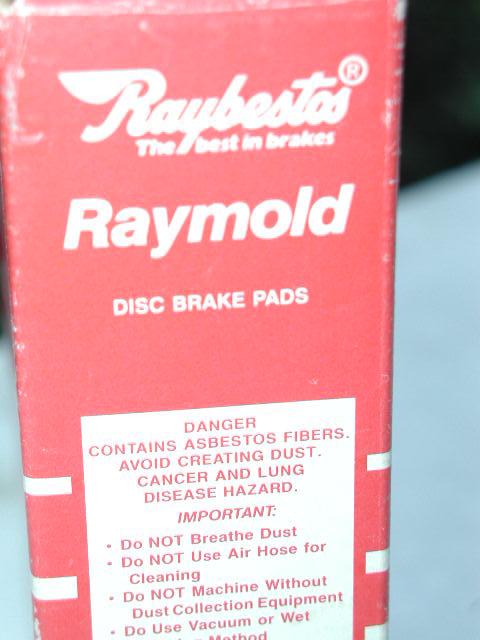
journalist Andrew Schneider has uncovered evidence that OSHA has threatened to fire an agency scientist for not softening warnings to auto mechinics about the dangers of cancer-causing asbestos in brake linings.

The problem of asbestos in brake linings is so little known that when Washington Senator Patty Murray asked OSHA nominee Ed Foulke at his confirmation hearing last January whether he thought it would be a good idea to ban asbestos, Foulke replied that he wasn't aware that the cancer-causing product was used anymore in the United States. Murray sharply corrected him, listing automobile brake pads as one of the many products in which asbestos can still be found.

Foulke could probably take some comfort in knowing that most Americans are just as ignorant about the hazards of asbestos-containing brake linings as he is. But finally last July, after six years or pressure by public health and labor activists, as well as Senator Murray, OSHA finally issued a bulletin on Asbestos-Automotive Brake and Clutch Repair Work. All's well that ends well? Not quite.

Three weeks after the bulletin was issued, former OSHA head John Henshaw called on the agency to make changes in its warnings, according to documents obtained by the Baltimore Sun. The order went out through OSHA, according to Schneider:

But Ira Wainless, an OSHA scientist who wrote the advisory bulletin about asbestos in brakes, refused, according to agency documents. Wainless cited dozens of studies, including work at his own agency, to show that his presentation of the medical risk to mechanics was solid.

Last week, David Ippolito, an official with OSHA's Directorate of Science, Technology and Medicine, told Wainless that he would be suspended without pay for 10 days if the changes weren't made, according to documents.

Wainless refused again, and the advisory bulletin remains online.
According to Ed Stern of Local 12 of the American Federation of Government Employees
OSHA wants the July 26 advisory to include studies, financed by the auto industry, that say that asbestos in brakes does not harm mechanics.

***

The union rebuttal letter noted that former OSHA chief Henshaw worked with two consulting firms run by Dennis Paustenbach, ChemRisk and Exponent. These firms, according to Stern and documents obtained by The Sun, have been paid more than $23 million since 2001 by Ford, General Motors and Daimler-Chrysler to help fight asbestos lawsuits brought against them by former workers.
Amazingly, Henshaw said that the warning wasn't needed because asbestos is no longer used in the United States. This despite evidence (also reported by Schneider) from experts who estimate that there has been an 83 percent increase in imports of asbestos brakes and brake material into the United States over the past 10 years. Dr. Barry Castleman, a former Baltimore County health officer and a leading researcher on medical and legal issues involving asbestos, estimates that thousands of workers die every year from exposure to asbestos from brake pads.

But this shouldn't be any secret to OSHA, according to Schneider,

an Aug. 31 internal OSHA memo on the brake warnings to agency chief Edwin Foulke Jr. stated: "Some domestic automobile manufacturers continue to use, in certain models, asbestos brake pads and linings."

Despite this information,

In the agency's suspension notification to Wainless, it faulted the industrial hygienist, who is an expert on the recognition, evaluation and control of hazardous materials, with failing to have adequate scientific documentation to support the claim of asbestos' danger. Yet the internal memo to Foulke lists 35 studies and reports.
In that memo, OSHA allows that asbestos can cause cancer, asbestosis and mesothelioma, but it plays down the risk to brake mechanics.
The war against warning auto mechanics about asbestos has been going on for a number of years. In 1986, EPA issued and distributed thousands of copies of the so-called "gold book: Guidance for Preventing Asbestos Disease Among Auto Mechanics. In November 2003, the lawfirm of Morgan, Lewis & Bockius, representing asbesetos manufacturers, petitioned the Environmental Protection Agency "to stop distributing warning booklets, posters and videotapes that give mechanics guidance on the need to protect themselves from asbestos." Senator Murray as been urging EPA to re-issue the publication.

Last year, OSHA officials acted to stop publication of the OSHA bulletin on asbestos in brakes. An OSHA spokesman said that release of publication of a safety and health information bulletin "is not warranted." At that time, Joel Shufro of the New York Committee on Occupational Safety and Health stated that "It borders on criminal negligence for OSHA to have produced a new alert addressed to mechanics but refuse to publish it because it does not conform to a so-called guideline."

Pressure from Murray finally forced the bulletin out last July. According to Occupational Hazards magazine,
Murray placed a legislative "hold" on the nomination of Stephen McMillin for OMB deputy director when she learned OMB ordered OSHA to shelve the publication which was due to be released on March 25, 2005 in fear of potential lawsuits against auto and parts manufacturers for asbestos-related diseases.
Medical experts, needless to say, are outraged and disgusted with this entire story:
"Asbestos causes cancer, whether it is pulled out of a mountain, scraped off a steam pipe or shed from a brake shoe," says Dr. Michael Harbut, who has examined thousands of autoworkers for asbestos disease under a project funded by the Occupational Health Legal Rights Foundation, which is financed by units of the AFL-CIO.

"To withhold these warnings to mechanics who have no knowledge of asbestos or believe it's banned is unconscionable," said Harbut, co-director of the National Center for Vermiculite and Asbestos-Related Cancers at the Karmanos Cancer Institute in Detroit.
The only good news is that this information is being released at a time when something can actually be done about it. How do Congressional oversight hearings sound?

Related Articles

Labels: ,


Slow Line Speeds In Meatpacking

The Nebraska Appleseed Center has called for the federal government to issue regulations slowing the pace of meatpacking production lines in to improve the safety of workers and food.
Swift-moving production lines processing 400 head of cattle per hour are the major cause of worker injuries and put food safety at risk, said Milo Mumgaard, executive director of the public policy center.

“The simple truth is that it all happens too fast,” he said.

Mumgaard urged Secretary of Agriculture Mike Johanns to “require the industry to slow down.”

It is Johanns’ job to “ensure our hamburgers -- and the workers who process them -- are as safe as they can be,” Mumgaard said. “Slowing down the line is a great place to start.”
The industry counters with it usual disingenuous argument that production line pace is already regulated.
Janet Riley, spokesperson for the American Meat Institute in Washington, D.C., disputed Appleseed’s conclusions.

Line speed already is regulated by U.S. Department of Agriculture inspectors, she said.

“Inspectors are in our plants every minute we operate and they are fully empowered to take action” if line speed adversely affects food safety, Riley said.

Production lines are allowed to move only at a speed that “permits compliance with federal rules,” she said.

“It’s not so much the speed of the line,” she said, but whether the production line is adequately crewed.
The fact is that the inspectors are concerned about the quality and safety of the meat, not the safety of the workers. According to a Government Accountability Office (GAO) report last year,
Line speed is regulated by USDA to permit adequate inspection by food safety inspectors. According to USDA, when the maximum speeds were originally set and when they are adjusted by the agency, the safety and health of plant production workers is not a consideration.
Not to worry:
Tyson Foods spokesman Gary Mickelson said: “Appropriate staffing for a production line is set by industrial engineers who conduct studies to determine the number of people needed to safely, yet effectively, process certain product mixes.”

Key factors in establishing staffing levels are “protecting the safety of our team members as well as the quality of our products,” Mickelson said.


Related Articles


Sunday, November 19, 2006


November 19, 1968: Today In Workplace Safety History

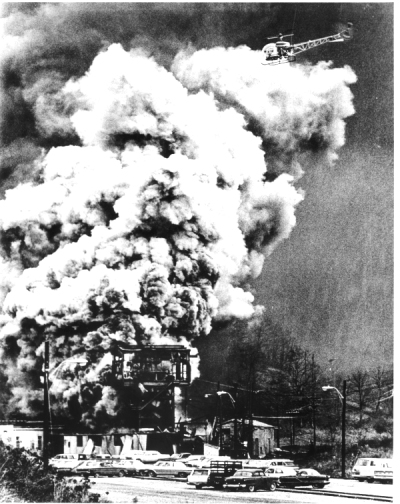
November 19, 1968, an explosion in the Farmington, West Virginia, Consol No. 9 mine kills 78 miners. More information here and here, and a recent NPR report here.

Major mining disasters such as the Farmington coal mine explosion in 1968 and the Sunshine Mine fire in 1972 led to the Federal Coal Mine Health and Safety Act of 1969 and the Federal Mine Safety and Health Amendments Act of 1977.

Labels:


Saturday, November 18, 2006


Update On The Class War: Houston TX and Tarheel NC

Stories about the Houston janitors strike and the walkout at the Tarheel North Carolina Smithfield meatpacking plant that I wrote about yesterday are making their way through the blogosphere.

To update both stories, the 1,000 Smithfield workers who walked off the job Thursday to protest the recent firing of immigrants are back at work and Smithfield officials say they won't be disciplined.
The agreement to return to work came late Friday after Smithfield representatives met with leaders from a Roman Catholic Church to discuss the workers' grievances.

Among those who returned to work were workers who had been fired, said Smithfield spokesman Dennis Pittman. The company is giving the employees more time to sort out problems with Social Security documents, which prompted the firings.

But Pittman said Smithfield is still committed to following immigration laws.
Meanwhile, the day after Houston police on horseback brutally broke up a demonstration of striking janitors and their supporters, the two sides are back in negotiations, according to SEIU spokesperson Lynda Tran.
"It's probably not a coincidence that during a week of historic civil disobedience, when the eyes of the country and the world are on Houston, cleaning companies came back to the negotiating table," Tran said.

The union says several people were injured Thursday by mounted police who were trying to break up their blocking of an intersection. The union has halted all acts of civil disobedience until it completes an investigation into the incident, Tran said
Meanwhile, several blogs are covering the issue:

Matt Stoller at My DD has photos and a video, and makes a plea to politicians:
I don't care if you don't like unions. This is insane. And if you are a politician reading this site, or a 2008 candidate, now's your chance to stand up and issue a strong statement condemning these actions and demanding that Chevron and Hines Interest pay these people responsibly.
Ezra Klein points out that this is what class war looks like and has eyewitness commentary from a striker.

Lindsay Beyerstein at Majikthise has a first-hand account by Union organizer Anna Denise Solis and another post about the striking Smithfield workers where she notes that
I think the truth is that the Democratic victories and the resurgence of organized labor are part of the same phenomenon. Americans are sick and tired of the divisive, racist, union-busting status quo, and they're making their voices heard at the ballot box and on the street.


Digby educates us about life in America (or at least in Texas:
In an unprecedented transparent attempt to severely limit the right to peaceful protest and freedom of speech of low-wage Houston janitors and their supporters, a Harris County District Attorney has set an extraordinarily high bond of $888,888 cash for each of the 44 peaceful protestors arrested last night.

***

The combined $39.1 million bond for the workers and their supporters is far and above the normal amount of bail set for people accused of even violent crimes in Harris County. While
And Susie Madrak at Suburban Guerrilla wonders
Is it the job of police officers to maintain order - or to act as bullies for corporate interests? There’s a long and dishonorable tradition of the latter in this country, and it sure looks like the good old days


Friday, November 17, 2006


Petrochem Companies Blame Workers For Cancer

Workers at Uniroyal Goodrich Tire Co. in Eau Claire County, Wisconsin, who were exposed to benzene caused their own cancer because they
voluntarily used the chemicals knowing the dangers and risks, and they failed to take precautions which could have avoided injuries.
And also, there were warnings on the chemicals and they were complying with industry standards and anyway the cancers were due to unavoidable accidents or by "abnormal or unintended uses" of the products.

Those are the excuses that 16 defendants including Exxon Mobil Corp., Sun Petroleum Products Co., Texaco, Standard Oil Co., Shell Canada and Shell Chemical are using to defend themselves against
nine former workers at the defunct tire factory who were exposed to dangerous levels of benzene, benzene derivatives, rubber solvents and other toxic and hazardous chemicals. Two the plaintiffs are dead.

According to the American Cancer Society, studies have linked benzene exposure to cancer, including myeloma, among rubber workers.

Myeloma is a progressive blood disease that affects the plasma cell, an important part of a body's immune system in the fight against infection and disease.

***

The lawsuit started when two women in their 50s who had worked together at Uniroyal in the 1970s discovered they both had multiple myeloma. The women began to research their illnesses and contacted a California law firm with experience in lawsuits related to toxic exposure.
All of their excuses about "complying with industry standards" might be amusing if we weren't talking about cancer. Amusing how? Benzene was first identified as a myelotoxin (meaning it's to bone marrow) in 1897 and leukemia in 1927. As early as the 1940's the American Petroleum Institute noted in the 1940s benzene caused leukemia noted that any level of exposure to benzene posed risks. Esso Oil's medical research division wrote an internal memo about the health effects of benzene in 1958 that said that "Most authorities agree that in light of present knowledge, the only level which can be considered absolutely safe for prolonged exposure is zero." Dow Chemical testified at OSHA's 1977 hearing on development of a benzene standard, but did not reveal that its own study had shown chromosomal damage at low levels of exposure until after the hearings were over. And the chemical industry fought OSHA's 1977 benzene standard all the way to the Supreme Court.

So cry me a river guys. And then pay up.

Related Stories


Workers Fired Up, Can't Take No More

American workers are getting mad as hell -- and they're not taking it any more.

First in North Carolina:
In a move highly unusual for nonunion workers, more than 500 employees walked out yesterday at the Smithfield Packing Company’s hog-killing plant in Tar Heel, N.C., the largest pork-processing plant in the world.

Workers involved in the walkout said it was fueled by anger over Smithfield’s recent decision to fire several dozen immigrants who the company said had presented false Social Security numbers in applying for a job.

Several of the workers said their action had largely crippled production at the plant, which employs 5,500 people and slaughters 32,000 hogs a day. But Smithfield officials said production had merely been slowed a little.

The walkout coincided with a big push by the United Food and Commercial Workers to unionize the Smithfield employees in Tar Heel, about two-thirds of them Hispanic immigrants. A number of workers said the discontent stemmed not just from the recent firings but also from brusque treatment, the speed of the production line and widespread injuries.

“They were tired of the working conditions,” said Gene Bruskin, director of the union’s organizing drive. “They want a permanent solution to the problems there.”
And in Houston:
An early-evening demonstration by SEIU janitors blocked a downtown intersection for more than an hour Thursday, resulting in the arrests of about 40 union officials and janitors, most of whom were from out of town.

Traffic was backed up for several blocks as police rerouted commuters around the three-hour demonstration.

Since Oct. 23, janitors have marched in front of office buildings throughout Houston, blocked streets and invaded a Galleria-area office in to bring attention to their cause.

The Service Employees International Union represents about 5,300 janitors who make an average $5.30 an hour and want a boost in pay to $8.50 an hour and health care benefits from the city's five largest cleaning companies.
The union's website reports that workers' lives were endangered as mounted police use horses to break up the demonstration. An 83-year old female janitor hospitalized.

Smithfield has become notorious in recent years for the dangerous conditions in its plants and its illegal union busting tactics. Earlier this year, a federal court decided that Smithfield had repeatedly broken the law in fighting the UFCW's attempt to organize its pork-processing plant in Tar Heel, N.C. nine years ago. UFCW is trying to convince Smithfield to agree to "card check" recognition of the union, instead of the marred, company friendly NLRB elections that the company abused before.

The Houston janitors went on strike last month for higher pay, more guaranteed work hours and health insurance. The 5,300 janitors, who currently earn $5.50 per hour, were organized by the Service Employees International Union last year in what was the largest union organizing campaign in the South in years. The janitors want their wages raised to $8.50 an hour, along with longer hours and health insurance. Currently they earn the lowest wages and benefits of any major city in the United States, according to the union.


Stickler ReReRenominated To Head MSHA

No, my computer is not stuttering. Welcome to "Night Of The Living Dead Bush Nominees."

Like a punch drunk fighter whose who thinks he's winning the fight even when he's lying bleeding on the mat, President Bush -- for the fourth time -- nominated Richard Stickler to head the Mine Safety and Health Administration. Stickler, you may recall, is the former mine industry official with less than sterling safety record who was rejected by the Senate and twice sent back to the White House only to be renominated again.

Stickler was finally put into the position last month by a recess appointement, which the President is able to do when Congress is out of session. The only problem is that a recess appointment only lasts one year -- hardly long enough to unpack the boxes.

Stickler was joined in the same announcement by the renomination of Wal-Mart attorney Paul DeCamp to head the Wage and Hour Division at the Department of Labor. The only problem, as the AFL-CIO Today points out, is that DeCamp's record
includes urging the weakening of the Fair Labor Standard Act’s (FLSA’s) overtime pay and other protections. He even argues for changing the law to prevent millions of workers from becoming eligible for overtime pay. Strangely enough, he also said that it would not be “in the interest” of the workers to obtain overtime eligibility.
Stickler and DeCamp join the other doomed nominees like John Bolton (recess appointed to UN Ambassador) and Ken Tomlinson to head the Broadcasting Board of Governors which oversees Voice of America and other American oversees radio networks. Tomlinson, who was first apponted to the Board in 2001, was found to have abused his position and effectively defrauded taxpayers. Tomlinson was was forced to resign from the board of the Corporation for Public Broadcasting Corporation last year after he was found to have engaged in highly unethical behavior. Stickler's in good company.

As the AFL-CIO blog says, "this is a very puzzling and odd way to demonstrate bipartisanship. Isn’t it?"

Indeed.

Labels: ,


John L. Lewis, Franklin Delano Roosevelt and Jesus

Must-read article in the Washington Post today about the difficulty the United Mine Workers are having organizing young miners in today's "second coal rush."

The older miners understand the value of retirement benefits like health insurance and pensions, as well as the job protections that come with unionization.

Middle-aged union supporters say younger workers are naive to think they won't face supervisors who underestimate danger or play favorites in assigning work, or try to deny their rights if they are injured or lay them off without explanation. They say they've seen all this and more.

The younger workers, on the other hand, are so pleased with the good money they're suddenly making that they don't want to rock the boat. That and high unemployment in the coal fields puts them a world away from the older miners:

The miners here come not only from different generations but different worlds. Those in their 50s mostly began mining as union men from union families, following grandfathers, fathers and uncles.

Their towns erected memorials to men who died in mine accidents alongside memorials for fallen soldiers. They relied on the union to protect them in a dangerous workplace and were raised to revere John L. Lewis, the longtime UMWA president.

"I have three pictures side by side in my house: John L. Lewis, Franklin Delano Roosevelt and Jesus," said Jack McReynolds, 70, a retired miner eating lunch recently at Lola's Uptown Restaurant in West Frankfort, once home to seven coal mines, all now closed. "I draw Social Security on account of FDR. I draw a pension on account of John L. Lewis, and I'm going to Heaven because of Jesus."

The UMW's current stuggle to organize Peabody coal is symbolic of the problems the union is having. In the 1980's Peabody was 80% union. Then the highly unionized eastern mines close as mining moved to the non-union west. Now that the eastern mines are reopening, Peabody is 85% "union free." They pay union wage, provide 401(k) plans and pay generous bonuses.

With all that, union organizers have their work cut out for them:
Back at Lola's Uptown Restaurant, [27 year old Carl "Bubba"] Vincelette recalled that he had listened with an open mind when a UMWA organizer visited him recently. The organizer said union coal miners elect safety committees that have authority to shut a mine if they judge it unsafe. But Vincelette said he trusted Peabody to be vigilant about safety.

The organizer also said that with 20 years in a union mine, Vincelette would get retiree health insurance for life. But 20 years sounded like an eternity.

"The way everything's going -- wars and stuff like that -- it's hard to think long term," he said.

McReynolds, the retired UMWA miner with John L. Lewis's picture in his living room, listened from across the table in pained silence.

When the young miner left, McReynolds rose slowly from his chair and straightened his Mason's hat bearing a UMWA pensioners' emblem and a gold pick-and-shovel pin the union gave him. "That young man has no idea what he's talking about," he said.
More on the Justice At Peabody organizing campaign here.

Labels:


Thursday, November 16, 2006


ILO Calls On Bush Administration To Stop Violating Screeners' Right To Organize Unions

The International Labor Organization has found that the Bush administration has violated the fundamental rights of American workers to form unions by denying unionization rights to the 56,000 passenger screeners at U.S. airports. The screeners were denied the right to organize a union and bargain collectively in 2003 for "national security reasons." The Bush administration claimed that it needed create a nimble work force capable of responding to today's threats.

The ILO was ruling on a three-year old complaint by the American Federation of Government Employees.
The ILO's Committee on Freedom of Association, which considered the case, said it was "concerned that extension of the notion of national security concerns for persons who are clearly not making national policy that may affect security ... may impede unduly upon the rights of these federal employees."

The United States is a member of the ILO, which sets global labor standards, but there is no mechanism to enforce its decisions within any of its member countries.
That wasn't the only union-busting action the Bush administration took in the name of national security, according to the AFL-CIO Today:
The Bush administration has used the same national security argument in its bid to deny collective bargaining rights through new personnel rules to more than 700,000 U.S. Defense Department workers and 160,000 employees in the U.S. Department of Homeland Security.

Federal courts have ruled against new personnel rules in both cases. Congress also has weighed in against the Defense Department’s so-called National Security Personnel System. But the Bush administration is appealing the Defense Department ruling in the suit brought by United DoD Workers Coalition made up of more than 30 unions that represent department workers.
Despite the Bush administration's orders, AFGE has been attempting to win bargaining rights for the screeners. One thousand screeners have signed cards expressing their desire to become members of a union. Despite the fact that they can't bargain, the union can represent them in disciplinary hearings, discrimination cases, and takes their case to the media.

AFL-CIO President John Sweeney and AFGE President John Gage issues a joint statement calling on the Bush administration to immediately grant collective bargaining and all other labor rights to TSA workers.
The AFL-CIO and AFGE join the international community in its recognition that national security and worker rights are not mutually exclusive. At a time when airport screeners need a voice on the job to highlight where improvements can be made in our national security, the Bush Administration continues to stifle dialogue. Today’s decision further calls into question the Administration’s policy of using national security to justify the denial of basic worker rights.

The decision by the ILO amplifies the growing voices heard around the country and the world that are calling on the Bush Administration to recognize internationally accepted workers’ rights standards.
TSA has no plans to change its policy:
Spokesman Darrin Kayser on Nov. 16 reiterated the department’s stance that collective bargaining would hurt TSA’s ability to make quick changes to respond to threats.

“Given the critical national security mission of our security officers, collective bargaining is not appropriate,” Kayser said.

Related Stories


Daughter Of Two BP Victims Settles Lawsuit

Eva Rowe, whose mother and father were killed in the March 23, 2005 BP Texas City explosion along with 13 other workers has reached a settlement with BP last week. Rowe's was the only case involving a fatality that had not been settled. She had said that she was suing the company to find out the truth behind why her parents are dead. Although all the terms of the total settlement was not released, some details are known:
Also as part of the settlement, all claims against contractor J.E. Merit Constructors., which employed Rowe's parents, and Texas City plant manager Don Parus were dismissed.

In memory of James and Linda Rowe, $1 million will go to the cancer center at St. Jude's Children's Research Hospital in Memphis, a favorite charity of the Rowes, and to Hornbeck High School in Louisiana, where Linda Rowe had worked as a special education teacher's aide before moving to Texas.

BP also will make another $30 million in donations on behalf of the Rowes and the other 13 people who died in the explosion.

The biggest payments will be $12.5 million each to the burn unit at the University of Texas Medical Branch at Galveston, which treated 23 people injured in the first six hours after the Texas City blast, and to the Texas A&M University Mary Kay O'Connor Process Safety Center, which works to prevent workplace injuries in the petrochemical industry.

The College of the Mainland in Texas City will receive $5 million for safety and process technology training for refinery and chemical plant workers.
But most important for Rowe was BP's promise to make potentially damaging records public.
Though every other wrongful death case against BP was settled in the past 18 months, Rowe had gone ahead because she wanted to hold the company responsible for the deaths of her parents, she has said.

She also said she wanted potentially damaging documents about BP safety practices to come to light during the trial.

Coon said, as a term of the settlement, those records will be made public. The process for releasing them is still being worked out, he said, but attorneys from his firm and BP will negotiate their disclosure.

The lessons learned from those records will set new industry standards and prevent future accidents, Coon said.

Rowe's attorney said she may have made peace with BP, but that doesn't mean she has forgiven them.

"I'll probably never say BP is a good company," she said.
More BP Texas City Explosion Stories

Labels:


Wal-Mart: Wrong Turn On Ergonomics

Gotta hand it to Wal-Mart. They certainly know how to spin the press. They're happy all the time, they help people save money, they have "associates," not employees, they're the new environmental champions, and now they've apparently become a leader in ergonomics.

Of course, as usual, Wal-Mart's view of a good ergonomics program doesn't exactly match the experts' view of a good ergonomics program. According to the Bureau of National Affairs Occupational Safety and Health Reporter (paid subscription), Wal-Mart's program provides "lifting visual targets." They're called "Badge Backer" rules because they're posted on the back of each associate's identification badge. Pretty nifty.

The "Badge Backer" rules tell employees to:

  • face the work (to eliminates twists);
  • lead with their feet (also to eliminate twists);
  • keep the shoulders square (to prevent side twists);
  • keep the load close to the body (to reduce fatigue);
  • "fly like a bird," (keep the elbows low and in);
  • use a 90 degree bend (to keep the back vertical);
  • do not hold (to reduce fatigue); and
  • use a momentum swing (do not throw).

In other words, what they're promoting is "safe lifting techiques." Nothing wrong with those, unless they're all there is to the program, which apparently they are. The problem is that the best way to prevent back injuries is to lift less -- smaller packages, less frequent lifting, using engineering controls like mechanical lifts. "Safe lifting" doesn't reduce the weight that's being lifted, although it can help workers lift with less stress on the back -- unless the packages are difficult to grip, or you have to twist in order to get the box from one spot to another, or if you have to lift from too low or too high, or, or, or.

But Wal-Mart consultant Bill Mullen ensures us that if the associates follow all of these good ideas, "they can still go dancing after work." Or at least after their second job. Of course, during OSHA's ergonomics hearings during the Clinton administration, people suffering from serious musculoskeletal injures were more concerned with being able to pick up their children, vacuum the carpet and just living a normal life than "dancing after work."

Of course there are a few problems, according to Wal-Mart. Like if you use the nifty "momentum swing" with eggs, they're likely to scramble. And then there's the specially developed Wal-Mart "pull hook," which makes "pulling boxes more comfortable, eliminates awkward climbing, and makes the task easier." Except that there's still a problem with "catching and pulling freight at the same time," which I think means that you have to be careful not to pull boxes down on your head. The good news, however, is that each "pull hook" only costs one dollar.

And next year, Wal-Mart has in store ergonomic lifting videos and monitoring improvements in the use of "pull hooks."

Get ready to dance.


Labels:


Wednesday, November 15, 2006


NYC Honor System, Weak OSHA Enforcement Contributing To Epidemic of Worker Deaths

A painter in Queens became the 99th fatality resulting from a fall in New York City since October 2001. Stupid workers? How about the city's "honor system" and weak OSHA enforcement that are allowing unscrupulous contractors and architects to get away with murder, both figuratively and literally,.
The doomed man was trying to attach scaffolding to the building from the roof, but the hookup failed and the apparatus crashed to the ground with him on it just after 11:30 a.m., authorities said.

His partner, who was standing on the roof, called 911. The injured painter was pronounced dead at Elmhurst Hospital Center minutes later.

Investigators said the dead man wasn't wearing a safety harness at the time of the accident. A permit was not required at the site, but the workers should have been supervised by a foreman, according to a Buildings Department spokeswoman.
Many more have been injured. How many is hard to tell, according to a special investigation by the Daily News.
Between 2001 and 2005, OSHA investigated 68 "catastrophic accidents" citywide, meaning at least one worker died or three were seriously injured.

Because the vast majority of mishaps occur on nonunion jobs involving immigrant laborers, numerous additional cases are believed to go unreported.

"When a union guy is injured, reports are filed," said David Perecman, a personal injury lawyer who represents many immigrant workers. "But when they are illegal aliens, the boss tells them if it still hurts in the morning go to the hospital and tell them you tripped and fell."
And the problem is getting worse in the city, partly as a result of the biggest building boom in recent history, and partly because of New York City's construction "honor system" which is allowing unscrupulous contractors to build illegal buildings and ignore zoning and safety rules:
"There are contractors who ... are doing it on purpose because they want the adjacent building to fall down or be vacated," Buildings Commissioner Patricia Lancaster said of the shoddy excavations.

In an interview with the Daily News, Lancaster refused to name names. But this much is certain: At the heart of the problem is a cadre of well-known scofflaw developers and shady architects who abuse the Buildings Department's flawed honor system, which allows them to self-certify their work for zoning and building code compliance.

According to the Mayor's Management Report, 43% of all building plans in fiscal 2005 were self-certified. Of those, only 18.9% were audited. And of those audited, 16% had permits revoked.
Two of the "poster boys for building boom boondoggles" are architects Robert Scarano and Henry Radusky who have not only been accused of ignoring zoning rules or building codes at no less than 26 Brooklyn apartment buildings, but three workers have also died on their projects.

The penalties, however, are not exactly cruel or unusual.
Both Scarano and Radusky have settled Buildings Department charges and have agreed to drop out of the self-certification program. But you'd never know that if you visit the department's Web site. Their names are not included on the list of disciplined architects.

Indeed, of the 34 architects and engineers who lost self-certification privileges this year and last, only four are named on the Web site. The rest have escaped public exposure in plea bargain-like deals, Lancaster admitted.

Moreover, none of them has been barred from practicing.

Few ever are.

Since 1995, the Buildings Department has asked the state Education Department, which licenses professionals, to discipline 132 architects and engineers. Only 31 have been fined or had their licenses suspended or revoked.

This year, the Buildings Department announced a pilot program to audit all self-certified plans. But it is limited to zoning conformity outside Manhattan. Building code compliance will continue to be audited randomly.
Meanwhile, OSHA isn't doing too much to pick up the slack according to CWA Local 1180 Vice President and NYCOSH Co-Chair Bill Henning.
The Occupational Safety and Health Administration, the federal agency that enforces the job safety and health law, has been starved for funds and staff for so long that the chances of a violation being identified by a random OSHA inspection are almost nil. OSHA’s staff is so small that it can barely inspect five construction sites a day in all of New York State. Even if such inspections uncover violations of safety standards, OSHA penalties are laughably small.

After a violation causes a fatality, the typical penalty is less than $5,000. In almost all cases when a worker is hurt or killed on the job, the only recourse is workers’ compensation, which pays tiny cash benefits.
Just to put that in perspective, last year the city issued 111,283 permits for demolition or construction, and this year the number is expected to reach 130,000.

The only thing working in employees' favor is the the scaffold law section of the labor law in New York which contractors have been trying to repeal:
The "strict liability" contained in that section of the law allows a worker (or the worker’s survivors) to sue an employer for damages when killed or hurt in a fall as a result of an employers negligence.

An employer who violates the scaffold law and kills a worker faces considerable liability, which is why contractors have been trying for years to get the law repealed.

Each year contractors tell the legislature that the scaffold law makes it too expensive to operate in New York State, when the truth is contractor negligence makes it expensive.
There's only one thing that's fairly certain here: fatality number 100 is right around the corner


Tuesday, November 14, 2006


What's OSHA Doing About Refinery Safety? Not Enough

And while we're talking about Congressional oversight, a prime subject might be OSHA's weak efforts to ensure safety in our nation's petrochemical industry and how increased funding and inspection strategies might address the problem.

One finding of the US Chemical Safety Board's investigation into the March 2005 explosion at BP's Texas City refinery that killed 15 workers is the contribution of OSHA's lax enforcement.
The board’s chairwoman indicated that OSHA’s approach to workplace safety might be a bit shortsighted.

“It’s just like BP was focused on trips and falls and lost work-time incident rates,” said Carolyn Merritt, who chairs the Chemical Safety Board. “OSHA focused on that, and they’re not going to recognize, for instance, if (a company) cuts too far back in maintenance.”

Merritt said OSHA’s approach does not recognize the long-term potential for disaster due to poor maintenance or other lax process-safety measures.
TJ Aulds, writing in the Galveston Daily News notes that U.S. Secretary of Labor Elaine L. Chao recently released a report showing workplace injuries and illnesses to be at an all-time low, and credits "compliance assistance from the regulated companies, health and safety partnerships with labor groups and targeted, “aggressive” enforcement against bad actors" for the improvement. (More on that here.)

Although OSHA's inspections of petrochemical facilites has picked up recently, that increase is a result of the catastropic BP explosion and other small incidents. In fact, according to Aulds, it may be OSHA's reliance on self regulation that's causing the problems.
Department of Labor statistics obtained by The Daily News show that in OSHA’s Region 6, which includes Texas and four other states, the agency conducted 123 inspections of petrochemical facilities in three years, from Oct. 1, 2003, through Sept. 30, 2006.

The vast majority of those inspections would not be considered preventative. In fact, 91 were conducted as a result of an accident, referral or complaint.

The rest were either follow-ups to previous inspections or related to an accident, complaint or referral.

Forty-eight of all of the Region 6 inspections during that same three-year period were conducted by the Houston office, which has oversight of the petrochemical facilities in Galveston County.

From those inspections, OSHA issued only four non-injury or non-incident citations.

However, the rate of inspections has picked up dramatically in the Houston region since the blasts at BP.
The root cause of this problem is, of course, not lazy OSHA inspectors, according to Merritt:
“Listen, they are understaffed, under-funded and overworked,” she said. “It’s simply a big job, and OSHA doesn’t have the resources to do much more than it already is.”
And the cause of that problem lies in Washington D.C.

Nevertheless, OSHA has it's opinion and it's sticking the script, no matter how ridiculous it sounds:
“A strong, fair and effective enforcement program is a key part of OSHA’s overall approach to workplace safety and health,” said Elizabeth Todd, a spokeswoman for OSHA’s Region 6 office. “We have the resources we need to be effective. Our balanced approach to workplace safety and health is succeeding, and it’s validated by workplace injury, illness and fatality rates that are at their lowest levels, even as the work force continues to expand.”
Blah, blah, blah. Not everyone is fooled though.
That response drew a chuckle from Glenn Erwin, who heads the United Steelworkers workplace safety initiatives.

Erwin, a former Texas City resident and BP — then Amoco — employee, is also a member of the panel led by James Baker that is reviewing the safety culture of BP.

“There is never an incident that happens that doesn’t have precursors or warnings before it happens if industry and (regulators) would investigate,” said Erwin, a critic of programs that emphasize investigations only when injuries are involved.

“Companies should be required — and OSHA actively force them — to investigate every incident, no matter what the size and even if no one gets hurt or loses work time.”

Erwin said such measures wouldn’t likely take hold unless Congress gets involved.

Fewer people were killed in the Sago Mine accident “and it sent shock waves all the way through Congress,” said Erwin.

“They even had hearings on mine safety. BP didn’t have that shockwave. There were no hearings until you had that problem with Prudhoe Bay, (Alaska).

“Why was it there were not hearings on Capitol Hill as to why (the Texas City) incident was allowed to happen? It’s a double standard.”


Erwin credits the Chemical Safety Board with putting pressure on BP as well as on federal regulators.

“Had it not been for the CSB calling attention to this last year, Terry Shiavo would have been the only news, and we would have been a footnote,” he said. “Congress was so worried about that one woman’s life, but didn’t get at all bothered that 15 people were killed.”
Amen brother.

Labels: , , ,


People Get Ready, Oversight's Coming...

I never fail to get a chuckle when reading the National Association of Manufacturers blog, written by NAM VP Pat Cleary. For the past several years Pat writes the same post, criticizing John Sweeney for pouring the hard-earned wages of American workers down the political sinkhole, only to lose election after election.

Being as Pat can no longer write that story, he's moved on to criticizing labor's agenda in the new Congress. Clearly having his finger on the pulse of the American electorate (not!), Pat made this statement in this morning's post about post-election "union demands" on Congress:
First and foremost, there's oversight, a big fat waste of time that will find little appetite among the general public. Not why they sent Dems to Washington.
Actually, Pat, with political appointees and corporate contractors doing "a heck of a job" from the city of New Orleans to the sands of Iraq to the mines of West Virginia, to the wasteland of the Department of Homeland Security, that's exactly why the sent Dems to Washington. No appetite? People are starving for oversight.

Washington Post and Bloomberg News columnist Cindy Skrzycki understands that a new day has dawned:
Business lobbyists have been powerful players with the Congress and the White House under Republican control the past six years. The emphasis was on minimal regulation, easy access to federal rulemakers, many of whom came from industry, and almost no congressional oversight.

There were occasional bursts of activity after the Sept. 11, 2001, terrorist attacks, the collapse of Enron Corp . and coal mine disasters. But for the most part, business interests were able to constrain new rules or put their imprint upon them. And many workplace-safety rules proposed by the Clinton administration were shelved.

"I can't be happier," said Gary Bass, executive director of OMB Watch, a nonprofit group in Washington that monitors regulatory policy. "The public wins. Some of these political appointees are going to have to learn what oversight is."
And workplace safety issues may be receiving some special attention:
One notable change in direction is expected from Rep. George Miller, a California Democrat and the incoming head of the House Committee on Education and the Workforce, where he has been the ranking minority member for six years.

"It's been clear there has been no oversight; not even mildly aggressive oversight," said Miller, whose panel oversees regulatory policy at the Occupational Safety and Health Administration and the Mine Safety and Health Administration.

Under Rep. Charlie Norwood, a Republican from Georgia, the subcommittee on workforce protections held hearings devoted to issues such as recovery of legal fees for small-business owners "when they contest unjust OSHA citations and prevail in court."

Miller said in an interview that he doesn't have a lengthy agenda but that he wants to examine the value of voluntary compliance programs and self-reporting of OSHA violations by employers.

Labor unions are expected to get some of their issues back on the agenda, especially because Sen. Edward M. Kennedy, a Massachusetts Democrat, will head the Senate Health, Education, Labor and Pensions Committee.
One good topic to start off with might be whether OSHA has responded to a 2004 Government Accountability Office report that found that there was no evidence that OSHA's much venerated alliances and voluntary programs are actually effective in preventing workplace accidents.

And finally, Skrzycki quotes this rather amusing "sky is falling" alert:
"These are the same folks who brought us the Endangered Species Act, the Clean Water Act, and top-down regulatory control schemes," said Andrew Langer, manager of regulatory policy for the National Federation of Independent Business, one of the lobbies closest to the Republicans.
Well, Andy, that's not precisely true. An early version of the Endangered Species Act, the Endangered Species Preservation Act was passed in 1966, but the real Endangered Species Act, as we know it today, was passed in 1973 and signed by President Richard Nixon. And the first Federal Water Pollution Control Act Amendments were passed in 1972 and signed by...Richard Nixon, although they were amended in 1977 into what became commonly known as the Clean Water Act. Oh, and then there was the Occupational Safety and Health Act of 1970 -- signed by Richard Nixon.

Those were the days when some Republican lawmakers actually cared about the lives of workers and the fate of the earth, as opposed to "important issues" like Terry Schiavo, same sex marriage, flag burning and the rights of zygote-Americans.

Labels:


Adam Finkel: Not Yielding

When last we left whistleblower and former OSHA official Adam Finkel, OSHA was refusing to give him the information he requested under two Freedom of Information Act requests to determine how much beryllium OSHA inspectors had been exposed to in the course of their inspections, and how many other OSHA employees may have developed signs of beryillium-related disease. OSHA was also refusing to give him chemical sampling data from inspections that he needs to determine whether OSHA has any kind of credible health targeting and sampling program, and if it is responding sensibly to chemical overexposures as the law intends. After a year and a half, he's gotten no response and has now filed a lawsuit.

Finkel, you may recall, was removed from his job as OSHA Regional Administrator in Denver in 2003 because he blew the whistle on the agency for not establishing a testing program for OSHA inspectors who were exposed to beryllium in the course of their inspections. Due to Finkel's efforts, OSHA tested a number of its inspectors and last year, The Chicago Tribune obtained an internal OSHA memo stating that ten OSHA employees out of 271 tested have confirmed postive results for beryllium sensitization.

Time moves on and OSHA has filed a legal brief in which the agency presents the reasons why it is refusing to give Finkel the information. Unfortunately, OSHA's excuses don't even pass the laugh test.

In order to figure out the lifetime beryllium exposure to each inspector, he must have the the identifying code of each inspector. And in order to determine whether OSHA is actually doing an adequate number of health inspections, levels of overall industry compliance with chemical standard, and other issues, he needs the names of the companies that were inspected and the names of the chemicals that were sampled.

OSHA, however, is refusing to give him the names of the companies, allegedly fearing that trade secrets will be released. (How a chemical wafting through the air, being inhaled by a worker constitutes a trade secret is beyond me. As Adam says, it's not like they'll be revealing the secret formula of Coca Cola.) For the first time, OSHA issue a Federal Register notice requesting information from companies about whether the requested information constituted a trade secret, and in case corporate America didn't get the hint, OSHA even sent memos to industry trade associations warning that “[t]here is reason to believe that the release of this data could include the confidential commercial or trade secret information that has not been previously disclosed to the public.”

The agency argues that an estimated 2% of companies inspected requested that the chemicals that were sampled be considered trade secrets, yet OSHA now claims that it never kept track of any of those alleged requests, and no one can come up with any examples of any business that ever claimed that the sampled chemicals were trade secrets. Nevertheless, OSHA says that Finkel's request would mean that agency staff would have to spend an estimated 1521 days to look through 73,000 enforcement case files to find the mysterious 2% that may have requested that the information be kept secret. Meanwhile, while searching (or not searching) for the elusive, probably imaginary 2%, OSHA sits on millions of valuable data points.

This, even though Finkel has gathered lots of examples over the past decades of researchers who have been given the exact same information that Finkel is requesting, and that OSHA is suddently considering to be a trade secret. (And he's looking for other examples of OSHA supplying chemical and company specific monitoring data to researchers -- or cases where such data has been declared a trade secret. You can contact him here.)

Then, in logic that makes the head spin, OSHA claims that it doesn't want to release information about the inspectors exposed to beryllium because may somewho figure out the names of the inspectors and get rich selling the information to employers who will then be able to deduce valuable information about which inspectors are tougher. (Why this information would be useful is beyond me, as employers don't get to choose their inspectors based on how well they do their jobs.) Adam points out that they're not exactly a bunch of Valerie Plames: the first thing inspectors do when they enter a workplace is introduce themselves and show their photo IDs.

Finally, the agency argues that the potential release of such data would cause more employers to force OSHA to get a warrant before inspecting -- also a rather questionable assertion, being as it's so easy for OSHA to get a warrant that few employers actually deny entry.

Menwhile, the public health community doesn't share OSHA's dim view of Dr. Finkel's efforts on behalf of workers. The American Public Health Association last week awarded Adam with the prestigious David P. Rall Award for Advocacy in Public Health. The Rall Award recognizes an individual "who has made outstanding contributions to public health through science-based advocacy, nationally or internationally."

I was fortunate to attend the ceremony where Adam gave his acceptance speech and explained a bit about what makes him tick:
At the risk of revealing the depths of my naïveté, however, I can simplify a career in science advocacy even further—I am drawn to try and take the least circuitous path to the truth. So far, it has been easy, in that my tendency towards precautionary analysis and my concern for workers have never come into conflict with what I see as true. The hard part has been working among and for individuals who treat the truth like it was the newest electronic gadget to be manipulated. I really believe that the casual lies beget the “big lies”—brought to you by “Mission Accomplished” banners and backed up by withholding of information, misuse of data, and the glorious tendency to write the press release first and then look for something, anything, to support it. If the agencies ever want to get back to their original regulatory and enforcement missions again, they had better staff them back up with people who indeed will advocate—but for something larger than their own career paths.
And finally, as those of us with parents and children know, we all come from somewhere and, hopefully, return the favor with the next generation:
Finally, I want to thank my family. My father Max has cheerfully (or so it has seemed to me) supported everything I’ve ever accomplished (and many things I’ve failed at as well). My Uncle Lou, who will be 95 in March, got his MPH at Johns Hopkins after World War II, and helped inspire me to choose public health and policy as a career. My wonderful wife Joanne has had to move her psychology practice from D.C. to Boulder to D.C. to Princeton during the past six years, and never blamed me despite this needless price of my advocacy. Most of all, I honor the hereditary gifts and life lessons I’ve received from my mother Mae, a retired ophthalmic nurse, who showed me how, and tried to show me when, to try to be the irresistible force or the immovable object. I often tell my daughter Maia that it’s a cruel fate of genetics to be both the second most stubborn person in the world and also in our little household, but I look forward (as I think you all should) to being on the same side of whatever causes she chooses to advocate for in the decades ahead. As Tennyson said, may those of us just starting out, and those of us “made weak by time and fate,” remain “strong in will/ To strive, to seek, to find, and not to yield.”
The full text of Adam's speech can be found here.


What The Next Congress Holds In Store For Workplace Safety

This week's Inside OSHA (paid subscription) has a number of articles about what we might be looking forward to as a result of the elections. To summarize --
  • Senator Edward Kennedy (D-MA), who will chair the Senate labor committee, will reintroduce OSHA reform legislation that will increase penalties and provide coverage to many workers who are not currently covered by OSHA, like public employees. He can look forward to support from Rep. George Miller (D-CA) who will head the House Education and Workforce Committee. Miller, you will recall, was pushing a much stronger version of the MINER Act that was passed and signed by Bush last June following a series of mine disasters.

  • On the other side of the coin, OSHA "deform" legislation," passed in the House by Rep. Charlie Norwood (R-GA), and pushed in the Senate by outgoing Labor chair Mike Enzi (R-WY) will gather dust.

  • Congressman Roger Wicker's (R-MS) appropriations rider prohibiting OSHA from enforcing a requirement for fit-testing of respirators designed to protect health care workers from tuberculosis will be lifted. The American Hospital Association, which pushed the ban, will not be happy.

  • Safe patient handling legislation to protect the backs of health care workers may gain headway. Congressman John Conyers (D-MI) introduced safety patient handling bill in the last Congress. At least nine states have all passed patient handling legislation.

  • With Dems in charge of the budget (except for the fact that Bush has to sign it), we may be able to look forward to larger OSHA budgets to reverse an 8.6% drop in OSHA positions since Fiscal Year 2001, and more money for worker training grants.

  • Michigan GovernorJennifer Granholm was re-elected. Granholm has been pushing through a state ergonomics standard despite fierce opposition from Republicans in the state legislature.

  • Business assocations have been busy sending out alarms that the sky is falling, fearing that Democrats will try to push national ergonomics standards and force OSHA to scale back its volunatry programs. Not bad ideas, but I wouldn't hold my breath.

  • Finally, let's not forget about oversite hearings.

WARNING!!

All of these sound like great ideas and you probably read them here first. In fact, unless you subscribe to Inside OSHA, the BNA Occupational Saety and Health Report, or other professional publications, you haven't read any of this anywhere else. That's because no one is talking about them except us. It's been a long 12 years, and there are a lot of interests out there who have been waiting a long time to get something done. Workplace safety is just one of those issues. And aside from the continuing problem in the White House and the fact that it takes 6O votes to pass most legislation in the Senate, there are a few other potential obstacles.

In order for any of these great ideas to happen, unions and Democratic politicians need to get behind them in a big way. And in order for that to happen, all of you reading this -- workers, union members, union staff, injured workers, families of injured and killed workers -- all of need to talk (write, phone, fax, e-mail) to your elected representatives, union officials, newspapers, television and anyone else who will listen.

Labels: ,


Monday, November 13, 2006


Nuclear Workers: "At That Time You Just Trusted The Government"

The Dayton Daily News is running a series on one of the most shameful and tragic episodes in American history-- the sacrifice of thousands of America's nuclear veterans. And it's a tragedy that's still happening.

A little over 25 years ago, I was working for a group called Environmentalists For Full Employement, trying to build coalitions between unions and environmentalists. We joined with the anti-nuclear group SANE to bring a bunch of workers, represented by the Oil Chemical and Atomic Workers union, from the Portsmouth Gaseous Diffusion Plant in Piketon, Ohio to talk with their Senators about the working conditions at the plant. The Senators (John Glenn and Howard Metzenbaum) were sympathetic, if somwhat skeptical that the US government would be treating workers this way. Nothing came of the meetings.

Little did we know how bad things really were. In fact, it wasn't until the Clinton administration that the federal government finally admitted that we were killing thousands of workers in the name of national security with diseases such as emphysema, lung cancer, asbestosis, beryllium disease. According to experts, over half of the 10,000 workers who were employed at Piketon are at risk of occupational illnesses from radiation and chemical exposures.

The Dayton Daily News is running a three-part series on the worker and environmental devastation caused by our government to cold war nuclear workers at the Piketon plant. (The first two parts are here and here.)
Government investigators blame problems at the now-closed Portsmouth Gaseous Diffusion Plant on decades of slipshod safety practices, accidental toxic releases and routine mishandling of chemical and radioactive material.

The cleanup cost at the uranium enrichment plant, estimated at $3 billion, could eventually top the $4.5 billion spent at the U.S. Department of Energy's former Feed Materials Production Center in Fernald, according to Ohio Environmental Protection Agency officials. That would make the Piketon cleanup the most expensive environmental reclamation project in Ohio history.

For decades, operators of the government-owned plant created a secret dump, spraying PCBs and uranium-contaminated oils on dusty roads, burying hazardous waste in unlined landfills, pouring toxins into waterways, allowing radioactive incinerator ash to scatter in the wind — even tilling radioactive oils into the ground.

Former workers told the Dayton Daily News chilling tales of a workplace in which managers downplayed risks, enforced a code of silence, and failed to protect employees against some of the most dangerous substances on earth.
The environment around the plant didn't fare much better.
In the early years, few environmental regulations existed across the United States and the hazards of chemical and radioactive materials weren't fully understood. By the 1970s, the government began regulating the handling and disposal of hazardous materials, and took action against companies that didn't follow the rules.

But unlike private companies, the Energy Department was allowed to set its own environmental standards, at least when it came to nuclear facilities such as Piketon. Energy officials, in effect, said, "trust us." Until the late 1980s, environmental regulators had no jurisdiction — or access — to the Piketon plant, and even now secrecy cloaks many plant practices.

All nuclear facilities must keep some practices confidential for reasons of national security. But the secrecy and self-regulation at Piketon veiled an astounding level of environmental destruction.

In 2000, the Energy Department secretary launched a massive investigation that documented the plant's grim environmental record: mishandling of hazardous and radioactive material, failure to properly monitor environmental emissions or workers' exposure to radiation, ignoring safety rules. The investigators identified 400 accidental releases of uranium gas or toxic fluorine since the 1950s, although they said the true total was unknown due to poor record keeping.
Even after EPA gained access to the plant in the late 1980's, the nuclear officials continued to claim that they were example from all environmental rules. Today the plant is being cleaned up, but funding doesn't begin to touch what must still be done.

In 2000, the Clinton adminstration pushed through the Energy Employees Occupational Illness Compensation Program Act which guaranteed $150,000 for those atomic workers at certain plants -- like Piketon -- that came down with certain types of cancers, as well as lifetime medical benefits. Workers at other nuclear plants, however, had to have their dose "reconstructed" by the National Institute for Occupational Safety and Health (NIOSH) before they're compensated. The program has been riddled with problems, however.

$2.2 billion has been handed out so far.
But the program's progress has been anything but smooth. It's been marked by bureaucratic delays, conflicts of interest, allegations of shaky science and what some say is an anti-worker bias that denies compensation to deserving claimants, many of them elderly.

***

Of the 58,000 applicants nationwide, only about 15 percent have received money or medical benefits. The rest have been turned down, are waiting to have their cases heard, or are struggling to prove their illnesses are work-related.

"New problems are cropping up every day," said Richard Miller of the watchdog Government Accountability Project, who lobbied for the program's creation. "I'm just heartsick about what they've done to this program."

Until 1999, federal Energy officials had a simple response to claims by sick atomic workers: Don't blame us. The feds denied that workers were sickened at Energy Department facilities such as Piketon, and plant contractors often blocked employees' bids for state workers' compensation.
Those who are required to have their dose "reconstructed" are in particularly bad shape. Three quarter of their claims have been rejected:
Critics say the program puts an insurmountable burden on most Energy workers to prove their illnesses had occupational causes, particularly because many old plant records are missing, incomplete, changed or, some allege, falsified.

Piketon plant guard Jeffrey Walburn and the president of his union local are calling for a criminal investigation, saying worker exposure records being used to decide compensation cases are "irretrievably corrupted" by falsification. Walburn, who has a lung ailment, said plant records his lawyer obtained with a subpoena show that someone changed his recorded exposure reading to zero after he inhaled a noxious gas in a 1994 accident.

Both lawsuits Walburn filed against the Lockheed Martin Corp., parent company of the now-defunct contractor he worked for at Piketon, have been "dismissed as having no merit," said Gail E. Rymer, Lockheed spokeswoman.

Elliott said plant records were "in some cases modified or changed by DOE."

"I understand and fully appreciate that these Cold War veterans — their activities were kept in secret and in many cases what they were exposed to was never revealed to them," he said. "I find that to be deplorable."
Workers were lied to and given lousy personal protective equipment:
Until the 1990s, guards wearing no protective gear often were posted around radioactive hazards, and even had to train in contaminated areas. When accidental releases occurred, guards often responded without adequate respiratory protection.

Charles Yeley, who developed about 50 skin cancer lesions and a lung disease after years as a plant guard, said he never considered the dangers.

"At that time, you just trusted the government," said Yeley, who received compensation this year. "We were out there wallerin' around in it (radiation) and I didn't know a thing."
Some people, like Piketon plant chemist James Reynolds are not just having trouble proving that they were exposed; they can't even locate records proving that they worked there because they worked for contractors. For Reynolds and thousands of others, the tragedy continues.
Over nearly five decades, thousands of people like Reynolds passed through the gates at Piketon, doing a job that many coveted for its good wages and benefits. But now instead of serving their government, a good many of them are fighting it, often while battling debilitating or terminal illnesses.

"The Cold War is still being fought in nursing homes, in convalescent facilities and in emergency rooms and in hospices all over the United States," Borris said. "It's not the type of killer that kills right away.

"It kills over a long period of time."


Workplace Safety Training

Two New Training Opportunities

National Labor College Train The Trainer

Would you like to learn how to teach union members and other workers about safety and health from a union/worker perspective, how to involve workers in safety and health, and learn how to make the union/organization more effective in tackling safety and health problems? Do you want to improve your training skills on workplace health and safety? Do you want to learn a fun, interactive way to do all of these things?

Well, it's your lucky day. The National Labor College (used to be called the Meany Center for Labor Studies) in Silver Spring, Maryland is offering another workplace safety and health Train-the-Trainer course February 11 – 16, 2007. The program is for union and community organization activists, staff, and local union health and safety representatives who would like to teach workers about workplace health and safety issues. The program will have approximately 20 participants who must be sponsored by their union or organization and must agree to facilitate safety and health training in their union or organization.

And best of all, financial assistance is available.

More information here.

NYCOSH and The New York City Central Labor Council

Meanwhile, if you're in New York, you can take advantage of a training program for union staff and members who are committed to improving health and safety in their workplaces, sponsored by the New York City Central Labor Council, in conjunction with the NNew York Committee for Occupational Safety and Health (NYCOSH). It's a great way to keep up-to-date on the issues, to meet fellow activists who are grappling with similar problems, and to work together to improve the safety and health of all union members in our City.

Attend at least five sessions, and you’ll receive a health and safety certificate; you will also become a member of the Council’s Health and Safety Network. Sessions will be three hours in length, and will start in December.

For more information, contact the Labor Council at 212-604-9552.


November 13, 1909: Today in Workplace Safety History

November 13, 1909: A fire in the Cherry Mine in Cherry, Illinois kills 259 miners. More information about the Cherry Mine disaster here, and here, and a book, Trapped: The 1909 Cherry Mine Disaster, here.


Sunday, November 12, 2006


Weekly Toll: Death In The American Workplace

A partial list of workers killed on the job over the past couple of weeks.

'She was a force of nature' Dartmouth family loses daughter to fatal accident

DARTMOUTH, MA — Kevin O'Driscoll took a photo of his daughter, Shannon, in her graduation robe off his living room wall last night, cradling it in both hands. The big, bearded trucker sighed, blinked, then smiled. "She was probably the only graduate there with pink hair," he said. The sun glinted off her flamingo-colored bob and white Dartmouth High School robe in the picture. Ms. O'Driscoll, 24, had just finished holding a sign with a group supporting state ballot Question 3 — which would allow child-care workers to unionize — and was crossing Route 1 on the way to her car.

Before she was killed, she was a national representative for the Service Employees International Union. She was stationed in Chicago over the summer, but returned to Massachusetts three weeks ago for a shoulder operation. "She was campaigning with a busted shoulder, her arm in a sling," Mr. O'Driscoll said. "I was tremendously proud of her." Ms. O'Driscoll was among a group of people holding signs on the sidewalk at the intersection of Route 1 and Interstate 495 at about 5 p.m. Sunday. "Apparently, once they were done, they walked a little ways down on Route 1 northbound and crossed Route 1 southbound," Plainville Police Chief Edward Merrick said. "Their cars were parked at a shopping center nearby." Ms. O'Driscoll was the last to cross, and was struck, the chief said. Police do not plan to charge the driver, a 50-year-old man from Attleboro. The demonstrators were in a dark area, where there are no crosswalks or stoplights, and the driver did not appear to be speeding, Chief Merrick said.


Camden store employee killed during tussle with robber

CAMDEN, N.J. (AP) _ A 35-year-old grocery store employee was shot to death after trying to wrestle a gun away from a robber in what police called a "heroic" effort to save his co-worker, city officials said Sunday. Ambioris Antonio Pena-Duran, of Camden, died Saturday night after being shot just after 8 p.m. in Cesar's Grocery Store in south Camden. Officials said Pena-Duran approached the robber from behind after the man pointed a gun at his 42-year-old female co-worker and demanded she open the cash register.


Guard Found Slain at FedEx Facility

Beltsville, MD -- A security guard working at a FedEx Ground distribution cengter in Beltsville was found dead there yesterday, police said. The victim, identified as Reina N. Lynch, 26, was a school bus driver and the mother of two children. She had taken the security job to help make ends meet, her mother said.

Police said a colleague arriving for the day shift at 7 a.m. discovered Lynch lying on the ground with a single gunshot wound in her upper body. She was pronounced dead at the scene, said Cpl. Stephen Pacheco of the Prince George's County police department. Lynch, of Bowie, worked in a guardhouse at the entrance to a fenced compound in the 11900 block of Trolley Lane.


Industrial accident kills Angora man

BRITT, MN — A 41-year-old Angora man died Friday after becoming trapped under a conveyor belt system at the Seppi Bros. Concrete gravel pit on Highway 53 in Britt, a St. Louis County Sheriff’s Department news release said.

The Sheriff’s Department received a report of a man trapped under the collapsed conveyor belt around 8 a.m. and found Seppi Bros. employee Christopher Mark Luecken dead at the scene upon arrival by law enforcement and emergency medical responders. The conveyor belt system was being prepared to be moved and Luecken was standing near it when it collapsed, the release says.


Walgreens truck driver found shot in head

POWELL, KY -- A truck driver found in the parking lot of a Powell drug store early Saturday morning died later at UT Medical Center. David Lindsey, 53, of Knoxville, was found lying in the parking lot of the Walgreens at 7320 Clinton Highway in Powell by another truck driver around 3:00 a.m. He had been shot in the head and leg.


Upper Saucon police officer killed on Route 309

Allentown, PA -- A 32-year-old Upper Saucon Township police officer died this morning after being struck by a northbound vehicle on Route 309, state police said. Investigator David Petzold was trying to take a dead deer off the highway when he was struck by a van driven by Dong S. Oh, 52, of Blue Bell, Montgomery County, at 6:05 a.m. today, officials said during an afternoon press conference.

Petzold was flown to Lehigh Valley Hospital-Cedar Crest, where he was pronounced dead at 6:54 a.m. Lehigh County Coroner Scott Grim said Petzold died of multiple blunt force injuries. He ruled the death an accident.


Worker killed at construction site for Dayton career center

DAYTON, OH —— A Brookville father of two was killed Thursday at a construction site when part of concrete crushing machine hit him, police said. The victim was Thomas Morgan, 29, of the 7200 block of Brookville Salem Pike, according to the Montgomery County Coroner's office. He was killed about 9:15 a.m. in the 800 block of West Washington Street, the future site of the Dayton Public School district's David H. Ponitz Career Center.

Morgan was working for Homrich Inc., based in Carleton, Mich., Dayton police Sgt. Richard Blommel said. The accident occurred when Morgan went to check on a crusher that had jammed, Blommel said. The crusher is used to grind concrete into sand. The crusher's operator had shut off the machine and walked away when Morgan went to kick a part of the machine called the tumbler, which rolls the concrete pieces around and shoves them into the area where the grinder is located, Blommel said."When he kicked it lose, it flipped (up and hit him)," Blommel said. "The machine was off, but it was still under pressure." Co-workers at the scene said Morgan was a member of the Operating Engineers Union Local 18.


Electrical worker dies working at Cedar Falls Hy-Vee

Cedar Falls, IA -- An electrical worker has died while working on a new Hy-Vee story in Cedar Falls. Chris Turney, whose age was unavailable, died Wednesday afternoon. His death is being investigated by the Occupational Health and Safety Administration. “It appeared the death was not related to anything the person was doing,” said Chris Friesleben, a Hy-Vee spokesman.


One dead in industrial accident at New Bedford wharf

NEW BEDFORD, MA - One person was killed and nine others hospitalized Thursday after being overcome by fumes following an industrial accident on a docked fishing vessel, police said. New Bedford police spokesman Capt. Richard Spirlet said one of the workers died. Police did not identify any of the victims. The workers were using a gasoline-powered pressure washer in a fresh water tank below deck when one passed out, Spirlet told the newspaper. One worker called 911, and returned to find two other workers unconscious.


City litter picker killed on I-40

ALBUQUERQUE, NM -- Albuquerque police are investigating a tragic car accident on Interstate 40 that left one man dead and almost killed another. The men were picking up trash for the city along the Interstate near Eubank NE when a car headed eastbound swerved into them.

The two men were part of Mayor Marty's Clean Team which picks up trash around the city.Around 9 a.m. the men were cleaning the shoulder of I-40 when one of them was hit by the driver of a PT Cruiser who may have been under the influence. The victim died at the scene.


Train hits semi in Tampa area; truck driver killed

Tampa, FL -- An Amtrak train carrying 89 people slammed into a tractor-trailer Wednesday, killing the truck driver and leaving three passengers with minor injuries, authorities said. The Amtrak Silver Star was heading into the Tampa area when it collided with the truck at an industrial rail crossing around 1:45 p.m., Fire Rescue Capt. Bill Wade said. The train stopped safely after the crash and did not derail, Wade said. The semi, which was carrying scrap metal, caught fire and was destroyed. The truck driver, 45-year-old Henry James Montgomery, of Tampa, died at the scene, Wade said.


Construction worker who died in fall is identified

MINNEAPOLIS, MN — Authorities have identified the construction worker who died after falling 35 stories while dismantling a crane at a downtown condominium complex. Arne Fliginger, 45, of Wyoming, Minn., died of blunt force injuries, the medical examiner said. His 22-year-old son, an ironworker who was also at the site, witnessed the fall.

Police said Fliginger apparently lost his balance on a platform between the tower and the crane, but it wasn't clear whether there was an equipment malfunction. Fliginger worked for Northwest Tower Cranes and was working at the site of The Carlyle condominiums. It was the second time a worker has fallen to his death while working on the project. A 36-year-old Plymouth man died after falling at least four floors at the site in September 2005.


Man killed by collapse of earth wall

Indianapolis, IN -- A Fishers man who stepped outside a safety box while installing a sewer line in a deep trench was fatally injured when an earth wall collapsed, Johnson County sheriffs' investigators said. Daniel L. Coffing, 52, was trapped by dirt and mud that reached the middle of his chest, said Maj. Steve Byerly. The accident occurred about 12:45 p.m. on Wednesday at a construction site east of I-65, south of Whiteland Road behind the Flying J truck stop.

"They were installing a 6-inch plastic sewer line for a new building there," Byerly said. Coworkers rescued Coffing from the dirt and began cardiopulmonary resuscitation, Byerly said. Indiana Occupational Safety Health Division inspectors told investigators the trench was about 12 feet deep.


Framer dies after site accident

San Louis Obispo, CA -- A Santa Maria man died Sunday after being hospitalized with a back injury from a construction accident in San Luis Obispo last month. Alejandro Becerra, 53, a framer for Luker Framing and General Construction died of natural causes, according to a San Luis Obispo County sheriff's-coroner report. Workers from the Santa Maria-based company were erecting a commercial building in the 3500 block of Broad Street Oct. 26 when the construction accident occurred and injured four people.

“He did not die because of the accident,” said Sheriff's Sgt. Brian Hascall. Becerra apparently died of previous diabetes and heart conditions, Hascall said, quoting a medical report signed by the coroner. Becerra was taken to French Hospital Medical Center with a broken back and was later transferred to Sierra Vista Regional Medical Center where he died shortly after 10 a.m. Sunday, said hospital spokesman Ron Yukelson. More than a week earlier, 12 workers from Luker Framing were erecting an 8-foot tall wall frame that, for unknown reasons, lost balance and tipped over on four workers, according to a San Luis Obispo fire official. Three of the four workers, whose names were not released, suffered mostly cuts and scrapes. Becerra was the only one to be hospitalized.


Employee Dies in Workplace Accident

MYRTLE BEACH, S.C. (AP) - Investigators say a Georgetown chemical plant worker who entered a large dryer to help a passed out colleague lacked oxygen and died. Officials say 27-year-old Ronald J. Altman was killed Saturday and two other workers were injured at 3-V Incorporated. The company makes chemicals used in plastic, textile and paper industries.

Randy McClure of the U.S. Chemical Safety and Hazard Investigation Board says the 3-V incident is similar to an accident where two workers died at a Delaware refinery last year. Federal safety authorities say 3-V was fined $1,000 in 2002 for worker health and safety violations.


Accident kills postal worker

SPRINGFIELD, MO - A 58-year-old U.S. Postal Service employee died last night after the driver of a tractor-trailer backed into him at a loading dock of a mail distribution facility on Brookdale Drive, police said.

The accident was one of two serious accidents involving a pedestrian occurring within a few minutes in different parts of the city, said police Capt. Robert T. McFarlin.


Man Killed Pouring Concrete in Chandler


Chandler, In -- A construction worker is killed in Chandler, Indiana. The man killed was part of the crew pouring concrete for the new highway being built in Chandler. Police say he was standing behind a dump truck that was backing up, and the driver didn't see him. The worker died at the scene.


Chesapeake store clerk killed during morning robbery

CHESAPEAKE, VA - A 49-year-old Texaco Food Mart cashier was shot to death Wednesday morning during a robbery, leaving an Indian River community mourning the loss of an "extremely wonderful man." Ozkan Karasu of the 400 block of Seahorse Run, in the Mariners Quay community of Chesapeake, was shot during the robbery about 9 a.m. and discovered in the station by a customer.


Mine worker electrocuted

KAYENTA, AZ — Employees of Peabody Western Coal Co. are mourning the loss of a fellow worker at the Kayenta Mine. Peabody spokesperson Beth Sutton said the company is not releasing the name of the veteran 25-year employee of the Black Mesa Complex "out of respect for the family as they notify next of kin."

The 52-year-old electrician died around 9 p.m. Sunday after receiving an electrical shock while working to restore power to a dragline, Sutton said.


Worker pinned on loading dock dies


WAYNE, NJ -- A warehouse worker was killed Tuesday after a tractor-trailer pinned him against a loading dock, police said. The victim, Harry Gonzalez, 34, of Brooklyn, was guiding the driver of the truck as he backed into the World of Beauty warehouse at 130 Ryerson Ave. just after noon, Sgt. Steve Giardino said.

As the truck rolled backward, "the driver felt a soft tap on the wall instead of a hard tap," Giardino said.Witnesses told police they saw the driver, Krzysztof Zakoscielny, 40, of Lindenhurst, N.Y., jump from his cab and run behind the truck. There he found Gonzalez lying on the ground and tried to help him, Giardino said.


Construction worker killed

Phoenix, AZ -- Daniel J. Gonzales
, 40 of Phoenix, died Oct. 30 when the back hoe he was operating turned over, trapping him beneath it. Gonzales was trenching land at Northern Avenue and Skousen Road. He was placing pea gravel into a trench, and as he was backing away from the trench the back hoe overturned into a retention pond, pinning the operator. Other employees used a second back hoe to free Gonzales. He died at the scene.


Pipe Fitting Blamed in Tyson Fatality


WICHITA, Kan. — A pipe fitting that split suddenly while workers were trying to drain anhydrous ammonia from refrigeration equipment was responsible for the Oct. 31 death of a worker at the Tyson Foods plant in South Hutchinson, the lead federal investigator said Wednesday.

At the time of the accident, two maintenance workers were installing a temporary vacuum hose on a drain pipe to remove the ammonia from the unit so they could replace a leaking cooling coil, said John Vorderbrueggen, lead investigator for the U.S. Chemical Safety Board, the federal agency that investigates chemical accidents. The rupture sprayed anhydrous ammonia on the face of Mike Wiebe, 51. He died after he breathed in the ammonia, Vorderbrueggen said. Bill Mumford, 55, is recovering at home from chemical burns to his left arm and torso.


Illinois man killed in workplace accident

Clinton, IA -- An Illinois man has died from injuries he received in an accident at Archer Daniels Midland plant in Clinton, Iowa. John Hager, of Erie, Ill., died Friday at University Hospitals in Iowa City, officials said. Hager got a flash burn from an electrical arc last Wednesday as he was repairing an electrical system at the company's plant in Clinton, fire officials said.


Teen crushed to death in heavy-equipment accident

Medford, OR -- A teenager working in the Big R Distribution Center died Monday after he was crushed by a forklift-like piece of heavy equipment inside the White City building, authorities said. Shane Watson, 18, was pinned between a Hyster material hauler and some shelving about 9:21 a.m. at the center, 7303 Highway 62, according to the Jackson County Sheriff's Department.

A fellow employee was driving the forklift in an aisle, where he apparently lost control of it, said Battalion Chief Rod Edwards at the Jackson County Fire District No. 3. The forklift swerved and the rear struck Watson in the aisle, Edwards said.


Tarrant man dies in industrial accident


Birmingham, AL -- A Tarrant man died Sunday after he was injured in a weekend industrial accident. Antonio Bartola, 41, fell 20 feet from a crane Saturday at WT Machinery at 3801 Industrial Drive. Bartola was taken to UAB Hospital where he died at 11:20 a.m. Sunday.


Officials identify trucker who died in port accident

Los Angeles, CA -- A truck driver who died in an industrial accident at the Port of Los Angeles on Thursday has been identified as Ramon Leos-Placencia, 49, of Porterville. Leos-Placencia died when the chassis of a tractor trailer crushed him as he prepared to load a container at the APM Terminal facility, the Port of Los Angeles said. Leos-Placencia's 16-year-old son was behind the wheel of the truck at the time. They were hooking the tractor portion of the trailer to the chassis.


Policeman’s death is a warning for other officers to be cautious

Tupelo, MS - The recent tragic death of University of Mississippi Police Officer Robert Langley has reinforced what law enforcers already knew – there is no such thing as a routine traffic stop.“Officer Langley’s death really hit home for our guys,” said Mississippi State University Police Chief Georgia Lindley. “We train our guys to be aware that anything can happen on a traffic stop, but after this tragic event, it really hit home. We realize that the most routine stop can turn into a life-or-death situation. We have to treat every stop with caution.” Langley was killed when he was dragged for nearly 200 yards during a routine traffic stop at Ole Miss on Oct. 21. Ole Miss freshman Daniel Cummings, 20, is being charged with capital murder in connection with Langley’s death.


WW man dies in 'freak accident'

WARWICK, RI - West Warwick resident Philip E. Joubert died in what police called a "freak accident" at the Balise Motor Group on Post Road Saturday. "We're a little bit behind the 8-ball as far as finding out the exact situation," said Capt. Robert Nelson of the Warwick Police Department. Joubert, an employee of the Warwick business, had been operating a 1998 Chevrolet pick-up truck used strictly for maintenance, police said. Joubert, 55, was moving the vehicle into a parking space when he exited the vehicle, apparently leaving its transmission in reverse. "He must have jumped out of the car quickly in order to continue doing what he was doing," Nelson said. "He must have gone behind the vehicle without realizing what he had done." The vehicle rolled backwards, striking and pinning Joubert, police said. He died shortly afterward at Rhode Island Hospital.


Gunman fatally shoots supermarket worker

Jersey City, NJ - - A gunman fatally shot a worker inside a grocery store in Jersey City, N.J.Police say the gunman walked into the G & P Deli & Grocery at 55 Webster Avenue and opened fire. A worker was struck and killed. Eyewitness News has learned the suspect, a man dressed in blue, fled the scene. No arrests were immediately made.


Shot passes through clerk, kills co-worker

LEESBURG, FL -- Police are searching for an armed robber who fired a bullet that passed through a store clerk's shoulder and then killed another. Investigators said two men in masks burst into a store at Tyler's Market located on Griffin Road in Leesburg late Sunday. During an exchange between workers in the store and the culprits, a shot was fired, police said. The bullet went through the store owner's shoulder and struck and killed the clerk standing behind him. Police said the crime happened in a location that usually does not have a lot of violent crime.


Clerk killed in robbery was known for kindness

East Frankford, PA - Julio Brito's E. Frankford customers said he was so generous they couldn't believe he'd be killed for not handing over cash. Two men were apprehended. A clerk in a small East Frankford grocery store who was known to give free milk to mothers or let customers slide when they came up short was gunned down during a robbery yesterday morning when he refused to give up cash from the register, police said. "Every time someone didn't have money for food or milk, he would just give it to you. And he never asked for anything back," said Lisa Diaz, 23, who lives behind Aurelia's Food Market at Torresdale Avenue and Orthodox Street and had been in the store a half-hour before the robbery. The victim, Julio Brito, 51, of the 2000 block of Orthodox Street, was taken to Frankford Hospital-Torresdale Campus, where he was pronounced dead shortly after the shooting, officials said.


Rt. 30 crash kills 1

Harrisburg, PA - A trash truck slammed into the back of a rig. It was the second fatal wreck at Roosevelt Ave. this year. A 30-year-old Harrisburg man died early Monday when the garbage truck he was driving crashed into the back of a tractor trailer at Route 30 and Roosevelt Avenue in York. Tony Rucker was pronounced dead at the scene at 4:30 a.m., according to the York County Coroner's office. He died as a result of multiple blunt force trauma, the York County coroner's office reported. West Manchester Township Police are investigating the crash. Rucker, a York Waste Disposal employee, was on his regular pickup route when the crash happened. He had been with the company since 2003, said company general manager Mark Pergolese.


Wentzville Officer Dies In Off-Duty Motorcycle Wreck

WENTZVILLE, Mo. (AP) -- Police in Wentzville are mourning the death of a colleague. Sam Vitale, 26, died in a motorcycle accident Monday afternoon near the town of Dutzow . He apparently lost control on a curve and his motorcycle crossed the center line, where it collided with a pickup truck. He was not on duty at the time. Officers hung black bunting outside the department doors and gathered last night to mourn together. Vitale was a three-year veteran of the department. The driver of the pickup truck suffered minor injuries.


Two Killed In Plant Explosion

Little Rock, AR - Employees at Arkansas Aluminum Alloys are coping with the loss of two of their own. At around 3:30 Tuesday morning there was an explosion near the rear of the production department. Mike Shaw is the safety director at Arkansas Aluminum Alloys. “It's a very close knit company. You know we are a relatively small company and like to consider ourselves a big family. So you know, there's a lot thoughts and players with families," explains Shaw. Ethon Boyer, 19, and John Cobb, 43, were killed. The men were working together melting aluminum. We're told no chemicals were released.


19-year-old worker killed on Ga. 400

ALPHARETTA, Ga. -- Alpharetta police say a 19-year-old man who was part of a construction crew doing road repair work on Georgia 400 was killed when his pickup truck struck a concrete placer machine. Police say Kevin Paul Clayton of Buchanan was driving the Ford truck on a lane closed off for repairs on the interstate about 6:15 p-m yesterday (near Old Milton Parkway) when he struck the 60-thousand-pound machine. Police Officer Justin Wilson says Clayton was killed instantly. NO one else was injured in the wreck. Wilson says the man was part of a crew working with Archer-Western Construction -- the company doing work on that stretch of the road.


Worker dies while trimming palm tree

SPRING VALLEY, CA – A tree trimmer died yesterday, apparently suffocated by heavy fronds while suspended near the top of an 80-foot fan palm. The man was identified by the Medical Examiner's Office as Rury Valdez, 45, of San Diego, a tree trimmer with at least 15 years of experience. Valdez, some cousins and an uncle worked on three tall, slender palms at a house on Central Avenue near Lamar Street yesterday in Spring Valley. Atop the last tree, Valdez started cutting the fronds, which drooped and covered him completely, said San Miguel Division Chief Patrick Sumrow.


Worker killed when ramp falls on him

ARLINGTON, TX — A 51-year-old Dallas man died Tuesday after a large metal loading dock ramp fell and struck him in the chest at an east Arlington industrial park, authorities and family members said. Calvin L. Harp, who worked for Anderson Paving, was injured in the 600 block of 110th Street. He was pronounced dead at 7:50 a.m., according to the Tarrant County Medical Examiner’s office. The death was ruled accidental, the office said. The federal Occupational Safety and Health Administration will investigate the incident, Arlington fire officials said. Anderson Paving could not be reached for comment. Harp is survived by his wife, Betty, and six daughters, ages 12 to 30. The Harps also have a 12-year-old adopted daughter and a 14-year-old adopted son, Betty Harp said.


Fifth firefighter dies, ‘persons of interest' questioned in Esperanza Fire south of Banning and Cabazon

Los Angeles, CA - The arson-caused Esperanza Fire south of Banning and Cabazon has claimed a fifth life. Four members of the U.S. Forest Service Engine 57 crew were killed last Thursday when a ball of flames engulfed their engine. The fifth member of the crew, 23-year-old Pablo Cereda, survived the flames, but suffered burns on 95 percent of his body, leaving him in critical condition and on life support at the Arrowhead Medical Center in Colton.He died there just after 5 p.m. on Tuesday. The fire itself, which had burned more than 40,000 acres, was declared 100 percent contained at 6 p.m. on Monday.


Robotic arm pulls worker to his death Manager at Pontiac plant was crushed in a press in rare accident with automated machinery.

PONTIAC, MI -- A 46-year-old Grand Blanc man was crushed to death early Tuesday when he was pulled into machinery by a robotic arm at an industrial plant. The death of Steven McGirr, an employee at HydroDynamic Technologies, 30 West Silverdome Industrial Drive, remains under investigation by the Michigan Occupational Safety and Health Administration. MIOSHA reviews all occupational deaths in Michigan to determine whether a company is in compliance with MIOSHA rules and regulations covering worker and workplace safety.


Man Killed in Industrial Accident

South Hutchinson, KS - A 51-year-old man died from an ammonia leak at the Tyson Foods plant in South Hutchinson today. Police say a 55-year-old man was injured in the leak. He was taken to a hospital for treatment of chemical burns. Authorities say the two men were doing routine maintenance on an ammonia line when the accident occurred.


Construction worker killed in Flatiron district fall

New York, NY - A hard-working Ecuadorian immigrant fell 18 stories to his death Wednesday in a scaffolding accident on Fifth Avenue, police and city officials said. Klever Ramiro Jara, 25, of Brooklyn, was walking along a ledge connecting two scaffolds that were 25 feet apart when he apparently slipped and plunged to his death, a city official said. He was wearing a safety harness but it was disconnected from the building, 114 Fifth Ave. between 17th and 18th streets, the official said. He landed on street scaffolding.


Knox Co. Officer Killed on Halloween Patrol

Nashville, TN - A school security officer lost his life on the job Tuesday night while patrolling a high school. Authorities said Russel Kocur was keeping an eye on a high school in northern Knox County to make sure no one vandalized the building on Halloween night. He told dispatchers he was going to check on a vehicle with a Virginia license plate. Officers said a homeless man from Virginia then shot Kocur in the back, stole his police car and lead officers on a chase. Kocur died on the way to the hospital.


Perkasie Man Killed In Construction Accident

Perkasie, NY - A 62-year-old Perkasie man was crushed to death Monday by a piece of heavy equipment at a Chester County construction site, police said. Larry Gosnell, of 1016 N. Ridge Road, a mechanic for the H&K Group of Pottstown, was working in South Coventry Township when he was killed, according to investigators, who are classifying the death as accidental.


Window Washer In UPMC Fall Identified

McKEESPORT, Pa. -- Allegheny County police are at UPMC McKeesport hospital, where a window washer died after apparently falling off the building's roof. Authorities said Dave Schmitt, 54, hadn't started the job yet, and there was no scaffolding involved. Authorities said Schmitt landed steps away from the hospital's emergency room. Staff quickly ran out to admit first aid, but it was too late. Schmitt was not a hospital employee, police said.


Worker dies in rig accident

DOUGLAS, WY -- A Buffalo man died this week in an oil rig accident near the Converse-Natrona county line. Jerrid Thomas Gardner, 22, was pronounced dead at the scene from head trauma, Converse County Coroner Ross Gorman said. Gardner became entangled in a moving piece of equipment at about 9 a.m. Tuesday in the oil patch between Interstate 25 and the old Glenrock highway, Sgt. Steve Nunez of the Converse County Sheriff’s Office said Wednesday. Ambulances were dispatched from Glenrock and Evansville, and an air ambulance was also called out. Gardner was employed by Hawkeye Well Service, said Johnnie Hall, compliance supervisor for the state Workers’ Safety and Compliance Division. Gardner was working on a workover rig-pulling unit. Workover rigs are used when an existing well has a problem. Crews pull rods and repair down-hole problems after a well has been drilled. An Occupational Safety and Health Administration investigator was taking statements and assessing the scene Wednesday. Hall said it could be several weeks to several months before his office is able to release a final report on the accident.


School worker shot; killer at large

PASSAIC, NJ – Police were looking for the killer of a Board of Education maintenance man who was found shot in his car early Wednesday. Jose Medina, 35, of Passaic, was wounded in the head at 4:49 a.m. while he was behind the wheel of his vehicle at Passaic and Sixth streets, said Keith Furlong, who was acting as police spokesman. Police did not release details of the homicide, although Furlong said Medina was involved in an altercation prior to the shooting. Medina was taken to PBI Regional Medical Center, where he was pronounced dead, Furlong said.


Volunteer Firefighter Killed in Jefferson County

Kent, IN - A volunteer firefighter has died and a second was badly hurt in a house fire that started at a horse farm in Jefferson County in Kent, Indiana, two miles northwest of Hanover off State Road 256. It happened around 4:00 a.m. Officials told 24-Hour News 8 three volunteer firefighters were first to arrive on the scene. All three went into the house to fight the fire. Two came back out, looked around and realized their third partner had not escaped. They found him on the second floor. The fire department says the flames became too strong and 33-year-old Greg Cloud couldn't escape.


Man killed in accident at workplace

NASHVILLE, Tenn. -- Nashville police said a man died from internal injuries yesterday after he slipped at work and a heavy object fell on him. The 21-year-old man was not immediately identified. He was working at Southern Medical Disposal when the accident happened. He was taken to Vanderbilt University Medical Center. The accident was reported to the Tennessee Occupational Safety and Health Administration.


Construction worker killed in fall

South Union, PA - A construction worker fell to his death Wednesday while cutting steel beams on a job in South Union, Washington County. Harold Lee Hunter, 53, of Aliquippa, died of multiple blunt force trauma in the accident at 9:40 a.m., Washington County Coroner S. Timothy Warco said. Mr. Hunter was working on a demolition site on Electric Way in South Union. He was in a construction cage hoisted about 35 feet up as he worked to cut the steel beams. A cut beam gave way and struck Mr. Hunter's cage, knocking him out of it and to the ground. He was pronounced dead at the scene at 10:48 a.m.


Harvest turns tragic for farmer killed in corn baler

TOWN OF LAMARTINE — A tragic accident that took the life of a town of Lamartine man Wednesday night is a reminder of how dangerous farm equipment can be, says Fond du Lac County Sheriff Gary Pucker. Pucker was called to the Michael L. Haney home at W8561 County Trunk T on Wednesday night because he is a friend of Haney's. Pucker lives about a half-mile from Haney. "He's been a good friend of mine for years," he said. Haney, 36, and known as "Boss Hog" to his friends, was killed when he was pulled into a corn baler while trying to remove jammed corn stalks, according to Fond du Lac County Sheriff's Department reports. Officials believe the large steel rollers of the baler jammed. Haney got off the tractor and, without turning off the baler, grabbed the stalks in an attempt to remove them, Pucker said. The baler is the type that produces large round corn bales.


Worker Killed at Port of Los Angeles

Los Angeles, CA - A man died after being crushed by a trailer chassis at the Port of Los Angeles, authorities said Friday. The industrial accident occurred at 10:35 Thursday night in the 2500 block of Navy Way on Terminal. Island, according to Los Angeles Port Police Sgt. Kevin McCloskey. Two men had been hooking the tractor portion of a tractor trailer to a trailer chassis used to haul cargo containers. While they were adjusting the unloaded chassis to connect it to the tractor, it shifted and crushed one of the men, McCloskey said. The victim, whose name was withheld until his family could be notified, was pronounced dead at the scene.


Pizza Delivery Worker Found Dead In West Chicago

WEST CHICAGO, Ill. -- Employer Reported Karen Hassan Missing Thursday Night. A pizza delivery woman was found dead overnight in a storage lot in West Chicago, and police are trying to find out what happened. The body of Karen T. Hassan, 41, of St. Charles, was found in a fenced off lot in an industrial area near North Avenue and Powis Road in unincorporated West Chicago, near the DuPage Airport, according to the DuPage County sheriff’s office. Hassan’s body was found around 11:45 p.m. on Thursday by a sheriff’s deputy investigating a missing person report, the sheriff’s office said. Her employer had reported her missing after she did not come back to work when she made a pizza delivery near where her body was found.


Cab driver killed in cab in Wichita Falls

Wichita Falls, OK -It was a day's work that ended with a Wichita Falls cabbie dead and police searching for a suspect. David McDowell, 52, of Wichita Falls was found in his All-America taxi cab in a neighborhood on the city's eastside. A fellow cab driver discovered McDowell's body around 5:40 Friday morning. He went looking for McDowell after he couldn't reach him on the radio. The founder and vice-president of the cab company, Jesus Ramirez, said he spoke to McDowell not long before the killing, and just hours before he was scheduled to get off work. "He called back and said he loaded a passenger going to High Point Village," said Ramirez. "Then, he called again, saying the passenger wanted him to take him back to Humphreys Street." Police say it appears McDowell died from a head injury, but they don't know what the weapon was that caused it.


Andersons employee killed in silo accident, Victim was trapped by grain at complex; 3 co-workers escape

Maumee, OH - A Maumee man employed at The Andersons grain storage complex died yesterday in an accident outside one of the storage tanks off Illinois Avenue between Conant and Ford streets, authorities said. Rodney Dinkens, 38, who is a third cousin of Maumee Mayor Tim Wagener, was one of four employees working to remove wheat grain from a tank when he suddenly became buried shortly before 1 p.m.


Friends, customers mourn slain party store owner, Suspects, expected to be arraigned today, were regular patrons at the store

ROCHESTER HILLS, MI -- Bouquets of flowers lay Friday at the base of a small party store's padlocked door, a memorial to a Washington Township man whose life ended violently the afternoon before. Cedomir Taseski, 73, was beaten and stabbed to death in his Auburn Road store, Bozana's Liquor Beer & Wine, which is about six blocks west of the Shelby Township border. Neighbors and employees of a nearby business helped police catch two suspects from Rochester Hills who are expected to be arraigned today. Police say one of the suspects went in the store about 1:30 p.m. and took a 20-ounce bottle of beer to the counter as if he was going to buy it. He struck Taseski's forehead with the bottle and beat him. Taseski had multiple puncture wounds on his neck and chest.


Trucker crushed to death at Busch brewery

JAMES CITY, VA -- A Gloucester man was accidentally crushed Thursday night while loading his tractor-trailer at the Anheuser-Busch brewery just south of Williamsburg, police said. The body of 54-year-old William Lee Yarosz was found by co-workers around 10 p.m. inside the trailer of his truck at the loading dock, James City County Police spokesman Mike Spearman said.


Department store employee slain at Lakeforest mall, Police say assailant was her co-worker

Gaithersburg, MD - A J.C. Penney employee at Lakeforest mall in Gaithersburg was fatally wounded Thursday afternoon when she was repeatedly stabbed by a co-worker, county police say. The 35-year-old woman was pronounced dead shortly after arriving at an area hospital. Her identity was unavailable.


Two gas station employees shot to death in Carson

CARSON, Calif. - A man who was working his last shift and a woman who was just starting her job were shot to death Saturday at the gas station where they were employed, authorities said. The owner of the Hasty Mobil station on Avalon Blvd. discovered the bodies on the floor when he arrived for work at 5 a.m., according to Los Angeles County Sheriff's Deputy Dana Camarillo. Eduardo Roco, 74, of Carson, and Esther Arteaga, 32, of Wilmington, were declared dead at the scene. Detectives believe the shootings occurred between 4 a.m and 4:20 a.m., based on cash register receipts, according a sheriff's report.


Con Edison Worker Killed After Being Pinned By Car

New York, NY - A Con Edison worker was killed on the job in the Bronx after a driver swerved her car to avoid hitting a bicyclist just before 5 p.m. Saturday. Police say a 62-year-old woman was driving south on Boston Road when she swerved at the intersection of Boston Road and 169th Street in Morissania. She hit Yuen Mun, a Con Ed employee who was working on an underground feeder job. Witnesses say the 40-year-old was hit by the car and pinned against a nearby restaurant. He died at the hospital. Police say there is no criminality suspected.


Man dies in industrial accident

Georgetown, SC - One person is dead and two others were hospitalized after an incident at 3V Chemical Co. Saturday afternoon.Emergency crews were rushed to the Pennyroyal Road plant at about 4:30 p.m. and transported three workers to the Georgetown Memorial Hospital. Ronald Jason Atman, 27, of 401 N. Magnolia St. in Andrews was pronounced dead shortly after arriving at the hospital by County Coroner Kenny Johnson. What caused the injuries to the three workers – and the death of Altman – is under investigation by 3V officials, as well as the Georgetown County Sheriff’s Office and the Coroner’s office. The Occupational Safety and Health Administration will also join in the investigation.


Employee Killed, Breaking Up A Fight In Hospital

Catonsville, MD -- State police have identified the state hospital worker who died Saturday after helping subdue a belligerent patient. Police say 39-year-old Lee McDuffy died at Saint Agnes Hospital, several hours after he helped break up a fight between two male patients. One of the patients, a 40-year-old man, continued to fight hospital workers as they tried to sedate him. After the incident, McDuffy told staff he did not feel well. He was taken by ambulance to the hospital, where he died.


Tree Service Worker Killed In Fall

DOUGLASSVILLE, Pa. - A tree-service employee fell 15 feet from a bucket truck and died of head injuries, officials said.

Justin D. Kelly, 23, of Douglass Township, was working at a home along Old Swede Road in Amity Township on Thursday when he leaned over the side of the bucket and fell, Berks County Deputy Coroner Terri L. Straka said. Kelly was working for the Dallas Mathias Jr. Tree Service, of Oley Township.


Kentucky Miner Dies in Accident

ELKHORN CITY, Ky. -- A Kentucky coal miner died on the job Saturday. Tony Swieney, 44, an underground mine section foreman, was struck on the head by a large electrical plug.


Montana Officer Killed in Wreck

Yellowstone, MT -- The Officer Down Memorial Page has reported that Yellowstone County, Mont. Deputy David Briese was killed in a wreck Nov. 3.

Briese was responding to backup an officer who was dealing with a combative drunk driver, according to ODMP.

When the deputy attempted to pass another vehicle, his cruiser left the road, overturned, and plowed into a sign.


Man dies in workplace accident

Nashville, TN -- A 21-year-old employee of Southern Medical Disposal died Thursday after a workplace accident, Metro police said. The man was working at the medical waste disposal facility at 1941 Cement Plant Road when he apparently slipped and fell, grabbing a heavy object on the way down, Capt. David Imhof said.

The object fell on him, and he suffered internal injuries, Imhof said. He was taken to Vanderbilt University Medical Center. Police reported the incident to the Tennessee Occupational Safety and Health Administration late Thursday


Worker Dies In Fall From Warehouse

MIAMI, FL -- A construction worker died Thursday night after an accident while on the job. The man was tearing down an old refrigeration unit inside the Tropical Pallets warehouse, 1691 N.W. 23rd St., when a portion of the floor collapsed from under him and he fell about 15 to 20 feet to the ground. The man, whose name has not been released, was pronounced dead shortly after arriving at Jackson Memorial Hospital's Ryder Trauma Center.


Truck driver killed in dock accident

Colorado Springs, CO -- A truck driver was killed Wednesday morning when his truck rolled over him near a loading dock in eastern Colorado Springs.

The truck was at Taylor Farms Distribution, 890 N. Newport Road, according to a Colorado Springs police report. The driver, 64-year-old Jimmie Lee Spencer of Rocky Ford, slipped and fell as he tried to get in the cab when the truck started to roll. Spencer died of head injuries, the police report said. Spencer was a driver for Pueblo-based Glennco Produce Distributing.


Cops: Trucker went too fast

Cincinnati, OH -- The semi-tractor trailer driver killed Tuesday when he lost control of his rig on the northbound Interstate 471 exit ramp to Fort Washington Way was driving too fast for the rainy weather conditions, a preliminary investigation indicates. “This is probably definitely speed-related and going too fast for the conditions,” Police Spec. Jerry Enneking said. “You’ve got plenty of signs for the road showing the curve.” Enneking, with the police department’s Traffic Unit, said it was raining when the crash occurred about 2:35 a.m. The truck driver, Charles D. Osborne, 53, of Bagdad, Ky., was pronounced dead at the scene, police said.


ACCIDENT KILLS LEXINGTON MAN

Lexington, KY -- A Lexington man was killed this week in a single-vehicle accident in Ashland, Kentucky State Police said. Randall Kevin Stemmer, 51, of Lexington was traveling westbound Wednesday on Interstate 64 when he veered off the road and struck an embankment that caused the 2006 Mack UPS truck he was driving to overturn. Stemmer was pronounced dead at the scene. He was wearing a seat belt, and alcohol is not thought to be a factor, police said.


Truck driver dies after colliding with freight train

MASARDIS, Maine -- A truck driver died Wednesday after failing to stop at a railroad crossing and colliding with a passing freight train, state police said. John Hughes, 69, of Biddeford, was driving a tractor-trailer flatbed truck carrying lumber south on Route 11, said Sgt. Tom Pelletier with the Maine State Police.

Hughes swerved into the northbound lane to avoid two vehicles that had stopped at the railroad crossing, and struck the train broadside about 11:30 a.m., Pelletier said. The warning lights and gate at the crossing were working, he said. Hughes died at the scene.


Tacoma: Worker falls into machine, dies at Birds Eye Foods in Nalley Valley

Tacoma, WA -- A man was killed Monday night in a workplace accident in the Nalley Valley, Tacoma police reported. Kenneth Williams, 51, fell into a large machine at Birds Eye Foods, 3303 S. 35th St., just before 11 p.m. and died, police spokesman Mark Fulghum said. An autopsy is scheduled today to determine the cause of his death. The state Department of Labor and Industries was investigating. Investigators will try to find out what Williams was doing before he fell into the machine.


Fatal accident; Power line worker falls to his death at Duke City utility conference
Albuquerque, NM -- A demonstration on power line repair went horribly wrong Tuesday during an international utility conference in Albuquerque, killing one man and critically injuring another when a 60-foot temporary tower fell. Canadian David Desjarlais was killed and Texas resident Mike Merchant's condition was critical as of late Tuesday.

Both were part of a crew near the top of the tower, which was being erected. A wire supporting it apparently snapped, causing the tower to topple in front of hundreds of spectators. The tower "was leaning at about 20 degrees, and then it was, oh ..., one of those words you can't say," said eyewitness Keith Lindsey, president of Lindsey Manufacturing of Azusa, Calif. He said he saw the incident from his exhibit stand about 200 feet from the accident.


STATE INVESTIGATES DEATH OF ELECTRICIAN HURT ON JOB

Baltimore, MD -- Officials from the Maryland Office of Safety and Health were investigating yesterday the death of an electrician who was killed while working at a downtown office building. Michael Hembree, 35, of Clinton was installing a light switch Wednesday shortly after 10 p.m. in an office building at 7 St. Paul St. when something went wrong, according to Matt Selmer, his business partner.

A person working with him "heard the sound of an electrical pop," according Officer Nicole Monroe, a Baltimore police spokeswoman. Believing that Hembree had received an electrical shock, the man, called for help, Monroe said. Hembree was taken to Mercy Medical Center, where he was declared dead at 10:50 p.m., police said.


Landscaper Is Slain in SE; Man Charged

Washington DC -- A landscaper who lived in Mount Pleasant was shot and killed yesterday morning as he mowed grass at an apartment complex in Southeast Washington, police and residents said.

Jose Villatoro, 35, was shot several times in the head and body about 11 a.m. in the 2600 block of Martin Luther King Jr. Avenue, in Anacostia's Parkchester housing cooperative. He died at the scene.


SENSELESS SLAYING; CLERK BEATEN TO DEATH; PAROLEE HELD

CHATSWORTH, CA -- A convenience-store clerk was fatally bludgeoned with a baseball bat early Friday by a parolee who had served time in prison for nearly killing another clerk more than a dozen years ago, authorities said. Rohan Rameukwella, 41, was found dead on the floor of the Arco AM/PM minimart at Devonshire Street and Mason Avenue after the suspect in his killing, Frank Erik Kaatz, 32, led Los Angeles police officers to his body, authorities said.

"It's very unfortunate that the victim had to be in the path of this suspect," said Officer Jason Lee, Los Angeles Police Department spokesman. A native of Sri Lanka, Rameukwella had worked the night shift at the AM/PM for about five years. Police said they believe he was targeted at random.


Truck’s owner denies brakes were not safe

Oklahoma City, OK -- The owner of the company whose truck was involved in a fatal collision with an Oklahoma Highway Patrol trooper said he fixed the brakes on the tractor-trailer less than a month before the Oct. 1 crash. “I inspected that truck myself,” said Harpreet Sidhu, owner of Arsh Transport in Bakersfield, Calif.

Highway patrol investigators last week said there was a defect in the truck’s brakes in an Oct. 1 crash that killed driver Hussein Haji-ege Osman and trooper William (Bill) McClendon, who was attempting to make a U-turn ahead of the truck on the Will Rogers Turnpike. Sidhu disputed the patrol’s claim and defended the safety of his truck.


Mail-truck driver killed in crash west of Lovelock

LOVELOCK, NV - A long-distance truck driver was killed five miles west of Lovelock early this morning when his tractor trailer loaded with mail overturned on Interstate 80.

The incident occurred at 3:05 a.m. The Nevada Highway Patrol reported the driver, heading west, veered into the center dirt median where the truck and trailer overturned. The driver sustained massive injuries and was pronounced dead at the scene, the highway patrol said.


3 men found dead in Detroit shop; Carbon monoxide poisoning suspected;

DETROIT, MI -- Three Detroit men were found dead in a furniture resale shop on the 14000 block of Schaefer early Sunday of what appears to be a case of carbon monoxide poisoning a day after the shop's owner was hospitalized seemingly for the same cause, according to family and friends. A generator was found running in the closed building, according to Detroit Police, who are investigating.

The bodies of Patrick Kulczyk, 50; Michael Johnson, 50; and Ladell Brooks, whose age could not be confirmed, were discovered at about 8 a.m. Sunday by Richard Pierce, a friend of the shop's owner, Charles Halliburton. The men were filling in for Halliburton, who was found passed out at the store at about 1 a.m. Saturday and was taken to Sinai-Grace Hospital, said a tearful Susan Kulczyk, sister of Patrick Kulczyk.


Tow truck driver killed after helping disabled motorist

EAST GREENWICH, RI — A 32-year-old tow truck operator assisting a disabled motorist was struck and killed yesterday afternoon by a 36-ton lumber truck on Route 4 when he ran onto the road to pick up debris, the state police said.

The man, whose name is being withheld until family members are notified, was hit at 2:25 p.m. by a truck owned by Douglas Lumber Kitchens & Home Center in Smithfield. He was pronounced dead at the scene shortly afterward, said state Trooper Sgt. Paul Olszewski. He worked for Herb’s Towing Co. in Warwick.


Man dies in The Landings stabbing

Fort Myers, FL -- An employee of The Landings’ golf course south of Fort Myers has been charged with stabbing and killing a co-worker after an argument Friday. Augustine Lorenz Wylie, 39, of 484 Lorraine Drive, Fort Myers, is being held in the Lee County Jail. He’s charged with second-degree murder of Fort Myers man James Edwin Marshall, 43, of 6103 Lake Front Drive. The two men got into an argument when the victim started questioning Wylie’s work performance, said Ileana Foell, a sheriff’s spokeswoman. Wylie wrestled with his co-worker, pulled out a pocket knife and stabbed Marshall repeatedly in the chest and neck, killing him.


Cab driver shot twice, killed

Forest Park, GA -- A 39-year-old taxi cab driver was shot twice in the back while driving on Old Dixie Highway in Forest Park Wednesday morning, police said. Witnesses told Clayton County Police they heard a gunshot and saw the south-bound Yellow Cab swerve across oncoming traffic at about 8:45 a.m., Assistant Police Chief Jeff Turner said. “He crossed over the north-bound lane and crashed in the wood line,” Turner said. Witnesses said they heard a second shot immediately after the crash, they told police.

A passenger climbed from the vehicle and ran away and the driver, Dacula resident Emmanuel Abuna, climbed out after him, police said. “The driver climbed out of back passenger side door,” Turner said. He collapsed a short time later. Abuna died in emergency surgery at 3:30 Wednesday afternoon, police said.


Truck driver killed in Waupaca County crash

TOWN OF DAYTON, WI — A semi truck driver was killed Friday after he was struck by a motorist who crossed the center line about five miles south of Waupaca. According to the Waupaca County Sheriff's Department, the crash happened shortly after 2 p.m. on State 22 near Rural.

A northbound vehicle, driven by a 62-year-old Waupaca man was northbound on State 22 and crossed over the center line into the path of the southbound semi, which was loaded with lime. The two vehicles sideswiped each other causing the car to roll over on its side. The driver of the semi, a 34-year-old Campbellsport man, lost control of the rig, which went into the west ditch and overturned, trapping the driver. He was pronounced dead at the scene.


2 killed, 1 injured in ambulance crash

Austin, TX -- The drivers of an ambulance and a pickup truck were fatally injured Tuesday when the two vehicles collided on a rain-slick road near Austin. Two people were killed when an ambulance and truck collided on rain-slicked roads. Kyla Wilson, 29, a paramedic with Marble Falls EMT, remained in critical condition at Brackenridge Hospital. Her partner, Eric Hanson, 26, did not survive. The ambulance collided with a pickup truck before dawn on State Highway 71 near Bee Cave. Investigators say speed and a wet road caused the pickup truck driver to lose control. The truck was sideways on the road when it was hit by the ambulance.


Milwaukee police: Slain delivery driver was college student from Lodi

MILWAUKEE, WI -- A family in Lodi (LOH-dye) just north of Madison say they've been devastated by news that their relative, a college student, was shot to death while working at a part-time job as a delivery driver in Milwaukee last evening. Police identified the victim as 21-year-old Joseph Munz from Lodi.

Munz, was a junior in the business school at the University of Wisconsin-Milwaukee, which is located less than a mile east of the shooting scene in the Riverwest neighborhood.


Police identify driver in fatal I-78 wreck, fire

Clinton Township, NJ -- The truck driver who died when his rig burned on Interstate 78 in Clinton Township Wednesday night was a 51-year-old Central Pennsylvania man, police said. Curtis C. Kickuth, of Newport in Perry County, died in the wreck at 8:21 p.m. below the Route 31 overpass near exit 17, according to New Jersey State Police at Perryville. He was driving his tractor-trailer eastbound when he lost control, ran off the right side of the highway, and struck the guide rail and bridge abutment. The tractor and trailer were engulfed in flames, and the eastbound lanes of I-78 were shut down completely for about an hour. The center and right lanes reopened about 4 this morning


Colleagues mourn a hard-worker; A man slain on a Durham street worked a prodigious schedule in the trade he loved: pizza

DURHAM, NC -- Disco -- most never knew his real name was Christopher Kyle Chambers -- spent much of his adult life putting in 60-hour weeks at pizza chains, pulling his last stint for four years at the Papa John's near the Duke University campus. He was killed in the 1400 block of James Street at 9:42 p.m. Tuesday by a gunman riding a BMX bicycle.

Chambers, 43, was a workhorse, volunteering for shifts unloading the twice-weekly load of products, running to other stores to swap ingredients, getting out of bed at 1 a.m. to help a staff overwhelmed by the late-night munchie crowd.


Community mourns Versailles brothers killed at farming site

WAYNE TWP., OH - Craig and Doug Meier were working side by side on the grain harvest on Saturday. It was a job they had done many for years and planned to do many more times in the future as farmers working their own land. Both brothers lived at home, but Craig, 28, was getting ready to move to his own place, a recently refurbished farmhouse around the corner, where he could have own land and still continue to help with the family farm, said neighbor Don Bohman. A housewarming party was planned for Craig on Saturday night.

Instead, friends and family stopped by the family home all day to offer comfort after the two brothers were electrocuted and killed in an accident while harvesting grain. Visitors helped with farm chores that would normally be done by the brothers, including milking the cows and moving hay bales, Bohman said. On Saturday morning, Craig and Doug Meier were working with farm equipment that came in contact with overhead power lines on a farm site they were renting at 11454 Ohio 47, northeast of Versailles. They were transported to Miami Valley Hospital, where they were pronounced dead.


Local trucker killed in 1-vehicle accident

ROBSTOWN, TX -- A 63-year-old Corpus Christi man involved in a one-vehicle accident near Robstown died from his injuries in a Corpus Christi hospital, DPS officials said.

David Davila was traveling westbound about 8:20 a.m. Monday on State Highway 44 about three miles west of Robstown when his 18-wheeler veered off the road. The truck struck a concrete drainage ditch and came to a stop in a plowed field.


Cabbie shot to death

Chicago, IL -- Sonnie Wellington, a gregarious, longtime South Side cabdriver, was shot to death early Thursday after picking up a fare, minutes before the end of his overnight shift. At about 4:55 a.m.,Wellington, 63, picked up three young men near his cab company's dispatch office in the 8000 block of South King Drive, according to his stepdaughter and other cabdrivers.
Police officers responded around 5 a.m. to an accident in the 2200 block of East 95th Street, Chicago Police Officer Robin Mohr said. When they arrived, they found a Jiffy Cab that had crashed into a light pole. Wellington was unresponsive. Paramedics arrived soon after and found he had been shot on the upper left side of his body, Mohr said.


Electrocuted worker was 33-year-old Mankato man

Mankato, MN -- A man electrocuted Wednesday while installing a gutter on a house in Orono has been identified as Shawn Longton, 33, of Mankato.The Hennepin County medical examiner's officer ruled the death an accident Thursday. Longton was installing an aluminum gutter with another man when a power line touched the gutter, sending electricity through it and into Longton, who fell 25 feet to the ground. The cause of death was high-voltage electrocution, the medical examiner's office said. The other man was also shocked, but he survived. The men were working for Lacina Siding & Windows Inc. of Mankato, an installer of the LeafAway gutter protection system.


Worker crushed to death at gravel pit

HENDERSON Minn. -- A worker died after being crushed in machinery at a gravel pit near Henderson, in south-central Minnesota. Sibley County authorities say Glen Phillips, 59, of Shawneetown, Ill., was helping with repairs to a piece of machinery at the Cemstone gravel pits, north of Henderson, when the cab came lose and fell, pinning him against a catwalk. Phillips died at the scene. The accident happened about 10 a.m. Wednesday.


City worker killed in traffic accident

Austin, TX -- A city of Austin truck was involved in a deadly accident Thursday. A Solid Waste Services truck was traveling along FM 1327 when it rear-ended the back of a tanker-truck stopped in traffic, investigators said. The incident happened around 5:30 p.m. Kenneth Ray Gardner, 42, died. The driver of the tanker was taken to a hospital with minor injuries.


Police Investigate Cab Driver's Slaying

WINSTON-SALEM, N.C. -- Police are investigating the fatal shooting of a cab driver --Winston-Salem's 18th homicide of the year. The incident occurred at about 1:38 a.m. Thursday at 25th Street and Patrick Avenue. Officers said they located a cab in the driveway of 622 E. 25th St. and that the cab had collided with a truck. Bira Gueye, 47, was found in the cab with what appeared to be a gunshot wound to his upper torso, according to a statement from investigators.

Illinois truck driver's body recovered from submerged semi

MOREHEAD, Ky. - The body of an Illinois truck driver whose semitrailer plunged into the Licking River in eastern Kentucky was recovered Wednesday, ending a 14-hour search. Rapid waters hindered the overnight rescue effort, said state Trooper Ralph Lockard. The body was trapped inside the submerged truck until officials with the Army Corps of Engineers were able to slow the river's flow by shutting off spillways.

The driver, Rondel R. Rush, 38, of Ina, Ill., was transporting cereal and other dry goods to a Family Dollar distribution center in Rowan County, Lockard said. The truck was owned by Gilster-Mary Lee Corp., an Illinois-based food manufacturer.


Truck driver killed in crash

Upper Freehold, NJ -- The driver of a dump truck was killed when his truck collided with a tractor trailer loaded with lumber and caught on fire on Interstate 195 in Upper Freehold Township this morning. The identity of the victim was not released pending notification of his next of kin. The dump truck is registered to a company in Pennsylvania.


Lobsterman feared dead; Four people are rescued from large waves off Cape Elizabeth

CAPE ELIZABETH, ME -- Rescuers suspended their search Wednesday night for the captain of a lobster boat that overturned earlier in the day, sending three men into the rough surf near McKenney Point. For much of the day, loberstermen and rescuers kept up hope the man was able to survive the pounding waves and 59-degree ocean temperature, but their optimism dwindled Wednesday night and the search was called off just before 11 p.m. Deputy Fire Chief Michael Jordan said rescuers were looking for Steve Smith, the captain and owner of the April Lee.

Labels: ,


Immigration "Thinking About" Going After Unions For Representing Undocumented Workers

The US Immigration and Customs Enforcement (ICE) Bureau is apparently at it again. Some of you may remember ICE as the agency that staged a sting on undocumented immigrant workers by impersonating OSHA trainers. The ICE was later forced to back down when unions, immigrant rights groups and even OSHA objected.

But now they seem to be up to no good again according to Jennifer Chacón at Immigration Prof Blog who went to a presentation by ICE director Julie L. Myers last week.
Ms. Myers briefly noted that, as unions increasingly provide representation for undocumented workers, "we need to look at" whether these activities cross the line into criminal conduct, such as harboring. When later asked to clarify those remarks, Ms. Myers appeared to back off the statement, emphazing that it is just something that "we need to think about."
Chacón correctly doesn't think much of this idea, noting that undocumented immigrants already have enough problems trying to defend their rights under the National Labor Relations Act (NLRA), which
actually creates incentives for abusive employers to hire the undocumented (rather than documented workers and citizens), since the cost of violating the NLRA is be cheaper for employers of undocumented workers. It also creates incentives for undocumented workers to accept low wages and poor working conditions without organizing -- after all, organizing for change can get them fired, and they won't be able to avail themselves of sufficient remedies to compensate them for their troubles.
This new "idea" by Myers threatens to make the situation even worse:
Now Julie Myers' remarks suggest that ICE may be thinking about a strategy that would further strengthen the hand of the most unscrupulous employers of undocumented workers at the expense of unions. But union-busting is not a good way to prevent undocumented migration. It is a good way to make it even easier than it already is for corner-cutting employers who hire undocumented workers to circumvent wage and labor laws at the expense of all employees -- citizens and noncitizens alike.
Where do they find these people?


Saturday, November 11, 2006


Mine Officials Go To Jail For Lying

Kathy Snyder at Minesafetywatch reports on three mine officials who are on their way to jail for lying to MSHA officials about a 2003 death at a southern Illinois coal mine.

And while you're in the neighborhood, check out this post which describes the support that incoming Virginia Senator Jim Webb received from the southern Virginia coal fields.

Labels: ,


Massey Energy At Fault For Aracoma Mine Deaths

Massey Energy company was ultimately to blame for the two coal mining deaths at the Aracoma mine last January, according to a report by J. Davitt McAteer, who conducted the investigation for West Virginia Governor Joe Manchin.
"It is the operator's responsibility to comply with the laws," McAteer, a former director of the federal Mine Safety and Health Administration, said at a news conference Friday.

Don. I. Bragg, 33, and Ellery Elvis Hatfield, 47, got separated from their crew in the smoke-filled Aracoma Alma No. 1 Mine in Logan County and were unable to escape the Jan. 19 fire.

McAteer wrote in a report released Friday that Massey couldn't alert miners about the fire and the need to evacuate. The mine's system for detecting fires and telling miners to evacuate was flawed, and water to the sprinkler system and fire hoses was shut off, he wrote.

He also noted that the state did not conduct a required annual electrical inspection for two years before the fire.

"The two victims' lives could have been saved with early intervention and a fire suppression system that worked," McAteer wrote.
Last week, the West Virginia Office of Miners’ Health, Safety and Training, released a report finding that the fire and deaths were caused by missing walls that control air flow and water lines for fire hoses and sprinklers that had been shut off and fire hoses that couldn't be connected because of incompatible fittings.

Lack of training and instructions to shortcut safety by Massey's owner also may have contributed to the deaths, according to McAteer's report:
According to the report, dispatcher Mike Brown -- the person in charge of monitoring mine alarms and the computer that regulates equipment underground -- was new in the job and had not been adequately trained on what to do when the fire alarm went off. He reset the alarm several times without understanding that the carbon monoxide alert was an indicator of a fire breaking out.

"He didn't think he had the authority to order the mine evacuated, and he certainly lacked the experience and knowledge to take it upon himself to do so," the report states.

Mr. Hagy, the foreman, also mentioned an Oct. 19, 2005, memorandum from [Massey CEO Don] Blankenship to ignore requests by anyone to do anything other than "run coal." The requests to be ignored, according to Mr. Blankenship's memo, included to "build overcasts (overhead conduits needed to carry fresh air), do construction jobs, or whatever."

Mr. McAteer's report makes clear that, instead of immediately evacuating the mine after a fire broke out along a defective conveyor belt line, igniting coal and coal dust, mine officials tried to fight the fire.
McAteer also noted that severe understaffing at West Virginia's mine safety agency may have led to inspectors overlooking many of the safety violations at the mine.
In the 63-page report, McAteer said a "severe manpower shortage" prevented state inspectors from properly enforcing safety rules at the mine. At the time of the fire, two inspectors at the state agency’s district office were off work because of illness and injuries, the report said.

However, even when the office is fully staffed, just 12 inspectors are responsible for completing quarterly inspections of 83 underground mines and 40 preparation plants.

Also, four electrical inspectors are required to conduct annual examinations. In order to do so, each would have to make 123 inspections every three months, the report said.

"This is a tremendous workload — the math would suggest an almost impossible task," McAteer said in the report.
But understaffing doesn't explain all of the problems with oversight, according to McAteer:
"The bottom line, however, is that while manpower shortages may have been a contributory factor, they do not provide an adequate explanation for the breakdown in regulatory oversight on the part of both federal and state officials," the McAteer report said.

McAteer recommended a joint study of how state and federal inspectors could do a better job.

"Some of the most urgent and troubling questions about accountability that the fatal fire raised will inevitably remain unanswered until and unless such a review is conducted, either by the agencies involved or by an independent entity," McAteer wrote.
The full report can be found here.

Labels:


APHA Luncheon Skit on Google Video

For all you fans of political theater out there (and anyone from the APHA Occupational Health Section that missed the awards luncheon last week or just want to relive one of the high points of your life), for the first time in recorded history, the Awards Luncheon skit, performed by the famous Dooley Players, has been taped and posted on Google Video (thanks to Dorothy Wigmore). You can watch it here.

The highlight comes only a few minutes in with the song "Can't Help Catching the Deadly Flu," after Elvis's "Can't Help Falling In Love With You."

Enjoyment of this video requires a, well, special sense of humor.

You have been warned.


Friday, November 10, 2006


Charleston Gazette's Ken Ward on NPR This Evening Re. Mine Disasters

Charleston Gazette staff writer Ken Ward Jr. will be on NPR's All Things Considered this evening talking about recent mine safety issues, including his recent study (described here),about his investigation into mine safety that showed that 90 percent of mine deaths could have been avoided if safety regulations had been followed.

Tune in. If you miss it, you can go here later this evening and listen at your computer.

UPDATE: I liked this part the best:

Reporter Melissa Block: Would folks in the coal mining industry say, 'Look, this is inherently dangerous work, not everything is preventable and accidents happen that we could have never predicted.

Ward: They certainly do say that. In the case of Sago, that's certainly the story the the International Coal Group has tried to spread. The theory at Sago is that lightning caused that explosion and that's what killed those miners. But as a matter of fact, that mine had a number of electrical violations that had never been fixed that could have played a role in that lightning causing the explosion.

***

As a matter of fact, in 88%, almost nine out of ten of the deaths that I looked at, there were violations that caused the death, and had those violations not occurred, the deaths wouldn't have occurred. So saying "accidents will happen" is a nice sounding cliche, but until these violations are eliminated, I'm not sure that's really much solace to the miners that are dying.

Labels: ,


November 10: Today in Workplace Safety History

I've been doing some research about major workplace safety disasters over the past century. These are events that we should remember in order to rededicate ourselves to making this country's workplaces safe.

To start:

November 10, 1975: The 729-foot freighter Edmund Fitzgerald and its 29 mariners were lost in a storm on Lake Superior. I wrote more about this last year here.


Thursday, November 09, 2006


Chemical Safety Board Calls For OSHA Combustible Dust Standard

Three years after three combustible dust explosions killed 14 workers and injured 81, the US Chemical Safety and Hazard Investigation Board called today for the Occupational Safety and Health Administration to issue a standard to protect workers from the hazards of combustible dusts. The recommendation was a result of a two year CSB investigation into the hazards of combustible dusts and how to prevent them.
CSB Chairman Carolyn W. Merritt stated, "Combustible dust fires and explosions are devastating, preventable, and often fatal tragedies. Dust explosions often cause loss of life and terrible economic consequences. While some programs to mitigate dust hazards exist at the state and local levels, they form a patchwork of adapted and adopted voluntary standards that are challenging to enforce. New federal standards are necessary to prevent further loss of life."

The investigation was initiated in 2004 following explosions the previous year in Kinston, North Carolina (West Pharmaceutical Services), Corbin, Kentucky (CTA Acoustics), and Huntington, Indiana (Hayes-Lemmerz).
According to the CSB,
The explosions, which occur when fine particles of combustible material are ignited, occur in many industries including rubber and plastic products, chemical manufacturing, primary metal, lumber and wood products, and food products, the CSB found.
The CSB investigation found that there had been 281 combustible dust incidents between 1980 and 2005 that killed 119 workers and injured 718. Although there are widely recognized voluntary consensus standards issued by the National Fire Protection Association to address combustible dust hazards, they are not generally enforced by fire code enforcement officials. Furthermore, there is currently no comprehensive OSHA standard that will protect workers from combustible dust explosions. OSHA issued a standard in 1987 that covers grain dust in grain handling facilities.

Tammy Miser, whose brother, Shawn Boone, was killed in the Hayes Lemmerz explosion, testified at the CSB hearing and called for an OSHA standard. (Tammy also assembles the Confined Space Weekly Toll and runs United Support Memorial For Workplace Fatalities, a webpage for the families of workplace fatalities.)

The Board's vote, however, was not unanimous. Two Board members voted against the report:
Gary Visscher, one of the two board members who voted against the recommendations, said a campaign to raise awareness about the risks of combustible dust would be more effective and faster than passing new OSHA regulations. He favored alliances between OSHA and various trade associations, safety organizations and labor unions to spread the word about combustible dust hazards.
Chairman Merritt, however, said:
I think regulation has to happen in order for industry to pay attention and to recognize these hazards and do something about controlling them.
The Board also called for OSHA to modify the Hazard Communication Standard to ensure that combustible dusts are clearly included as a "physical hazard."

Labels:


Wednesday, November 08, 2006


Blue America: Day 1

Well, that couldn't have gone much better now, could it? First time since '98 I've waken on election eve morning without feeling like going back to sleep for the next two years.

And, of course, although the pundits and prognosticators missed it totally, we know that the Democratic victory was all due to the workplace safety and health vote.

But seriously, with Democrats controlling both the Senate and the House of Representatives, we have some major opportunities, if not to actually pass legislation into law (there's still that guy in the White House for another couple of years), but we can:

Introduce and get votes on legislation in both houses of Congress

When Republicans controlled the House, it was impossible for Democrats even to get a vote on their legislation. Now, even if bills won't get signed by the President, legislators will have to go on record -- for or against workplace safety. And come next election, we have the opportunity to ask the Congresman from Dowsanto why he voted for killing workers.

So what kind of workplace safety bills do we want to see on the agenda? I'll start with a few. How about legislation that:

  • Raises OSHA penalties, enables prosecutors to charge employers who kill after willfully violating the law with felonies that might actually end up with prison time.

  • Provides full OSHA coverage for public employees.

  • Requires OSHA to issue overdue standards like the standard that would require employers to pay for workers' personal protective equipment, a standard to protect workers against avian flu, a beryllium and silica standard, a popcorn lung emergency standard, a revision of the Process Safety Management standard to add reactive chemicals, etc., etc., etc.

  • Appropriations: Increase OSHA's budget for enforcement and worker training grants.

Hold Oversight Hearings

It's the responsibility of Congress to oversee the operation of our government. Are taxpayer dollars being well used? Are laws being enforced? Are agencies doing what Congress intended them to do when they were created. What kind of Congressional oversight hearings would we like to see? OK, I'll start again. How about hearings that look into:

  • OSHA's surrender of its standard-making authority. The agency has only issued one major standard in the past six years, and that was under court order. A standard requiring employers to pay of personal protective equipment has been lying around OSHA since the Clinton Administration.

  • The effectiveness of OSHA's Alliances, Voluntary Protection Programs and other voluntary programs that are eating up a growing percentage of OSHA pathetically small budget. In 2004, the Government Accountability Office issued a report concluding that there is no evidence that these programs are effective. What has OSHA done in response? Expanded the programs.

  • Where OSHA's training grant money is going. Unions have almost been shut out of receiving any new grants.

  • The fact that the vast majority of OSHA's chemical standards are over 35 years old.

  • What OSHA is doing about popcorn lung?

  • The BP Texas City explosion that killed 15 workers and injured 180 last year. What does it mean for the safety of refineries and chemical plants?

These are very short lists, and I'm tired. So I'm turning it over to you. It's our Congress now. What should we do with it. (use the comments below)

Oh, and one more thing. Richard Stickler (recently put into office as head of the Mine Safety and Health Administration on a one-year recess appointment) -- I wouldn't sign any long term leases.

Labels:


Tuesday, November 07, 2006


Miners Dying Alone

Charleston Gazette reporter Ken Ward is one of the best labor writers in the country. But Ward isn’t your usual labor writer; instead of spending time writing about union campaigns and labor laws, he writes about workers, more specifically coal miners and what’s killing them.

Ward’s special report in Sunday’s Gazette documents the situation in America’s coal mines – conditions that exist in many of this country’s other workplaces as well. Ward’s observations are fairly obvious to those of us who following workplace safety: Most miners die alone, in ones or twos, unreported by most newspaper, and unnoticed by most Americans. But more important is Ward’s second point: that almost all of these deaths were the result of employers ignoring safety rules..

Ward’s study begins with the story of Kentucky coal miner Bud Morris whose leg was severed in a mine accident and how he bled to death, unnoticed by the nation’s media – unlike the 12 Sago miners who died with the world watch. Ward’s point:
Bud Morris died alone, like most other coal miners killed on the job in America….Mine disasters like Sago get headlines. But far more coal miners die as Bud Morris did — alone, crushed by heavy equipment, ground up by runaway machinery, buried beneath collapsed mine roofs.

***

Only 13 percent of the more than 100,000 coal miners killed in the United States in the last 100 years have died in mine disasters, which regulators define as accidents causing five or more deaths.
These are the same points that I’ve often made, originally using the example of the Challenger astronauts.

But the more important point the Ward’s study makes is this:
Most of these coal miners also died for the same reason: Their employers ignored safety rules.

Almost every single one of the 320 workers killed in U.S. coal mines in the last decade didn’t have to die, according to a six-month investigation of coal mine safety in America.

Nearly nine of every 10 fatal coal-mining accidents in the last decade could have been avoided if existing regulations had been followed, according to a Sunday Gazette-Mail study of MSHA reports.
The main causes that Ward lists are mine companies’ failure to perform required safety check, properly maintain equipment, violations of roof control, mine ventilation or other required safety plans, and inadequate training.

Personally, I think the situation has changed a bit. Sago was followed closely by the Aracoma fire that killed two miners, and then the Darby explosion that killed 5. Every time another miner dies in the United States, articles appear that include the current count for the year, as well as a short paragraph recounting the company’s recent history of MSHA citations, injuries and fatalities. But unnoticed by most Americans is this fact that Ward points out:
At Sago, Aracoma and Darby, a total of 19 coal miners died. Through Oct. 31, another 24 [26 as of November 7] coal miners have died alone — more than the total death toll in 2005.


Some observers think this is more than just a bunch of coincidences:
With coal prices high, pressure is on mine managers and miners to get coal out as fast — and as cheaply — as possible. Miners and mine safety advocates worry that more miners will perish in the process.

“Safety is taking a back seat to production right now,” said Floyd Campbell, a United Mine Workers safety committee member at Foundation Coal’s Emerald Mine near Waynesburg, Pa.

James Blankenship, an Alabama coal miner and UMW representative, said, “As long as the price of coal is where it is, it’s all about production — get it out as fast as you can.
Read the entire article. It’s filled with detailed, chilling stories of mine companies making the same deadly mistakes over and over again, MSHA’s failure to assess meaningful fines, and West Virginia Governor Joe Manchin’s failure to move forward with mine safety initiatives after a lot of ambitious promises made following Sago and Aracoma.

This is only the first of several special reports that Ward is working on. Others will cover the unique dangers faced by strip-mine workers, the controversial emergency breathing devices carried by all coal miners, and the oversight record of the federal Mine Safety and Health Administration.

Labels: ,


45th Coal Miner of '06 Killed

Coal miner deaths in this country have now reached 45. Four coal miners -- one third of those killed at Sago -- have died on the job over the past three week.

Saturday’s death in Kentucky occurred at the McCoy Elkhorn Coal Corp.’s Mine 23 near Ashcamp in Pike County. Tony Swiney, a 44-year-old section foreman at the underground mines, was killed when he was hit by a large electrical cable plug, according to a preliminary MSHA report.

***

Sunday’s death occurred at Peabody Energy subsidiary Peabody Western Coal’s Kayenta Mine in northeastern Arizona, according to MSHA records.


Few details were available. The accident was listed as an electrocution, said MSHA spokesman Dirk Fillpot.

This marks the fourth coal mine death in the past three weeks. A Kentucky miner was killed October 30. A Schuylkill County, Pennsylvania coal miner, Dale Reightler was killed on October 23 in Pennsylvania. And a 49-year-old West Virginia miner was killed on October 20.

More stories on 2006 mine disasters here.

Labels: ,


Election Day 2006


Sunday, November 05, 2006


Coal Mine Deaths Reach Double Of Last Year

With the death yesterday of a Kentucky coal miner, 44 coal miners have been killed on the job so far in 2006, double the 22 who were killed in all of 2005, and the most coal miners that have been killed in one year since 1995.

Kentucky Miner Dies in Accident

Underground mine section foreman dies after being struck on the head.

ELKHORN CITY, Ky. -- A Kentucky coal miner died on the job Saturday.

Tony Swieney, 44, an underground mine section foreman, was struck on the head by a large electrical plug

It happened Saturday afternoon at the McCoy Elkhorn Number 23 mine near Ashcamp-- that's in Pike County.

Swieney died on the way to the hospital. His death is the 15th coal-related fatality in the BlueGrass state this year.

Labels:


Walking Away From Negligent Homicide

I've been writing the same stupid, tragic stories in this stupid blog almost every single day for three and a half years, but there never cease to be stories like this that make me mad as hell and nauseous at the same time.

Jeremy Foster's stepmother, Becky, sent me this article about her son, yet another young worker -- 19 years old -- who was killed in a perfectly preventable incident that should have drawn a citation that might have really punished the company, and, more important, sent a message throughout the land that this kind of thing absolutely won't be tolerated.

Instead, for the death of Jeremy Foster in a sawmill accident more than two years ago, OSHA fined the company, Deltic Timber in Ola, Arkansas, a grand total of $2,250. That $2,250 was half of the original fine because OSHA wanted to ensure that the problems were fixed as quickly as possible. Sometimes that kind of thing makes sense, because the law states that if an employer appeals an OSHA citation, they don't have to fix the problem until the appeal is exhausted which can be months or years later. In this case, however, the problem had been fixed while OSHA was still at the plant, well before they issued the original $4,500 citation.
On the night of Oct. 1, 2004, Foster showed up for work at the Deltic Timber plant in Ola where he worked as a chipper attendant. His job was to remove wood chips and sawdust from a chipping machine.

As usual, he worked alone. No one witnessed his accident that night, but a report filed by the Ola Police Department describes what happened, based on testimony from co-workers who found Foster’s body:

“Co-workers stated that Foster’s sweatshirt had got caught and tangled up in the tail spool. Co-worker said that Foster had apparently grabbed the shirt and tried to free himself …. Foster’s left glove apparently got hung inside the tail spool, possibly when he was trying to free himself.”

Foster died of asphyxiation, strangled as his sweatshirt — caught on a circulating machine shaft — wrapped tighter around him.

Normally, a machine operator in a similar situation would have been able to slide off the shaft. But the shaft that caught Foster’s sweatshirt had a piece of metal welded to its end, preventing Foster from freeing himself.

In January 2005, the U.S. Occupational Safety and Health Administration (OSHA) cited Deltic for a “serious” violation, noting:

“In the chipper tender area, the projecting end of the tail spool shaft on the edger saw dust chain conveyor did not present a smooth surface. A metal bar had been welded to the end of the shaft, which created a catch point. On or about 10/1/04, an employee’s shirt was caught on and twisted around the metal bar and rotating shaft, resulting in the death of the employee.”
Foster's parents are feeling betrayed by their government. “Deltic walked away from negligent homicide,” Foster's father, Jeff, said.

One other thing that just isn't right. Foster worked for a temporary agency, not Deltic. More and more, companies are hiring "independent contractors" or temps so that they don't have the responsiblity of paying the same benefits or providing the same training that their regular employees get. The downside, is that unlike regular employees who are barred by workers compensation laws from suing their employer, contract workers usually are not prevented from suing. For some odd reason, this isn't the case here:
Little Rock attorney Gary Davis advised Foster’s family that “only a workers’ compensation claim would be available under circumstances due to our ‘exclusive remedy’ law in Arkansas. Deltic Timber would, by use of the ‘dual employment doctrine,’ likely be able to also take advantage of this exclusive remedy provision of Arkansas law. In other words, Deltic will be allowed to declare themselves as Jeremy’s ‘employer’ for purposes of the law which returns us to the limits of workers’ compensation. … Since Jeremy had no dependents, there is really no monetary gain to be had from even pursuing a workers’ compensation claim.”

While Jeremy was alive, Deltic did not treat him as a company employee. According to his parents, Jeremy Foster did not clock in, as a Deltic employee would. He signed in at the guardshack, like a contractor. And his temp agency paid him, not Deltic.
And just to add insult to injury, worker comp didn't even have to pay anything, because Jeremy had no dependents.
“The way workman’s comp laws in Arkansas work, they protect the company,” Jeff Foster said. “If Jeremy had just been hurt, we could have got a large settlement. But since he died, we didn’t.” If a worker killed on the job has dependents, benefits may be paid to them, but Foster had none.
Finally, take a look at the comments at the bottom of the article by Jeremy's parents, friends and relatives following the article. They get it.

Jeremy's mother and stepfather wrote: "What was OSHA thinking? They are suppose to be so strict!" His aunt and uncle wrote "I thought OSHA was suppose to ensure a safe work place for us, But is our tax dollars being wasted?"

Here we see the myth propagated by corporate America. OSHA the bully, OSHA the gestapo, OSHA the job-destroyer.

A wise person once told me that America should have the laws that people think we already have. People think that companies that kill workers will be seriously punished. They think that fines will be more than the cost of a beat-up old used car. People think that workplace homicide is a serious offense. People think that someone, somewhere -- like maybe even politicians -- gives a shit.

But this isn't the reality in the United States today. Workers can be killed due to employer negligence the employer will get away with a slap on the wrist. Even if the death is caused by a violation that the employer knew was life-threatening, there are only criminal prosecutions in the rarest of circumstances, almost never resulting in jail. Unfortunately, the reality doesn't sink in until you lose your teen-age son, or your husband, or father (or daughter, wife or mother).


Is this the kind of country people think we live in? I don't think so.

So what are we doing about it?

Labels:


Another Mental Health Worker Dies After Confrontation With Patients

In an incident erily reminiscent of a similar even in Florida almost two months ago, 39-year-old Lee McDuffy died at Saint Agnes Hospital in Catonsville, MD, several hours after he helped break up a fight between two male mental health patients.
One of the patients, a 40-year-old man, continued to fight hospital workers as they tried to sedate him.

After the incident, McDuffy told staff he did not feel well. He was taken by ambulance to the hospital, where he died.
The Florida event, that led to the death of James Smith, 52, was blamed on chronic understaffing, resulting in frequent assaults on staff at the institution.


Saturday, November 04, 2006


Don't Make Me Hurt You

Here's one I haven't seen before.

A concerned health and safety construction trainer sent me this memo that one of his students from Briggs Engineering in Massachusetts had given him.

The Briggs employee was distressed by the memo and said that he felt that management was putting the financial responsibility for health and safety program compliance on his shoulders.
The trainer sent a copy of the memo to OSHA asking them if this was OK.
Obviously, if a company can merely shift its fiduciary reponsibility for CFR 1926 safety regulations on to its workforce by way of a memo, this trend will catch on like wildfire nationwide. I trust that this isn't the way you expect a responsible management to behave by threatening or extorting compiance costs out of its workforce to achieve corporate safety program compliance.

If I am wrong on this and this corporate policy is acceptable with OSHA, please let me know so that I can immediately adjust my training curriculum accordingly.
Well apparently, he's going to have to change his curriculum because an the OSHA rep responsible for dealing with discrimination cases told him that OSHA won't intervene unless the company actually carries through with the threat.

Hello? Punishing workers is a violation of the, but threatening to punish workers is just fine as long as you don't actually do it? So if a manager can be so serious in his threats that his employees don't dare "force" him to carry through, it's perfectly fine?

As the concerned trainer said:
It's almost like telling a cop that the guy over there just threatedn to shot me and the cop answering that he won't even talk to the guy until after he does shoot me.
Yeah, except that these are Bush times.


NY City Plagued By Fatal Falls

With the death of Klever Ramiro Jara in a 17 story fall from a scaffold earlier this week, there have now been 17 fatal falls in New York city in the past year. Most of the workers killed in New York construction accidents have been immigrants.
Officials said the employee in yesterday's accident was moving between two scaffoldings about 25 feet apart that were attached to a building on Fifth Avenue at West 17th Street. Officials said around 8:45 a.m., the employee, Klever Ramiro Jara, 25, of Brooklyn, unclipped his harness and was walking on a building ledge when he apparently fell.
In response to Jara's death, the city has formed a task force to improve fall safety for construction workers.
The 28-member task force will develop a policy for safety enforcement, worker training and oversight by the middle of next month, said Buildings Commissioner Patricia Lancaster.
In August, New York State Comptroller Alan Hevesi announced that following an audit by his office, the New York City Department of Buildings had
increased inspections and revamped or instituted new databases to improve its oversight over the issuance and monitoring of permits for cranes, derricks and scaffolds to maintain public safety
The results of the audit were pretty disturbing:
Auditors made random unannounced site visits in Manhattan, Bronx, Brooklyn and Queens during August and September 2005 to observe cranes and scaffolds and determine if valid permits were in place. Auditors determined that there was no valid permit on record for 43 of 144 pieces of equipment (30 percent), including 41 of 104 scaffolds (39 percent) and 2 of 40 cranes (5 percent).

Department of Buildings inspectors followed up auditors’ findings by visiting the sites where the 43 equipment items without valid permits were located. The inspectors issued Stop Work Orders (SWO) at five of the sites, where seven scaffolds were still operating without permits. Auditors later visited these five sites and found that work continued at three of them, despite the SWO.

In late September and early October 2005, auditors visited 78 sites where scaffolding permits had expired between August 1 and September 12, 2005. At 12 of the 78 sites (15 percent) scaffolding was still present, and work was underway at four of those 12 sites.
It's not yet clear whether Jara's employer had a valid permit.

According to the NY Times, things are getting so bad that even employers are getting fed up:
Louis J. Coletti, president of the Building Trades Employers’ Association, which represents about 1,500 construction managers, contractors and subcontractors, said the task force needed to find ways to create and enforce strict universal standards for all builders, and to punish violators.

“Fines are not enough,” he said. “They should be put out of business."
And then there was this stupid statement from Mayor Michael Bloomberg:
"People that work in this city deserve to have a safe workplace,” he said. “Now, some of the jobs are just inherently dangerous — you’re up there in scaffolding; you know, to say, ‘Well, let’s put it inside,’ you can’t do. But we’ll do everything we can to make them safe.
Shrugging you shoulders and saying a job's "inherently dangerous" is one step away from sayting "shit happens." No one's saying that people shouldn't work on scaffolds. It can be done safely -- it just takes equipment, training and the good management to make sure it gets done.


Thursday, November 02, 2006


A Month In Jail -- And No One Even Died!

OK, this is interesting, even if it happened in another far off country, north of the border.

I mean we almost never even send people to jail for willfully ignoring a safety standard that leads to the death of a worker. This guy gets jail for a bruised shin:
Seeley's Bay contractor jailed 30 days for health and safety violation

KINGSTON, ON, Oct. 25 /CNW/ - A partner of Peaks & Valleys Contracting, a roofing contractor based in Seeley's Bay, Ont., was ordered jailed for 30 days today for a violation of the Occupational Health and Safety Act that resulted in injuries to a young employee.

On September 14, 2004, a worker fell from a roof about three storeys into a refuse bin on the ground below. The worker suffered a bruised shin bone. Just prior to the incident the worker had been instructed by the defendant to ascend the roof to remove old shingles so they could be replaced. The roof was about eight metres (27 feet) from the top of the eavestrough to the ground. The worker had been on the roof for about 10 minutes before falling. It was the worker's first day on the job. The incident occurred at a shingling project at row housing on Craig Lane in Kingston. K.B. Home Insulation Ltd., a Kingston-based contractor, was hired by the row housing's condominium corporation for the shingling project. K.B. Home Insulation Ltd., in turn, hired the defendant to do the work.

A Ministry of Labour investigation found the worker was not wearing a
fall harness when ascending the roof. However, as the worker lay injured in the bin, the defendant put a fall harness on the worker and told the worker to tell Ministry of Labour investigators the worker had been wearing it while on the roof. The worker did as instructed.
Of course the punishment was not just the bruised shin; it was the lie and the fact that the man could have been killed, just like two workers fall to their death every day down here, south of the border, in the United States.

But more important than the guy spending a month in jail is the message this sends out to employers across Canada. You put workers at risk, you lie to inspectors, you go to jail -- even if no one dies.

Think about it.

Labels:


Underground Deathtrap

Everywhere you turn in this report, there is another safety procedure that was supposed to be followed that wasn’t or safety equipment that was supposed to be in place that either wasn’t there or didn’t work.
Thats how United Mine Workers of America Cecil E. Roberts characterized a report on the fire at the Aracoma Alma No. 1 Mine that killed miners Don. I. Bragg, 33, and Ellery Elvis Hatfield, 47, last January. Robert says that the mine was “set up to be a death trap in the event of an accident, and that’s what it became.”

According to the report by the West Virginia Office of Miners’ Health, Safety and Training,
State investigators said missing walls that control air flow and faulty firefighting equipment were key factors in the deaths of two miners in a conveyor belt fire at an underground coal mine in January.

Investigators concluded the missing walls allowed smoke to enter the main escape route at the Aracoma Alma No. 1 Mine, the Office of Miners' Health, Safety and Training said in a report released Thursday.

The investigation found that water lines for fire hoses and sprinklers at the scene of the fire were shut off and that fire hoses at the site couldn't be connected because of incompatible fittings, a problem that had been reported to management after a similar fire on Dec. 23.

Investigators said the fire resulted from a misaligned conveyor belt that carries coal. The belt was rubbing a bearing, causing friction. Mine personnel were unable to fix the alignment problem before the evening shift started, but operated the belt anyway, according to the report.

According to the report, the crew was not notified of the danger until about 40 minutes after the fire broke out at 5 p.m. Eddie Lester, vice president of operations for the mine, did not notify the state about the fire and the two missing miners until 7:33 p.m.

Throughout this week I've reported on findings by the Chemical Safety Board and CBS 60 Minutes that BP knew of the unsafe conditions that led to the March 2005 explosion that killed 15 workers, but the company chose not to fix them. I noted then, and I'll repeat now, that if you investigate almost any workplace disaster (or even small accidents) and you'll find that there were plenty of warning signs known to both workers and managers, but there was no existing management system to ensure that such warnings get addressed before disaster strikes.

Massey Energy Company, which owns the mine, isn't taking full blame:

"At Aracoma, it appears that deficiencies were not fully recognized by mine
personnel or by state or federal inspectors," Massey said.
But Roberts understands who's responsible:
“These are Massey management’s responsibilities,” Roberts said. “These are things they’re supposed to be staying on top of. The report clearly shows that this is a tragedy that didn’t have to happen, shouldn’t have happened, and only happened because proper and required safety and maintenance procedures were not followed at that mine.”

***

“This is yet another example of what happens when upper management puts pressure on a mine to ‘run coal’ before doing anything else, ” Roberts said, referring to a memo Massey CEO Don Blankenship sent to Massey mines last fall, before the Aracoma disaster. “Proper maintenance isn’t done, needed and required safety equipment is not put in place, and effective safety procedures in the event of an emergency are not followed. When you put production ahead of safety, tragedies like this are all too often the result.”
Last October, Blankenship warned his mine superintendents,
If any of you have been asked by your group presidents, your supervisors, engineers or anyone else to do anything other than run coal (i.e., build overcasts, do construction jobs, or whatever), you need to ignore them and run coal. This memo is necessary only because we seem not to understand that the coal pays the bills.
But Roberts wasn't letting mine inspectors off the hook either:
“You have to wonder why many of these things were not identified. Ventilation stoppings were out, carbon monoxide monitors were not installed, the water wasn’t turned on to the fire suppression system, and more. Why weren’t these clear violations of the law identified?”


Deadly Scaffold Fall Strikes Close To Home

Blogger Lindsay Beyerstein of Majikthise works in a New York office building where someone fell to his death from a scaffold yesterday. She explains why this incident will mean a vote for scandal-tainted Candidate Alan Hevesi for NY State Comptroller.
Hevesi's one incontrovertible achievement is his audit of scaffolds, cranes, and rigging. On average, two workers die every day from falls in the US, and New York construction accounts for a disproportionate share of the carnage. According to the audit 39% of audited New York scaffolds didn't even have permits.

***

There's a safety crisis in New York City regarding fall protection and comptroller Hevesi took serious action to address it when other officials weren't stepping up prominently. For that alone he gets my vote at a time when employers in New York are bitching about being held strictly liable for scaffold accidents on their jobsites.

If we had more Americans basing their vote on how serious candidates are about workplace safety issues, we'd have a lot more workers coming home alive at the end of the day.


Wednesday, November 01, 2006


MASK!

A couple of people have sent me an interesting article on pandemic flu preparations that reviewed a new study by a group of researchers at the University of Pittsburgh that includes D.A. Henderson, the scientist who led the successful global effort to eradicate smallpox.

I'll write more about the study later, but those who read my review of the New York Times op-ed last week that seemed to be promoting the use of surgical masks (with the assistance of nylon hosiery) for respiratory protection against the flu will find this interesting:
Studies have shown that ordinary surgical masks do little to prevent inhalation of small droplets bearing the influenza virus, it added. "The pores in the mask become blocked by moisture from breathing, and the air stream simply diverts around the masks." While N95 masks can be effective, they must be properly fitted to the wearer’s face "and are uncomfortable to wear more than an hour or two," according to the study.

Henderson questioned the credentials of a presenter at last week’s Institute of Medicine meeting on pandemic countermeasures who said a surgical mask covered by panty hose would be effective. The presenter is an economist, Henderson said.
Not to be deterred however, SEIU Health and Safety staffers Bill Borwegen and Mark Catlin decided to try out the idea before trashing it. The result: The human condom.


Need we say more?


Google Groups Subscribe to Confined Space
Email:
Browse Archives at groups.google.com


Google
Search WWW Search Confined Space


DISCLAIMER: The views expressed in this Blog are my own and do not, in any way, shape or form, reflect or represent the views or policies of my employer. Links to or from other websites of individuals or organizations do not constitute an endorsement of these views.
Looking for Confined Space Safety Information?
Click Here

Google
Search Web Search Confined Space

Greatest Hits


BP Texas City Explosion Stories

2006 Mine Disaster Stories

Popcorn Lung Stories

Speech on Receiving the APHA Lorin Kerr Award
by Jordan Barab, November 9, 2004


Acts of God, Acts of Man," by Jordan Barab, Working USA

Lies, Partisanship Caused Ergo Standard to Crumble, by Jordan Barab, Safety + Health, February 2002

A Week of Death, by Jordan Barab, Hazards, February 5, 2003

Archives


March 2003
April 2003
May 2003
June 2003
July 2003
August 2003
September 2003
October 2003
November 2003
December 2003
January 2004
February 2004
March 2004
April 2004
May 2004
June 2004
July 2004
August 2004
September 2004
October 2004
November 2004
December 2004
January 2005
February 2005
March 2005
April 2005
May 2005
June 2005
July 2005
August 2005
September 2005
October 2005
November 2005
December 2005
January 2006
February 2006
March 2006
April 2006
May 2006
June 2006
July 2006
August 2006
September 2006
October 2006
November 2006
December 2006
January 2007

Recent Posts


FINALIST

Koufax Award

For Best Single Issue Blog of 2003 and 2004