Saturday, June 18, 2005

Teen Worker Resources

Ah, it's summertime again. Swimming pools, camp and teenagers getting jobs -- and teenagers getting hurt and killed on those jobs. According to NIOSH, every year about 70 teens die from work injuries in the United States. Another 70,000 get hurt badly enough that they go to a hospital emergency room.

The National Consumer League has listed the fivemost dangerous summer jobs for teens:

1. Agriculture: Fieldwork and Processing

2. Construction and Work in Heights

3. Outside Helper: Landscaping, Groundskeeping, and Lawn Service

4. Driver/Operator: Forklifts, Tractors, and ATVs

5. Traveling Youth Crews

If you've got a kid starting a summer job (or you are a kid starting a summer job), check out the following resources.

Web Pages

Washington State Department of Labor and Industries: Great collection of resources for and about young worker health and safety.

Safe Jobs for Youth, UCLA Labor Occupational Safety and Health Program.

Young Workers' Health and Safety Website, a project of the California Resource Network for Young Worker Health and Safety and the U.C. Berkeley's Labor Occupational Health Program (LOHP)

Youth 2 Work - OSHA - Department of Labor


Fact Sheets

Health and Safety Rights on the Job for Teen Workers. National COSH Network. (pdf)

Are You a Working Teen? Factsheet on Safety and Health Hazards on the job for Young Workers (pdf)

Hurt on the Job? Information Alert for Teens Basic Guide to Workers' Compensation for Teen Workers (pdf)

So You've Got the Job . California Resource Network for Young Worker Health and Safety

Facts About Teen Driving on the Job, Teen Labor Coalition

And when all else fails:

What Is a Union? California Resource Network for Young Worker Health and Safety


Related Stories

Teen Safety Diaries, May 24, 2004
15 Year Old Killed in Mulcher, May 21, 2004

.

Labor Great Jim Moran Retires As Director of Philaposh

The essence of trade unionism is social uplift. The labor movement has been the haven for the dispossessed, the despised, the neglected, the downtrodden, the poor.
-- A. Phillip Randolph


What would get me to jump in a car after work and drive through three Friday rushhours from DC to Philadelphia and through three major construction zones on the way back? (I don't even like driving 35 minutes to work. Luckily I live near the metro.)

Only the retirement of Philaposh Director Jim Moran.

Philaposh, for those who don't know, is the Philadelphia Area Project on Occupational Safety and Health, the second oldest COSH group in the United States. COSH groups are local coalitions of labor, environmental and public health advocates who organize and provide technical assistance to worker on workplace safety and health issues. For workers who don't belong to unions (and for many who do), COSH groups are their only available resource for health and safety issues.

I've known Jim for over twenty years and had heard of him before that. Philaposh earned its first fame in the struggle for Philadelphia's right-to-know law in the late '70's. When it was their turn to testify during a crucial city council hearing, Philaposh representatives brought along a tank of compressed gas and opened it up in front of the skeptical Councilmen. "What is this stuff?" they demanded to know.

The point was made more effectively than any boring testimony would have done. The Philadelphia Right-to-Know law passed - the first in the nation.

A couple of years later, OSHA came under its first organized legislative attack with the so-called Schweiker Bill, named after its main sponsor Pennsylvania Senator Richard Schweiker. Instead of settling for normal lobbying, Philaposh took its case directly to Schweiker -- directly to his home, to be precise. The Senator -- and the press -- were not amused. But the Schweicker bill never passed.

Philaposh's most (in)famous exploit came about ten years ago. In 1995, North Carolina Republican Congressman Cass Ballenger, newly in command of the House committee that covered OSHA after the 1994 elections which brought the Republicans to power in the House and Senate, introduced OSHA Deform legislation. Labor and COSH groups fought back with letters, demonstrations, testimony and petitions. But Philaposh had a better idea: a "wanted" poster with Ballenger's picture on it, declaring that the congressman was wanted "for conspiracy to maim, injure and kill American workers. There was also a button and a petition to go with the poster. It didn't receive much notice until then-OSHA director Joe Dear put the button on at a conference of the American Public Health Association, prompting Ballenger to investigate whether Philaposh or APHA were receiving any federal funds. (They weren't)

According to an article published at the time,

Some in the labor movement criticize tactics like the wanted poster, Moran noted. But, he said, "When people are out to hurt you, you have to do something more than write a letter to your congressman. We have to expose these guys more and call them what they are, and not be afraid that we were impolite. They're coming at us with tanks and we got peashooters."

***

"Obviously he was out to hurt us," said Moran. ButPhilaPOSH, a 21-year-old non-profit organization supported by 150 unions, didn't have any federal grants. Ballenger also demanded (and got) an apology from Joe Dear. The conflict got headlines earlier this year. By March 19, Ballenger withdrew the bill.

Moran doesn't think PhilaPOSH's "wanted" campaign was solelyresponsible for killing Ballenger's bill, "but we do think it was probably what pushed it over the edge. It drew him out," Moran said.

But of course, those are just the big stories. What makes Moran and Philaposh special are the thousands of smaller battles fought and won, the lives saved, the bodies protected.

There was one thing that struck me at the retirement party -- particularly at a time when the AFL-CIO seems to be giving up on the idea that health and safety has any role in organizing.

Normally at a retirement party for a COSH director, you'd hear lots of speeches from members of the health and safety activist "cult" about how he helped win this or that health and safety battle. We certainly heard those stories, but the remarkable thing about the evening is that most of the speakers -- who were labor leaders from the Southeastern Pennsylvania, and southern Jersey areas, including officials of the state AFL-CIO and leaders of several regional labor councils -- told stories that were mostly about Jim teaching them not just about workplace safety and health, but first and formost how to be progressive trade unionists, how to use their members' health and safety problems to mobilize and organize them, and how to use the union to save members' lives.

And Jim's activities weren't just confined to safety and health, or even just traditional labor issues. Stories were told of him leading a bunch of co-conspirators in a raid to open up an abandoned house for the use of homeless persons one frigid Philadelphia night.

On a personal note, Jim was always an inspiration and a reminder to me of who I'm really working (and writing) for -- something that's all too easy to forget living in Washington D.C. And amidst the storming and struggles here in DC over the future of the labor movement, it was enormously refreshing to sit back for an evening and listen to stories of the small and large struggles and victories of workers and organizers where the labor movement is alive, dynamic and focused on workers' lives. For a few moments, D.C. seemed a million miles away.

Finally, I'd be remiss (and in trouble) if I didn't note that retiring along with Jim is his wife of 42 years, Aggie Moran. Aggie has been a Philaposh employee since 1992 and before that was an IBEW shop steward at Progress Lighting before retiring after 17 years with multiple musculoskeletal injuries. And as Jim said last night, "Without Aggie Moran, there would be no Jim Moran."

So, good luck, Jim and Aggie. we'll all miss you, but more important, as was said last night, 'the dispossessed, the despised, the neglected, the downtrodden, the poor' will miss you.

The history of the labor movement is one of great achievements for the entire working class, strengthening the rights of the whole society, not just union members. We're proud of our great victories like the 8-hour day, public education, child labor laws, unemployment compensation, the Occupational Safety and Health Act and Social Security, one of the last standing monuments of the "New Deal." But again, they want to "privatize" Social Security.

The only movement that will police the social contract listed above is the labor movement. When that contract is broken and union busting prevails, look out! Show me a Country without a labor movement and I'll show you a Dictatorship.

Far from being obsolete, unions are the most important weapon we have to defeat all of the social ills mentioned above, not to mention the ongoing struggle for social justice over issues like racism and sexism.

Jim Moran, Who Needs 'Labor Day'?


UPDATE: Jim and Aggie may have retired, but they -- and Philaposh -- live on. Unfortunately, Philaposh was never in a position to offer a pension or health insurance. Meanwhile, the organization struggles forward doing essential work in the time of a declining labor movement.

What this means is that if you have any spare cash, both Philaposh and the "Moran Retirement Fund" could use contributions.

Contributions to "Philaposh" and the "Moran Retirement Fund" can both be mailed to

3001 Walnut Street, 5th floor
Philadelphia, PA 19104


Related Stories
Tropicana Penalty: Problem With OSHA, the Law or Both? May 3, 2004
Another Day, Another Dollar, Another 4 Dead Workers, April 25, 2004 .

Thursday, June 16, 2005

House Committee Again Forbids OSHA From Protecting Health Care Workers From TB

Once again, as expected, Congressman Roger Wicker (R-MS) is showing his industry friends that their campaign contributions are well spent. For the second year in a row, Wicker has succeeded in adding language to the House appropriations bill that would prohibit OSHA year from requiring hospitals do annual fit-testing of respirators designed to prevent occupational exposure to tuberculosis. The Republican-controlled House Appropriations Labor Sub-Committee voted June 9 to add the language to the FY 2006 Department of Labor spending bill. If passed by the full House and the House-Senate conference committee, this would make the second year that OSHA would be prohibited from requiring fit-testing.

Inside OSHA reports that because respirator fit-testing would protect health care workers from other air-borne disease as well -- including bioterrorism agents -- Democrats are arguing that national security would be threatened if healthcare workers are not protected from TB during emergency situations. Health care worker advocates are hoping that moderate Republicans will oppose Wicker's language when the full House votes.

Because the rider only applies to federal OSHA, state OSHA programs may enforce the fit-testing requirement. Washington State state OSHA has cited employers for not conducting fit-testing.

The committee's action comes almost exactly one year after the death of nurse Deborah Byrd Crysostomides from tuberculosis.

Related Stories

Wednesday, June 15, 2005

So What The Hell's Going On With The Labor Movement?

More than I can say right now, so read what others are saying. We here at Confined Space are mostly going to just keep focusing on workers.

Harold Meyerson in the Washington Post
In a sense, the leaders of American labor -- people who have spent their lives at the bargaining tables -- are engaging one another in a massive game of chicken. But such games can take on a life of their own, with all manner of unforeseen consequences
Jonathan Tasini in Working Life
My own view is that everyone should look at this coalition as a distinct, independent effort from the fight inside the AFL-CIO. I know that's hard--and there is no question that the coalition roll-out is designed to put pressure on Sweeney. But, it feels like more than that. Rather than attack the coalition, it would be far better for people outside of the coalition to wish it well, applaud its willingness to at least attempt to try to do something different--in a world where we will be dead if we don't rapidly change the dynamic in the workplace where workers are under attack every day.
Nathan Newman et. al. in LaborBlog
Ironically, a split in the AFL-CIO could lead to more unity. The SEIU-led coalition goal is to create organizing unity among its five unions -- plus probably the Carpenters. And the rest of the remaining AFL unions will no doubt feel pressure to unify more of their organizing drives or see the new coalition moving in on their territory. This is exactly what happened in the 1930s when the formation of the CIO led to the AFL back then launching a massive organizing drive, something the CIO unions had been demanding but something those unions refused to do until they had the pressure of an alternative federation breathing down their neck.

This may be unity of two competing blocks, but that's better than 57 separate unions all doing their own thing as happens today.
Bill Fletcher in the Black Commentator
The issues SEIU raised were important, but largely secondary to the greater challenge facing organized labor. Missing from the SEIU analysis (and virtually anything else that has subsequently appeared from either SEIU, its allies or its opponents) have been issues including a clear understanding of the forces of capitalism that workers are up against, including but not limited to globalization; the manner in which the US government has shifted more and more to the Right and become increasingly hostile to workers and their unions; how unions should organize critical regions like the US South and Southwest, and particularly how to ally with African Americans and Latinos in these regions in order to be successful; how to engage in political action in such a way that working people can advance an agenda and candidates that represent their interests and not simply the institutional interests of unions or established political parties; the continued relevance of fighting racism, sexism and other forms of oppression and intolerance if workers are to ever unite; how to work with and build mutual support with workers in other countries; and the critical importance of joining with others to fight for democracy.
Steve Early (CWA) in Tikkun: (For an opposing viewpoint from SEIU's Stever Lerner, you have to buy the magazine)
The real question is not whether change is needed, but whether that change should come from the top down or the bottom up. Stern’s suggestions are a management-based, top-down solution. Many rank-and-filers, like those associated with the unofficial Detroit newsletter, Labor Notes, instead have long argued that “putting movement back in the labor movement” requires greater grassroots activism. Labor Notes contributors Jane Slaughter and Dan LaBotz write in their edited compendium, A Troublemaker’s Handbook: How To Fight Back Where You Work—and Win!, that the best-laid plans of headquarters officials will fail to reverse labor’s decline if there’s not a corresponding transformation of union functioning—on the job and in local communities.
Charles Hecksher (Rutgers) and Jonathan Tasini (again) on the Lehrer Newshour (audio)

---

Related Stories

Tuesday, June 14, 2005

Father of Murdered Correctional Officer Sues State

I've written a couple of times about the June 2003 murder of Florida correctional officer Darla Lathrem. Lathrem, who was armed only with pepper spray and a radio, was attacked and killed by three inmates who then attempted to escape. Her body was discovered stashed in a locked closet amid the chaos of the attempted breakout.A report on Lathrem's murder showed that a number of prison procedures had not been followed on the night of her murder.

Lathrem's father is now suing the state of Florida for "wrongful death."
The complaint alleges that the Florida Department of Corrections placed Darla Lathrem in danger by violating several of its own rules and policies.

David Lathrem's wrongful death lawsuit seeks damages of more than $15,000, his attorney, Peter C. Burkert, said Tuesday.


.

'Turning and Burning' and Asleep on the Job? Fire Their Asses, Right?

With all we're learning about the functioning of the human body and how work organization (including hours of work) affect human attentiveness, it never ceases to amaze me that employers are still so successful at blaming workers for what is obviously an organizational failure of management systems.
A freight train conductor blamed for a crash that killed three Metrolink passengers and injured more than 260 in Placentia three years ago was tired after weeks of long hours and erratic sleep, attorneys say, citing sworn statements taken for dozens of lawsuits.

***

The attorneys, who represent the injured Metrolink passengers, cite the sworn depositions of conductor Dean E. Tacoronte, 41, and engineer Darrell W. Wells, 51. Both were fired by Burlington Northern, which blamed their inattentiveness for the accident in which their mile-long freight train plowed head-on into a stopped Metrolink train the morning of April 23, 2002.

"Me and Darrell, we were both tired that day," Tacoronte said in his deposition. He had worked 29 days straight in the weeks before the crash. "We were real, real busy.... I worked all the time."

"Turning and burning," was how he described his routine.
I hate to repeat myself all the time, but until people (particularly employers) stop doing stupid things like neglecting the real root causes of accidents and firing workers so they look like they're taking decisive action, I have no choice.

This is what I wrote previously about fatigue on the rails:

As happens in so many other accident investigation, the root causes of these problems have been covered by conclusions that essentially blame the worker for falling asleep or "poor judgment, miscommunication and failure to follow operating procedures — errors that experts say can be triggered by fatigue."The root cause of the fatigue is not careless workers, but scheduling problems:

A 1997 survey of more than 1,500 freight crew members by the North American rail Alertness Partnership — a group of industry, government and union officials — found that about 80% had reported to work while tired, extremely tired or exhausted.

Though fatigue can affect passenger train crews, it is primarily a problem for the 40,000 to 45,000 engineers, brake operators and conductors assigned to unscheduled freight service.

Many put in 60 to 70 hours a week, sometimes more. They can be called to work any time during the day or night, constantly disrupting their sleep patterns.The irregular shifts often place bleary-eyed crews at the controls between 3 and 6 a.m., when experts say the body's natural circadian rhythm produces maximum drowsiness.

Engineers, brake operators and conductors liken on-the-job fatigue to being in a constant state of jet lag."There is no set rest schedule. It changes all the time, and it is hard to adjust," said Doug Armstrong of Huntington Beach, a veteran Union Pacific engineer who often works 12-hour days, six days a week. "People have a normal rest cycle, but a railroad is anything but normal."

And the problem is that there are antiquated laws, in this case, the 98 year old federal Hours of Service Act. The act requires train operators to have 8 hours off, but that doesn't allow for commuting, family obligations, meals -- as well as adquate sleep. In addition, it's legal for engineers, conductors and brake operators to work 432 hours a month, as opposed to truckers who are allowed to drive no more than 260 hours.

This isn't just a problem of fairness and justice. The problem with ignoring the root causes of accidents (poor scheduling, forced fatigue, etc.) is that you can fire the tired workers, and then you can fire the next workers who fall asleep, and on and on, but you'll never be preventing the problem from happening over and over again. Because humans need to sleep or they make mistakes, and no amount of discipline or punishment will ever solve that problem.

.

Why The Hazard Communication Standard Requires Labeling

OSHA Hazard Communication Standard 1910.1200(f)(5): Except as provided in paragraphs (f)(6) and (f)(7) of this section, the employer shall ensure that each container of hazardous chemicals in the workplace is labeled, tagged or marked with the following information:

1910.1200(f)(5)(i) Identity of the hazardous chemical(s) contained therein; and,

1910.1200(f)(5)(ii) Appropriate hazard warnings, or alternatively, words, pictures, symbols, or combination thereof, which provide at least general information regarding the hazards of the chemicals, and which, in conjunction with the other information immediately available to employees under the hazard communication program, will provide employees with the specific information regarding the physical and health hazards of the hazardous chemical.


Meanwhile, in a hospital in North Carolina:
"Toward the end of last year, elevator workers Duke Health Raleigh Hospital and Durham Regional Hospital drained hydraulic fluid into empty soap containers and capped them without changing the labels.

Not long afterward, medical staff complained that some of their surgical tools felt slick. But it was not until January that nearly 4,000 patients learned that for two months their surgeons had unknowingly used instruments washed in the slippery fluid instead of soap. The instruments also had been run through a steam bath for sterilization.

Duke University Health System assured patients that the mix-up created little chance of medical problems. The hospital said it monitored infection rates and found no increase for the time the hydraulic fluid was used.

But a federal agency determined both hospitals had endangered patients."

.

The Human Toll of United's Pension Default

It ain't pretty. Retirees going back to work, retirement dream houses being sold, people who had depended on their pension forced to move in with their children.
Ellen Saracini lost her husband, United Airlines Capt. Victor J. Saracini, when his Flight 175 crashed into the World Trade Center on Sept. 11, 2001. Now she stands to lose more than half of her widow's pension in a very different kind of crash -- United's default of its $9 billion pension obligations.

The scale of the default, the largest in U.S. history, has received more attention than the toll on the lives of the bankrupt airline's 120,000 employees and pensioners.
What's wrong with this picture?
Last week, United Chief Executive Officer Glenn Tilton testified to the Senate Finance Committee about $4.5 million he is receiving from United to replace benefits he had accrued over a 32-year career at Texaco, his previous employer. Tilton said that the default will not affect the payment, and that he has $1.5 million left to collect. He said this does not represent a double standard because United promised him the money in his contract.

"He is saying, 'United guaranteed that to me,' " said retired pilot John D. Clark of Charlottesville, who flew United planes for 36 years out of Dulles and whose $125,000 annual pension is to be reduced by more than 70 percent. "Why is the promise made to him understandable, and the one made to me can go by the wayside?"

Clark said he is more enraged at the injustice of the pension default than at his own situation. "The company is at fault, the Congress is at fault, the president is at fault, past presidents are at fault. There's plenty of fault to go around, but we live in a time when nobody takes responsibility," he said.

R's and D's On Worker Rights

David Sirota says that when it comes to worker rights, there's a difference between Democrats and Republicans.

.

Monday, June 13, 2005

Preventing Future Refinery Disasters: Real Sanctions or More Voluntary Alliances ?

As the dust literally settles over the site of the March 23 Texas City BP Amoco explosion that killed 15 workers, widely divergent ideas are emerging about how to prevent future incidents.

Some Texas Congressional representatives are considering doing something about closing the loophole that allows large companies to report only the deaths and injuries of their own employees without reporting the injuries and fatalities of contract workers on their site. As reported previously in Confined Space, OSHA only requires companies to report the injuries and fatalities of workers on their own payroll, not contract workers on someone else's direct payroll. In compiling industry injury and fatality statistics, the Bureau of Labor Statistics also doesn't count the deaths and injuries of contractors, raising serious questions about the accuracy of industry statistics. For example:
BP's official death rate at the Texas City plant looked the same the day after the explosion as it did the day before the explosion. That's because companies are required by OSHA only to keep logs of the employees on their payroll; employees of contractors working at the site go on logs of the employer of the contractor, which often aren't even in the same industry as the main employer.
This "loophole" has a direct impact on OSHA's ability to enforce the law because the agency uses these industry numbers to determine its inspection targeting priorities.

Texas Congressman Gene Green of Houston has introduced legislation that would require employers to compile injury and illness logs that include regular employees and contract workers. Green and other representatives is also interested in increasing the penalties for employers who willfully kill their employees:
Green and several other Texas members of Congress also said that they support increasing penalties for renegade employers whose willful disregard for workplace safety leads to deaths. Three bills expected to be considered this year would make such a crime a felony instead of a misdemeanor.

No Texas employers in the past decade have been prosecuted under federal workplace law for willful violations leading to workplace death.

In fact, there have been only about 30 prosecutions nationwide since 1995, according to U.S. Department of Justice data.

The effort to make safety statistics more accurate is supported by Democratic Reps. Lloyd Doggett of Austin; Eddie Bernice Johnson of Dallas; Al Green and Sheila Jackson Lee, both of Houston; Ruben Hinojosa of Mercedes; and by Michael McCaul, R-Austin.

Most supported increasing penalties for employers whose negligence leads to deaths.
"Animals have more protections under the Endangered Species Act than workers get from negligent employers," Johnson said.
Of course, there are certain Congressmen who aren't very interested in biting the hand that feeds them:

Others, like Rep. Tom DeLay, R-Sugar Land, said they wanted to see what happened with the BP investigation before taking legislative action.

Of 14 lawmakers who responded to Chronicle questions, only Ron Paul, R-Lake Jackson, whose district includes Texas City, opposed consideration of any bill to increase penalties for renegade employers.

"Constitutionally, workplace rules are a matter for state legislatures, which are much better situated to understand the realities of local industries and employers," Paul said through a spokesman.
Uh, actually Congressman, constitutionally speaking, when it passed the Occupational Safety and Health Act some thirty-five years ago, the U.S. Congress said that the federal government has authority over workplace rules, not state legislatures (unless the state has a federally approved state OSHA plan, which Texas does not.)

And for those readers not fluent in Congress-speak, the statement that state legislatures "are much better situated to understand the realities of local industries and employers," can be roughly translated as "state legislatures are much better situated to be influenced (and compensated) by local industries and employers" than the federal government, particularly in Texas.

Paul isn't too hot on forcing refineries to keep track of contractors either:

If we ask large facilities to keep track of non-employees (which could be numerous), we increase the regulatory burden on them.
Yeah, keeping that regulatory burden down is much more important than having an accurate picture of how safe our workplaces are or preventing the injury or death of "non-employees," which in this case are numerous.

And speaking of local industries and employers, the Texas chemical industry has decided that it doesn't need any stricter penalties or recordkeeping. After all, it's 2005 and we're living in Bush-World. And in Bush-World, all we need are more voluntary alliances to make workplaces safer.

Furthering the safety and health of chemical and refinery workers is the goal of a new alliance between the Houston area office of the U.S. Department of Labor's Occupational Safety and Health Administration (OSHA) and the Texas Chemical Council (TCC) Environmental Health and Safety (EHS) Seminar Committee.

"Through this alliance, OSHA and members of the TCC will use forums, roundtable discussions, meetings and conferences to examine workplace safety and health issues in the chemical and refining industry," said Chuck Williams, OSHA area director at the Houston South area office. "We are hopeful that cooperation between TCC and OSHA will help to eliminate fatalities in the chemical and refinery industry."
So was it the lack of "forums, roundtable discussions, meetings and conferences" that cost 15 contractors at BP Amoco's Texas City refinery their lives? Or was it maybe that BP was using a system to vent flammable gasses that had been proven to be unsafe? And then there was the little matter of trailers being located in the blast zone, also known to be unsafe.

But, says OSHA and the TCC:

Alliances enable organizations committed to workplace safety and health to collaborate with OSHA. They provide opportunities to build trust, exchange information about best practices, and leverage resources to maximize worker safety.

Now it's no secret that I have a problem with OSHA alliances. Not that it's a bad thing to exchange information and leverage resources, nor is it bad for industries to "collaborate" with OSHA (as long as we don't mean "collaborate" in the WWII, occupied France sense.) But industries don't need a formal "alliance" to be "enabled" to work with OSHA. So, I ask myself, why do we need all the pomp and circumstance of forming Alliances? Window dressing? Smoke and mirrors? A magician's trick to divert the eye from what's really (not) happening?

And an interesting side note: This Alliance between OSHA and the TCC was not just a half-assed response to the death of 15 workers in the March 28th explosion. It had actually been in the works since February. Had the BP explosion not occurred, it would have been yet another of OSHA's many meaningless alliances, just another opportunity for a press release and a ceremony with lots of fancy pens and photographers. Ho hum.

But given the "event" that occurred between the conception and birth of this Alliance, wouldn't you think that the organizers might use the birth of this Alliance as bit more than yet another boring call for "forums, roundtable discussions, meetings and conferences?" Wouldn't this have been a good opportunity for the TCC to declare that this industry would no longer stand for practices that knowingly put workers at risk? Wouldn't it have been an opportune time for the TCC to join with OSHA to agree that the time had come for company and contractor injuries and fatalities to be reported so that Americans could finally learn the real safety conditions at our nation's refineries?

Nah!

Related Articles

Sunday, June 12, 2005

Jury To McWane: It's Not Nice To Pollute Mother Nature

McWane Inc continues to live up to its reputation and one of the country's leading corporate criminals. Unlike Enron, however, which robbed peopal of their jobs and life savings, McWane robs people of their lives and health.

A federal jury found industrial pipe maker McWane Inc. and two of its executives guilty of environmental crimes, including conspiracy to violate the Clean Water Act. Another McWane executive, the company's vice president for environmental affairs, was found guity of making false statements to the Environmental Protection Agency.
McWane was found guilty of 20 counts in all. James Delk, 37, the former general manager at McWane Cast Iron Pipe Company, the plant in Birmingham, was found guilty on 19 counts. Michael Devine, 44, the former plant manager at McWane Cast Iron Pipe, was convicted on seven counts. Mr. Delk and Mr. Devine continue to hold positions at other McWane plants. McWane faces potentially millions of dollars in criminal fines, while the three managers face fines and possible prison time.

During a trial that lasted five weeks, numerous McWane employees, including two former plant managers, testified that McWane managers had ordered them to discharge industrial wastewater into storm water drains, which emptied into Avondale Creek. Prosecutors asserted that McWane managers then engaged in an elaborate subterfuge to hide the discharges from regulators.
Last March, McWane Corporation pleaded guilty to "environmental crimes" for knowingly violating the Clear Air Act by making major modifications at its Tyler Pipe plant in Tyler, Texas, without installing the necessary air pollution controls. The compay was fined $4.5 million, placed on probation for five years and required to spend an estimated $12 million on plant upgrades.

McWane was the focus of a 2003 NY Times/Frontline series about the high number of workplace injuries and fatalities at that company's facilities. The company is also accused of conspiring to violate environmental and workplace safety laws at its plant in Phillipsburg, N.J.

.

Saturday, June 11, 2005

Company That Killed Worker Banned From Working For State

I wrote last January about the dismissal of manslaughter charges against Angelo D’Alessandro of Lanzo Construction for the 1999 death of Robert Whiteye who was buried in an unprotected 18 foot deep trench. Michigan OSHA had issued a willful citation to Lanzo and brought criminal charges against D'Alessandro.

At the time, Michigan Department of Consumer and Industry Services (CIS) Director Kathy Wilbur stated that “Lanzo Construction Company has shown a complete disregard for protecting their employees, as evidenced by their past history and the significant number of alleged wilful violations in this incident” and the MISOHA Newsletter reported that the investigation revealed that D’Alessandro "knew of the substantial risk of injury to employees engaged in trenching work, and failed to provide trenching support to prevent injury to their employees."

(A 2004 inspection of Lanzo, which had by then changed its name to D'Alessandro Construction, found that the company was continuing to expose workers to the same dangerous trenching conditions that killed Whiteye.)

Despite dismissal of the manslaughter charges against D'Alessandro, the judge found the company, Lanzo Construction, criminally responsible and put Lanzo "on probation," although no one seemed to know what it meant to put a company (as opposed to a person, on probation.)

Well, apparently it means you don't get to play the game anymore -- at least for the state of Michigan.
Gov. Jennifer Granholm has issued an executive order barring Lanzo Construction Co. from receiving any state contracts until 2013, after the company was found guilty of violating state rules and safety procedures in the 1999 construction site death of a worker.

"The state of Michigan and its corporate partners are held to high standards to protect our workers, citizens, environment and laws," Granholm said. "Those who don't play by the rules won't win state business."

***

Lanzo had received state contracts from the Michigan Department of Transportation in 1999, 2000 and 2001. The company has also performed extensive sewer construction work for numerous municipalities and other government agencies.

The 8-year ban, made possible by a 2003 policy initiated by the governor shortly after taking office, only applies to state contracts.

The Granholm administration rules allow companies to be banned from doing business with the state if they: are associated with a conviction on embezzlement, fraud or bribery charges; lose their state license; or are found guilty of violating state laws pertaining to worker safety, consumer protection, public health or environmental protection.
D'Alessandro says the ban is unjust because the company's conviction is still under appeal. Boo hoo.

The Granholm rules sound like a good idea that should be more widely adopted, especially as long as winning criminal convictions remains so difficult. We've seen a lot of companies working under government contracts who have killed their workers (here, here, here, here, and here for example). Maybe they shouldn't have the privilege of living off taxpayer dollars anymore.

.


.

Thursday, June 09, 2005

Why We Need Labor Unions, Part Deux

Harold Meyerson has a column in the Washington Post today describing how public employees have managed to resist Republican attempts to repeal the New Deal, as well as the Wal-Martization of the American workforce:
Policemen, firefighters, teachers, hospital nurses -- they still belong to the one part of the U.S. economy where the New Deal hasn't been repealed. Fully 90 percent of them have defined-benefit pensions as of old. In the private sector, just 60 percent of employees have retirement plans, and a scant 24 percent still cling to defined-benefit plans. Fully 86 percent of public employees are covered by on-the-job health insurance; in the private sector, the rate has fallen to 66 percent.

According to the Employee Benefit Research Institute, public employees make on average $49,275 a year. A sub-princely sum, that, but better than the $34,461 that is the average annual income of private-sector workers.
What's the secret to their success? Unions, of course:
While 37 percent of public-sector workers are unionized, just 8 percent of private-sector workers are. Through their power at the ballot box, public employees have maintained the ability to bargain with their employers, who are either elected officials or their appointees. For all intents and purposes, their private-sector counterparts have lost the power to bargain collectively.
The problem is that Republican politicians who don't generally earn the support of public employee unions are out to get them. It's not too hard to understand why public employee unions are generally hostile to Republicans, especially considering the war against public employees in Missouri and Indiana.

Now, California Governor Arnold Schwarzenegger, having failed in his recent attempt to roll back public employees' pensions, as well as losing battles against nurse patient ratios and funding for schools is about to get on the bandwagon supporting a initiative that would curtail the ability of public-sector unions to fund political campaigns. He's hoping that the growing numbers of Californians who don't have the pensions, health care and salaries enjoyed by public employees will grow to resent the privileges that "public servants" are enjoying on their tax dollars.

Meyerson points out that even if the Governator loses this battle,
the problems faced by public-sector workers as the private sector grows steadily meaner aren't going away, whatever the outcome of the immediate battles in California. When public-sector workers were first joining unions in the '60s, they were largely playing catch-up with private-sector employees. But as Wal-Mart has supplanted General Motors as America's largest private employer (and GM announced a cutback of 25,000 more workers Tuesday), it's the teachers and their public-sector cohorts who have emerged as the relatively more advantaged -- and politically exposed.

From the period of the three decades after World War II, when the long boom in the American economy was felt in every class and quadrant, we have devolved into a nation of separate economies -- increasingly insecure private-sector workers, a public sector where the guarantees of the New Deal order still pertain and a stratum of mega-rich whose investment income is taxed at lower rates than the incomes of those who work for a living. If we can't create more security in the private sector (and universal health insurance would be a good start), the modest security of a work life in the public sector will surely be eroded, too.
In other words, just as "globalization" and Wal-Mart are dragging down the standards and benefits once enjoyed by private sector workers, the increasingly non-unionized private sector is threatening to drag down the well-unionized public sector to their level.

And as far as I can tell, there's one and only one way to "create more security in the private sector" and avoid the race to the bottom: Organize the private sector.

.

Wednesday, June 08, 2005

Whistleblowers: Modern American Heros

Merrill Goozner of GoozNews covers a NY Times story about a former petroleum industry lobbyist, now working for the Bush administration, who watered down his office’s reports on the need for near-term action to halt global warming.

Goozner makes an important point in his post:
There’s a big difference between blowing the whistle and being a leaker. Whistleblowers take responsibility for their actions and suffer the career consequences, as today’s news amply points out.
The whistleblower in this case, Rick S. Piltz, was a former high official in the government’s Climate Change Science Program who resigned after the report was watered down.
Piltz could have remained in the shadows and leaked his information to the press. But instead he went to the Government Accountability Project, which provides legal assistance to government employees who want to go public with knowledge about government wrongdoing. In today’s New York Times story documenting his allegations, Piltz not only attached his name to the allegations that Philip Cooney, a non-scientist who previously lobbied for the American Petroleum Institute, added equivocating language to a 2002 global warming report, but he provided the documents that proved the allegations.
We are living in a political environment that more closely resembles the late Soviet Union than the democracy we once cherished. Republicans in the House of Representatives tolerate no wavering from the party line by the shrinking body of Republican moderates. The Senate is moving quickly to imitate the House by shutting down any minority rights. The courts are being taken over by right-wing ideologues and all public policy is determined in the White House and dictated to political appointees in the Cabinet agencies, leaving increasingly frustrated government employees to simply carry out Karl Rove's orders.

In times like these, our only hope may lie in the whistle blowers who have the courage to reveal what's really going on behind the scenes and who's pulling the strings.

And by the way, check out GoozNews, which I'm adding to my blogroll.

Fox News On Asbestos Comp: Old Politics Creates New Legal License to Kill

As you know, the Senate Judiciary Committee approved Asbestos Compensation legislation last month and sent the bill to the full Senate for a vote. Fox News covered the story the other day in its usual "fair and balanced" fashion. I present below the version that actually aired on T.V. But thanks to an confidential source (Deep Lung) located somewhere in the New York area, Confined Space has acquired of the original Fox report before the fair and balanced police got to it.

First the official version:

FOX SPECIAL REPORT WITH BRIT HUME

June 3, 2005
Byline: Jim Angle, Major Garrett, William Lajeunesse

ANGLE: More Special Report in a moment, but first, let's get a check on the day's other headlines and a preview of tonight's FOX Report from Shepard Smith in our New York newsroom -- Shep?(NEWSBREAK)

Hundreds of thousands of Americans have been sickened or even killed by diseases related to asbestos. In fact, more than 70 companies who made asbestos have gone bankrupt paying damages. And other companies fear a similar fate. So the court system, groaning under still more asbestos cases, is urging Congress to intervene.

FOX News correspondent Major Garrett has more.

(BEGIN VIDEOTAPE)

MAJOR GARRETT, FOX NEWS CORRESPONDENT (voice-over): Asbestos, discovery of it in its dangerous fibrous form at a work site like this one in Montana often leads to closure, clean-up and a lawsuit. Asbestos is only manufactured now in safe, encased forms.
But exposure to free-floating spear-like asbestos fibers can lead to severe lung ailments, such as asbestosis. The worst form, mesothelioma, a fatal cancer in the lining of the lung. At least 2,000 new cases of mesothelioma are diagnosed each year.

As a result, asbestos litigation clogs the courts. Real victims seek damages, but phony ones do, too. Seventy-seven companies have gone bankrupt paying damages to real victims and to frauds.

SEN. ORRIN HATCH (R), UTAH: We know that there have been a lot of injustices that have occurred over the years.

GARRETT: Thousands of other asbestos cases are pending. Ten U.S. companies alone face $25 billion in projected liability.

WAYNE BROUGH, FREEDOM WORKS VP: We clearly have a system that's being exploited for opportunistic reasons. And I think, in the process, you're having real people being harmed.

GARRETT: Congress wants to reduce corporate liability and compensate real asbestos victims. The proposed remedy? A bipartisan Senate bill that creates a $140 billion trust fund financed by asbestos companies and insurers. A special court would grant awards on a no-fault basis.

The goals: Eliminate lawsuits, speed up compensation, and use specific medical criteria to weed out phony claims.

SEN. ARLEN SPECTER (R-PA), CHAIRMAN OF THE JUDICIARY COMMITTEE: It will enable thousands of victims of asbestos, deadly diseases who have been able to collect nothing, to collect now from this fund. They've been unable to collect anything because their companies are bankrupt.

GARRETT: Big U.S. manufacturers like auto companies support the bill, preferring predictable trust fund payments to years of unknown liability. When senators unveiled their bill, companies with asbestos-related liability saw their stocks soar. Evidence, liberal critics say, that the bill is a big corporate give-away.

FRANK CLEMENTE, PUBLIC CITIZEN CONGRESS WATCH: Many companies that are liable, that have caused this problem, are going to be let off the hook. They're only going to be paying pennies on the dollar into this trust fund.

GARRETT: Senators concede the trust fund could only work as long as it remains solvent, and there's one huge variable. How many victims will qualify for payments? Right now, 100,000 damage claims over asbestos are filed every year.

SEN. DIANNE FEINSTEIN (D), CALIFORNIA: This is an unprecedented fund. We don't know how many victims there really are out there.

GARRETT: Critics fear the trust fund won't last and Congress will be too timid to go back to big business to foot additional costs.

CLEMENTE: They always underestimate the number of claims that come in, how much gets paid out. And in the end, the taxpayers end up paying for it.

GARRETT (on-screen): The Senate bill, which passed out of the Judiciary Committee in May by a wide margin, also caps lawyers' fees at 5 percent, down from the 40 percent typically applied in asbestos cases.

The White House sees this as another potential tort reform victory. But conservative critics are pushing a house bill that's an alternative. It spells out what constitutes an asbestos-related disease. This approach, they say, protects companies, victims and the taxpayers.
In Washington, Major Garrett, FOX News.

(END VIDEOTAPE)


And now the unexpurgated, unedited, unfair and badly balanced orginal piece:

FAUX SPECIAL REPORT WITH BRIT HUME

June 3, 2005

Byline: Jim Angle, Major Garrett, William Lajeunesse

ANGLE: More Special Report in a moment, but first, let's get a check on the day's other headlines and a preview of tonight's FAUX Report from Shepard Smith in our New York newsroom -- Shep?(NEWSBREAK)

Hundreds of thousands of Americans have been sickened or even killed by diseases related to asbestos. But in fact, only around 70 companies who knowingly exposed their workers to one of the most deadly materials on the planet have been held fully accountable. Other companies, fearing they might suffer a similar fate have spent millions lobbying susceptible politicos to ensure that would not happen. The court system, led by attorneys fighting on behalf of dying workers, have objected to no avail as the well-trained Congressional yes-men have moved in with nails and hammers to close the coffin lid on equitable settlements.

FAUX News correspondent Major Garrett has more.

(BEGIN VIDEOTAPE)

MAJOR GARRETT, FAUX NEWS CORRESPONDENT (voice-over): Asbestos, known for over 50 years as a killer of men at work sites like this one in Montana, has avoided disclosure, clean-up and lawsuits by sheer force of its economic power.

But exposure to free-floating spear-like asbestos fibers can lead to severe lung ailments, such as asbestosis. The worst form, mesothelioma, a fatal cancer in the lining of the lung. At least 2,000 new cases of mesothelioma are diagnosed each year. But even more shocking, more than seventy-seven companies have gone tragically bankrupt when they were forced to actually pay damages to victims.

In spite of the total lack of control and responsibility on the part of the employers, some workers have survived long enough to undertake litigation.

SEN. ORRIN HATCH (R), UTAH: We know that a lot of injustices have occurred over the years, but as a Republican Senator proud to be supported by American business, I can’t stand by and let good American businesses face a long, painful death because of irrelevant issues like ethics, murder, and deceit. That’s not why they elected me.

GARRETT: Thousands of other asbestos cases are pending. Ten U.S. companies alone face $25 billion in projected liability, although pigs will fly before Congress allows them to pay out that much.

WAYNE BROUGH, FREEDOM WORKS VP: We clearly have a system that's being exploited for opportunistic reasons. We built this system, and we’ll be damned if were going to let it get taken over by a frivolous trial lawyer witch hunt on behalf of few sick people who are going to die soon anyway. We can't let the bad luck of a few guys (and their wives and children) bring down the institutions that are creating jobs and protecting the value of the people’s stock market. I understand people are suffering, but surely the fate of Dow Jones is more important than the life any one individual.

GARRETT: Some in Congress want to reduce corporate liability and compensate real asbestos victims. The proposed remedy? A bipartisan Senate bill that creates a $140 billion trust fund financed by those we trust most - the asbestos companies and insurers. A special court would grant awards on a no-fault basis. “No fault,” because after all, everyone knows that the asbestos tragedy was really no ones’ fault.

The goals: Eliminate lawsuits (where embarrassing details might be revealed,, speed up compensation (so the sick will shut up and go away), and use specific medical criteria (that helpful industry officials have developed in order to weed out phony or expensive claims). While everyone admits there are lots of asbestos workers out there who have lung cancer, it’s clear that some are just slouching off and could really go back to work anytime they want.

SEN. ARLEN SPECTER (R-PA), CHAIRMAN OF THE JUDICIARY COMMITTEE: It will enable thousands of victims of asbestos, deadly diseases who have been able to collect nothing, to collect almost nothing now from this fund. True, they've been unable to collect anything because their companies that gave them cancer have managed to find ways to hide behind corporate bankruptcy laws. But surely we don’t want these companies going bankrupt when they could be setting up new businesses, investing in real estate, keeping the engine of commerce going and, of course, participating in our great political system.

GARRETT: Big U.S. manufacturers like auto companies support the bill, preferring not to admit in court that they knew asbestos was deadly and that they didn't really want to invest in worker protection or safer alternatives. Senators were SHOCKED (wink, wink) that their stocks soared when the bill passed out of committee. Evidence, liberal critics whine, that the bill is a big corporate give-away.

FRANK CLEMENTE, PUBLIC CITIZEN CONGRESS WATCH: Many companies that are liable, that have caused this problem, are going to be let off the hook. They're only going to be paying pennies on the dollar into this trust fund.

GARRETT: Senators concede the trust fund could only work as long as it remains solvent, and there's one huge variable. How many victims will qualify for payments? Right now, 100,000 damage claims over asbestos are filed every year. But the way things are going, after Republicans get rid of Social Security, Medicare and Medicaid, the program should be able to pay for itself.

SEN. DIANNE FEINSTEIN (D), CALIFORNIA: This is an unprecedented fund. We don't know how many victims there really are out there. True, if terrorists plotted to slowly kill 100,000 Americans a year we would probably be enlisting 5 year olds. That is just so grim. I really can't think about it. Hey, did you hear that the landslides stopped in LA. Now there's some good news!

GARRETT: Critics fear the trust fund won't last and Congress will be too timid to go back to big business to foot additional costs. We all know how timid those Congress people can be – especially when it comes to making business foot the bill for the damage they have caused.

CLEMENTE: They always underestimate the number of claims that come in, how much gets paid out. And in the end, the taxpayers end up paying for it, just like they paid for the Savings and Loan scandals of the ‘80s, oil in Iraq, Wal-Mart’s low pay and lack of benefits ...

GARRETT (on-screen): The Senate bill, which passed out of the Judiciary Committee in May by a wide margin, also caps lawyers' fees at 5 percent, down from the 40 percent typically applied in asbestos cases. That means that trial attorneys won't have the funds to investigate claims, get good medical opinions, document what happened, or have the funding to start any costly lawsuits over the thousands of other chemicals poisoning Americans that remain unaddressed by OSHA or the EPA.

CLEMENTE: ...lousy workers comp laws, a prescription drug bill that benefits drug companies, subsidies for nuclear power…


GARRETT (on-screen): Thank you, Frank, that will be enough.

The White House sees this as another potential tort deform, er, reform victory, ensuring that the Democrats have a smaller pot of financial support from radical trial lawyers. But conservative critics are pushing a House bill that's an alternative. It spells out what constitutes an asbestos-related disease. According to insiders, "Caused By Asbestos" will have to be stamped on your lung X-ray by God herself. This approach, they say, protects companies, the politicians and the shareholders.

In Washington, Major Garrett, FAUX News.

Tuesday, June 07, 2005

Changes to MSHA Diesel Rules Threaten Miners' Health

By Guest Blogger Celeste Monforton

Meanwhile, back in the real coal mines...

When Bush Administration officials team up with greedy mining companies, the result is usually a bad deal for miners. Today, it's not just a bad deal, it could be deadly.

On June 6, MSHA published a revision to a Clinton-administration health standard designed to protect underground non-coal miners from diesel exhaust and particulate matter (DPM) in diesel fumes. As Leo Gerard, president of the United Steelworkers (USW)
said, "Without good controls, working in an underground mine can be like working in the tailpipe of a bus."

MSHA's scientists and career staff clearly understand the serious health risks faced by underground miners, who have the highest exposures to DPM of any occupation. In this latest
Federal Register notice they highlight the enormous body of scientific evidence linking Diesel Particulate Matter to adverse health effects, including lung cancer. Yet, in a reversal of the earlier rule, the Bush Administration turns the traditional "hierarchy of controls" on its head, expanding situations in which miners must wear respirators, instead of implementing more effective engineering controls.

The industrial hygiene "hierarchy of controls" states that engineering controls, like exhaust ventilation, are always the preferred means of controlling hazards. Respirators are always a last resort because they not as effective.

The most egregrious part of this rollback, however, is MSHA's failure to require mine operators to provide medical tests to ensure that a miner can safely wear a respirator. Breathing through respirators puts an extra burden on the heart and lungs, and wearing a respirator can be deadly for workers with undiagnosed heart conditions As noted by the USW, all OSHA standards require medical testing before workers wear respirators, and every major industrial hygiene and occupational health organization, as well as NIOSH, recommend such testing. .

Yes, this is a bad deal for miners. Now, if the diesel exhaust doesn't make them sick, the respirator might do them in.


Load 16 Tons And What Do You Get? Sex & Hot Bods

Anyone out there know what "ecomagination" is? According to GE, it's something about their "commitment to imagine and build innovative solutions that benefit their customers and society at large." In other words, according to Slate writer Seth Stevenson, "GE has been getting all enviro on us."

All well and fine. More companies should be fighting for cleaner air, although I think the jury is still out on how "clean" burning coal can get.

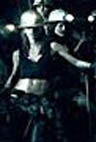
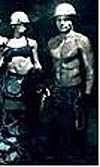
But check out this GE ad. GE has gone way beyond "ecomagination" all the way to "ecofantasy." This is how Stevenson describes it, but you can't really get the whole flavor unless you view the video yourself here (scroll down to Model Miners)

The Spot: We're in a coal mine, dank and dark. But wait—what's with these coal miners? They're sexy! Toned bods and tank tops. Dudes with cinder-block pecs. Ladies with come-hither stares. One of these chicks is wielding what looks to be a pneumatic jackhammer. As the models preen with their pickaxes and helmet lamps, an old mining folk song plays: "You load 16 tons and what do you get? Another day older and deeper in debt."
And Stevenson manages to hit my personal "nail" on the head:

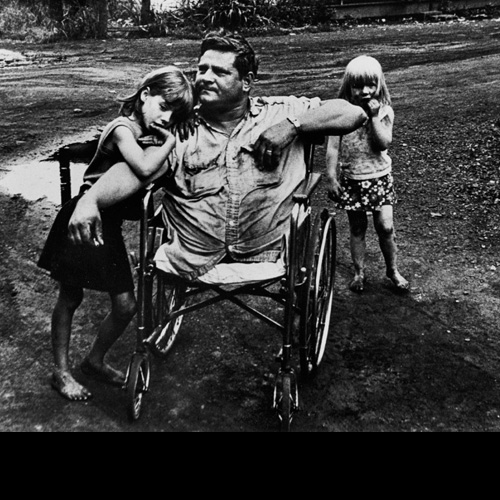
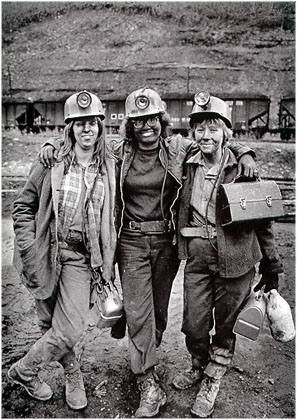
Even if coal processing gets cleaner, that coal will still need to be mined. And unless I'm mistaken, there will be actual coal miners doing that. Now: Guess who still gets black lung? Guess who still gets killed when mines collapse? It isn't sexy supermodels.

You won't be shocked to learn that the models appearing in this ad never actually entered any mines. That would be dirty, unpleasant, and dangerous. Instead, according to the ad agency, a replica coal mine was built on a soundstage. That way the models could strut in comfort.

And then there's the song over which the miner models gyrate:
Several of my readers were even more galled by the ad's use of "Sixteen Tons"—a folk song about the miserable futility of mining and the evils of controlling corporations. Merle Travis wrote the song in 1946, drawing on the experiences of his father, a coal miner from Kentucky. More sample lyrics: "St. Peter don't you call me 'cuz I can't go. I owe my soul to the company store."

Not a positive take on the mining experience. So what's it doing here, in a piece of pro-coal propaganda? The only thing comparably weird would be to use Bob Dylan's "The Times They Are a Changin'" in an ad for, say, a giant, corporate bank. Oh, wait—never mind.


GE's miners

GE's miners


.


GE's miners

GE's miners


Real Coal Miners

REAL Coal Miners


Real  Coal Miners


OSHA whistle-blower Adam Finkel, who sent me this article (and, as usual is not speaking on behalf of OSHA or Princeton University where he is employed) notes the following:

So coal mining is glamorous, not to mention healthful, as none of the models was using any kind of respiratory protection. I’ve never lost a loved one to a cave-in or black lung, so others have far more right to be offended by this latest ‘they don’t get it’ moment than I do. But to me these sorts of ads offer a mirror to how differently we treat environmental versus occupational issues. There are no ‘Times Beach Diet’ commercials extolling the benefits of oiling roads with PCBs, or tourism ads for what remains of the Aral Sea, and yet the dangerous trades continue to be fodder for parody.
Finkel seems to have an eye for inappropriate parody when it comes to workplace safety. Last Fall he contributed a couple of stories to Confined Space, one in which the Charlotte Bobcats basketball team created a commercial where an opposing player gets buried in sand in a construction accident, and another where Mike's Hard Lemonade created a television commercial that featured a construction worker who falls and impales himself on a steel rod and then retreats to a nearby bar for a glass of hard lemonade.

But if may be allowed to carry the inappropriate metaphor too far, I think we all need to chill a bit and learn to make lemonade out of lemons. I mean, if GE can use sex to sell clean coal, why can't John Sweeney and Andy Stern put their heads (or some other appropriate part of their anatomy) together and use sex to sell unions.

With commercials like these, I could get even get my Madison Avenue-wannabe daughter to join. She's probably heading down to apply for a mining job as we speak.

.

Labor Unions: The Folks That Brought You The Middle Class

File this under "Why We Need Unions."

The Wall St. Journal had a front page article yesterday about how it's becoming increasingly difficult for workers with limited education to start a job at an entry level and use in-house training opportunities to gain promotions that would eventually push them into the middle class. (The article is for registered WSJ subscribers only.)

The article itself was interesting, but probably most interesting was the positive things the Journal had to say about unions:
The MTA was once full of jobs like motor inspector or turnstile repairman -- jobs that a person with limited education could jump to with some training. As in the corporate world, many of those jobs have disappeared, often because technology upgrades mean fewer people are needed. At the MTA, for example, new subway cars last 138,000 miles between overhauls, compared with 8,000 miles in 1982. Around the system, the jobs that do open often require a college education and computer skills.

Overall, the pace of hiring has slowed since the 1980s, as the MTA reduced its staff by 13%, to 48,000. When the MTA does fill new jobs, it is less likely to promote from within because it believes it will attract better talent on the outside. In the 1990s, insiders got half the new jobs; today they get fewer than 40%. Car cleaners used to have the inside track for promotion to motorman, tower operator and token-booth clerk. Since 2001, those jobs have been thrown open to outsiders.

"For too many of our people, entry-level no longer means entry-level. It means dead-end," says Rodney Glenn, director of training for Transport Workers Union Local 100, to which 30,000 MTA employees belong.
Part of the reason that the advancement opportunities are disappearing is that the power of labor unions is disappearing.
Traditionally, unions helped unskilled workers attain middle-class lives. But organized labor now represents only 11% of the work force, down from one-third in the 1950s. The fastest-growing unions, in the service industries, represent both low-wage workers and skilled professionals, but it's hard for members to move from one category to the other. On-the-job training may turn an orderly into a nurse's aide, but not into a nurse.

New York's MTA, with an annual operating budget of $8 billion, has been a haven for African-Americans seeking upward mobility since the 1940s, when Adam Clayton Powell Jr. joined other Harlem activists in pressing city-owned and private transit lines to hire more blacks. The Transport Workers Union's legendary president, Michael Quill (1905-66), was active in the civil-rights movement and once brought Martin Luther King Jr. to address workers, then mostly white, on the subject. Today, about half of the membership of the union's Local 100 are either African-Americans or West Indians. The local's president, Roger Toussaint, arrived in New York from Trinidad in 1974 and started at the MTA as a subway cleaner, as did several of the top MTA managers with whom he negotiates.
Even in their weakened state, however, unions are still about the only means for workers to move up:
In 2002, the MTA started requiring that new entrants in the subway-car maintenance program either have a recent degree from a vocational high school or a community-college degree in technology because so many jobs demand electronic skills. Ms. Beatty, with her 20-year-old diploma from a regular high school, probably wouldn't make the cut today.

Over the past four years, the training center has graduated just 40 apprentices for various skilled jobs, with fewer than a dozen of those graduates coming from the Transport Workers Union. Three months ago, under pressure from the union, the MTA started a new subway-inspector training course with 13 students, all from the union's ranks. Of the 13, six are former cleaners, and all of them have the technical degrees. The others came from skilled jobs such as forklift operator or signalman's assistant.

***

Both sides agree that improved productivity at a system that was once notorious for breakdowns and graffiti has reduced the pool of new jobs to which cleaners and security guards can aspire. Staff at a big maintenance depot in Coney Island has been cut to 650 workers from 1,000 over the past five years. When the MTA replaced subway tokens with prepaid Metro Cards, 120 skilled-machinist positions were eliminated, estimates the union. It persuaded the MTA to retrain the workers to repair card-vending machines.
The distressing thing is that at the same time that rising health care costs, globalization, the disappearance of well-paying industrial jobs, and bankruptcy legislation are all consipring to knock more and more people out of the middle class, more barriers are being raised to keep people from climbing up into the middle class. Meanwhile, the historical force that knocked down those barriers -- the labor movement -- is itself declining into ineffectiveness.

I think if I was the President, or a congressional representative, I might be concerned about some of these issues.

And speaking of those who are really concerned, check out speeches by Bill Moyers and John Edwards at the Taking Back America Conference last week. And while you're at it check out the other speeches too.
.

Monday, June 06, 2005

Nothing To Lose But Your Latte: Organizing Starbucks!

Workers Comp Insider has an interesting article about an attempt by the International Workers of the World (IWW) -- yes, the good old Wobblies -- to organize Starbucks.
The IWW press release raises some classic issues of poor working conditions, some of which will ring true with those who study the ergonomics of fast food. Starbuck workers serve an enormous volume of beverages, many of them extremely hot. The union claims that in order to save money, management refuses to schedule enough workers to do the required work safely. Instead, workers are forced to perform their duties at unsafe speeds with an undue level of physical exertion.

"A Starbucks coffee shop is an ergonomic minefield. The stores are supposed to mimic an Italian cafe without considering the uncomfortable bending and reaching we have to do, " explained Barista Anthony Polanco. "This is not your mom and pop coffee shop. We are talking McDonalds busy every day. Starbucks talks about "Creating Warmth" but the only warmth I feel is the heat pad at the end of the day."


.

Deborah Byrd Chrysostomides: One Year Later

Last August, I wrote an article about the death of Deborah Byrd Chrysostomides, a Chesapeake General nurse, from an undiagnosed tuberculosis infection. As I said then, "although I hate to say "I told you so," OSHA's decision last year to withdraw the tuberculosis standard is looking dumber and dumber as the number of TB cases in many states creep up."

I also cited a Virginia Pilot article that asked a few pressing questions:
Questions linger about her case and whether more could have been done to prevent it –certainly, from the more than 100 patients and visitors who have since tested positive for TB, and also from those closest to her.

Tim Peluso, the fiance of the once-vibrant and compassionate nurse, questions whether the hospital could have done more to detect her illness when she displayed TB symptoms. Hospital and public-health officials wonder whether Chrysostomides ever sought medical help, as she claimed to friends and a supervisor. If so, why didn’t a doctor diagnose her sooner?

And why can’t public-health officials find the doctor who supposedly treated her?

Two questions that loom largest for the general public: How could her illness have gone undetected in a hospital, of all places, and should anything be changed to keep such cases from occurring again?
Today I received the letter from Debbie's friend:
Thank you for asking the questions that Debbie's friends are still wondering one year after her death. I can't understand why Chesapeake General Hospital did not follow procedures and save the life of their devoted nurse and our beautiful friend. In a few days, it will be one year since her terrible death and I feel that Chesapeake General didn't do anything to save her life. I, along with others, lodged a complaint with the Virginia Health Dept. The Virginia Dept of Health did cite Chesapeake General with violations. Changes in hospital policies are to take affect.

The reason that Debbie's illness was not addressed, according to Chesapeake General, was due to the fact that their person in charge of monitoring the nurses and reporting cases of possitive TB from the annual testing of nurses was on leave in Dec 2003. Meaning, the two positive tb conversions in Dec were overlooked. When this person returned from leave no one had reported the unusual number of positive TB cases. And even after another positive Tb result of a nurse in Feb and a couple more in March nothing was done. They said they didn't have enough information.

In April 2004 Debbie could not work any longer because she was so terribly ill and decided to resign. In May 2004, one month before Debbie's death, the hospital claimed that they were getting ready to report the cases to the health dept but had not yet done this. Even in June 2004 the month when Debbie died, the hospital had not yet reported the TB problem. They reported them after Debbie had died. My friend's life could have been saved if the hospital reported their nurses positive Tb test.

In the past I had been told that most hospitals don't care if their nurses are sick. They just want them at work. I was told that they work their nurses to death. It turns out to be true.

Debbie's Loving Friend,

Angela
Anything to add, John Henshaw, Roger Wicker, George W. Bush?

.