Thursday, April 27, 2006

Can We Still Trust Popcorn? Maybe Not If These Guys Say It's OK

You know, despite all the news about the illnesses and deaths of popcorn workers from the butter flavoring, diacetyl, I wasn't too worried about the health effects of the popcorn roasting in our microwave oven almost every night.

But after reading this little tidbit by the American Council on Science and Health, I'm starting to worry....

One familiar (and sometimes effective) tactic that the chemical industry uses to defend its hazardous products is to claim that everything causes cancer, and the everything is bad for you if you eat, drink or inhale too much of it. Even too much water can kill you, after all. In other words don't let those activists scare you.

A corollary is that lots of things that those activists say are going to kill you occur naturally, in nature, in fact, they're practically organic.

So after writing reviewing Andrew Schneider's article earlier this week about the ravaged lungs of popcorn and other food workers from exposure to the butter-flavoring chemical diacetyl, it was with great interest that I read this emission from the American Council on Science and Health (ACSH), which has good news for popcorn lovers:
A chemical, diacetyl, found naturally in butter and other foods, has been found to cause a fatal and rapidly-progressing lung disorder when it is present in the air at high concentrations in occupational settings. The connection to popcorn is that diacetyl is used in products like microwave popcorn (and some movie theater popcorn machines) to provide butter flavor.

The diacetyl story is a prime example of what ACSH has pointed out for years (see our reports on carcinogens, activists, and natural chemicals in your holiday dinner menu): while high doses of a chemical may impair health, the typical doses that consumers encounter in their foods or through other environmental contacts pose no risk.
ACSH,by the way, is an chemical industry funded "a consumer education consortium concerned with issues related to food, nutrition, chemicals, pharmaceuticals, lifestyle, the environment and health."

OK, now there are a few point that seem to be slightly distorted here. Just off the top of my head.

  • Yes, diacetyl is found naturally in butter, but the diacetyl that's killing workers by destroying their lungs is man-made. (And "naturally" doesn't make something good. After all, asbestos occurs "naturally" as well)

  • "The typical doses that consumers encounter in their foods or through other environmental contacts pose no risk." This is probably true. On the other hand, no one has really tested it. NIOSH "is not aware of any evidence to suggest danger to consumers in the preparation and consumption of microwave popcorn." NIOSH doesn't say there is no danger. The agency says it "is not aware of any evidence to suggest danger." Two different things. In 2004, EPA announced that it would study the type and amount of chemicals emitted from microwave popcorn bags and possible health effect on consumers. The study was supposed to be completed last year, but I haven't heard anything. Meanwhile, I'm telling my kids not to stick their heads in the bag of popcorn.

  • "While high doses of a chemical may impair health, the typical doses that consumers encounter in their foods or through other environmental contacts pose no risk." This may also be true. On the other hand, the fact that a chemical can cause serious harm at a high dose over a relatively short period of time, does not mean that it can't cause serious harm at low doses over a longer period of time.
ACSH is most well known for it's Thanksgiving Dinner menu of carcinogens, which I guess is supposed to make you feel better about the chemical industry, although I'm not sure how.

Tuesday, April 25, 2006

AFL-CIO Releases 15th Annual "Death On The Job" Report

The AFL-CIO has issued its 15th annual Death On The Job report (.pdf), an impressive piece of work (particularly considering that they're operating on half the staff they had a year ago.)

The purpose is to report on the state of workers' safety and health. First the good news: Workplace safety has improved dramatically in the 35 years since OSHA was created.

Now, the bad news. According to the report:
Progress in protecting workers’ safety and health is slowing, and for some groups of workers jobs are becoming more dangerous....As the economy, the workforce and hazards are changing, we are falling further and further behind in our efforts to protect workers from new and existing problems.
Here are the "highlights", if you want to call them that.

Workplace Injuries, Illness and Death
  • 5,703 5,764 workers were killed in the workplace due to traumatic injuries in 2004, according to the Bureau of Labor Statistics. This is an increase from the number of deaths in 2003, when 5,575 workplace deaths were reported. The rate of fatal injuries was 4.1 per 100,000 workers in 2004 compared to 4.0 per 100,000 workers in 2003, a 2 percent increase. The increase in the fatality rate in 2004 was the first increase in the national fatality rate since 1994.


  • Fatalities among foreign-born and native born Hispanic workers increased in 2004. Fatalities among Hispanic workers increased by 11 percent over 2003, with 883 902 fatalities among this group of workers. The rate of fatal injuries to Hispanic or Latino workers increased from 4.5 per 100,000 workers in 2003 to 4.9 5.0 per 100,000 workers in 2004, a 9 11 percent increase. The fatality rate among Hispanic or Latino workers in 2004 was 19 percent higher than the fatal injury rate for all U.S. workers.


  • 4.3 million injuries and illnesses were reported in private-sector workplaces in 2004, a slight decrease from 4.4 million in 2003. The manufacturing sector had the most injuries, accounting for 22 percent of the total, while health care and social assistance workers accounted for 16 percent of injuries and illnesses, followed by the retail trade at 15%.


  • There were over 400,000 musculoskeletal disorder cases (back, shoulder, wrist pain and disability) in 2004, again accounting for nearly one-third of all injuries and illnesses involving days away from work. (Note that OSHA has estimated that for every MSD reported, there is another that was not reported.)


  • Underreporting: The report also contains a lengthy discussion of how and why the BLS underestimates the number of workplace injuries and illnesses in the United States. We reported earlier this month about a Michigan State University study that showed that the BLS may miss two-thirds of all injuries and illnesses. There are a variety of reasons for this, including the fact that the data doesn't count many categories of workers. Then, there are built-in incentives for employers to underreport, including workers comp systems that will charge more if there's an increase in injuries, and OSHA's system of targeting inspections at companies that report high rates. Finally, of course, there are employer programs of providing incentives to workers for not reporting injuries, or punishing workers that do.
The problem is not new, nor is it going away, despite the fact that the problem is well known:
Year after year, all of these factors known to contribute to significant underreporting are ignored as the statistics are rattled off and administration officials take credit for policies that drove the numbers down. Yet it is these same policymakers who are responsible for ensuring a clear and accurate picture of injury and illness in our nation’s workplaces.

We must not allow inaccurate data to drive safety and health efforts. Only with an accurate picture of the nature of occupational safety and health problems may employers and policymakers work to reduce the occupational safety and health hazards that cause workplace injury, illness and death. Until policymakers require an accurate picture, occupational injuries will continue and there will be no clear strategy to address workplace hazards.
Cost of Workplace Injuries And Death

The Liberty Mutual Insurance company estimates that workplace injuries cost U.S. employers $50.3 billion – nearly $1 billion per week – in direct costs alone (medical and lost wage payments). Liberty Mutual data indicate businesses pay between $150.9 billion and $301.1 billion annually in direct and indirect (overtime, training and lost productivity) costs on workers’ compensation losses.

OSHA Enforcement and Coverage

Staffing: OSHA continues to be seriously understaffed. In FY 2005, there are at most 2,117 federal and state OSHA inspectors responsible for enforcing the law at approximately eight million workplaces. At its current staffing and inspection levels, it would take federal OSHA 117 years to inspect each workplace under its jurisdiction just once. Things are slightly better in the 21 state-plan states that run their own programs. It would only take them a combined 65 years to inspect each worksite under state jurisdiction once. Fewer inspections were conducted in FY 2005 than in FY 2004.

Penalties remain low with serious violations of the OSH Act carrying an average penalty of only $883. Although the number of willful violations issued by federal OSHA increased from 446 in FY 2004 to 726 in FY 2005, 303 of these willful violations were against the BP Texas City Refinery where a March 2005 explosion killed 15 workers and injured 170.

In FY 2005, the Department of Labor referred ten enforcement cases to the Justice Department for criminal prosecution. Under the OSH Act, an employer may be subject to criminal prosecution in cases where a willful violation results in a worker’s death.

Regulatory (In)Action


This is a short section. OSHA issued only one major regulation last year, covering hexavalent chromium, and it was only done under court order. We've written a bit about this already (here, here and here), but in case you're still catching up, the standard was issued with permissible exposure limit (PEL) five times what was originally proposed by the agency; a level exposure which by OSHA’s own admission will leave workers at a significant risk of developing cancer. The final standard also failed to cover hexavalent chromium found in Portland cement, weakened worker access to exposure monitoring results, scaled back worker training requirements, and gave employers four years to implement engineering controls to protect workers.

Otherwise there's not much going on. OSHA still refuses to issue a standard requiring employers to pay for employees' gloves, boots and other personal protective equipment -- a standard that has been hanging around since the later days of the Clinton administration. OSHA says its working on five economically significant regulations (Crystalline Silica, Confined Spaces in Construction, Beryllium, Hearing Conservation for Construction Workers, and Electric Power Transmission and Distribution), but I wouldn't hold my breath.

The Job Safety Budget

To sum up:
President George W. Bush’s proposed FY 2007 budget for worker safety and health programs reflects the administration’s policies toward worker protection—it includes priorities and policies that favor employers over workers and voluntary compliance over enforcement.
OSHA: Bush proposed $484 million for FY 2007. Adjusting for inflation, this is about the same as FY 2006, but in real dollar terms (adjusting for inflation), in represents a $14.5 million (3%) cut since FY 2001 when the Bush administration took office. As might be expected, more money is going to voluntary effort for employers and compliance assistance, while standard setting and state enforcement programs have taken major hits, and every year Bush tries to eliminate the $10.3 million Susan Harwood Training Grant Program.

MSHA: The Bush administration is proposing $287 million for FY 2007, a 1.4% increase over 2006, adjusting for inflation, but representing a $13.6 million (9%) cut, since FY 2001 after adjusting for inflation.

NIOSH: Bush proposed a $250 million budget for NOISH, cutting NIOSH's funding by $4.5 million over FY 2006.

Challenges

Hispanic and Foreign Born Workers: Immigrant workers face an epidemic of workplace injury and death and are at far greater risk of being killed or injured on the job than native born workers. Although the share of foreign-born employment has increased by 22 percent between 1996 and 2000, the share of fatal occupational injuries for this population increased by 43 percent. ,” Hispanic men have the greatest overall relative risk of fatal occupational injury of any gender or race/ethnicity group. 22 percent higher than the relative risk for all men.

Ergonomics: Ergonomic injuries still are the biggest job-safety hazard faced by workers, accounting for one-third of all injuries and illnesses. Yet despite Administration promises of a "comprehensive plan" for ergonomics following their 2001 repeal of OSHA's ergonomics standard, only three guidelines have been issued, and the agency has issued on 17 General Duty Clause citations over the past five years.

Pandemic Flu: Despite legitimate fears that the avian flu may develop into a pandemic that could make 30% of the entire population of the United States sick and kill 1.9 million persons, the federal government is failing to plan effectively how to protect the millions of health care workers, firefighters, emergency medical services personnel, home health care workers and other responders will be needed to care for those who are ill from the virus.

The Pandemic Influenza Plan, issued by the Department of Health and Human Services, dangerously recommends the use of surgical masks instead of NIOSH certified respirators, and HHS is also pushing the idea to reuse diposable respirators. Surgical masks will not protect workers against the flu, plus they are illegal under OSHA's respiratory protection standard.

Gulf Coast Hurricane Response Hazards: OSHA’s presence in the Gulf has largely been providing information and it has yet to enforce any of its health and safety standards and carry out its core responsibilities in the areas most heavily destroyed. This lack of enforcement will put workers at increased risk of injury and illness.

Work Organization: Workers in the United States now work more hours than workers in most of Western Europe and Japan. Evidence is growing that long hours of work cause more injuries and illnesses such as heart attacks, increased blood pressure, unhealthy weight gain, increased alcohol use and smoking.

The ways in which work is performed and is being restructured are also emerging as a potential safety and health hazard for workers. Machine-paced work, inadequate work-rest cycles, time pressures and repetitive work are associated with musculoskeletal disorders, increases in blood pressure and risks of cardiovascular mortality. The nurse shortage is resulting in long hours of work and high patient-to-nurse hospital staffing ratios which have been linked to increases in needle injuries and near misses, nurse burnout and elevated surgical patient mortality. In response, nine states have passed legislation placing limits on the amount of mandatory overtime nurses or health care workers can be forced to work (Connecticut, Maine, Maryland, Minnesota, New Hampshire, New Jersey, Oregon, Washington and West Virginia).

And finally,

What Needs To Be Done?
Very simply, workers need more job safety and health protection. The Bush administration’s lack of regulation and increased attention to employer assistance and voluntary compliance comes at the expense of worker safety and health. The OSH Act needs to be strengthened to make it easier to issue safety and health standards and to make the penalties for violating the law tougher. Workers need to be given a real voice in the workplace and real rights to participate in safety and health as part of a comprehensive safety program to identify and correct hazards. Coverage should be extended to the millions of workers who fall outside the Act’s protection.

Immediate action is needed to strengthen mine safety and health requirements to protect miners in the event of an emergency, to prohibit dangerous practices like the use of belt air for coal mine ventilation and to increase penalties for serious and repeated violations.

A standard still is needed to protect workers from ergonomic hazards and crippling repetitive strain injuries and back injuries, which continue to represent the most significant job-safety problem in the nation. OSHA needs to keep up with new hazards that face workers as workplaces and the nature of work change. Hazardous conditions in the service sector and in retail trade need greater attention. OSHA and MSHA need additional funding to develop and enforce standards and to expand worker safety and health training. Similarly, additional funds are needed for NIOSH to support enhanced research on safety and health problems.

$2.4 Million OSHA Fine For BP Ohio Refinery

The Occupational Safety and Health Administration has fined BP North America $2.4 million for unsafe operations at the company's Oregon, Ohio refinery. The OSHA Press Release notes that many of the violations are similar to the problems at BP's Texas City refinery where a March 2005 explosion killed 15 workers and injured 170.
"It is extremely disappointing that BP Products failed to learn from the lessons of Texas City to assure their workers' safety and health," said Edwin Foulke, Jr., OSHA assistant secretary. "Our Enhanced Enforcement Program (EEP) exists for companies like this who, despite our enforcement and outreach efforts, ignore their obligations under the law and continually place their employees at risk."

OSHA's Toledo Area Office initiated an inspection at the Ohio refinery in response to an alert issued by OSHA under the EEP. The inspection resulted in 32 per-instance willful citations, with penalties of more than $2.2 million. OSHA cited BP for locating people in vulnerable buildings among the processing units; failing to correct de-pressurization deficiencies; failing to correct deficiencies with gas monitors; and failing to prevent the use of non-approved electrical equipment in locations in which hazardous concentrations of flammable gases or vapors may exist.

BP was fined an additional $140,000 for two willful violations. The company neglected to develop shutdown procedures and designate responsibilities, and failed to establish a system to promptly address and resolve recommendations made after an incident when a large feed pump failed. Three years later those recommendations had still not been implemented.
BP Texas city received a record $21.4 million fine from OSHA for the 2005 explosion. Last August, the US Chemical Safety and Hazard Investigation Board, responding to the Texas City explsion as well as a number of other incidents at BP facilities in the United States, issued an urgent recommendation to BP to commission an independent panel that would review a range of safety management and culture issues in all of their North American refineries, including the Ohio refinery cited by OSHA today.

The United Steelworkers Union, which represents BP employees said that today's citation shows that BP was wrong when it initially blamed the Texas City explosion on workers' mistakes.
"This goes to show that the problems at Texas City were not worker-caused and were a result of system failure," said USW spokeswoman Lynne Baker.
OSHA's enhanced enforcement program (EEP) was announced in March 2003 to focus on persistent violators. It followed by two months the NY Times/Frontline series on the McWane Corporation. McWane was a persistent violator of OSHA standards and killer of workers, yet the series revealed that OSHA had never taken a coordinated approach to end the company's pattern of deadly negligence.

Workplace "Dirty Dozen" Report Calls For Stopping Corporate Killers


The National Council on Occupational Safety and Health (National COSH) released a report today listing twelve companies -- a dirty dozen -- whose reckless disregard for their employees’ safety and health has had tragic consequences for workers and their families. Coinciding with Workers Memorial Day, April 28, the report announces a new National COSH campaign, “Stop Corporate Killers” which calls for an overhaul of the regulatory system to ensure that workers realize the right to a safe and healthy workplace that the Occupational Safety and Health Act promised.

The "Dirty Dozen" consists of the following companies: British Petroleum, Cintas Corp, DuPont Corp, Hayes Lemmerz International, Honda Motor Company of America, International Coal Group (Sago Mine), McWane, Safety Bingo Inc, Sunesis, UNICCO, Wal-Mart Stores Inc. and W. R. Grace.

The “Stop Corporate Killers” Campaign calls for
  1. Stronger enforcement of current standards and regulations, including higher penalties and increased criminal prosecution of corporate irresponsibility in cases of willful and egregious actions by employers that result in fatalities and serious workplace injurie

  2. Promulgation of new and revised standards to address known hazards.

  3. Revision of policies to increase the participation of unions in the OSHA process after the inspection and investigation occurs.

  4. Revision of OSHA policies to include families of victims in agency procedures and access to information and increased rights to compensation.

  5. Preservation of the right of workers and citizens to bring suits in the civil courts and have their claims presented before a jury of their peers when corporations have wantonly violated their rights to safe workplaces and communities.

  6. Appointment of individuals to key safety and health positions on the basis of knowledge and competence, not ideology and political connections

  7. Passage of a criminal prosecution law authorizing OSHA to indict corporations for felony manslaughter when they cause the death of workers by willfully violating safety and health laws.
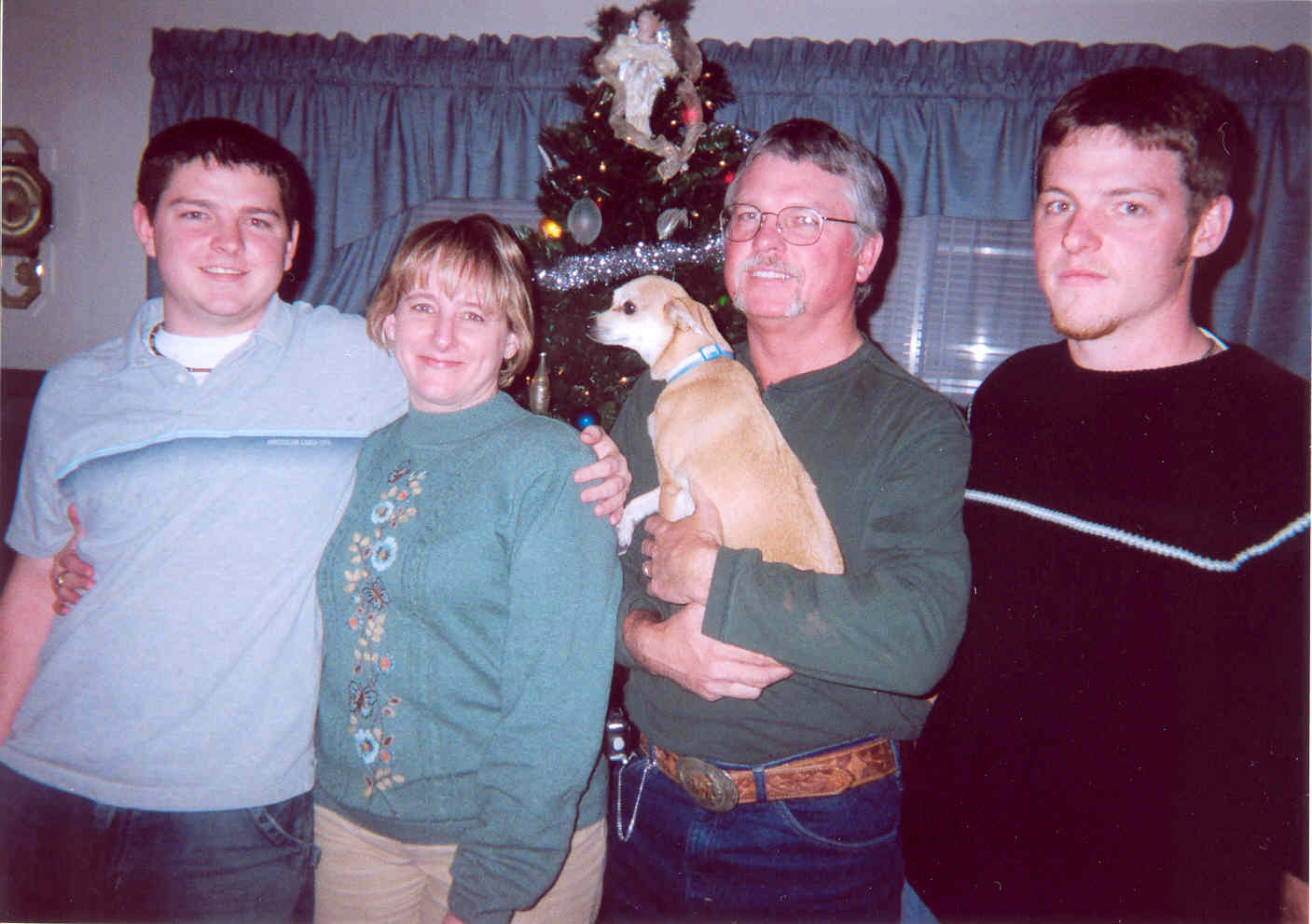
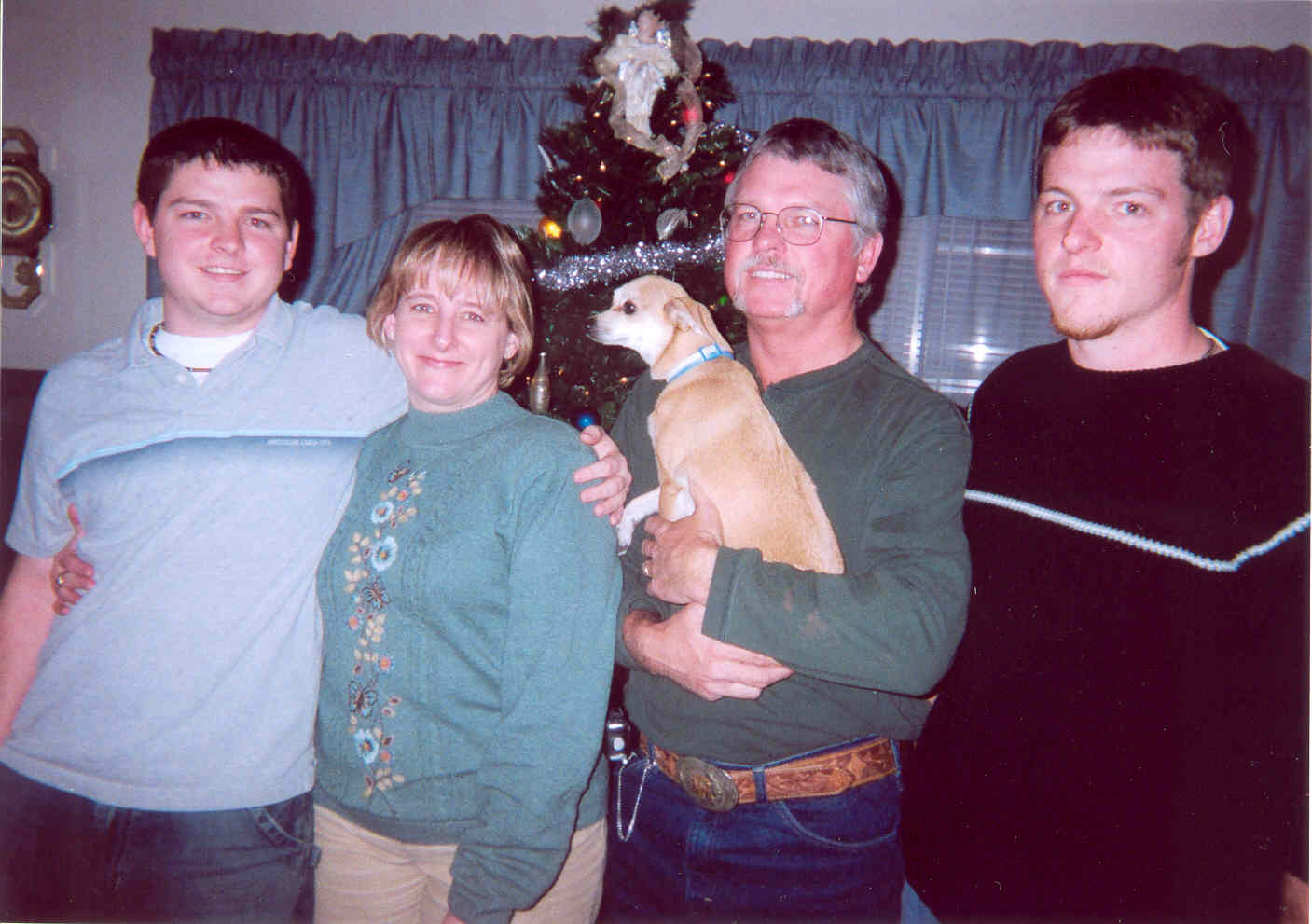
Donald Coit Smith, whose son (far right in the photo) was killed last year in a meatpacking fatality, stated that:
Another death incident was posted at OSHA. A company in North Tonawonda, New York was cited $60,000 for 20 violations as a result of Corporate America not caring. No lockout procedures, no employee training, no lockout inspections just to name 3 of the citations given. OSHA does not have the power to stop these killings. Our legislature and lawmaking entities MUST TAKE CHARGE and quit covering up for companies killing people. Violations of the law, especially where death is concerned, must carry stiff penalties to include long jail terms. There's no difference in what happened in New York and someone getting run over by a drunk driver...except the laws protect companies. They are, in effect, getting away with murder.
The National Council for Occupational Safety and Health is a federation of local and statewide "COSH" groups--Committees/Coalitions on Occupational Safety and Health consisting of health and technical professionals, labor unions, and others that work to promote worker health and safety through education, training, and policy advocacy.

A Spanish language copy of the report can be found here.

Union Leader Jailed For Leading Strike

When oh when are these foreign countries going to learn about democracy, freedom and human rights? We clearly need to do a better job teaching them how it's done.

Oh, wait.

Nevermind.

Workers Memorial Day In Washington

If it's Spring, it must be time for Workers Memorial -- the day where we re-energize ourselves for another year of fighting for safer workplaces.

Well, spring has sprung in Washington D.C. -- the dogwoods are blooming, the thunderstorms are coming, and George W. Bush's approval ratings are scraping the bottom of the septic tank.

For those enjoying the spring here, drop in at the AFL-CIO building (815 16th St. N.W.) Wednesday afternoon at 5:30 for for a discussion with United Mine Workers President Cecil Roberts and photojournalist Earl Dotter about safety and health in the nation's mines and what must be done.

A reception and viewing of the photo exhibit "Our Future in Retrospect: Coal Miner Health in Appalachia" will follow, with a welcome by AFL-CIO Secretary-Treasurer Richard Trumka. The exhibit, sponsored by the Appalachian Institute of Wheeling Jesuit University, combines Dotter's present-day look at health and safety issues in America's coalfields with Russell W. Lee's 1946 documentary photography on the hardships of coal communities.

If you're planning on dropping in, please RSVP to pseminar@aflcio.org or call 202-637-5029.

And if you're not in the DC area, hopefully you've hooked up with Workers Memorial Day events in your area. Contact your local union or COSH group to find out what's happening in your neighborhood. The AFL-CIO's Workers Memorial Day page is here. And no matter where in the world you are, you can find out what's happening at the Hazards Workers Memorial Day events page.

And, of course, all kinds of posters and fact sheets on the Hazards Workers Memorial Day main page.

Monday, April 24, 2006

Government To Workers: Cough Your Lungs Out And Drop Dead

Does this ring a bell?
It took two years on the job and a chemical in something as ordinary as butter flavoring to turn a strapping factory worker into someone who sleeps tethered to an oxygen tank.

Francisco Herrera, 32, suffers from an aggressive disease that has destroyed 70 percent of his lungs and could kill him if he doesn't get a transplant. A physician
diagnosed bronchiolitis obliterans after the flavoring plant worker became ill in 2003, concluding that the disease was caused by exposure to diacetyl.

"Everyone knew that the diacetyl was harmful," said Herrera, a father of two who contends in a lawsuit that his employer never warned him of inhalation hazards. "But why didn't anyone tell the workers handling it?"
Yes, it’s “popcorn lung” again, same disease, different location. Confined Space readers will recall a series of lawsuits in Missouri last year filed by workers whose lungs had been destroyed by a popcorn butter flavoring chemical called diacetyl. But exposure to the chemical is not limited to Missouri or to just popcorn. In fact, the National Institute for Occupational Safety and Health has identified the disease in more than two dozen workers from other parts of the food industry.

Bronchiolitis obliterans is a deadly lung disease caused by inhaling certain chemicals, including diacetyl. It’s irreversible, and often fatal without a lung transplant. It also progresses rapidly, making early diagnosis essential.

Famed labor/environmental journalist Andrew Schneider describes in the Baltimore Sun how workers are still getting sick and dying, while federal and state agencies whose job it is to address these hazards are falling down on the job. We’ve already written about how thirty workers at a Missouri popcorn plant sued the manufacturer of diacetyl which ruined their lungs because they weren’t warned to take precautions. And we’ve already learned that the association that represents food additive makers had failed to disseminate information they possessed about the chemicals hazards.

What Schneider does, however, is take a close look at the failure of the US government (and the government of California) to address the problem, despite that fact that aggressively tackling chemical hazards that kill workers is exactly what these agencies were created to do.

Schneider’s investigation has found that
Scientists at NIOSH and the Occupational Safety and Health Administration want to intensify investigations into illness caused by flavorings and issue federal regulations to protect workers. But top officials say they don't plan to act because in their view what is being done now is enough.

That response among agency heads is one example of how government has largely allowed the flavoring industry to police itself. The Food and Drug Administration has let flavoring producers and sellers decide which chemicals are safe, and California's occupational safety agency, Cal/OSHA, has delegated health examinations of flavoring workers to an industry-paid doctor.

Government physicians question the propriety of relinquishing the health evaluations to doctors paid by the plants.

"It needs to be made clear to everyone involved that accepted public health practices do not allow us to rely solely on medical conclusions obtained by industry or its paid consultants," said Dr. Robert Harrison, chief of occupational surveillance and epidemiology for California's Department of Health Services. "This practice would be unfair to the worker and contrary to the process under which we work."
The first problem is that many food flavoring chemicals have never been tested:
The safety of diacetyl, as well as many of the 2,000 chemicals blended to make flavorings, has never been tested by the government. The FDA classified them among substances "Generally Regarded As Safe." It took the word of a panel of scientists hired by the Flavor and Extract Manufacturing Association. Diacetyl was declared safe decades ago because the industry said it was safe, according to a spokesman for the FDA.

About 70 U.S. companies are involved in the making and sales of flavorings, according to the association, which is the largest trade group for the $3 billion-a-year industry. Of more than 8,000 employees, only about 3,000 are engaged in the actual production of flavorings. In the much larger food processing industry, tens of thousands of workers are estimated to work with flavorings.
Schneider has unearthed evidence showing that the Food Extract Manufacturers Association (whose unfortunate acronym is FEMA), had evidence as early as 1977 that the chemical caused lung damage. FEMA is being sued for conspiring with the other defendants to fraudulently conceal information about the health risks of butter flavoring.

Inaction at OSHA

The Occupational Safety and Health Administration, which is supposed to regulate worker exposure to hazardous chemicals, had no standard for diacetyl when the problem was discovered in 2000, and the agency has no intention of working on a standard or taking aggressive action. OSHA has published a factsheet for its inspectors which warns of exposure only in 138 popcorn plants. But according to interviews conducted by Schneider,OSHA scientists urged agency leadership to take broader action on diacetyl in 2002 and 2003 because workers are exposed in other food plants as well. NIOSH has also held briefings with OSHA's leaderhip. An OSHA spokesman argued that inspectors had been notified of the risk at “a variety of food processing work sites,” but Schneider’s interviews with OSHA inspectors found that four out of five had never hedard of new inspection orders.

OSHA also refused to consider a new regulation that would protect workers from exposure to diacetyl, much to the disgust of public health experts:
"There is nothing to indicate that additional regulations are needed," [OSHA spokesman Al] Belsky said.

Asked to elaborate, OSHA spokeswoman Kate Dugan said: "We cannot regulate every hazard in every industry. That would be an impossible task." She said OSHA has a "general duty clause" that applies to hazards for which there aren't regulations.

However, this clause puts no responsibility on the employer other than to keep a plant safe.

David Michaels, an epidemiologist at George Washington University's School of Public Health who examined OSHA's handling of the popcorn workers' sickness, called its inaction "criminal."

Michaels, who heads the university's Project on Scientific Knowledge and Public Policy, said: "OSHA could have issued an emergency temporary standard, or at least ordered its inspectors to make sure no more workers are exposed to that hazard. NIOSH scientists proved the terrible damage caused by breathing those chemicals. OSHA did nothing.

"How many more workers like Francisco Herrera are going to lose their lungs before OSHA does its job?"
Michaels, you may recall, along with G.W. Research Associate Celeste Monforton, used the "popcorn lung" story in an excellent article about industry's influence on our regulatory and tort system last year. The article described how industry's influence on our regulatory system has not only hatlted the issuance of regulations that protect workers from exposure to hazardous chemicals, but now they're also attacking the last weapon that workers and consumers have at their disposal: the ability to sue chemical manufacturers who produce products that sicken and kill workers, consumers and communities. The article is essential reading for those who continue to rest quietly under the illusion that the government has the tools to protect us from chemical hazards or that corporate America is working in good faith to learn the truth.

Problems With NIOSH

NIOSH, according to Schneider, is about as close to a hero as government agencies come these days – but not quite. After doing excellent investigative work on the chemical and workers who had been exposed, NIOSH issued an important alert in 2002. Since then, the agency has identified victims of the chemical in Maryland, New Jersey, Georgia, Ohio and North Carolina. So far so good, but in order for NIOSH to do its work, it has to get into the workplaces. Unlike OSHA, employers can prevent NIOSH from entering their property, a right they have not been shy about using. Requests by three employees can give NIOSH access, but employees are scared to death about being fired if they complain to NIOSH (Welcome to American in the 21st century!).

There's one other avenue NIOSH can pursue: go before a federal judge to gain entry. But, these are George Bush times:
"The route of forced entry takes time, and the employer will probably fight it," said Fred Blosser, NIOSH's chief spokesman. "You've got to ask if the expenditure of time, effort and money to go the forced-entry route to get into a plant is going to result in actions that benefit the workers. The answer is probably not."

Dr. Richard Lemen, who spent 26 years working for NIOSH, including as its acting director, called that a "dangerous philosophy."

"If workers are sick in the workplace with an illness like bronchiolitis obliterans, which is a life-threatening disease, it is necessary to exercise the NIOSH right of entry and to get in and help these workers as soon as possible," said Lemen, a former assistant U.S. surgeon-general who now works as a public health consultant.

"Without exerting its right of entry, NIOSH is reverting to the days before Congress created it and OSHA, when scientific study of worker health depended on the willingness of employers and workers died needlessly."
Sellout At CalOSHA

Meanwhile, if NIOSH looks bad, and federal OSHA worse, Arnold Schwarzenegger’s CalOSHA isn’t far behind. CalOSHA had fined the factory where Francisco Herrera worked in 2004 and had then promised to work with NIOSH to get into some of the California’s 20 other food flavoring plants that use diacetyl. But nothing has happened. Why not?

Apparently CalOSHA officials decided to let the industry do its own study, rather than NIOSH
Late last year, when [CalOSHA Acting Director Len] Welsh was asked why the inspections of the flavoring plants hadn't progressed, he said that "the person I put in charge had to handle an outbreak of the heat-related illness last year."

But NIOSH was given a different explanation in late summer.

"We were told by staff members of the California health department that [the trade association] made it clear that it did not want NIOSH involved in any of the California flavoring plants," said Kreiss.

Welsh denied that.

"FEMA does not tell Cal/OSHA what to do and you know that," he told The Sun in an e-mail.

Hallagan, the trade association's top lawyer, said the group has "no power to stop anybody from going anywhere."

Cal/OSHA has the authority to enter any workplace, but Welsh chose to allow a trade association consultant to do the surveys.

"It is just better for everyone if we work cooperatively with the plants or industries we're investigating," Welsh said. "It's much better to go in [to the plants] with their permission rather than strong-arming our way in."
Meanwhile, Back In The Workplace

And what are employers doing? Not enough. Because the haven't gotten the information or because there's notregulations...the result is the same:
Physicians in and out of government say they're frustrated at the lack of action to protect workers. For UCLA's [Chief of the Division of Occupational and Environmental Medicine, Phillip] Harber, who diagnosed Herrera's illness, it's even more infuriating because he has just treated another worker from a second flavoring plant.

On Sunday, in an interview with The Sun, Irma Ortiz expressed more concern about the health of her former coworkers at the small Los Angeles-area plant than about her own difficulty breathing.

Ortiz, 43, said the chest specialist who referred her to Harber had been unsuccessfully treating her for asthma "until I showed him my little list with the chemicals that I worked with." Then, she said, the doctor was able to determine she had brochiolitis obliterans.

"We knew that diacetyl could kill and sicken workers. Although NIOSH proved it years ago, my patient continued working with the chemical without protection," Harber said. "She is a wonderful woman working for her children, and now she's tragically ill and might need a transplant to survive.

"The system is too slow to react, too slow to protect the workers from known hazards. "


And finally, I find very little humor in this line of work, so sometimes I just have to settle for irony. Check out the advertisement accompanying Schneider's article in the Baltimore Sun:

Saturday, April 22, 2006

OSHA Saves Lives: Building Evacuated Minutes Before Collapsing

The debate never ends. Does OSHA actually save lives, or just get in the way of business productivity. Sometimes it's a theoretical debate, but sometimes it's much easier to see:
Roof caves in just after work is halted
Half-dozen employees had been on the site

Building inspectors say they got there just in time.

They had just shut down construction of a new building for the Goddard School for Early Childhood Development, moving the work crews out from under the newly raised roof.

No more than 10 minutes later, the roof fell in and part of the walls collapsed. An OSHA investigator was on the scene, as were county inspectors. OSHA is investigating.

County Building Inspector Art Verdoorn said local contractors had their eyes on the Georgia company that was erecting the preschool on Normandy Park Road because the trusses for the roof were bowing.

Someone made an anonymous call to the Occupational Safety & Health Administration office in Cleveland and someone called Verdoorn. By coincidence, both agencies made a surprise visit to the work site a week ago Monday, just in time to issue a stop-work order before the collapse.

Verdoorn said the exterior walls were up and half the roof was on but the structure wasn't braced correctly. Verdoorn estimated a crew of six was pulled off the structure, some on the high beams and some inside, minutes before the collapse.

Standard Building Co. of Atlanta requested the building permit, Verdoorn said. OSHA records list it as a non-union company.

An OSHA spokesman in Washington said three complaints have been filed against Standard Building, two in 2005 and one in March on a job in Elyria.


"Till the stream of your blood runs as black as the coal:" Two More Miners Killed

Two more coal miners were killed over the past two days in Kentucky.
Coal miner killed in Harlan County
Death is 2nd in 2 days in Kentucky


FRANKFORT, Ky. -- Two miners were killed over the past two days in Kentucky, bringing the number of coal industry fatalities so far this year to 26 nationally.

Five coal miners have died on the job in Kentucky this year.

The latest death occurred about 4:30 a.m. yesterday in an underground mine in Harlan County.

Rick McKnight, 45, of Cumberland, was crushed by a machine he was working on, said Harlan County Coroner Philip Bianchi. Bianchi said McKnight was pronounced dead at Harlan Appalachian Regional Hospital. McKnight leaves a wife and two children.

McKnight was repairing a machine used to shift coal onto a conveyor belt, said Amy Louviere, spokeswoman for the U.S. Mine Safety and Health Administration. Louviere said the machine shifted and pinned the miner, who was working in Lone Mountain Processing's Huff Creek No. 1 mine at Holmes Mill, about 30 miles east of Harlan near the Virginia border.

McKnight had worked at the mine for 11 years, said Mark York, spokesman for the Kentucky Office of Mine Safety and Licensing.

The accident occurred more than five miles underground.

Federal and state inspectors were investigating the accident yesterday.

The other fatal accident, on Thursday, occurred when material fell on a miner at a Pike County coal mine.

David Chad Bolen, 28, of Harold, was moving a shuttle car anchor in the Tri Star Coal LLC No. 1 mine, according to a release from the Kentucky Environmental and Public Protection Cabinet.
That brings the total for this year to 26 deaths in coal mines compared with 22 all of last year. Six miners have also died this year in metal/non-metal mines.

Chemical Leak: Did It Happen or Did It Not? Does It Matter?

Is this what workplace safety has come to in this country? Prevention is out. Unless you actually kill, injure or sicken someone, it doesn't matter. Nor harm, no foul. Right?

Well, that's not the premise on which the Occupational Safety and Health Act was passed. You may recall paragraph 5(a)(1) of the OSHAct:
(a) Each employer --

(1) shall furnish to each of his employees employment and a place of employment which are free from recognized hazards that are causing or are likely to cause death or serious physical harm to his employees;
In other words, the idea is not just to cite employers after they harm workers, but to set standards, and enforce those standards to ensure that such harm doesn't happen in the first place.

So the claim of Resurrection Health Care is rather curious concerning the alleged leak of the cancer-causing sterilant, ethylene oxide, at Chicago's St. Mary of Nazareth Hospital last month. An alarm sounded at the hospital on March 1, indicating a leak of ethylene oxide on a loading dock that reached the hospital ventilation system, sending three people to the emergency room. Hospital management did not call the Chicago Fire Department until the following morning, by which time at least 15 individuals had potentially been exposed to the chemical. The employees filed an OSHA complaint.

OSHA investigated and cited the hospital because:
  • Appropriate respirators were not selected nor provided to employees who had to respond to the alarm.
  • The emergency plan designed to respond to an ethylene oxide leak was not implemented, including notification of emergency personnel and evacuation of
    employees.
  • The emergency plan did not provide for proper protection of employees.
  • Employees who worked with ethylene oxide were not provided adequate information and training.
Resurrection Health Care denied the leak ever happened and that the alarm had malfunctioned.
But as Ramsin Canon of AFSCME, the union that represents is trying to organize the workers, pointed out:
Whether or not the leak occurred is not the issue. "As the citations show, the hospital put its workers in jeopardy by not providing adequate safety equipment, an adequate emergency plan and by not responding immediately to the alarm.”
Indeed, OSHA has a rather comprehensive standard for ethylene oxide which employers are supposed to comply with in order to prevent exposure from occurring, not just after employees are exposed. In other words, in the unlikely event that OSHA had visited the hospital on a routine inspection independent of an alleged spill, they would still have cited the hospital for violating the standard.

Just one question. The article also reported that "None of the citations carried a fine or penalty, according to the OSHA documents."

Huh?

In A "Go To Jail Issue" Asbestos Manufacturers Fight To Stay Free

Nothing sharpens the mind like the prospect of jail terms because you're found guilty on charges of conspiracy, wire fraud, obstruction of justice and violations of the Federal Clean Air Act -- not to speak of knowingly exposing thousands of workers and citizens to asbestos.

What to do, what to do? How about running the clinic that's diagnosing cases of cancer and asbestos disease out of business? That's what staff of the (CARD) are accusing the WR Grace Company of doing. Grace executives were charged earlier this year in connection with the company's vermiculite mining operations in Libby, Montana. Grace's vermiculite is laden with asbestos and Grace's mining and milling operations spread the dust throughout the town. Grace executives were not just charged with contaminating the people and the town, but with conspiring to conceal information about the hazardous nature of the company’s asbestos contaminated vermiculite products, obstructing the government’s clean-up efforts, and wire fraud.

Grace had set up the Center for Asbestos Related Disease to diagnose and treat the hundreds of sick and dying people in Libby. But that was then...

Grace, a producer of chemicals and building materials, voluntarily pays for most of the medical treatment at the clinic. In recent months, the company's medical plan administrator imposed new rules that have made reimbursement more lengthy and involved, and pushed the clinic, its administrators say, into a cash-flow crisis. And the administrator said that a review it commissioned of past medical diagnoses in Libby found flaws in more than a quarter of the cases.

LeRoy D. Thom, who worked at Grace's vermiculite mine for 17 years as a foreman and is the vice chairman of the clinic's board, said he thought legal strategy and trial preparation could explain the company's actions.

"If they can put out the fact that people are being overdiagnosed, then they reduce the credibility of the doctors," he said.

Dr. Alan Whitehouse, a consulting pulmonologist at the clinic, is even more blunt.

"It's a go-to-jail issue," he said.

And jail would be such a bad idea? The grand jury that indicted the executives found that Grace knew when they took over the mine in 1960 that the vermiculite ore was tainted with asbestos and that asbestos exposure was deadly. Grace concealed this knowledge from the town and from the workers in Grace's 200 plants across the country. The biggest problem, however -- which EPA hasn't even begun to deal with -- is that asbestos-tainted vermiculite insulation remains in the attics of 35 million homes around the country, and has contaminated other communities with Grace's products were processed.
So far, more than 1,400 people in the Libby area, which has a population of about 8,000, have received diagnoses — many but not all, at the CARD clinic — of lung abnormalities related to asbestos exposure. And people are still coming forward.

"We see about 20 new patients a month, and that is ramping up," said Kimberly Rowse, a nurse and clinical coordinator at CARD. "We're seeing more and more people, and younger people, but our clinical resources are the same."

Medical experts around the country who support the clinic say there is more at stake than the patient care itself.

"These doctors stood up in the face of considerable pressures, including from some people in the town, and said, we have a real problem here," said Stephen M. Levin, the medical director of Mount Sinai School of Medicine's center for occupational and environmental medicine in New York. "To close this clinic would prevent us learning some very important things about this disease and what we might do about it."
The problem is that asbestos-related disease is difficult to diagnose, particularly with the type of asbestos found in Libby's vermiculite, and Grace executives are trying to spread the blame to particulate pollution, mainly from the smoke of wood-burning stoves.

Last November, Andrew Schneider of the Baltimore Sun reported that physicians hired by Grace's insurer, HNA, were challenging the findings of Libby physicians, national pulmonary specialists and federal public health experts, sending letters to more than a quarter of the 700 people covered by the HNA plan saying they show no signs of asbestos disease.

But it may also be that we ain't seen nothing yet.
In addition, the effects of asbestos often do not manifest themselves for years, or even decades. "Even if the clinic did overread their X-rays," said Dr. Jacqueline Moline, an associate professor of occupational and environmental medicine at Mount Sinai, "people are still at risk for developing disease, and that risk is not going to go away."
The company could face a fine of up to $280 million, and some Grace executives could be facing up to as many as 70 years in prison, making it quite tempting to make sure that the jury see's no evil.


Related Stories

Friday, April 21, 2006

Heavenly Beds Send Hotel Workers To Hell

Ah, Heavenly Beds. Super thick mattresses, feather-filled duvets, incredibly soft sheets, decorative bed skirts, goose-down pillows -- five per bed!
"This has proven to be a very positive thing with the hotel consumer," said Joseph A. McInerney, president of the American Hotel and Lodging Association. "People have said they've gotten the best sleep they've ever had."
The beds may be heavenly, but as Steve Greenhouse reports in the New York Times, angels don't make them up every day; flesh and blood hotel workers do. And not only is everything heavier, but even with more pillows, sheets, bathrobes, etc, etc, hotel workers are still expected to make up the same number of rooms every day.
"It's gotten harder," said Dolores Reyes, a 55-year-old housekeeper responsible for 16 rooms a day at the Hilton Hawaiian Village in Honolulu. "I've been trying to get my body used to it, but instead I'm feeling more pain. I've had to go to the doctor about my shoulders. That's what's killing me right now."

***

Reyes complained that some days she must make 25 double beds, a task that entails taking off, and putting on, 100 pillowcases. And then there are vacuuming, dusting, washing mirrors, scrubbing bathroom tiles, cleaning hair dryers, and stocking shampoo and soap.
But unlike hotel customers, hotel workers aren't taking it lying down:
The hotel workers' union, Unite Here, says injuries and the increased workload will be a major issue in negotiations this spring with Hilton, Starwood and other hotel chains. The union is threatening its biggest strike ever, one that might involve hundreds of hotels in New York, Boston, Chicago, Honolulu, Los Angeles and Toronto.

"Our union has been increasingly pushed by our members in housekeeping to take a close look at this problem," said John W. Wilhelm, president of Unite Here's hospitality division. "The amenity arms race among the major hotel companies has dramatically increased the workload and the injury rate."
The work is taking its toll on the bodies of hotel workers.
Indeed, a union study based on statistics provided by the hotels has found that since 2002, when the amenities race began in earnest, the injury rate for housekeepers has climbed to 71 percent more than for all hotel workers, compared with 47 percent more beforehand.

Another study, by ergonomics professors at Ohio State University, concluded that housekeepers had so strenuous a job that they had a higher risk of back disorders than autoworkers who assemble car doors.

Still other research, by Orr Consulting, a firm dealing in ergonomics, found that the strain of making 12 or more king-size beds a day — many with 115-pound mattresses, 14-pound duvets and three sheets instead of two — exceeded federal occupational safety guidelines on lifting. And in a recent Unite Here survey of 622 housekeepers in Boston, Los Angeles and Toronto, 91 percent said they had work-related pain, 67 percent had gone to doctors because of that pain and 66 percent took medication for it.
American Hotel and Lodging Association President McInerney protests that "As hoteliers," he said, "we really respect what our workers do every day, because they take care of our guests. We don't want to do anything that endangers them."

Yeah, well you can't eat respect and it doesn't make beds.
Housekeepers, who earn $17,300 a year on average, invariably stoop over to lift mattresses, some of which are only 14 inches off the floor. They frequently twist their backs as they tuck in the sheets, often three of them rather than the two of yesteryear. Since it can take 10 to 12 minutes a bed, a housekeeper who makes 25 beds a day frequently spends four to five hours on the task, lifting mattresses 150 to 200 times.

"Almost every day I take Motrin 800," said Jackie Branson, 50, a housekeeper at the Chicago Hilton and Towers. "It's for my back and my shoulders, mostly."

After a day in which Ms. Branson has cleaned 14 rooms in the elite Towers section, she feels "whipped, beat, especially at the end of a bad day."

"Every time you turn around," she said, "there's something new that has been added."
Try that for a day or two, McInerney.

More Information
UNITE-HERE's "Hotel Workers Rising" website is here.

Ex-OSHA Director Settles Lawsuit Over Workplace Death Of His Son

Many of us workplace safety and health oldtimers (geezers) not-so-fondly remember Thorne Auchter, Ronald Reagan's first chief of OSHA. Auchter attempted to undo much of the work of Jimmy Carter's chief, Eula Bingham, who labored to make OSHA into an agency serious about preventing workplace death, injury, and particularly workplace illness, after years of neglect by Richard Nixon.

OSHA's "official" history, recounts Auchter's congressional testimony at his confirmation hearing:

The principal overall change that Auchter sought was the eradication of the "prevailing adversary spirit" among labor, management and government. Specifically, he intended to promote greater labor management cooperation and to involve both sides in the formulation of programs and policies at OSHA.
A week after his arrival, Auchter was shocked to find that the cover of an OSHA publication on Cotton Dust displayed a photograph by Earl Dotter of a cotton dust victim, Louis Harrell. Auchter, believing the cover to be inflammatory, ordered the remaining publications destroyed and reissued the document with no photo on the cover.

OSHA's staff was slashed from 3,015 in 1980 to 2,355 in 1984; one third of its field offices were closed; and its inspection staff reduced by 25 percent. Workplace inspections declined from 63,363 in 1980 to 59,452 in 1986. He was known for unilaterally dismissing citations against companies if he thought OSHA inspectors had been too aggressive. After a tumultuous few years, marked by open warfare between labor and OSHA, Auchter resigned in 1984.

That was about all we heard about Thorne Auchter until tragedy struck on Feb. 24, 2000 when his 22-year-old son, Kevin Campbell Auchter, a culinary student who worked as a demolition laborer, was killed on the job during the demolition of two silos at the Monterey Coal Co. in Missouri.

Auchter, 22, of Glen Arm, Md., was preparing one of the silos for implosion when a 40- to 70-ton chunk of concrete was jarred loose from within the silo and landed on Auchter, who was killed instantly.

On the morning of the accident, RBS Excavating was instructed by Ciminelli to bring in a larger excavating machine to speed up the chipping of a portion of the silo in preparation for implosion, according to the complaint.

The machine operator chipped away, causing the large piece of concrete to fall, the complaint alleged. No demolition engineering survey was prepared prior to the concrete's removal.
OSHA cited the contractor, Ciminelli Services Corp., for two serious citations and fined them $14,000 for the death of Kevin Auchter and another worker who died in the same accident.

A $14,000 OSHA citation isn't much for the loss of your son. Would a more aggressive agency have made a difference, maybe deterring employers from risking their workers' lives? Hmmm.

But in the meantime....

Auchter sued Ciminelli Services and the subcontractor, RBS Excavating. Just before selecting a jury for the trial scheduled to begin on Monday, the case was settled for $2.3 million.


Related Story

Ronald Reagan's Workplace Safety Legacy, June 15, 2004

Thursday, April 20, 2006

Laws Of Nature, Laws Of Man (Some Men, At Least)

Now here's something interesting. ("Interesting" in a tragic sort of way.)

Two public employees have been killed in the past two weeks in perfectly preventable trench collpases: Jose Rodriguez Garcia of Mission, Texas and Tony Poole, of Byron, Georgia.

Both articles about the fatalities initially stated that OSHA would be investigating the accidents. Both articles were wrong -- OSHA won't be investigating -- and both were later corrected.

You see, Garcia and Poole were public employees, and in 26 states in this country -- including Texas and Georgia -- public employees are worth slightly less than other human beings. They don't get OSHA inspections, they don't get OSHA investigations, they don't have the right to a safe workplace and their employers don't get fined or penalized if they kill workers by ignoring well-recognized safety standards and best practices that private sector employers are required to follow.


One more thing: Check out the original headline in this article about Garcia (it was later changed):" Vibrations from car may have caused man's death." Now, a person who doesn't know a whole lot about trench collapses and how to prevent them might think, "Oh, well, shit, what a tragic coincidence, a car going by causing that trench to vibrate just when the poor guy was inside it. Who could have predicted that? Unlucky bastard."

Well, lots of things cause trenches to collapse -- vibration, water, soil conditions, and, who knows, maybe even sun spots and the juxtaposition of Jupiter and Mars. It isn't quite as important for employers and employees to know exactly why trenches collapse, as it is for them to understand that trenches collapse -- they collapse all the time. It's really more a function of the law of gravity -- which is why we have the laws of man to protect workers from the laws of nature.

The problem is that the laws of gravity apply to everyone, whereas the laws of man apply only to private sector employees. A lesson that the news media, and family of Garcia and Poole are only now finding out.

Chemical Industry: Progressively Greater Pathology About Inherently Safer Technology

You'll recall we've written quite a bit in this blog about the debate over chemical plant security, most recently last Monday. And you'll also recall that much of the debate is whether or not a law should require chemical plants and refineries to implement, as much as possible, "inherently safety technology" in order to reduce the most serious hazards in the plants, thereby reducing its value as a terrorist target.

The chemical industry is opposed to mandating inherently safer technologies. OK, fair enough. But now they're going one step further -- playing dumb by even denying that anyone knows what it is.
Chris VandenHeuvel, a spokesman for the American Chemistry Council, an industry group, said that many companies already employ safe technology measures. In late 2001, the council vehemently opposed a security bill that contained IST language. The legislation died on the floor of the Senate.

"It is one of the most unclear concepts out there," VandenHeuvel said. "Nobody knows what it means. Nobody would know what it looks like. Nobody would know how to do it."
Well, bullshit. He's lying. Or maybe he really is dumb. So here's a bit of help, Chris.

First, the Lautenberg-Menendez-Obama legislation that we discussed the other night lays it out pretty clearly:

(18) USE OF INHERENTLY SAFER TECHNOLOGY-

(A) IN GENERAL- The term `use of inherently safer technology' means use of a technology, product, raw material, or practice that, as compared to the technology, products, raw materials, or practices currently in use--

(i) significantly reduces or eliminates the possibility of the release of a substance of concern; and

(ii) significantly reduces or eliminates the hazards to public health and safety and the environment associated with the release or potential release of a substance described in clause (i).

(B) INCLUSIONS- The term `use of inherently safer technology' includes chemical substitution, process redesign, product reformulation, and procedural and technological modification so as to--

(i) use less hazardous or benign substances;

(ii) use a smaller quantity of a substance of concern;

(iii) moderate pressures or temperatures;

(iv) reduce the likelihood and potential consequences of human error;

(v) improve inventory control and chemical use efficiency; and

(vi) reduce or eliminate storage, transportation, handling, disposal, and discharge of substances of concern.

Then there's this example from a previous story I wrote:
Immediately after September 11, Washington D.C.’s Blue Plains Wastewater Treatment Plant changed from chlorine to sodium hypochlorite, which is a strong version of bleach, but much safer. The change cost about $1 million, which translates into about 50 cents per customer more annually for sewage treatment.

"Needless to say, our neighbors were very pleased that we discontinued that practice," said Libby Lawson, a spokeswoman for the District of Columbia Water and Sewer Authority. "We had to rearrange a few of our economic priorities, but, obviously, it can be done."
Then there's this from Philadelphia:
In Philadelphia, Sunoco Inc. has set a good example by voluntarily committing to adopt a safer refining process by 2008 to protect its South Philadelphia neighbors. It will cost $61 million. Company officials said the new process, long sought by community residents and environmentalists, would reduce the potential drift of a "worst-case" toxic cloud from 25 miles to six. (more on that here.)
Here are a couple of examples from Obama's press release:
  • In Cheshire, Ohio, American Electric Power selected a urea-based pollution control system rather than one involving large-scale storage of ammonia that would have endangered the surrounding community.
  • In Cuyahoga County, Ohio, ALCOA reduced its potential off-site impact by working with local emergency planners and ending on-site storage of hydrofluoric acid and nitric acid.
In other words, Chris, you're lying. Or maybe you're just incredibly ignorant, in which case, allow me to introduce you to Google. Happy searching.

Wednesday, April 19, 2006

Shit Happens. Workers Die.

Jose Rodriguez Garcia of Mission, Texas, was killed yesterday when a 10-foot deep trench collapsed on top of him. But hey, what are you going to do? Accidents happen.
Santa Cruz Irrigation District Manager Roy Garza described Rodriguez as “a good worker. A very good worker; dedicated to his job; always on time. Just a good darn worker.”

Garza says his workers always practice safety. “They're careful. They don't horse around. They don't play around during the job. It just happened we had an accident,” he said.
The reporter, in this case, thought to ask a few more questions:
But some rescue workers say the accident could have been prevented. Edinburg firefighter Ubaldo Perez said, “If there would've been safety measures before it occurred. Prevention would've been the best scenario.”

Firefighters say a 10-foot trench requires safety measures. They believe there should have been reinforcements so the dirt would not cave in.
But that would have been hard work, according to Garza.
Garza tells us why reinforcements weren’t used. “Okay, it is hard to provide in this particular job. You have telephone lines. They go this way. You have to get a back hoe. This job would've taken an hour to do and maybe they didn't put the right protection they needed,” he said. When asked if they should have, he replied, “I believe so.”
Yeah, didn't want to spend another hour. Oh well, maybe next time.

Tuesday, April 18, 2006

Sleepless In Hollywood -- Long Hours, No Sleep Threaten Film Crews

Oscar winning cinematographer Haskell Wexler is known for the big movies he has filmed-- "Who's Afraid of Virginia Wolf" and "In the Heat of the Night," and "One Flew Over The Cuckoo's Nest" -- as well as some well known labor and "movement" films like "Bound for Glory," "The Trial of the Catonsville Nine," "Paul Jacobs and the Nuclear Gang," and "Matewan."

Now Wexler has a new movie, "Who Needs Sleep?" and a new cause: making sure movie crews get enough sleep. In response to the death of a friend and co-worker who died driving home after a 19-hour day. He had been working more than 15 hours for five straight days on the movie "Pleasantville." Wexler is working with a group called 12 on/12 off which is fighting to reduce the work day for camera crews, assistants and staff to 12 hours.

In a Los Angeles Times interview, Wexler calls on union leaders and the federal government to set limits on the number of hours a day movie crews can work.

Movie making has always meant long, hard hours, but the problem has gotten worse:

Q: Haven't grueling hours always been part of the filmmaking business?

A: No. When I worked in the 1950s and 1960s, eight to 10 hours was a normal working day. Then in the '70s, the normal grew to 12 hours. By the '80s many shows were budgeted at 14 hours. Today, we see workdays of 16 to 18 hours.

Q: So what's behind the increase in work hours?

A: I would say one word: stupidity…. The people who make the movie budgets are sitting in some room in Switzerland in front of a computer with numbers, and they say this picture has to cost X. It's all mechanical and numbers. But you're dealing with something that's not on an automobile production line.
The problem is more common than many people realize:
UNIDENTIFIED MALE: When we were shooting the "Lethal Weapon" series, it got so bad that we had three or four major automobile accidents.

UNIDENTIFIED MALE: I fell asleep at the wheel a quarter mile from my house after working 17 hours.

UNIDENTIFIED MALE: And I wake up going...

UNIDENTIFIED FEMALE: I ended up falling asleep at the wheel, taking my car into a tree at 50 miles-an-hour.

UNIDENTIFIED MALE: I woke up when a cop stopped me and I said, what'd I do wrong? And he said, well, I've been following you, you ran seven red lights this in a row.
Wexler's also not too happy with the response of his union, the Alliance of Theatrical Stage Employees:
There was a petition [to prevent excessive work hours] with over 10,000 signatures. Then the union took the petitions and put them in a suitcase. It fell into a black hole. Tom Short may be president of the IA, but he uniformly represents the producers. I think he's there to deliver a compliant workforce.
A CNN report noted that some actors, like Julia Roberts are trying to make sure the crew gets some rest:
As an actor, I am given a kind of union buffer in that I have to be allowed a certain number of hours from the time I leave work and the time I have to come back to work. So, if I see the crews getting worn out, and tired, and overworked, I won't -- then I'll say, no, I have to have my 12 hours. Because if I have 12 hours, then I know they have a fighting chance at a nap or something.
And aside from the driving problem Wexler also notes that
studies shows lack of sleep dumbs down intelligence, slows reflexes, and reduces memory. It can lead to diabetes, obesity, and then again, it just might kill you. And another thing, says Wexler, isn't there more to life?
Next up: Bloggers Who Never Sleep: Threat To Humanity?

Thank You For Dying

George Washington University Professor, David Michaels, scourge of the chemical industry, goes on the attack again in the Baltimore Sun, reminding us the the current movie "Thank You For Smoking" is not fiction, nor is it history. The tobacco and chemical industry are still distorting science and government in order to keep on marketing hazardous products. Luckily Congress and government experts are managing to slow the Administration's attempts to weaken environmental and public health protections. But,
Clearly frustrated, the White House is making a run around Congress to change the way the agencies conduct risk assessments, the studies that form the basis for health protections. The Office of Management and Budget has proposed mandatory "guidelines" that would require agencies to conduct impossibly comprehensive risk assessments before issuing scientific or technical documents, including the rules polluters have to follow.

What appears at first blush to be good government reform is in fact a backdoor attempt to undermine existing environmental laws. If this is successful, the uncertainty manufactured by polluters will be written into federal risk assessments, providing the justification to weaken public health protection.
But beware, they're getting more clever, if we let them:
Big tobacco's response, disputing EPA estimates, was spearheaded by experts in the lucrative new industry science called "product defense."

The cigarette manufacturers' scientists-for-hire were rarely successful in swaying federal scientists, so the industry arranged for other legislation whose name was misleading, the "Data Quality Act" (DQA), to be slipped into an appropriations bill in 2001 without hearing or debate. The DQA allows affected parties to challenge a government report or document, giving tobacco a new forum to argue over science and to further delay the government's smoking prevention activities.

Now, with its risk assessment proposal, the Bush administration is interpreting the DQA as a license to override the Clean Air Act and laws meant to protect the public's health and environment.

Years from now, we will view these attempts by the administration and hired scientific guns to weaken environmental protections with the same outrage with which we now look back on the deceits perpetrated by Big Tobacco. But will years from now be too late?

Georgia Chemical Release: Playing The Blame Game

Local officials weren't very happy about the Chemical Safety Board's report on the April 2004 chemical release at MFG Chemical that criticized the emergency response of the city of Dalton and Whitield County, as well as oversight by the state of Georgia.

The Dalton Daily Citizen, however, keeps its eyes on the "prize":
Several local officials have been quick to place the blame of the events of April 12 with MFG Chemical, the local company whose mishandling of the manufacturing process led to the incident. Of course MFG bears the primary responsibility for the initial accident, but targeting MFG while doing little else accomplishes nothing. There is no way of guaranteeing a similar accident won’t happen tomorrow, or the day after. That’s why the ability of our city and county emergency agencies to respond effectively is vital.

That’s also why playing the blame game is unacceptable. Blame MFG. Blame the city. Blame the county. Blame the state. Blame the feds.

City and county officials would better use their time by asking the question, why did things go so badly on April 12, 2004, and what can we do to make sure that next time — and chances are there will be a next time — the response will be outstanding?

Simply put, a failure to learn from past mistakes could cost lives. The public and our emergency response personnel — many of whom performed very bravely on April 12, 2004 — deserve better.
And they have little patience for the usual tired excuses employed by public officials:
Our city and county fire and law enforcement chiefs have a sacred responsibility to the men and women who serve under them, as well as to the public at large. If their departments are underfunded or lack key equipment to do their jobs, the leaders must make that case strongly. To do less is unforgivable.

It is fortunate that the events of April 12, 2004, did not claim a life. This community was given a second chance to get things right.

Some positive steps have been taken in that direction and more should follow. The nuts and bolts of good governance may not be exciting, but in an emergency it's the fundamentals which can save lives. What priority comes higher?

Monday, April 17, 2006

Chemical Plant Security: The Plot Sickens

It's all so confusing, this chemical plant security stuff, trying to ensure that terrorists don't do us in with our own home-grown weapons of mass destruction at the chemical plant or refinery down the street

But then again, not. It's really the same old story.

In the right-wing corner, we have Secretary of Homeland (in)Security, Michael Chertoff, saying that we don't need no stinkin' enforceable standards or inspections when we can just trust industry to do the right thing, and you can throw this crazy, tree-hugging enviro "inherently safer technology" crapola in the river, along with the EPA/Greenpeace wackos it rode in on, and in case any of you states out there think you have a better idea, fuggedabout that too. Big government knows best. And big government says we're just going to trust big industry. End of story.

In the center corner is Senator Susan Collins (R-ME), with her "bi-partisan" bill (Joe Lieberman D?-CT and a few other Dems) that, at this point wants to set some standards, but doesn't like this green "inherently safer" stuff either (although her bill -- S.2145 -- will leave it to the discretion of Homeland Security whether there's any role for inherently safer technologies.), and maybe she'll let the states set up their own programs, if everyone is civil about it.

Finally, the cavalry has arrived in the persons of Senators Barack Obama (D-IL), Frank Lautenberg (D-NJ) Robert Menendez (D-NJ), who have introduced a bill, The Chemical Security and Safety Act of 2006 (S 2486), that would require plants to develop a comprehensive security plan that is required to use inherently safer technologies (as well as plant security), when possible. It would have a role (although not the lead role) for EPA and provide for inspections to determine if the plants were actually doing what their security plan says they're supposed to do. It contains extensive language for employee (and union) participation in developing and implementing the plans, whistleblower protections and allows states to set up their own programs as well.

Lautenberg and Menendez held a press conference yesterday where they criticized the administration's approach:
"The president wants a weak, industry-favored approach that pre-empts our state's chemical safety and security laws. We say no way."
A little background for those of you who are just tuning in for the first time....

Around four and a half years ago, a bunch of terrorists flew airliners into the World Trade Center and Pentagon, killing thousands and leading some of our nation's politicians and security experts to wonder what would happen if terrorists attacked some of our country's chemical plant or refineries where a major release of some unpleasant substances could kill or injure tens of thousands of people. New Jersey Senator (now Governor) Jon Corzine quickly introduced a chemical plant security bill that called for chemical plants to do a hazard assessment and consider the introduction of inherently safer technologies.

Everyone thought this was a great idea, and it passed out of committee unanimously -- that means all of the Democrats and all of the Republicans voted for it. So far, so good -- until the American Chemistry Council woke up and invested several million dollars into reversing the vote, arguing that it would drive American companies out of business, but assuring us that chemical plants were already taking care of the problem, thank you very much, and we don't need to worry our pretty little heads, and we could just go on about our business, move along, nothing to see here.

This was all well and fine until journalists and television reporters across the country decided to verify the ACC's assurances by seeing if it would be possible to sneak into a chemical plant as if they were terrorists. Turns out, not only was it possible to sneak into every plant they tried, it was almost impossible to get caught and thrown out.

Oops. OK, the ACC said, we've decided that actually a chemical security law wouldn't be such a bad thing, and luckily for America, we already have a great program called "Responsible Care" which will take care of the problem. Just require everyone to adopt our guidelines, keep EPA away from the game, and none of this pinko inherently safer crap, and we're responsible enough to do the right thing, so we don't need any inspections either. Everyone happy?

Apparently not. In fact, the good citizens of he state of New Jersey were so unhappy that they passed their own law that required plants using the most hazardous chemicals to review their potential for adopting inherently safer technologies.

Hmm, time for "bipartisan" compromise. Enter Senator Collins with her bipartisan bill. But that wasn't quite good enough for the ACC because it didn't pre-empt rogue states like New Jersey. Which means we really, really need a good administration bill that will pre-empt the states, put an end to the enviro-socialist-inherently-safer-technology garbage, and get this thing over with once and for all.

OK, that's the story in a nutshell. Now, let's review the main issues one more time

Inherently Safer Technologies vs. Guns, Guards and Gates: This is not an either/or. It's a "both."

Although the ACC and the Wall St. Journal equate inherently safer technologies with costly, quasi-socialist environmental control of our precious chemical fluids by Greenpeace, the idea is actually much simpler: using safer chemicals, reducing inventories of highly hazardous chemicals where safer substitutes can't be found, reducing hazardous pressures and temperatures where possible, improving inventory control, and reducing or eliminating storage, transportation, handling, disposal and discharge of highly hazardous substances. It's not pie in the sky. Lots of plants have already done it.

What's the advantage? First, by making plants "inherently" safer, we not only contribute to ensuring our safety against terrorist attacks on our refineries and chemical plants, but these technologies would also protect us from ourselves. Because, as we saw at the Texas City BP Amoco plant last year, we don't need no stinkin' terrrorists to blow up our chemical plants. We're perfectly good at doing it ourselves. That explosion killed 15 workers and injured 170. Happily, there were no significant offsite consequences, although the refinery probably contains enough highly hazardous chemicals to wipe out half of Houston.

The second advantage of inherently safer technologies is that they reduce the target. If there's nothing there to blow up that will kill lots of people, why even bother trying to attack the plant. And if there's no significant target, there's no need for costly security measures.

Chertoff, as we've seen before, doesn't have a clue:
We have to be careful not to move from what is a security-based focus, as part of the type of regulation I'm describing, into one that tries to broaden into achieving environmental ends that are unrelated to security. There is an Environmental Protection Administration. They deal with environmental matters that are distinct from security.
Which is not to say that we don't need the guns, guards and gates. We do. But it's not enough and to the extent we reduce the target, we need fewer costly (and ultimately ineffective) guns, gates and guards. Think about it. How much sense does it make to only commit resources to guard a target (with questionable effectiveness) when in most cases it’s entirely possible to shrink or even remove the target completely?

EPA vs. Homeland Security: This seems like a no-brainer. With its Risk Management Program, EPA clearly knows more about reducing chemical plant hazards than Homeland Security, unless of course you think that chemical plant security is only about guns, guards and gates -- which Chertof and the Wall St Journal and the ACC clearly do. This is how the Wall St Journal characterized Corzine's bill in 2003 which would have given authority to the EPA:
Senator Corzines’ bill is about getting rid of chemicals, period. He’d give half of the responsibilities for coming up with new security regulations to the highly trained, highly motivated anti-al Queda special forces at ---the Environmental Protection Agency.
Judging from the fact that even the Lautenberg-Menendez-Obama bill gives primary authority to Homeland Security (in consultation with EPA), giving responsibility to EPA is probably out of the (political) question.

State Pre-emption: Pre-emption of state laws wasn't really a big issue until New Jersey spoiled the fun. Suddenly it's the main issue keeping chemical industry executives and lobbyists in a cold sweat all night.

I've explained this before. Republicans and the business community are always for federalism and states' rights, until a few states start doing things that they don't like. Then business, faced with rebellion in the states and the prospect of having to comply with 10 or 20 or 50 different state laws, suddenly becomes a big fan of federal regulation -- as long as it's weak and pre-empts stronger state laws. We've seen this process numerous times with workplace safety and environmental regulations.

Politics

OK, enough of the issues, what's the politics? Senator George Voinovich (R-OH), who is on Collins' committee, is pressuring her to include language that would pre-empt state laws like New Jersey's. And to get more Republican and administration support for her bill, she may roll over. On the other side, Lieberman, who is also co-sponsoring Collins' bill, is threatening to add language that would force chemical plants to implement safer technologies. Collins as I said, is opposed, as is the Administration.

But the ACC, which is suddenly in a big hurry to get a bill passed, is ready to jump on board with Collins (as long as she makes a few changes). According to ACC President Jack Gerard
“The train is about to leave the station, and we hope that the entire Senate jumps on board. Four and a half years after 9-11 is too long to wait for legislation to secure the chemical sector of our nation’s critical infrastructure.
Too long to wait? And whose fault is that?

And in response to yesterday's Lautenberg-Menendez press conference, Homeland Security spokesman Russ Knocke warned
"We have been waiting for Congress to pass chemical regulations for three years," Knocke said. "Where we may disagree with some of the issues around the edges, we are eager to work with the House and Senate to pass regulations this year."

Yeah, hurry, quick, before any other states start following New Jersey's wayward path.

Stay tuned. Collins' committee will soon consider the bills, probably next month.

Related Articles